20 June 2022, Volume 33 Issue 3
    

  • Select all
    |
    Expert Forum
  • LI Zhi-chao, DONG Jin-wei, LIU Qi-yong
    Chinese Journal of Vector Biology and Control. 2022, 33(3): 321-325. https://doi.org/10.11853/j.issn.1003.8280.2022.03.001
    Abstract ( ) Download PDF ( )   Knowledge map   Save
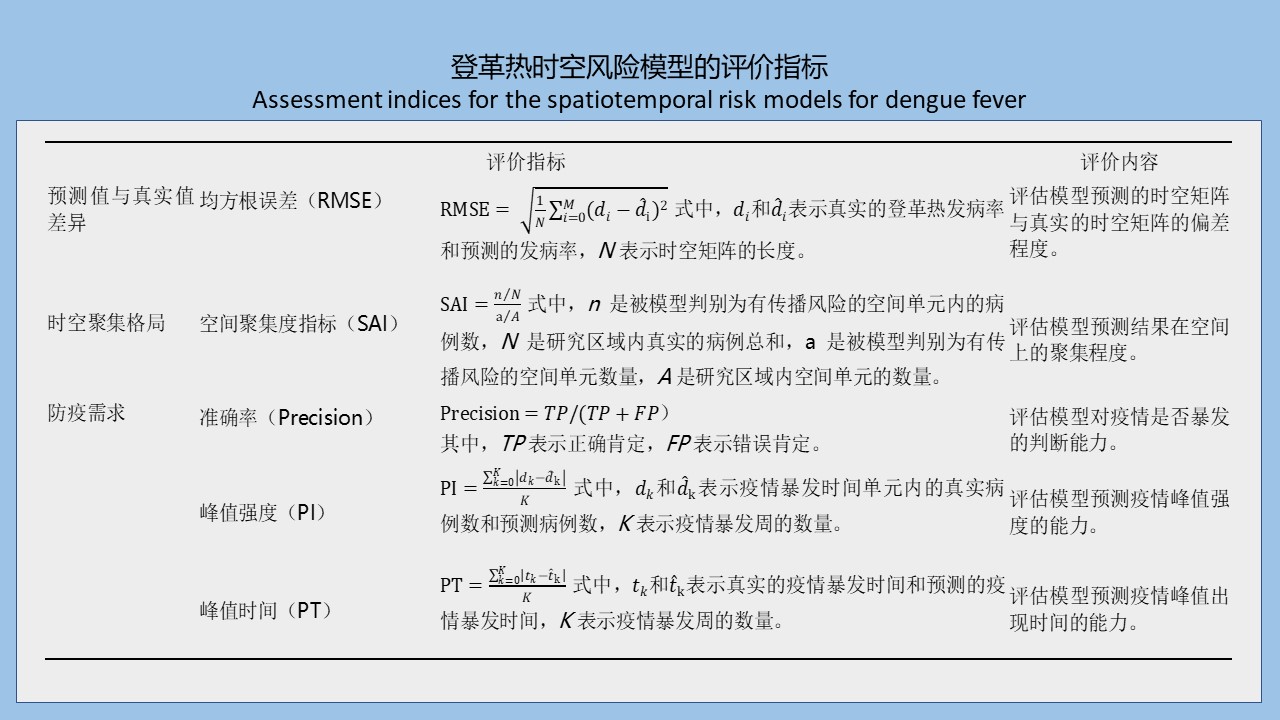
    Dengue fever is a mosquito-borne viral infectious disease that is widely distributed in urban or peri-urban areas in the tropical, subtropical, and warm temperate zones worldwide and threatens the health of populations in more than 100 countries and regions. Global climate change, urbanization, and urban population growth have created favorable conditions for the spread of dengue fever virus. At present, due to a lack of vaccines applicable for mass vaccination, Aedes vector control is the main measure for the prevention and control of dengue fever, and accurate and timely risk prediction for dengue fever can provide an important basis for precise prevention and control, and decision-making. In recent years, the development of geospatial big data promotes the identification of the driving factors for dengue fever at different spatial and temporal scales, and the advances in artificial intelligence, especially the emergence of various deep learning networks, provide new techniques for the risk prediction of dengue fever. Through a comprehensive analysis of the various types of driving factors for dengue fever and their mechanism of action, geospatial big data, and artificial intelligence techniques, this article elaborates on the application of geospatial big data in identifying the driving factors for dengue fever from the aspects of urban land use, climate and environment conditions, and population movement, as well as the current status of the application of artificial intelligence algorithms in predicting the risk of dengue fever transmission. Based on the current research status of geospatial big data and artificial intelligence, it is proposed that future research should develop spatiotemporal risk predictive models at different spatial and temporal scales and the performance of such models should be evaluated in terms of the difference between predicted and true values, the spatiotemporal aggregation patterns of dengue fever, and the actual needs of dengue fever prevention and control.
  • Experimental Study
  • ZHANG Xiang, CHENG Rong-rong, LIU Lu-yao, SUN Meng, HONG Yu-hang, YANG Cong-shan, LIU Yan, YIN Zong-jun, XU Qian-ming
    Chinese Journal of Vector Biology and Control. 2022, 33(3): 326-330. https://doi.org/10.11853/j.issn.1003.8280.2022.03.002
    Abstract ( ) Download PDF ( )   Knowledge map   Save
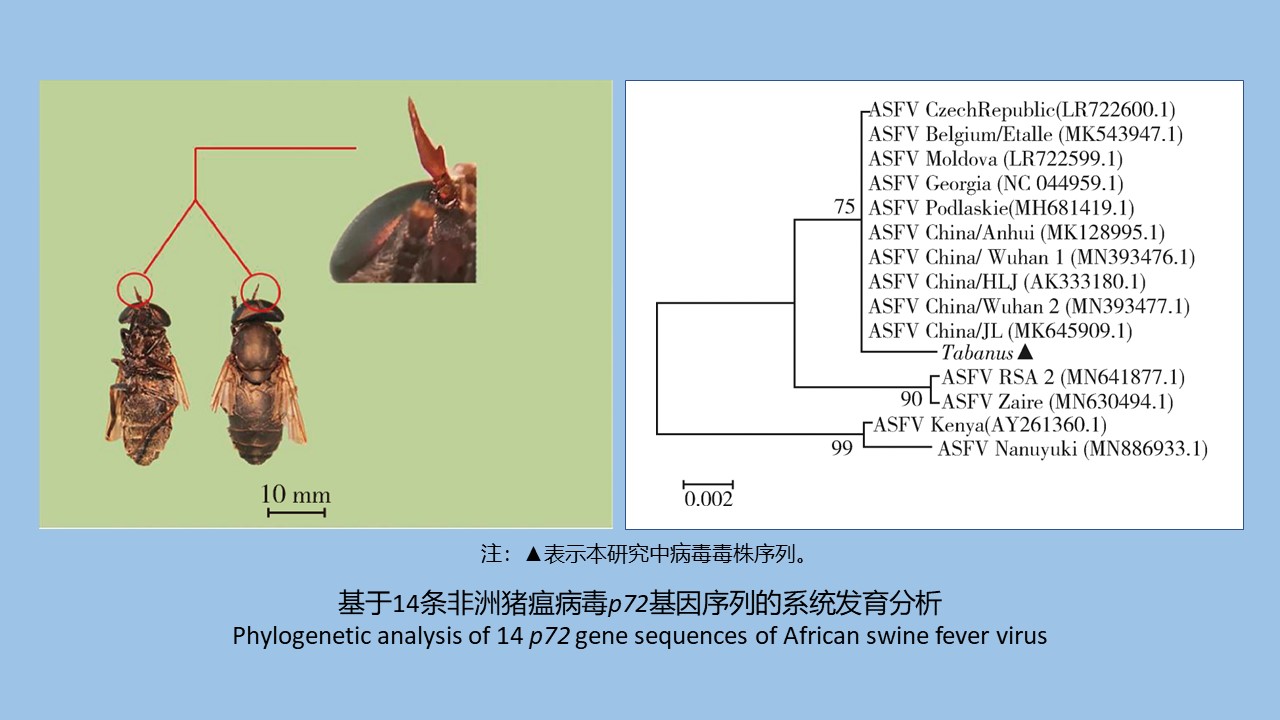
    Objective To investigate the role of blood-eating insects in the family Tabanidae in the spread of African swine fever virus (ASFV) in the Dabie Mountain region of Jinzhai county, Anhui province, China, and to provide evidence for the prevention and control of Africian swine fever in the region. Methods The insect trap method was used to collect wild horsefly in the Dabie Mountain region of Jinzhai county, Anhui province in September 2019. The collected horseflies were observed with a stereo microscope to preliminarily identify their species based on their morphological characteristics. The collected horseflies were separately ground and DNA was extracted using a tissue nucleic acid extraction kit and a virus nucleic acid extraction kit. Cytochrome c oxidase subunit Ⅰ (COⅠ) gene amplification and sequencing were performed on the tissue genome to identify the species of the horseflies. With the ASFV p72 gene primers published by World Organisation for Animal Health, the ASFV nucleic acid was amplified by PCR, followed by sequencing to detect the DNA of ASFV in the horsefly samples. Results A total of 24 horseflies were collected from three different locations. Through morphological observations and COⅠgene amplification and sequencing, the horseflies were identified as Tabanus hypomacros. Amplification with the ASFV p72 gene primers was positive for part of viral nucleic acid extraction samples, with an overall positive detection rate of ASFV of 45.83%. The product of the positive amplification with ASFV p72 primers was sequenced to be a 278 nt sequence. The phylogenetic analysis showed that the ASFV in the horsefly specimens and the epidemic ASFV strains in China were in the same evolutionary branch. Conclusion ASFV is found in wild horseflies in the Dabie Mountain region of Jinzhai county, Anhui province, and is highly homologous to the epidemic ASFV strains in China, indicating that T. hypomacros can be a potential mechanical transmission vector of ASFV.
  • SHI Meng-ting, HE Shan, LI Wei-yi, XIAO Qiu-qiu, CHENG Jin-zhi, WU Jia-hong
    Chinese Journal of Vector Biology and Control. 2022, 33(3): 331-335. https://doi.org/10.11853/j.issn.1003.8280.2022.03.003
    Abstract ( ) Download PDF ( )   Knowledge map   Save
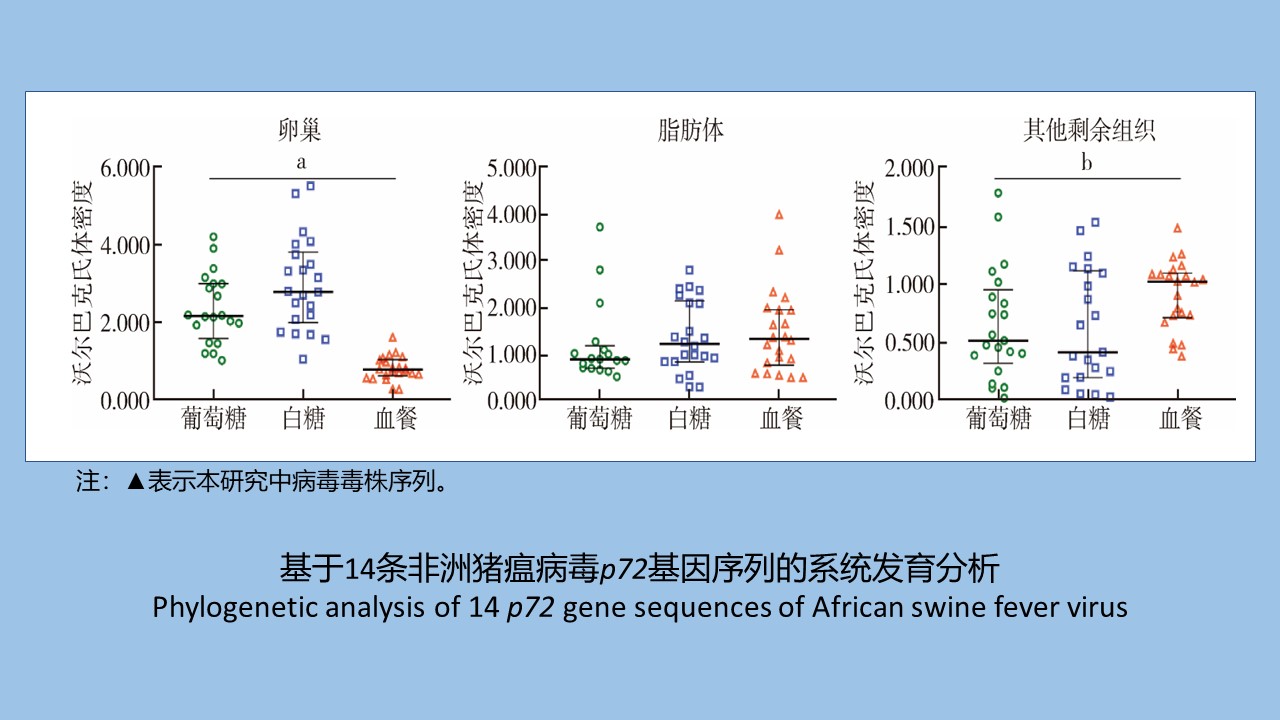
    Objective To investigate the effects of different diets on the density of Wolbachia in the ovary, fat body, and the other tissues in female Aedes aegypti of the WB strain. Methods After eclosion, Ae. aegypti mosquitoes of the WB strain were divided into glucose group (fed with glucose), white sugar group (fed with white sugar), and blood group (fed with blood for 2 hours on the 3rd day). Mosquitoes in each group were collected on days 4, 4.5, 5, and 6 to harvest the ovary, fat body, and the other tissues. DNA was extracted to determine the density of Wolbachia in all tissues using quantitative real-time PCR. SPSS 20.0 software was used for data analysis. The Kruskal-Wallis H test was used to compare the density of Wolbachia under different diets and at different days of age.Results On day 4.5, Wolbachia densities in the ovary in the glucose, white sugar, and blood groups were 2.149, 2.773, and 0.761, respectively, with a statistically lower density in the blood group (H=40.754, P<0.001); Wolbachia densities in the fat body in the three groups were 0.859, 1.189, 1.298, respectively, and the differences were not statistically significant (H=1.631, P=0.442). Wolbachia densities in the other tissues were 0.505, 0.405, 1.012, respectively, and the differences were not statistically significant (H=6.306, P=0.043). Under different diets but at the same days of age, Wolbachia densities in the ovary were lowest in the blood group on days 4, 5, and 6, and highest in the white sugar group on days 4 and 6 (H=14.335, P=0.001; H=22.049, P<0.001; H=4.266, P=0.084); for the fat body on days 4 and 6 and the other tissues on days 4, 5, and 6, Wolbachia densities were highest in the blood group, followed by the white sugar group, and lowest in the glucose group (H=7.186, P=0.028; H=10.504, P=0.005; H=16.338, P<0.001; H=14.083, P=0.001; H=4.266, P=0.118). At different days of age but under the same diets, Wolbachia densities in the ovary, fat body, and the other tissues in the glucose group had no statistical differences between different days of age (H=4.683, P=0.096; H=2.451, P=0.294; H=0.293, P=0.864); under the white sugar diet, Wolbachia densities in the ovary and fat body were no statistically increased with days of age (H=4.731, P=0.094; H=0.390, P=0.823); under the blood diet, Wolbachia densities in the ovary and fat body were first decreased and then increased with days of age (H=20.572, P<0.001; H=9.675, P=0.008). Conclusion Feeding blood reduces the density of Wolbachia in the reproductive tissue but increases its density in the non-reproductive tissues of Ae. aegypti mosquitoes of the WB strain. Under laboratory conditions, the mosquitoes can be fed with white sugar to increase the density of Wolbachia in the body.

  • MA De-zhen, SONG Wei, XU Yan, LIU Huan-yan
    Chinese Journal of Vector Biology and Control. 2022, 33(3): 336-339. https://doi.org/10.11853/j.issn.1003.8280.2022.03.004
    Abstract ( ) Download PDF ( )   Knowledge map   Save
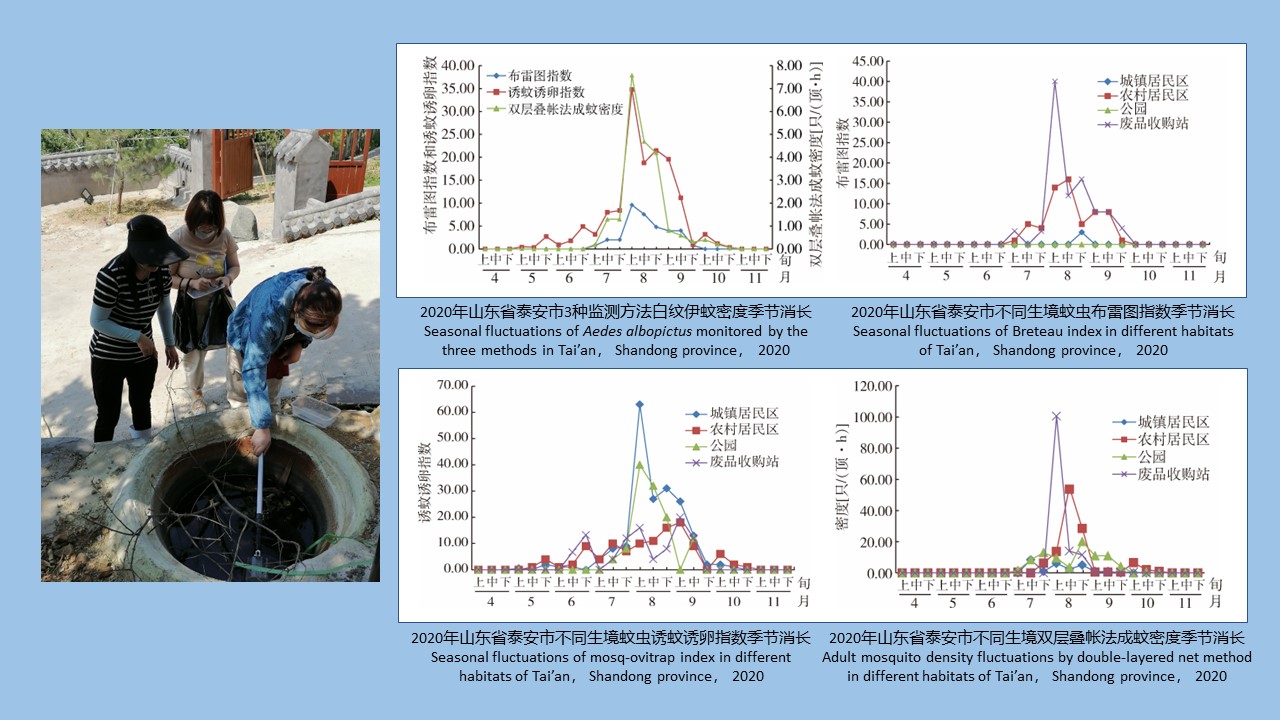
    Objective To study the effects of three Aedes albopictus density monitoring methods. Methods One monitoring site each was selected in four types of habitats (urban residential areas, rural residential areas, waste collection stations, and parks) of Tai'an, Shandong province, China. The Breteau index (BI) method, Mosq-ovitrap (MOT) method, and double-layered mosquito net method were used to separately monitor the density of Ae. albopictus once each in the early, middle, and late periods of every month from April to November 2020. Differences in mosquito density were examined using Chi-squared test, and a Pearson correlation analysis was used to analyze the correlation between BI and mosq-ovitrap index (MOI). Results The average BI was 1.57, the average MOI was 6.22, and the average adult mosquitoes density by double-layer net method was 0.05 mosquito/net·h from April to November in 2020. The seasonal fluctuation trend of the three monitoring methods was basically the same, and the peak density was all in early August. Adult Ae. albopictus was detected by MOT method in early May, and Ae. albopictus was detected by BI method and double-layer net method in early July. There was a positive correlation between the BI and the MOI (r=0.957, P<0.001), and there was a positive correlation between the MOI and the adult mosquitoes density by double-layer (r=0.914, P<0.001), and there was a positive correlation between the BI and the adult mosquitoes density using double-layer net method (r=0.934, P<0.001). the BI in waste collection station (5.16)>in rural residential area (3.10)>in urban residential area (0.11)>in park (0.00). the MOI of park (6.90)>urban residential area (6.82)>rural residential area (5.55)>waste collection station (4.84). The adult mosquitoes density by double-layer net method in waste collection station (mosquito/net·h) (0.32)>rural residential area (0.30)>park (0.22)>urban residential area (0.06). Conclusion The density index of Ae. albopictus monitored by the MOT method is relatively high, which can reflect the density level of Ae. albopictus at an earlier time to provide an earlier warning of mosquito-borne diseases in Tai'an city. The BI method and double-layer net method are suitable for density surveillance during the peak period of Ae. albopictus.
  • TANG Li-ping, ZHU Jian, LIAO Guo-dong, WU Ying-hua
    Chinese Journal of Vector Biology and Control. 2022, 33(3): 340-345. https://doi.org/10.11853/j.issn.1003.8280.2022.03.005
    Abstract ( ) Download PDF ( )   Knowledge map   Save
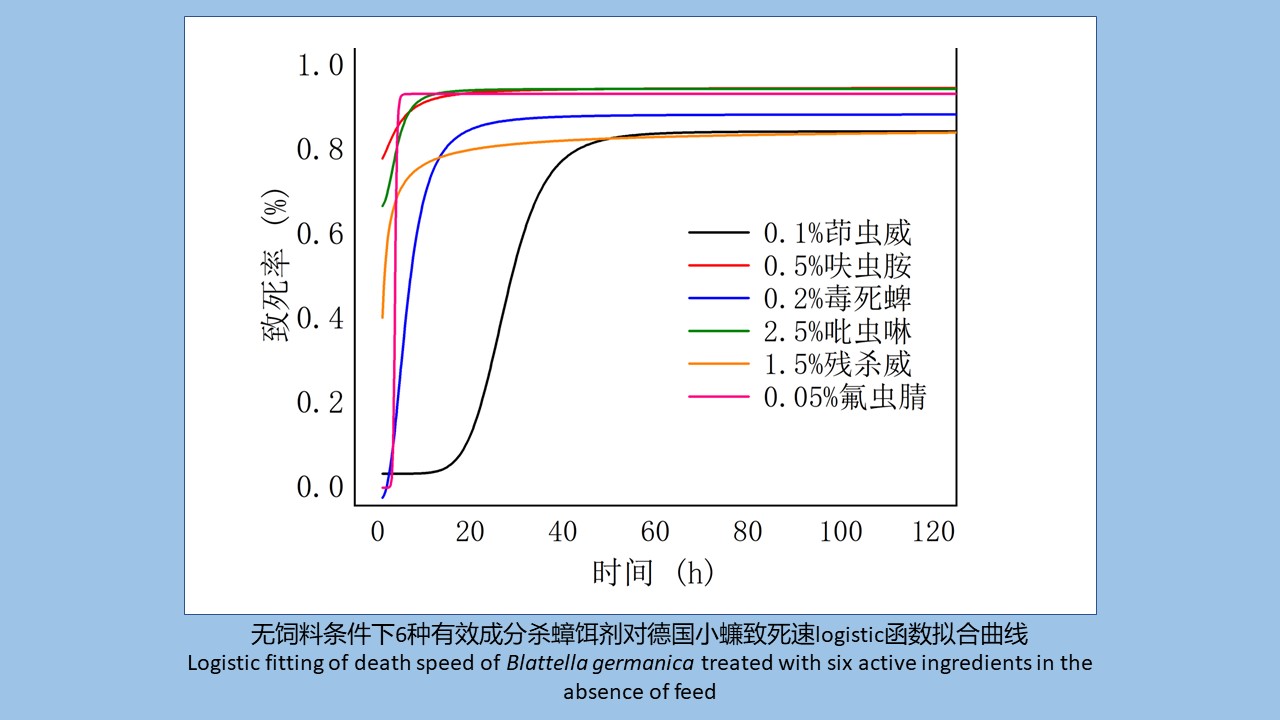
    Objective To test and compare the speed of death of Blattella germanica and Periplaneta americana treated with six active ingredients, and to provide theoretical basis for consumers' experience. Methods Using the open square box method, 30 test insects were starved for one day had allowed access to cockroach baits containing each of the six effective components. The number of dead insects was counted at regular time intervals, and LT50 and LT95 were calculated according to the weighted linear regression method. Results Without other feed, the LT50 for B. germanica was in the order of 0.5% dinotefuran>2.5% imidacloprid>1.5% propoxur>0.05% fipronil>0.2% chlorpyrifos>0.1% indoxacarb, and the order of the LT50 for P. americana was 2.5% imidacloprid>0.05% fipronil>0.2% chlorpyrifos>1.5% propoxur>0.1% indoxacarb. The LT95 for B. germanica was in the order of 0.5% dinotefuran>2.5% imidacloprid>0.05% fipronil>0.2% chlorpyrifos>0.1% indoxacarb>1.5% propoxur, and the LT95 for P. americana was in the order of 0.2% chlorpyrifos>0.05% fipronil>0.1% indoxacarb>1.5% propoxur>2.5% imidacloprid. Dinotefuran had almost no toxic effect on P. americana. Cockroaches fed less on the diets of dinotefuran, imidacloprid and propoxur, which had a faster death rate in the early stage, and fed more on the diets of chlorpyrifos, fipronil and indoxacarb, which had a slower death rate in the early stage. Conclusion On the whole, cockroach baits with different active ingredients had different lethal rates to different species of cockroaches. Dinotefuran, imidacloprid and propoxur were quicker to kill B. germanica, while chlorpyrifos and fipronil were quicker to kill P. americana.
  • Vector Surveillance
  • WANG Qiao-yan, WANG Shao-hua, WU Zheng-rong, ZHONG Pei-song, LENG Pei-en
    Chinese Journal of Vector Biology and Control. 2022, 33(3): 346-350. https://doi.org/10.11853/j.issn.1003.8280.2022.03.006
    Abstract ( ) Download PDF ( )   Knowledge map   Save
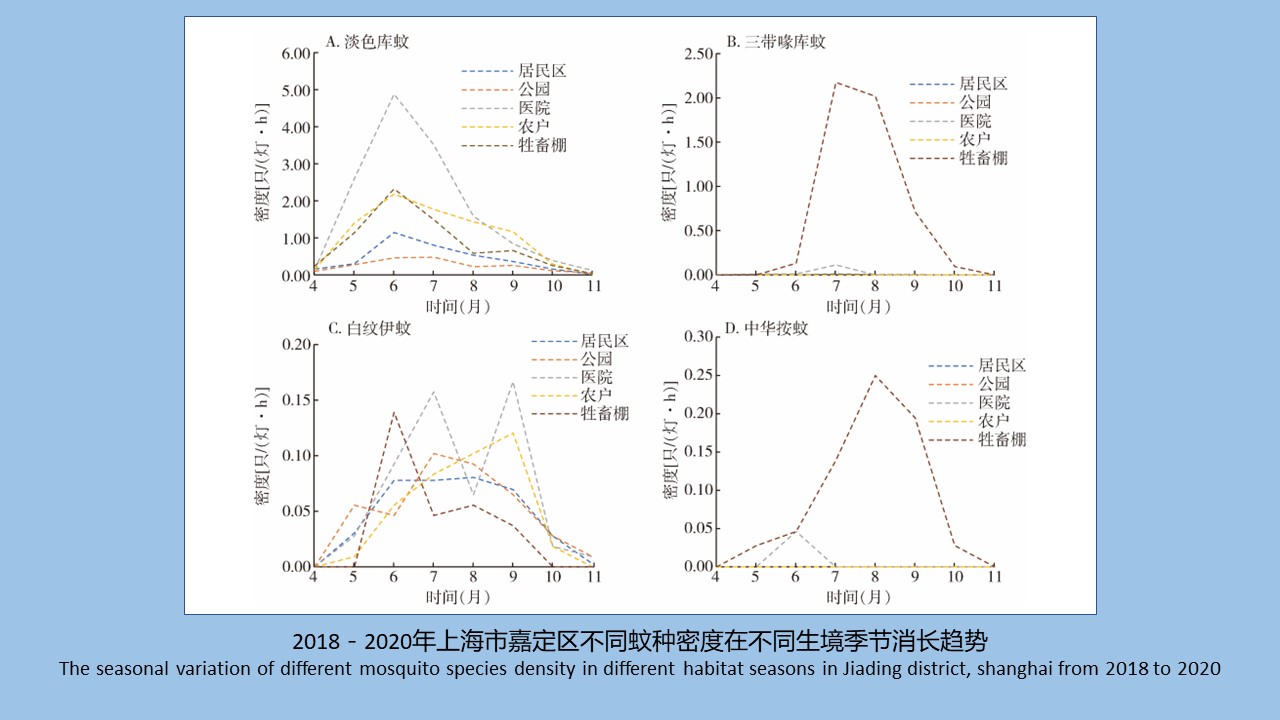
    Objective To investigate the species, population density, habitat distribution, and seasonal trend of adult mosquitoes in Jiading district, Shanghai, China in recent years, and to provide a scientific basis for the control of mosquitoes and mosquito-borne diseases. Methods Adult mosquitoes were monitored by the CO2-baited baited light trap method in various habitats from 2018 to 2020, and analyzed mosquito species composition, seasonal fluctuation, and density differences between various habitats.Differences in mosquito species composition were examined using Chi-squared test, and ANOVA was used to analyze differences of density in different habitats. Results Culex pipiens pallens accounted for the highest proportion (82.70%) of the captured mosquitoes, followed by Cx. tritaeniorhynchus (10.32%) and Aedes albopictus (5.49%). The composition ratio of each mosquito species was significantly different in different years (P ≤ 0.001). The densities of Cx. pipiens pallens and Cx. tritaeniorhynchus peaked in June and July, respectively, being 2.28 and 0.39 mosquitoes/lamp·h, respectively. The peak periods of Ae. albopictus and Anopheles sinensis lasted for a longer time, appearing from June to September and from July to September, respectively. Among various types of habitats, the average mosquito density was highest in hospitals (1.41 mosquitoes/lamp·h) and lowest in parks (0.25 mosquitoes/lamp·h). Cx. pipiens pallens was the absolutely dominant species in all monitored habitats. The densities of Cx. tritaeniorhynchus (0.51 mosquitoes/lamp·h) and An. sinensis (0.07 mosquitoes/lamp·h) in livestock sheds were significantly much higher than their densities in other habitats (F=3.763, P=0.012; F=6.194, P<0.001). The peak time of Ae. albopictus varied greatly in different habitats. During the peak season of mosquito activity, Ae. albopictus densities in hospitals and parks showed a decrease followed by an increase, with the decline occurring in August and June, respectively. Conclusion The density of mosquitoes in Jiading district is generally at a relatively low level. However, mosquito control in hospitals, livestock sheds, and residential areas should be strengthened. Targeted, scientific, and effective control strategies should be taken according to the activity patterns of different mosquito species.
  • YUN Ling, WANG Fu-cai, ZHANG Ling
    Chinese Journal of Vector Biology and Control. 2022, 33(3): 351-355. https://doi.org/10.11853/j.issn.1003.8280.2022.03.007
    Abstract ( ) Download PDF ( )   Knowledge map   Save
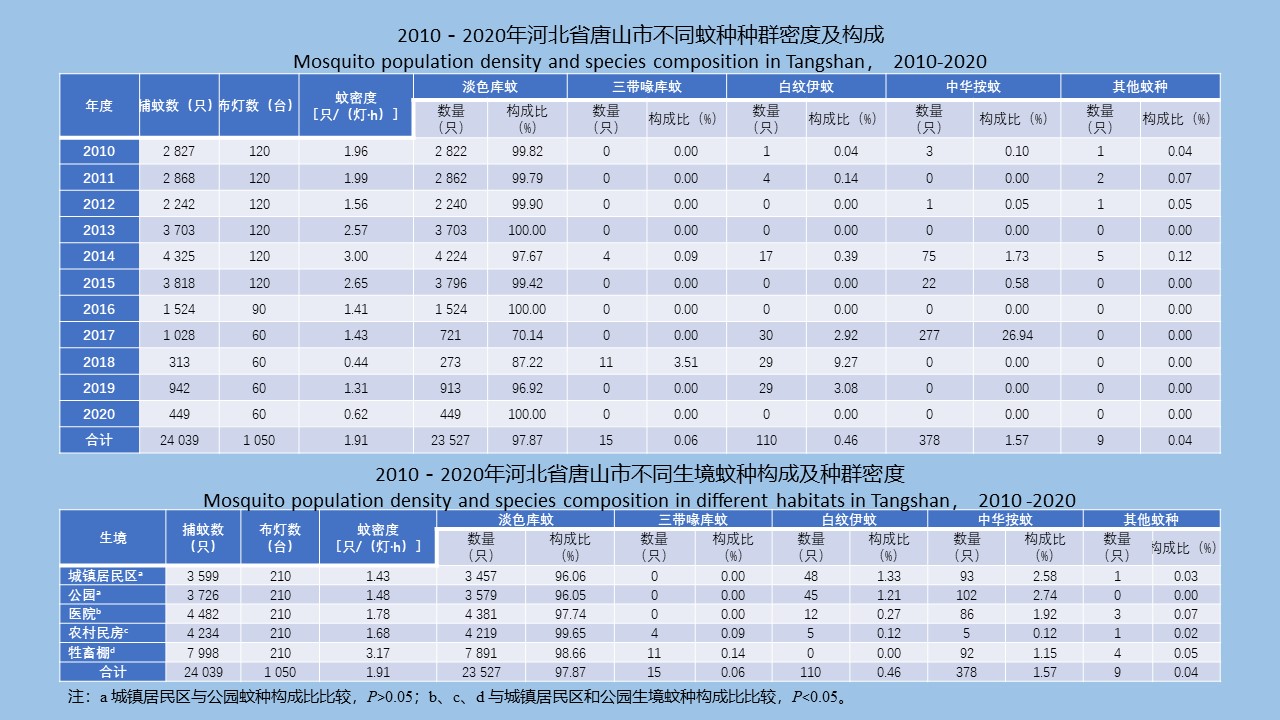
    Objective To investigate the mosquito species composition, population density, and seasonal fluctuation in Tangshan, Hebei province, China, 2010-2020, and to provide a basis for the prevention and control of mosquitoes and mosquito-borne diseases in Tangshan. Methods Adult mosquito density of different species was monitored using the lamp-trapping method. The mosquito species composition, population density, and seasonal fluctuation were analyzed in different habitats. SPSS 25.0 software was used for data analysis. Differences in mosquito species composition were examined using the χ2 test. Results A total of 24 039 adult mosquitoes were captured in Tangshan, 2010-2020, and the overall mosquito density was 1.91 mosquitoes/(lamp·h). The dominant species was Culex pipiens pallens, followed by Anopheles sinensis. The density of Cx. pipiens pallens[3.13 mosquitoes/(lamp·h)) and Cx. tritaeniorhynchus[0.01 mosquitoes/(lamp·h)] were highest in livestock sheds. The density of Aedes albopictus[0.02 mosquitoes/(lamp·h)] was highest in urban residential areas. The density of An. sinensis[0.04 mosquitoes/(lamp·h)] was highest in parks. Mosquito density in Tangshan generally decreased over the past 11 years, with a statistical difference across the years (χ2=109.306, P<0.001). The highest mosquito density was found in livestock sheds, followed by hospitals, rural houses, parks, and urban residential areas. There was a statistical difference in the composition of mosquito species between different habitats (χ2=349.301, P<0.001). The trends of mosquito density in different habitats all showed unimodal distribution, and mosquito activity peaked in July and August. Conclusion Cx. pipiens is the dominant mosquito species in Tangshan. Mosquito density generally decrease over the years and is highest in livestock sheds. Mosquito activity peak in July and August when effective mosquito-control measures should be implemented.
  • LI Xi-shang, WANG Jia-zhi, LI Sheng-guo, TANG Zong-yan, YANG Dong-hai, YIN Shou-qin, WANG Xing-juan, LI Zeng-zhu, CAI Wen-bin
    Chinese Journal of Vector Biology and Control. 2022, 33(3): 356-359. https://doi.org/10.11853/j.issn.1003.8280.2022.03.008
    Abstract ( ) Download PDF ( )   Knowledge map   Save
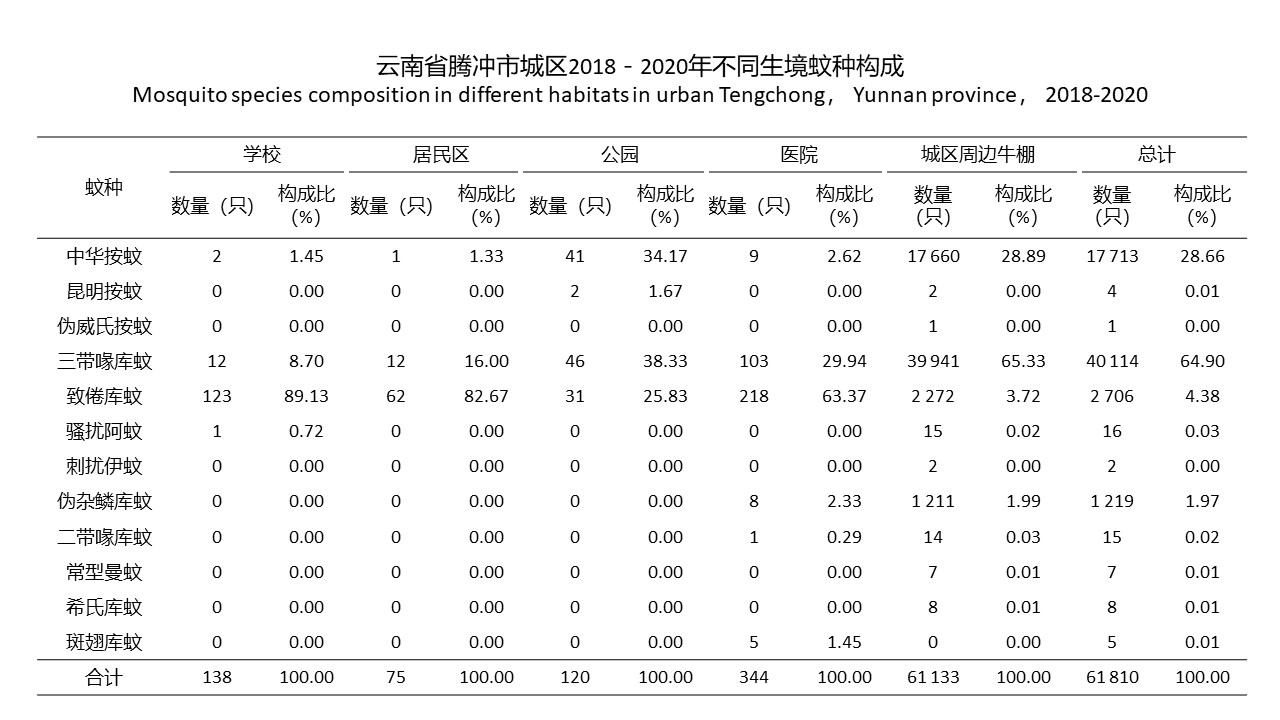
    Objective To investigate the species composition, spatial distribution, population density, and seasonal fluctuation of mosquitoes in the urban area of Tengchong, Yunnan province, China, and to provide a scientific basis for mosquito prevention and control. Methods Adult mosquitoes were captured by the light trap method. Aedes albopictus larvae were investigated using the Breteau index (BI). The F test and Chi-squared test (or Fisher's exact test) were used for data analysis. Results A total of 61 810 adult mosquitoes were captured from 2018 to 2020, involving 12 species of 5 genera. The dominant species were Culex pipiens quinquefasciatus and Cx. tritaeniorhynchus in the urban area, and Anopheles sinensis and Cx. tritaeniorhynchus in the suburban area. The average mosquito density was 2 183.32 mosquitoes/light·night in cattle sheds in the suburban area, 12.29 mosquitoes/light·night in hospitals, 4.93 mosquitoes/light·night in schools, 4.29 mosquitoes/light·night in parks, and 2.68 mosquitoes/light·night in residential areas. A total of 11 986 containers were examined for Aedes larvae. There were 80 positive containers, all of which were positive for Ae. albopictus larvae. The average BI was 0.66. Conclusion The species composition, spatial distribution, population density, and seasonal fluctuation of mosquitoes in the urban area of Tengchong are preliminarily understood. Control measures should depend on the seasonal fluctuation of mosquito density and the breeding environment of mosquito.
  • MA Zhe, ZHENG Yu-ting, YANG Rui, XU Xiang, WEI Chun, YU Xiao-jun, YANG Chun-mei, JIANG Jin-yong
    Chinese Journal of Vector Biology and Control. 2022, 33(3): 360-365. https://doi.org/10.11853/j.issn.1003.8280.2022.03.009
    Abstract ( ) Download PDF ( )   Knowledge map   Save
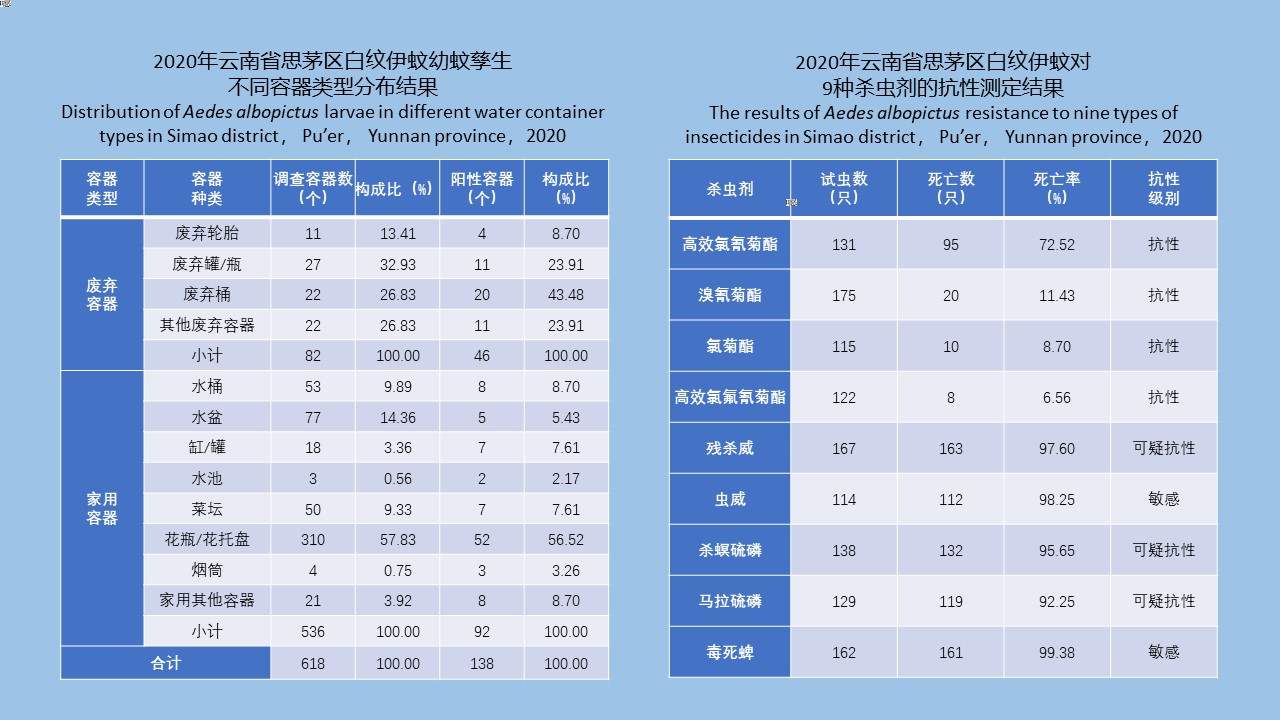
    Objective To investigate the density, breeding habitat, and sensitivity to insecticides of Aedes albopictus in Simao district, Pu'er, Yunnan province, China, and to provide a scientific evidence for mosquito control. Methods The Breteau index (BI) method was used to investigate the breeding sites of Ae. albopictus and the density distribution of larvae in five settlements selected from different orientations in Simao district in August 2020. The collected larvae were reared to F1 generation in laboratory. The filter paper contact method was used to measure the sensitivity of adult mosquitoes to nine types of insecticides. The resistance degree was determined according to the mortality rate. Results A total of 618 water containers were identified in 281 households, and larvae were found in 138 water containers in 80 households. The BI, House index, and Container index were 49.11, 28.47%, and 22.33%, respectively. The highest BI was 71.67 and the lowest was 20.00. Statistically, among the 138 mosquito-positive water containers, 92 (66.67%) were household containers and 46 (33.33%) were disused containers. The positive rates of household containers and disused containers were 17.16% and 56.10%, respectively, with a statistical difference between them (χ2=62.157, P<0.001). The positive rates of indoor and outdoor containers were 11.16% and 47.87%, respectively, with a statistical difference between them as well (χ2=101.637, P<0.001). The outdoor places had a higher positive rate than the indoor places, with an odd ratio of 7.31. The investigation demonstrated that outdoor environments were the main breeding habitats for Ae. albopictus in Simao district. Meanwhile, the mortality rates of adult Ae. albopictus exposed to nine types of insecticides ranged from 6.56% to 99.38%. These Ae. albopictus mosquitoes showed resistance to beta-cypermethrin, deltamethrin, permethrin, and lambda-cyhalothrin, and suspected resistance to propoxur, fenitrothion, and malathion, while they were sensitive to bendiocarb and chlorpyrifos. Conclusion Ae. albopictus is broadly distributed in the core of Simao district and is of high density. Therefore, there is a potential risk of dengue fever. It has developed varying degrees of resistance to a variety of pyrethroid insecticides. It is necessary to strengthen the regular surveillance and control of Ae. albopictus population density and insecticide resistance and environmental management.
  • PU En-nian, DUAN Xing-de, FENG Zhi-gang, LIU Zheng-xiang, CAI Wen-feng, WANG Jian, QIN Yuan, LI Hao, TANG Yong-quan, SHAO Zong-ti
    Chinese Journal of Vector Biology and Control. 2022, 33(3): 366-370. https://doi.org/10.11853/j.issn.1003.8280.2022.03.010
    Abstract ( ) Download PDF ( )   Knowledge map   Save
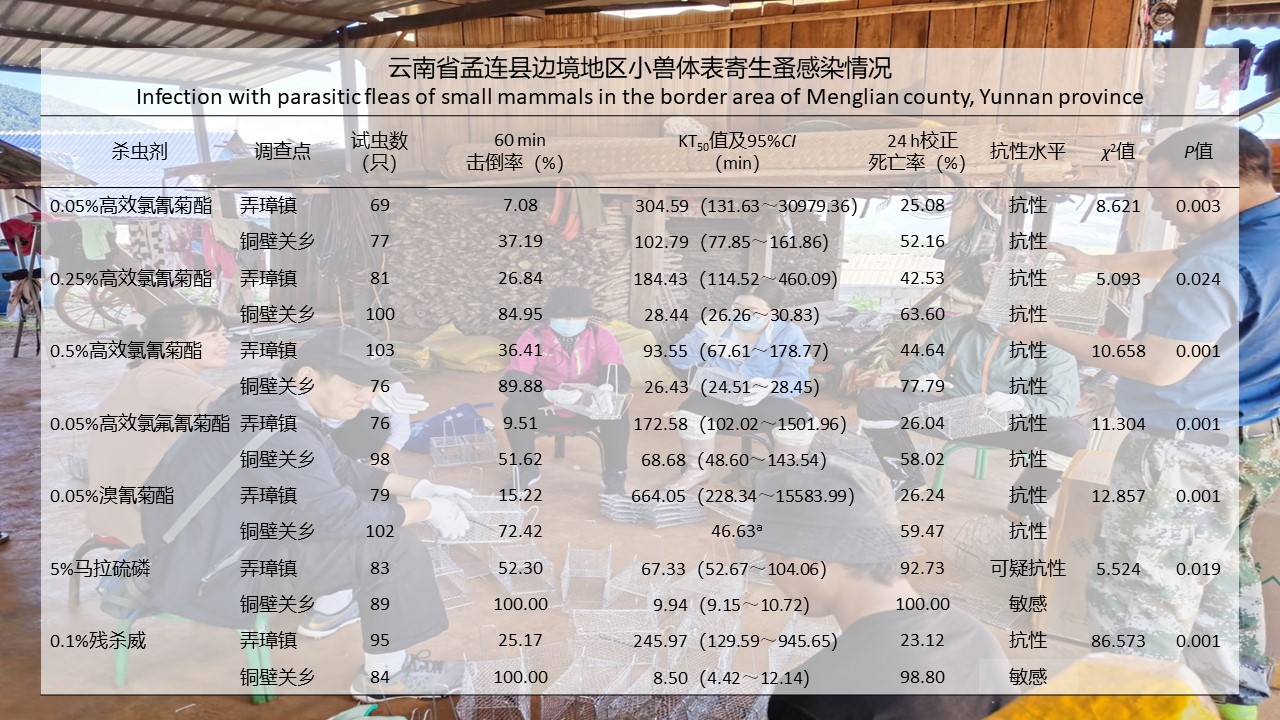
    Objective To investigate the species composition and distribution of small mammals and their parasitic fleas in the border area of Menglian Dai, Lahu and Wa Autonomous County (Menglian county), Yunnan province, China, and to provide basic data for the surveillance and control of vector-borne diseases. Methods In November 2020, two border townships in Menglian county were selected as the survey sites. The cage and clip trapping methods were used to investigate the species composition and density of small mammals in three habitats (residential areas, farming areas, and forest areas). Afterwards, ectoparasitic fleas were collected from the small mammals and the flea infestation rate and flea index were calculated. The ecological approach was used to analyze the species composition and distribution of the small mammals. The β-diversity index was used to analyze the community similarity. The Chi-square test was used to compare the capture rate between different habitats. Results A total of 313 small mammals were captured, which belonged to 15 species from 9 genera, 4 families, and 3 orders. Rattus tanezumi (47.60%), R. andamanensis (20.13%), and Suncus murinus (10.86%) were the dominant species. The capture rate in residential areas was 3.25%, and most were R. tanezumi (97.44%), while R. tanezumi, R. andamanensis,and S. murinus were the dominant species in farming and forest areas. The sorensen coefficient value of small mammals in farming and forest areas was 0.80, with a relatively high community similarity. The capture rates in farming and forest areas were 18.42% and 19.20%, respectively, with no statistical difference between the two habitats (χ2=0.146, P=0.703). Furthermore, a total of 99 fleas were collected and classified into 7 species of 7 genera of 4 families of 1 order, with a mean flea index of 0.32. Xenopsylla cheopis (69.70%) and Palaeopsylla remota (20.20%) were the dominant species. Conclusion The main hosts and vectors of plague are widely distributed in the border area of Menglian county, Yunnan province, and the capture rate of small mammal and their flea index are relatively high in some areas. It is suggested that continuous surveillance should be performed, and preventive rodent and flea control should be carried out in areas with high rodent and flea densities to reduce the risk of rodent-borne diseases.
  • Vector Infectious Disease
  • ZHAO Jia-xin, LI Wen, LI Gui-chang, YUE Yu-juan, LIU Qi-yong, LU Liang
    Chinese Journal of Vector Biology and Control. 2022, 33(3): 371-378. https://doi.org/10.11853/j.issn.1003.8280.2022.03.011
    Abstract ( ) Download PDF ( )   Knowledge map   Save
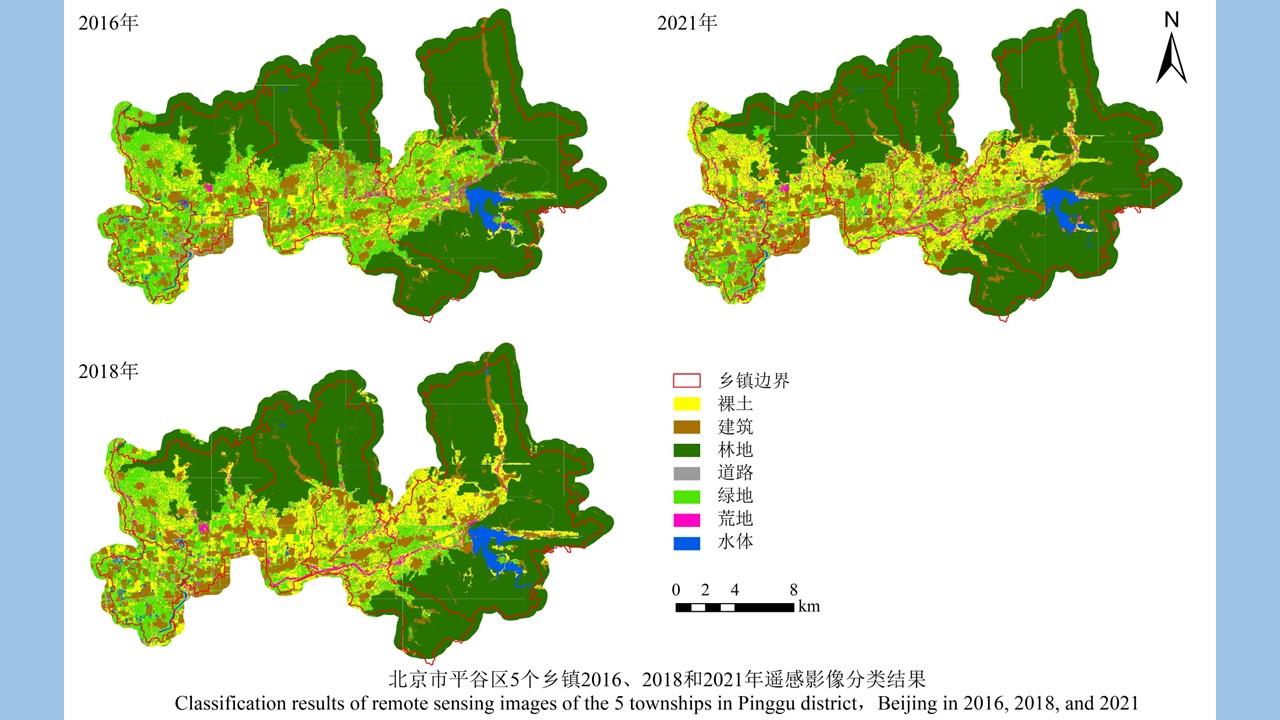
    Objective To explore the relationship between the incidence of scrub typhus and land use in Pinggu district, Beijing, China. Methods The multi-scale segmentation and random forest algorithm in eCognition v9.0.1 software were performed to extract and classify the remote sensing image data of five townships (Wangxinzhuang town, Daxingzhuang town, Jinhaihu town, Nandulehe town, and Shandongzhuang town) in Pinggu district in 2016, 2018, and 2021 that had relatively large numbers of cases of scrub typhus. ArcGIS 10.7 software was used to calculate the area of each type of land in each township in each year. The relationship between the area of objects and the incidence of scrub typhus was analyzed through line graphs and Spearman's rank correlation analysis. Results The overall classification accuracy of remote sensing images of 5 towns in Pinggu district of Beijing in 3 years were all >80%, and the Kappa coefficients were between 0.600 and 0.800. The Spearman's rank correlation analysis showed that in the five townships, the incidence of scrub typhus was positively correlated with the ratio of green space area to non-forest land area from 2016 to 2018 (r=0.576, P=0.082), while there was no correlation between the incidence of scrub typhus and the proportion of object area from 2018 to 2021. From the perspectives of townships, in Nandulehe and Shandongzhuang towns, the incidence of scrub typhus was negatively correlated with bare soil/non-forest land ratio (all r=-1.000, all P<0.010), positively correlated with green space/non-forest land ratio (r=1.000, P<0.010), and negatively correlated with wasteland/non-forest land ratio (r=-1.000, P<0.010). However, there was a positive correlation between the incidence of scrub typhus and wasteland/non-forest land ratio in Jinhaihu town (r=1.000, P<0.010). The incidence of scrub typhus in the five townships was negatively correlated with building/non-forest land ratio in 2016 (r=-0.900, P=0.037), negatively correlated with water/non-forest land ratio in 2018 (r=-0.900, P=0.037), and positively correlated with water/non-forest land ratio in 2021 (r=0.900, P=0.037). Conclusion The incidence of scrub typhus in Pinggu district of Beijing was positively correlated with green space/non-forest land area ratio in 2016 and in 2018, but with no correlation between the two factors in 2018 and in 2021. The correlation results varied in different towns and different years.
  • WEI Kong-fu, ZHOU Wei-zhong, LIU Xin-feng, GOU Fa-xiang, ZHANG Hong
    Chinese Journal of Vector Biology and Control. 2022, 33(3): 379-382. https://doi.org/10.11853/j.issn.1003.8280.2022.03.012
    Abstract ( ) Download PDF ( )   Knowledge map   Save
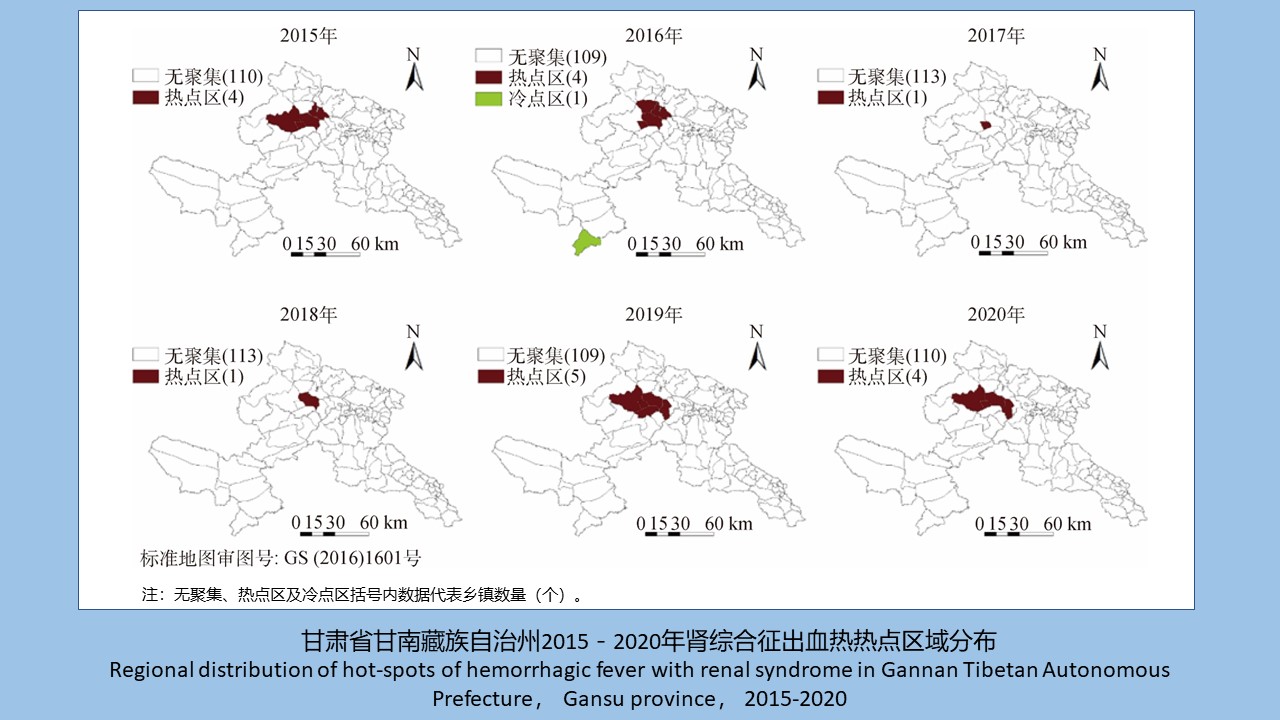
    Objective To investigate the spatiotemporal distribution characteristics and the hot-spot areas of hemorrhagic fever with renal syndrome (HFRS) in Gannan Tibetan Autonomous Prefecture (Gannan prefecture), Gansu province, China from 2015 to 2020, and to provide a reference for the prevention and control of HFRS. Methods Data on the incidence of HFRS in Gannan prefecture from 2015 to 2020 were collected to calculate spatial autocorrelation coefficient, identify hot-spot areas, and analyze the spatiotemporal clustering pattern at the township level. Results The incidence of HFRS was generally sporadic in Gannan prefecture from 2015 to 2020. The mean annual incidence was 4.07/100 000, and the highest incidence was 12.50/100 000 in 2019. The incidence of HFRS had two peaks during May to June and November to next January, slightly higher in the latter peak period. HFRS was highly prevalent in the population aged 30 to 75 years. The cases were mostly young farmers (17.14%) and herdsmen (66.29%). The male-to-female ratio was 1.57:1. The incidence of HFRS showed spatial correlation in Gannan prefecture from 2015 to 2020. The hot-spot areas were Nawu and Lexiu towns in Hezuo city; and Amuquhu town, Yaliji township, Bola town, and Zhayou township in Xiahe county. The spatiotemporal clustering analysis identified a clustering region 21.40 km in radius, mainly covering Amuquhu town, Yaliji township, Bola township, Jicang township, and Zhayou township in Xiahe county, clustering during 2019 to 2020 (relative risk=68.89, log-likelihood ratio=245.78, P<0.001).Conclusion There were epidemics and clusters of HFRS in Gannan prefecture from 2015 to 2020. Authorities should adopt comprehensive prevention and control measures including health education, rodent control, and vaccination, with an emphasis on the five townships of Xiahe county.
  • SUN Fei, YANG Ai, WANG Yi, ZHANG Xiao-lei, YAN Dong
    Chinese Journal of Vector Biology and Control. 2022, 33(3): 383-386. https://doi.org/10.11853/j.issn.1003.8280.2022.03.013
    Abstract ( ) Download PDF ( )   Knowledge map   Save
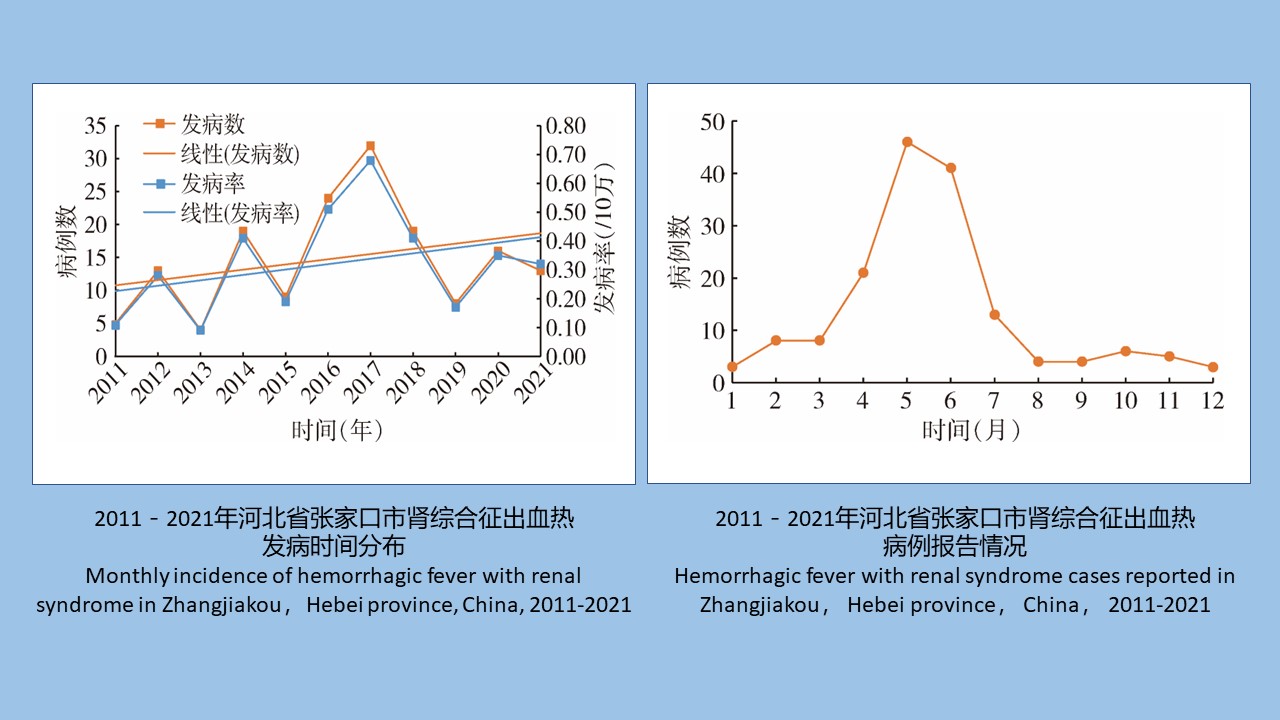
    Objective To analyze the epidemiological characteristics of hemorrhagic fever with renal syndrome (HFRS) in Zhangjiakou, Hebei province, China, 2011-2021, and to provide a scientific basis for HFRS prevention and control. Methods Descriptive epidemiological methods were used to analyze the monitoring data of HFRS cases and host animals in Zhangjiakou from 2011 to 2021. Results A total of 162 HFRS cases were reported in Zhangjiakou from 2011 to 2021, with an average annual incidence rate of 0.29/100 000 and an average mortality rate of 0.005/100 000. Cases were reported in every month of the year, and the incidence peaked from April to June. The male-female ratio of the patients was 3.26:1, and the disease mainly affected people 20-60 years of age and farmers (95 cases, 58.64%). The reported cases of HFRS were concentrated in Xuanhua district and Chicheng county (52.47%). Exposure factors were identified in 90 cases (55.56%). From 2013 to 2017, the annual rodent density was high and averaged at 3.65 individuals/100 traps. One of the 436 rodent samples tested positive, with an infection rate of 0.23%. Conclusion From 2011 to 2021, the HFRS epidemic in Zhangjiakou increased slightly but was generally low. In areas with high HFRS incidence, it is necessary to actively monitor rodent infection rate, and at the same time implement the strategy based on both rodent control and vaccination to reduce the incidence of HFRS.
  • ZHANG Jing, ZHANG Yu-feng, LIU Zhong-min, HE Ling-ling, NAN Xiao-wei, JIANG Xiao-feng
    Chinese Journal of Vector Biology and Control. 2022, 33(3): 387-393. https://doi.org/10.11853/j.issn.1003.8280.2022.03.014
    Abstract ( ) Download PDF ( )   Knowledge map   Save
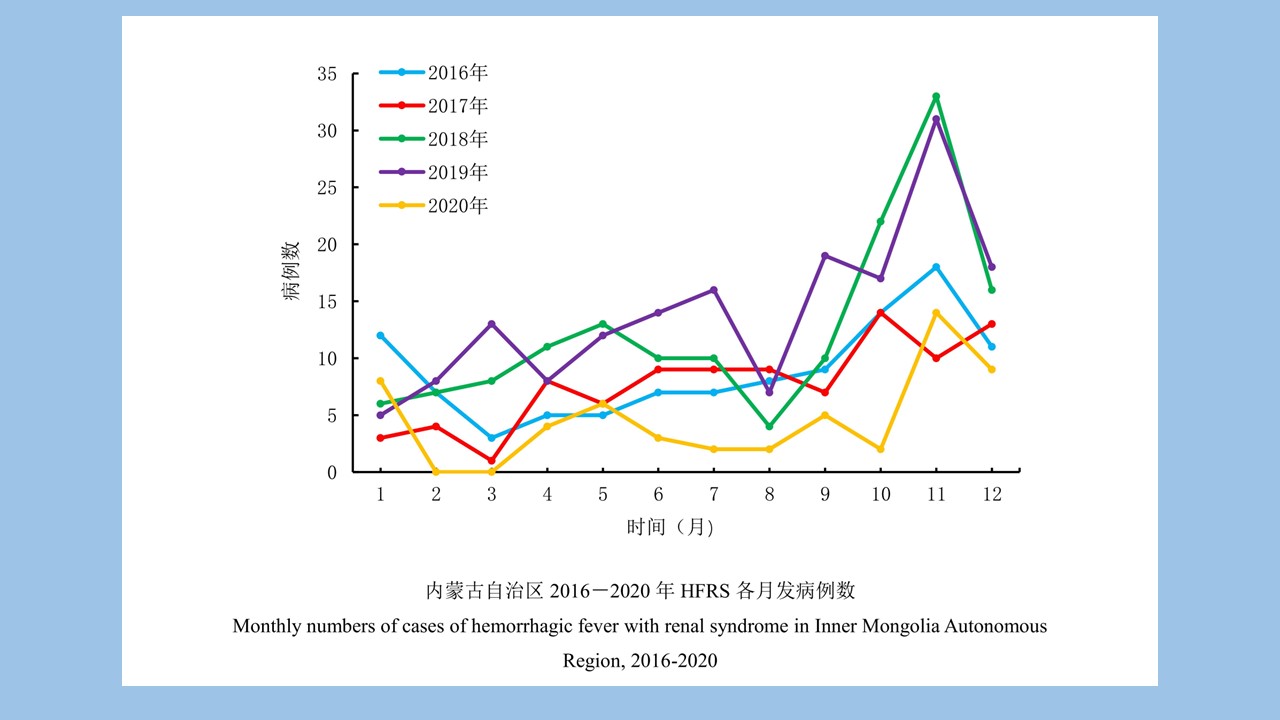
    Objective To investigate the epidemiological characteristics of hemorrhagic fever with renal syndrome (HFRS) and the epizootic situation in host animals in the Inner Mongolia Autonomous Region (Inner Mongolia), China, and to provide a basis for formulating relevant prevention and control strategies and measures. Methods The descriptive epidemiological method was used to analyze the data of HFRS epidemics in Inner Mongolia from 2016 to 2020 from the National Infectious Disease Report Information Management System. SPSS 22.0 software was used to perform the rank sum test, linear correlation analysis, regression analysis, and cluster analysis. Results From 2016 to 2020, a total of 572 cases were reported in 9 leagues/cities of Inner Mongolia, including 5 deaths, with an incidence rate of 0.45/100 000 and a mortality rate of 3.96×10⁻³/100 000. The epidemics of HFRS peaked in autumn to winter, and mainly affected the population aged between 25 and 54 years. Farmers accounted for 62.24% of the total cases. The ratio of male to female was 3.43:1. High incidence areas were mainly concentrated in Hulun Buir in eastern Mongolia, where the cases accounted for 67.66% of the total number. The mean inapparent infection rate of HFRS was 6.06% among people in Bayannur. The virus-carrying rate of rodents was 10.34% in Morin Dawa Daur Autonomous Banner. Conclusion The epidemic situation of HFRS in Inner Mongolia from 2016 to 2020 was generally milder than that in the last five years, but Hulun Buir is still in a relatively severe situation, requiring enhanced effective strategies and measures to control the epidemic.
  • YANG Wei-hong, YANG Xiao-long, YANG Li-fen, KUANG Guo-peng, LI Hua-chang, PAN Hong, WANG Juan, HAN Xi, FENG Yun
    Chinese Journal of Vector Biology and Control. 2022, 33(3): 394-399. https://doi.org/10.11853/j.issn.1003.8280.2022.03.015
    Abstract ( ) Download PDF ( )   Knowledge map   Save
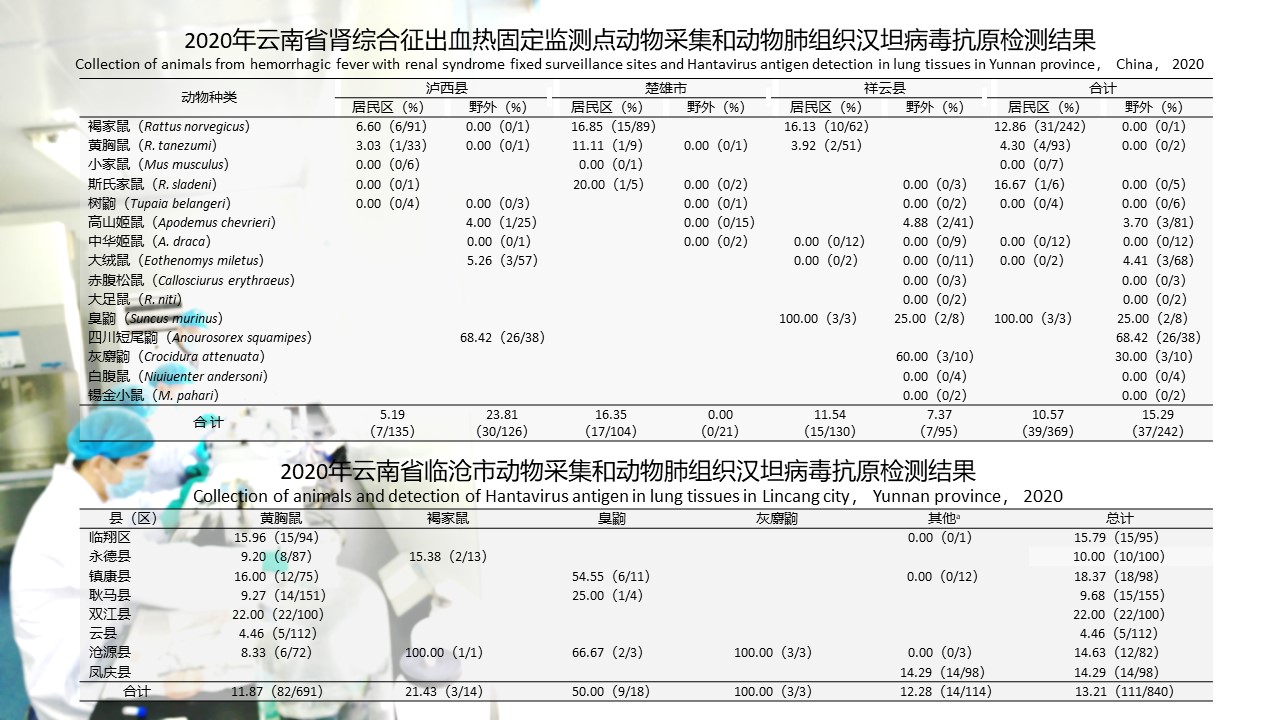
    Objective To further understand the species of host animals with hemorrhagic fever with renal syndrome (HFRS) and their natural infection with hantavirus (HV) in Yunnan province, China, 2020, and to provide a scientific basis for the control and prevention for HFRS in Yunnan. Methods We collected information on HFRS epidemic in Yunnan in 2020 and performed host animal investigation at fixed surveillance sites (Luxi county, Chuxiong city, and Xiangyun county) and mobile surveillance sites (1 district and 7 counties in Lincang city). Animals were captured for classification and identification, and lung tissue specimens were tested for HFRS antigen by direct immunofluorescence method. Results In 2020, a total of 213 patients with HFRS were reported in Yunnan, with an incidence of 0.44/100 000. The patients were mainly located in Dali and Chuxiong prefectures (89.20%). A total of 1 451 host animals in 10 genera and 15 species were captured. Rattus norvegicus was the dominant specie in the fixed surveillance sites, Apodemus chevrieri and Eothenomys miletus dominated the surveillance sites in the wild, and R. tanezumi was the dominant specie in the residential area of mobile surveillance sites. The HV positive rate in host animals was 14.18% (37/261), 13.60% (17/125), and 9.78% (22/225) at the fixed surveillance sites of Luxi, Chuxiong, and Xiangyun and 13.21% (111/840) at the mobile surveillance site of Lincang. The host animals positive for HV were R. norvegicus, R. tanezumi, R. sladeni, A. chevrieri, Crocidura attenuate, E. miletus, Suncus murinus, and Anourosorex squamipes. Conclusion Glires and insectivorous animals in Yunnan are commonly infected with HV. In recent years, the incidence of HFRS in Yunnan province has been at a high prevalence level. Therefore, comprehensive prevention and control measures based on rodent control, case monitoring, personal protection, and vaccination should be strengthened across the province, and the monitoring and control of HFRS should be improved.
  • XIA Guang-hui, TANG Song, YANG Fu-qiang, ZONG Jun, PAN Huan-hong
    Chinese Journal of Vector Biology and Control. 2022, 33(3): 400-404. https://doi.org/10.11853/j.issn.1003.8280.2022.03.016
    Abstract ( ) Download PDF ( )   Knowledge map   Save
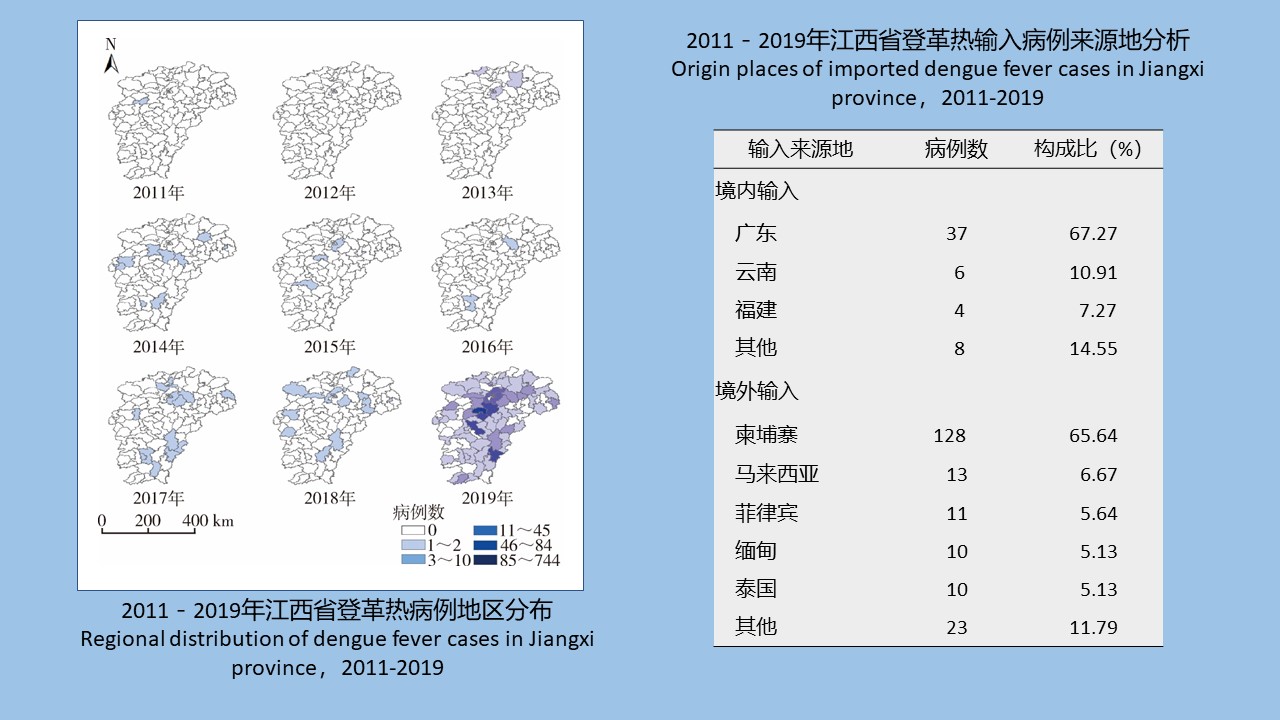
    Objective To analyze the epidemiological characteristics of dengue fever in Jiangxi province,China from 2011 to 2019, and to provide a theoretical basis for formulating prevention and control strategies against dengue fever in Jiangxi province. Methods Descriptive epidemiological method was used to analyze the monitoring data of dengue fever in Jiangxi province from 2011 to 2019. The Chi-square test and Mann-Whitney U test were used to compare data differences. Joinpoint software was employed to perform trend analysis. Results From 2011 to 2019, a total of 1 352 cases of dengue fever were reported in Jiangxi province,including 250 (18.49%) imported cases and 1 102 (81.51%) local cases. The imported cases were reported mainly from June to October, while the local cases from August to October. Among all patients,there were 707 male and 645 female patients, with a male-to-female ratio of 1.09:1. The male-to-female ratio in the imported cases (3.24:1) was significantly higher than that in the local cases (0.88:1) (χ2=25.927, P<0.001). The patients were mostly aged between 30 and 69 years, with a median age of 45 years. The imported cases had a significantly younger median age than the local cases (35 vs. 48 years, Z=-10.304, P<0.001). Most of the cases were engaged in farming,housework or unemployment,and commercial service,accounting for 71.97% of the total cases. The difference in occupational distribution between the imported cases and local cases was statistically significant (χ2=716.261, P<0.001). The total cases involved 84 counties or districts in 11 cities with subordinate districts across Jiangxi province,and local cases were reported in 23 counties or districts in 7 cities with subordinate districts. The median time interval from onset to diagnosis was 5 days (interquartile range:3 to 7 days;range:the day of onset to 71 days). The time from onset to diagnosis was longer in the imported cases than in the local cases. Of the 250 imported cases,55 were imported from within China,with the most cases from Guangdong province (67.27%);and 195 were imported from abroad,with the most cases from Cambodia (65.64%). Conclusion The epidemic trend of dengue fever in Jiangxi province is on the rise, imposing an increasing challenge to the prevention and control of dengue fever. Relevant control measures should be strengthened to prevent a wider outbreak.
  • DAI Pei-fang, TIAN Xiao-dong, ZHAO Jun-ying, DONG Hai-yuan, CHENG Jing-xia
    Chinese Journal of Vector Biology and Control. 2022, 33(3): 405-408. https://doi.org/10.11853/j.issn.1003.8280.2022.03.017
    Abstract ( ) Download PDF ( )   Knowledge map   Save
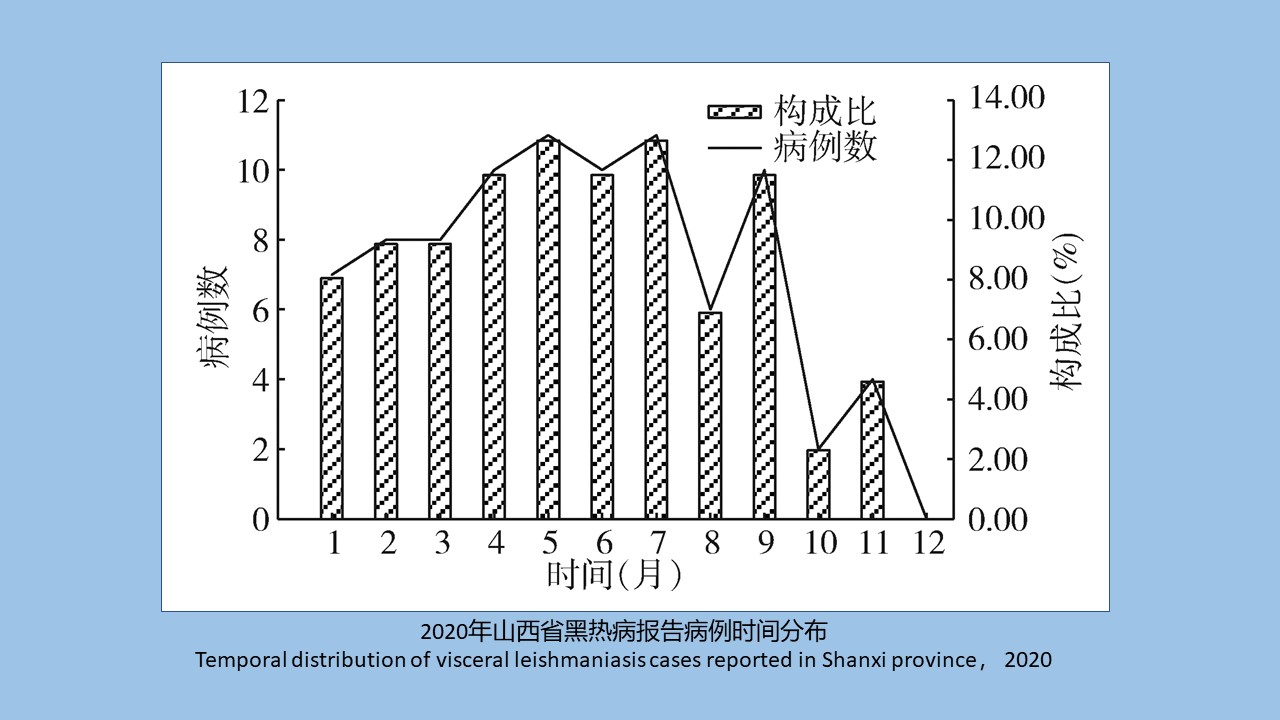
    Objective To analyze the epidemiological characteristics of visceral leishmaniasis (VL) in Shanxi province, China in 2020, and to provide a reference for the effective prevention and control of VL. Methods The data of VL cases reported in Shanxi province in 2020 were collected from the National Disease Reporting Information System and were collated. Excel 2010 software was used to process and plot the data, and SPSS 18.0 software was used to perform one-way analysis of variance for comparison of the number of reported cases between different age groups in different regions. Results In 2020, a total of 87 VL cases were reported in 18 counties of 6 prefectures in Shanxi province, which increased by 85.11% compared with the year 2019, with an annual incidence rate of 0.23/100 000. The cases were mainly distributed in Yangquan (68 cases), Changzhi (7 cases), and Linfen (6 cases). The counties/districts with an annual incidence rate of >1/100 000 included Pingding county, suburban, urban, and mining districts of Yangquan, Xiangyuan county, and Daning county, and 80.46% of the total reported cases happened in these counties/districts. The peaks of reported cases were in May and July, respectively, and no cases were reported in December. Among the reported cases, 57 were males and 30 were females; 25.29% of them were aged <5 years, 32.18% aged 60 and older, and 26.44% aged 40-59; farmers (43.68%) were the main susceptible population, followed by scattered children (26.44%) and unemployed persons (12.64%). Conclusion In 2020, the prevalence of VL increased and the epidemic area became wider in Shanxi province. It is a serious situation and awareness, prevention, and control should be strengthened.
  • Early Warning and Forecast
  • YANG Yi-tao, DU Yu-zhuang, LI Yi-ran, CUN De-jiao, YAO Xiao-yan, LI Lan-hua
    Chinese Journal of Vector Biology and Control. 2022, 33(3): 409-413. https://doi.org/10.11853/j.issn.1003.8280.2022.03.018
    Abstract ( ) Download PDF ( )   Knowledge map   Save
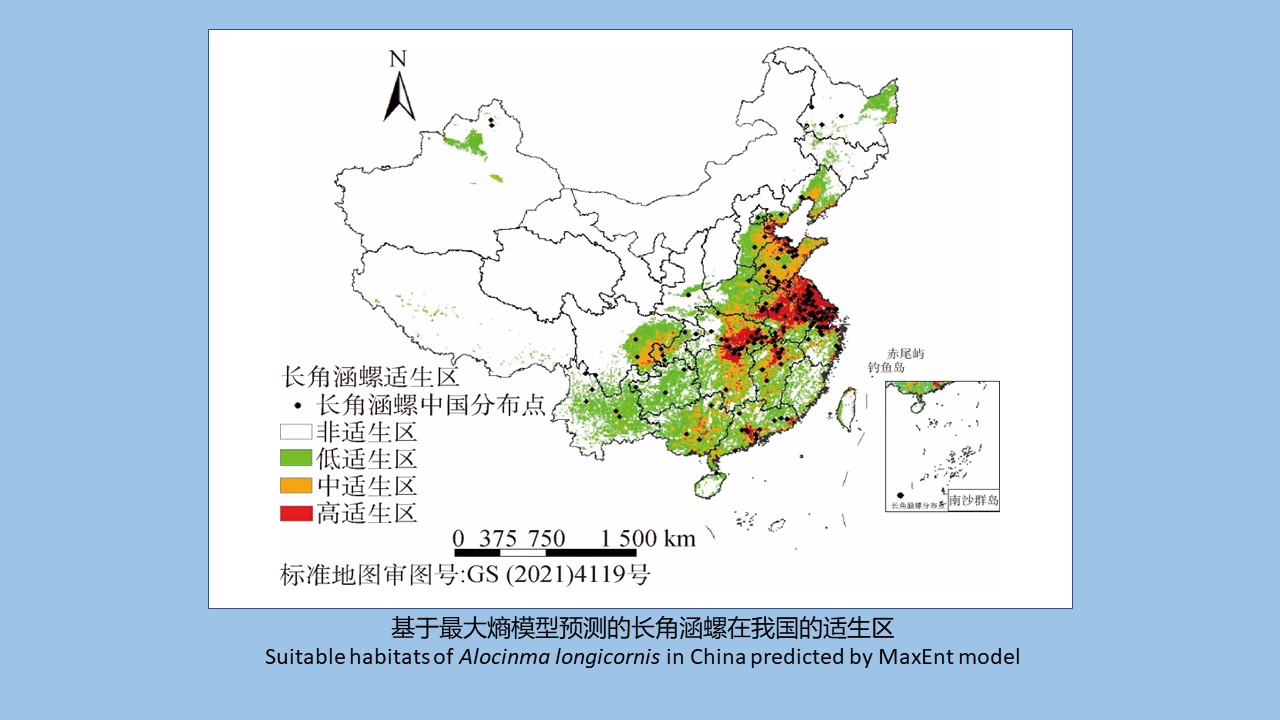
    Objective To analyze the climate and geographical factors affecting the distribution of Alocinma longicornis in China, and to predict its potential habitat areas in China. Methods English and Chinese articles reporting the geographical distribution of A. longicornis in China were retrieved for extraction of the geographic information. The impact of climate and geographical factors on the distribution of A. longicornis was analyzed and the suitable habitats were predicted using a MaxEnt model. Results Elevation (48.80%), precipitation of driest month (22.70%), and normalized difference water index (6.70%) had great influence on the distribution of A. longicornis in China. The habitats with high, medium, and low suitability were 0.306 4, 0.606 0, and 1.010 0 million km2, respectively. Areas with high suitability were mainly located in Zhejiang, Jiangsu, Shanghai, Anhui, Hunan, and Hubei provinces (municipality). Conclusion A. longicornis is mainly distributed in China south of the Qinling-Huaihe Line. Elevation, precipitation of driest month, and normalized difference water index are the main factors affecting its distribution.
  • Investigation
  • CHEN Yong-ming, KANG Dong-mei, LAN Xiao-yu, YAN Dong, LIU Guan-chun, SHI Xian-ming, DU Guo-yi, ZHOU Song, YANG Shun-lin, HOU Zhi-lin, ZHENG Nan, YANG Ai, ZHANG Xiao-lei, ZHANG Jin-yi, SUN Fei, MA Yong, GUO Chao, DAI Hong, WANG Xiao-yan
    Chinese Journal of Vector Biology and Control. 2022, 33(3): 414-417. https://doi.org/10.11853/j.issn.1003.8280.2022.03.019
    Abstract ( ) Download PDF ( )   Knowledge map   Save
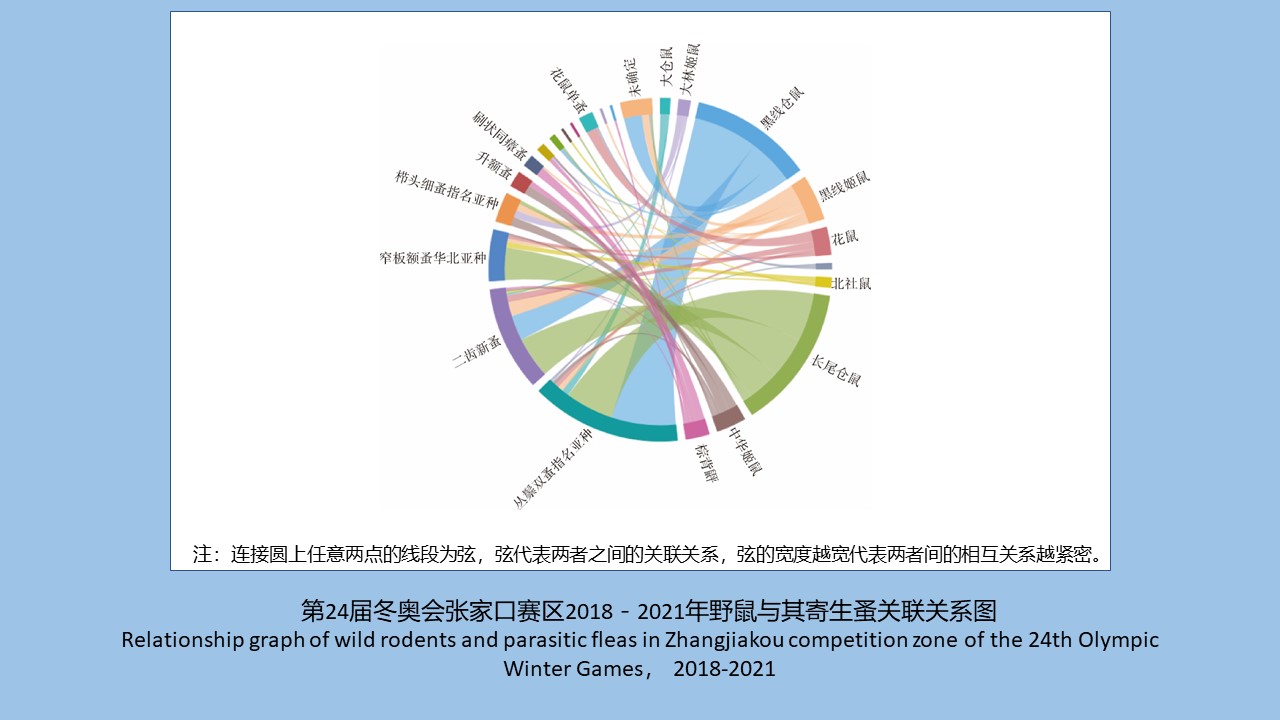
    Objective To investigate the changes in the number and composition of parasitic flea populations on wild rodents in the Zhangjiakou competition zone of the 24th Olympic Winter Games from 2018 to 2021, and to provide a basis for prediction and warning of rodent-borne diseases in the in Chongli district, Zhangjiakou competition zone. Methods Wild rodents were caught by the night traping method in Chongli district, Zhangjiakou city. Parasitic fleas on the rodents were collected and identified. Excel 2010 software was used to summarize the data and perform year-by-year and month-by-month analyses. A chordal graph was used to present the relationship between wild rodents and parasitic fleas. The seasonal distribution of fleas was analyzed by the concentration degree method. Results From 2018 to 2021, a total of 302 rodents were caught in Chongli district, belonging to 11 species of 9 genera under 4 families. All rodent species but Mus musculus carried fleas. A total of 218 fleas were collected, belonging to 13 species of 8 genera under 4 families. The average flea index was 0.72. The most dominant flea species was Amphipsylla vinogradovi, which had the closest relationship with Cricetulus barabensis and was also found on other seven rodent species including C. longicaudatus, Tscherskia triton, and Apodemus agrarius. Strong seasonality (all M=0.72) was observed in total, male, and female parasitic fleas on wild rodents. Conclusion Parasitic fleas on wild rodents in Zhangjiakou competition zone have large quantities, diverse species, and strong seasonality, with a close relationship with C. barabensis. Their population density and structure changes should be a warning in key areas. Attention should be paid to the trend and complications of rodent-borne disease epidemics.
  • HU Yan-hong, WANG Shu-yi, LI Jian-yun, ZHANG Da-yu, FENG Yi-lan
    Chinese Journal of Vector Biology and Control. 2022, 33(3): 418-425. https://doi.org/10.11853/j.issn.1003.8280.2022.03.020
    Abstract ( ) Download PDF ( )   Knowledge map   Save
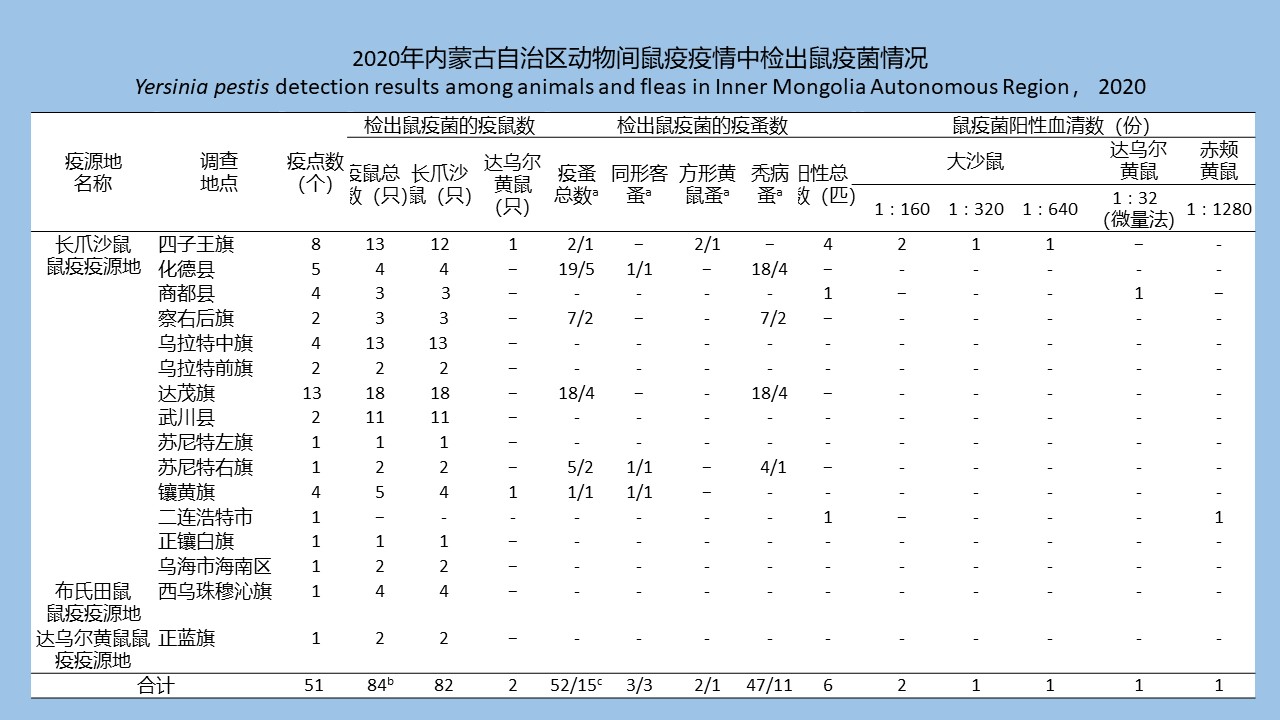
    Objective To analyze the species, quantity and distribution of plague host animals and vector fleas in the Inner Mongolia Autonomous Region (Inner Mongolia), China, and understand the situation of human and animal plague, and to provide a scientific basis for accurate prediction of plague epidemics and formulating control countermeasures. Methods According to the National Plague Surveillance Program and Inner Mongolia Plague Surveillance Program, plague surveillance data from 57 surveillance counties in 12 prefectures (leagues) of Inner Mongolia Autonomous Region in 2020 were collected and sorted out. Descriptive epidemiological methods were used to analyze plague epidemics, host density, and flea index. Results In 2020, there were three human plague cases in Inner Mongolia, with two cases of bubonic plague and one case of intestinal plague. Four types of plague foci of Marmaota sibibirica, Spermophilus dauricus, Microtus brandti, and Meriones unguiculatus covering an area of 6 003 hm2 were investigated, and 22 710 host animals were captured. The main hosts Meriones unguiculatus and Spermophilus dauricus accounted for 79.55% and 15.32% of the total capture rodents, respectively. The flea infestation rate was 30.38%, and the overall flea index was 0.97. The dominant flea species included Citellophilus tesquorum, Nosopsyllus laeviceps, and Xenopsylla conformis, which accounted for 44.92%, 22.28%, and 20.99% of the total population, respectively. A total of 22 451 host animals and 21 821 fleas were examined, and 99 Yersinia pestis strains were isolated from them. The indirect hemagglutination test detected 6 positive samples from 10 671 serum samples of various host animals. Conclusion The situation of human and animal plague in Inner Mongolia is complicated, which is intense in M. unguiculatus plague foci. It is necessary to strengthen plague monitoring and ensure timely detection and emergency preparedness and response.
  • HAN Shi-kang, LIU Yu, WANG Song-lin, CHEN Jian-ping, DENG Yong, WANG Pei-zhang, LUO Fa-mei, YU Yi-xin, QIAN Wei-ping
    Chinese Journal of Vector Biology and Control. 2022, 33(3): 426-429. https://doi.org/10.11853/j.issn.1003.8280.2022.03.021
    Abstract ( ) Download PDF ( )   Knowledge map   Save
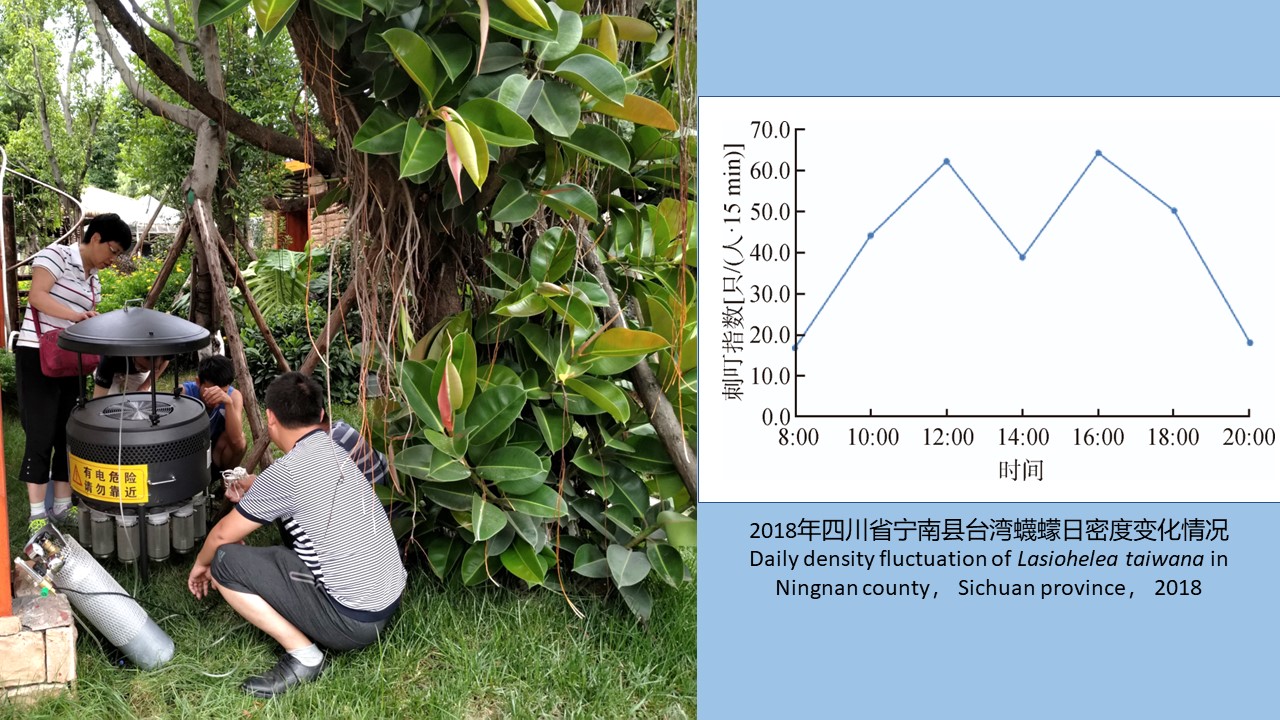
    Objective To investigate the population density and seasonal fluctuation of Lasiohelea taiwana in Ningnan county, Sichuan province, China. Methods Three types of habitats (urban, suburban, and rural areas) were selected as monitoring sites. Using the human trap method, researchers exposed their legs to L. taiwana to induce biting in a fixed time period. The biting data of L. taiwana were recorded, and the biting index was calculated. Furthermore, the meteorological data of Ningnan county were collected and analyzed. Results The daily density of L. taiwana in Ningnan county showed two peaks at 12:00[62.0 midges/(person·15 min)] and 16:00[64.0 midges/(person·15 min)]. In terms of seasonal fluctuation from 2018 to 2019, L. taiwana had not been detected from January to May, and began to appear in late June. Its density reached the first peak in September and the second peak at the end of October. Then it decreased rapidly in November until it was undetectable in December. The overall mean density index from June to November were 85.6 midges/(person·15 min) in 2018 and 52.4 midges/(person·15 min) in 2019. The densities of L. taiwana in different habitats were 183.9 midges/(person·15 min) in rural areas, 117.7 midges/(person·15 min) in suburban areas, and 20.0 midges/(person·15 min) in urban areas; 90.9 midges/(person·15 min) in bushes, 52.4 midges/(person·15 min) on lawns; 18.4 midges/(person·15 min) in the bushes on plains, and 5.8 midges/(person·15 min) in the bushes in hilly areas. Conclusion The daily density variation, seasonal fluctuation, and densities in different habitats of L. taiwana in Ningnan county have been preliminarily mastered, which provides a scientific basis for the control of L. taiwana.
  • LIN Zu-rui, LIN Ying-kun, GUO Xiang-rui, YANG Jie, LI Shi-gang, DONG Chao-liang, CHEN Li-fei, ZHOU Xian-hua, GUAN Gui-qin, SUN Xiao-dong
    Chinese Journal of Vector Biology and Control. 2022, 33(3): 430-433. https://doi.org/10.11853/j.issn.1003.8280.2022.03.022
    Abstract ( ) Download PDF ( )   Knowledge map   Save
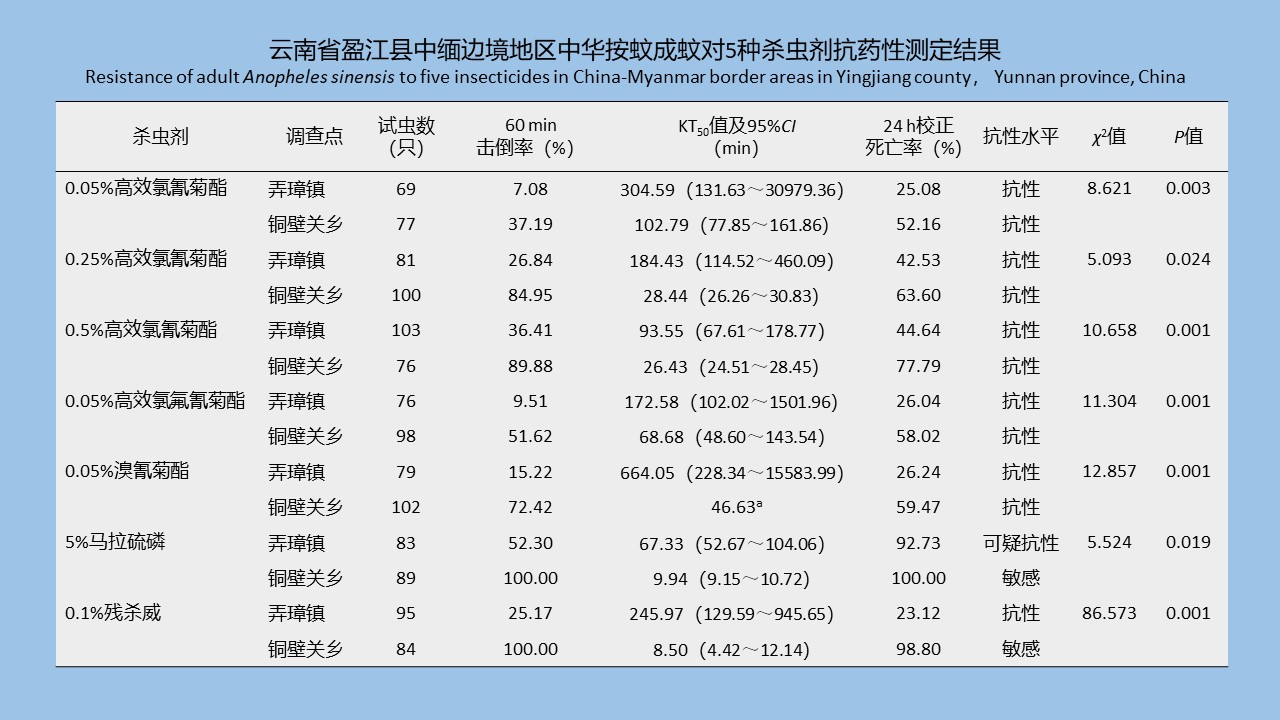
    Objective To investigate the resistance of adult Anopheles sinensis to insecticides in China-Myanmar border areas in Yingjiang county, Dehong Dai and Jingpo Autonomous Prefecture, Yunnan province, China, and to provide a basis for controlling the vectors for re-transmission of malaria after elimination.Methods One study site was selected at each of two townships on China-Myanmar border in Yingjiang county, and non-blood-fed female adult mosquitoes of An. sinensis were collected in cowsheds and brought back to the laboratory. World Health Organization (WHO) exposure tube assay was used to test the resistance of adult An. sinensis against insecticides on the next day. Each dose of insecticide was tested in triplicate for 60-min knockdown rate, half knockdown time, and 24-h corrected mortality. The Chi-square test was used to examined the 24-h corrected mortality between the two study sites. Results A total of 7 doses of 5 insecticides were tested. The 24-h corrected mortality of adult An. sinensis averaged from the two study sites for beta-cypermethrin (0.05%, 0.25%, and 0.5%), lambda-cyhalothrin (0.05%), deltamethrin (0.05%), malathion (5%), and propoxur (0.1%) was 38.62% (resistance), 53.07% (resistance), 61.22% (resistance), 42.03% (resistance), 42.86% (resistance), 96.37% (possible resistance), and 60.96% (resistance), respectively. There were significant differences in 24-h corrected mortality between the two study sites (both P<0.05). The average 24-h corrected mortality in Tongbiguan township was higher than that in Nongzhang township. Conclusion Adult An. sinensis in China-Myanmar border areas of Yingjiang county has generally developed resistance to pyrethroid insecticides, but is sensitive to carbamate and organophosphorus insecticides in some areas. Surveillance of insecticide resistance should be regularly carried out in Yingjiang county. Mixed insecticides, insecticide rotation, and physical mosquito control measures can be used in combination to delay the development of insecticide resistance.
  • GAO Yang-ye, WU Ying, DU Guo-jun, HAN Hui-qiang
    Chinese Journal of Vector Biology and Control. 2022, 33(3): 434-437. https://doi.org/10.11853/j.issn.1003.8280.2022.03.023
    Abstract ( ) Download PDF ( )   Knowledge map   Save
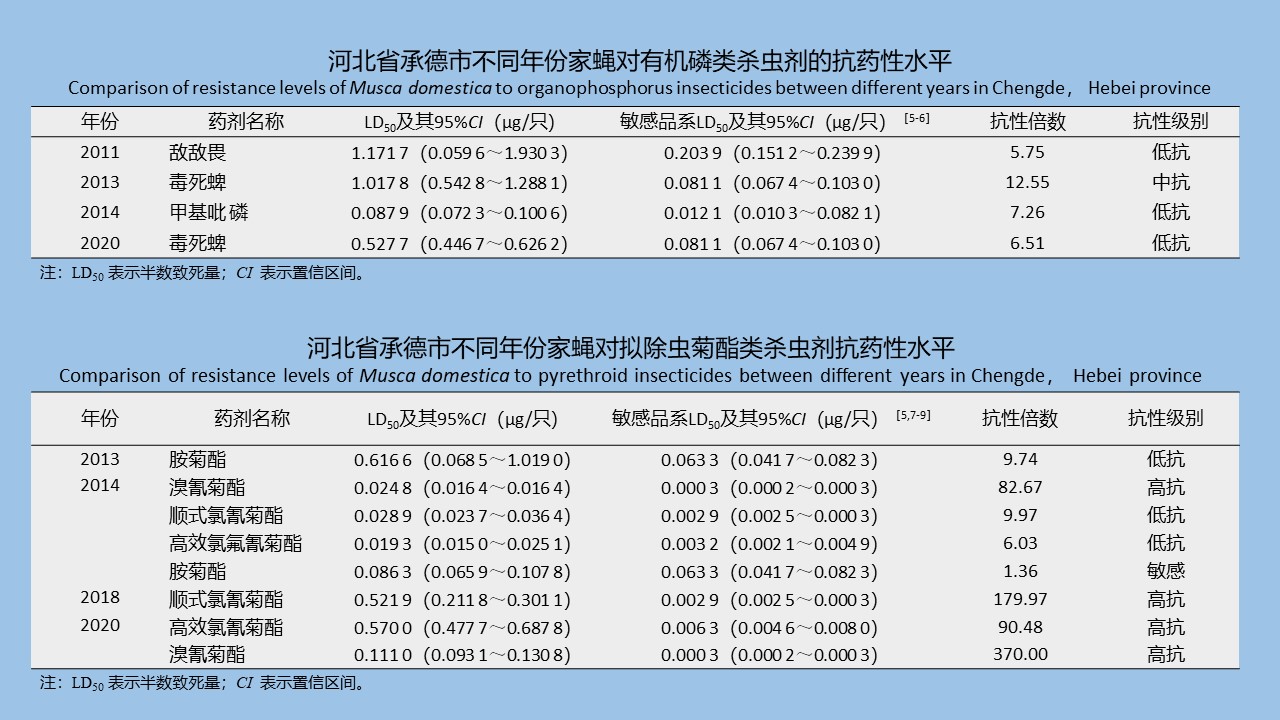
    Objective To investigate the resistance levels of Musca domestica to different types of insecticides in Chengde, Hebei province, China in 2020, to compare the resistance levels with those in the past ten years, and to provide a scientific basis for guiding M. domestica control. Methods The netting method was used to catch M. domestica in five types of habitats, including farmers' markets, restaurants, green belts, urban residential areas, and rural villages, in Chengde in 2020. After reproduction for 1 to 2 generations in the rearing room, the micro-drop method was used to determine the median lethal dose of three commonly used insecticides, i.e., chlorpyrifos, beta-cypermethrin, and deltamethrin. Data Processing System software was used to statistically analyze the laboratory results. A comparative analysis was performed on the resistance levels of M. domestica between the year 2020 and the past ten years. Results In 2020, M. domestica in Chengde had a low resistance level to chlorpyrifos, with a resistance ratio of 6.51, and had high resistance levels to beta-cypermethrin and deltamethrin, with resistance ratios of 90.48 and 370.00. The comparative analysis on the resistance data between the year 2020 and the past ten years revealed that M. domestica in Chengde had been having moderate or low resistance levels to organophosphorus insecticides, and had a rising trend in the overall resistance level to pyrethroid insecticides. Conclusion M. domestica in Chengde, Hebei province has developed different levels of resistance to different types of insecticides in the past ten years. Therefore, the insecticides should be reasonably and accurately used to scientifically and effectively inhibit and delay the development of M. domestica resistance.
  • Control Experiment
  • ZHENG Feng-yun, CHEN Feng-ling, HUANG He
    Chinese Journal of Vector Biology and Control. 2022, 33(3): 438-441. https://doi.org/10.11853/j.issn.1003.8280.2022.03.024
    Abstract ( ) Download PDF ( )   Knowledge map   Save
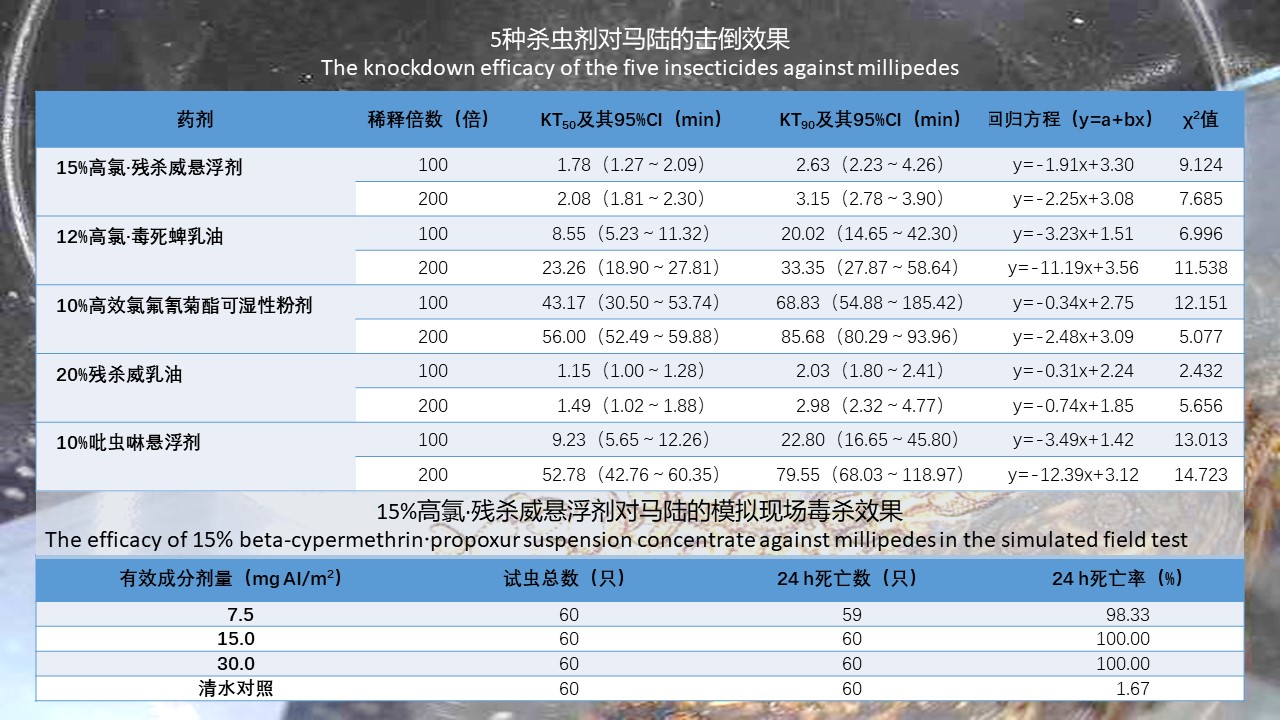
    Objective To investigate the killing efficacy of several commonly used public health insecticides for the control of millipedes, and to provide scientific evidence for millipede control. Methods The insecticide screening test was performed to determine the toxicity of five insecticides with different insecticidal mechanisms to millipedes. The median lethal dose (LD50) of 15% beta-cypermethrin·propoxur suspension concentrate (SC) was estimated, followed by simulated filed testing to verify its killing efficacy. Excel 2016 and SPSS 19.0 softwares were used for data analysis. The Chi-squared test was used to compare the knockdown effects of different insecticides on millipedes. Results The insecticide screening test showed that the 100 fold dilutions of 15% beta-cypermethrin·propoxur SC, 12% beta-cypermethrin·chlorpyrifos emulsifiable concentrate (EC), 10% lambda-cyhalothrin wettable powder, 20% propoxur EC, and 10% imidacloprid SC had:median knockdown times (KT50) being 1.78, 8.55, 43.17, 1.15, and 9.23 min, respectively; times taken to knockdown 90% of millipedes (KT90) being 2.63, 20.02, 68.83, 2.03, and 22.80 min, respectively; 2-h mortality rates after insecticide application being 76.25%, 56.25%, 73.33%, 56.67%, and 46.67%, respectively; and 24-h mortality rates all being 100%. The 200 fold dilutions of the five insecticides had:KT50 being 2.08, 23.26, 56.00, 1.49, and 52.78 min, respectively; KT90 being 3.15, 33.35, 85.68, 2.98, and 79.55 min, respectively; 2-h mortality rates being 65.00%, 47.50%, 68.33%, 40.00%, and 36.67%; and 24-h mortality rates all being 100%. The laboratory toxicity test showed that the LD50 of 15% beta-cypermethrin·propoxur SC against millipedes was 5.42 mg AI/m2. The simulated field test showed that the 24-h mortality rates of millipedes with 15% beta-cypermethrin·propoxur SC at 7.5, 15.0, and 30.0 mg AI/m2 were 98.33%, 100%, and 100%, respectively. Conclusion Among the five commonly used insecticides, 15% beta-cypermethrin·propoxur SC has relatively excellent efficacy in killing millipedes, which provides a reference for insecticide selection to control millipedes in public environment.
  • Review
  • WANG Dong, PEI Zhou-yang, WANG Jie, WEI Ling, ZHANG Xiao, WANG Yong-ming, XIN Zheng
    Chinese Journal of Vector Biology and Control. 2022, 33(3): 442-445. https://doi.org/10.11853/j.issn.1003.8280.2022.03.025
    Abstract ( ) Download PDF ( )   Knowledge map   Save
    As nanotechnology progresses in interdisciplinary fields, it has made breakthroughs in the field of pest control, which lays the foundation for reducing application and increasing efficiency of pesticides to achieve green pest control. This paper summarizes the application methods, modes of action, and advantages of nanopesticides, as well as the looks ahead the development trend of nanotechnology in pest control. The limitations of nanopesticide research are also presented. It provides a theoretical basis and practical guidance for efficient and green pest control using the emerging nanotechnology.
  • XU Peng, ZHANG Xue-fei, ZHAO Zhi-jun, MA Ying
    Chinese Journal of Vector Biology and Control. 2022, 33(3): 446-452. https://doi.org/10.11853/j.issn.1003.8280.2022.03.026
    Abstract ( ) Download PDF ( )   Knowledge map   Save
    The excrement of wild animals contains a complex and huge microbial community,which plays an important role in the survival history of wild animals. Studying fecal samples can provide an understanding of the species and composition of microorganisms in wild animals,the diversity and identity of microorganisms,and the symbiotic and evolutionary relationships between microorganisms and hosts,which provides a theoretical basis for the prevention and diagnosis of animal-borne infectious diseases and shows academic value and significance for choosing the future research focus and development trend of relevant disciplines. This paper summarizes the research progress in metagenomics and its application in fecal microorganisms of wild animals,and prospects the future development trend and research focus,in order to provide theoretical and technical support for the prevention and diagnosis of diseases caused by contact with wild animals.