20 February 2022, Volume 33 Issue 1
    

  • Select all
    |
    Expert Forum
  • LIU Qi-yong
    Chinese Journal of Vector Biology and Control. 2022, 33(1): 1-7. https://doi.org/10.11853/j.issn.1003.8280.2022.01.001
    Abstract ( ) Download PDF ( )   Knowledge map   Save
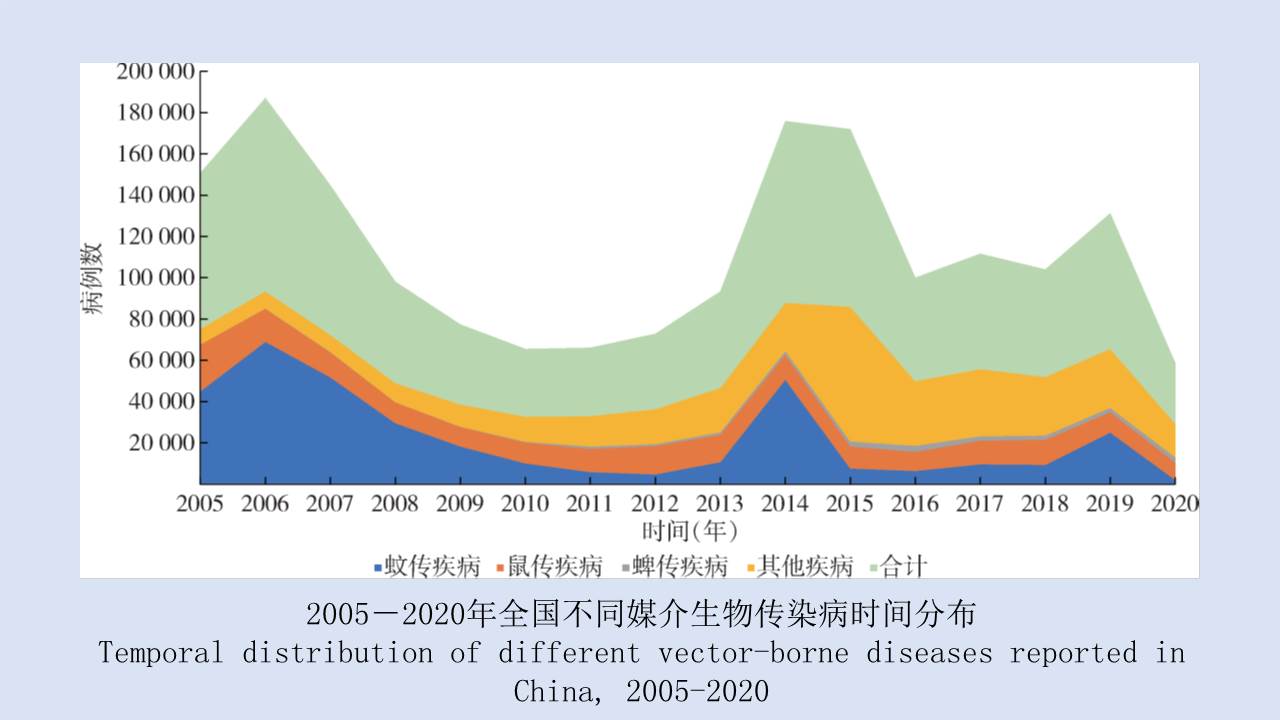
    Objective To analyze the data of reported cases of vector-borne diseases (VBDs) in China in 2005-2020, and to investigate the epidemic characteristics and trend of VBDs, challenges in prevention and control, and related coping strategies. Methods The descriptive epidemiological method was used to analyze the data of reported cases of VBDs in China in 2005-2020, and the challenges in prevention and control and related coping strategies were determined based on the epidemic characteristics of VBDs, current policies, and related literature domestic and abroad. Results A total of 905 092 cases of 14 VBDs were reported in China in 2005-2020, among which malaria, scrub typhus, and hemorrhagic fever with renal syndrome (HFRS) accounted for 66.94%, the ten notifiable VBDs accounted for 76.01%. A total of 5 076 death cases were reported, among which the death cases due to Japanese encephalitis (JE), HFRS, severe fever with thrombocytopenia Syndrome (SFTS), and malaria accounted for 93.26%. The incidence of VBDs fluctuated and decreased in 2005-2020. The number of cases showed two significant peaks in 2006 and 2014-2015. The Mann-Kendall trend test showed a significant trend of reduction in JE, malaria, typhus, and leptospirosis (P<0.01) and a significant trend of increase in SFTS and scrub typhus (P<0.01). At the same time, the incidence of VBDs showed marked seasonality with a peak in October. About 2 165 districts/counties reported VBDs annually, mainly in the east of the Heihe-Tengchong line. The Mann-Kendall trend test showed that the number of districts/counties reporting such cases tended to increase with no significance (P=0.367). Over the past 16 years, the number of cases of vector-borne diseases tended to decrease in northeast China, while this number tended to increase in southwest China. Different diseases had different ages of onset, and the peak age of onset of VBDs was 20-44 years. The male population tended to have a higher incidence rate than the female population. Conclusion The number of cases of VBDs tends to decrease with fluctuation in China, but it still remains at a relatively high level, and the epidemic area tends to expand, with continuous increases in the incidence rate or mortality rate of some VBDs. As for the new challenges in the control of VBDs, it is necessary to implement related strategies and measures including the integrated vector management and sustainable vector management, so as to further reduce the morbidity and mortality of VBDs and achieve the targets and goals of Health China and Global Vector Control Strategies.
  • Special Investigation on Dengue Vectors Topics
  • LIU Xiao-bo, YUE Yu-juan, JIA Qing-chen, ZHAO Ning, GUO Yu-hong, ZHAO Chun-chun, LIANG Ying, WANG Jun, WU Hai-xia, LIU Qi-yong
    Chinese Journal of Vector Biology and Control. 2022, 33(1): 8-15. https://doi.org/10.11853/j.issn.1003.8280.2022.01.002
    Abstract ( ) Download PDF ( )   Knowledge map   Save
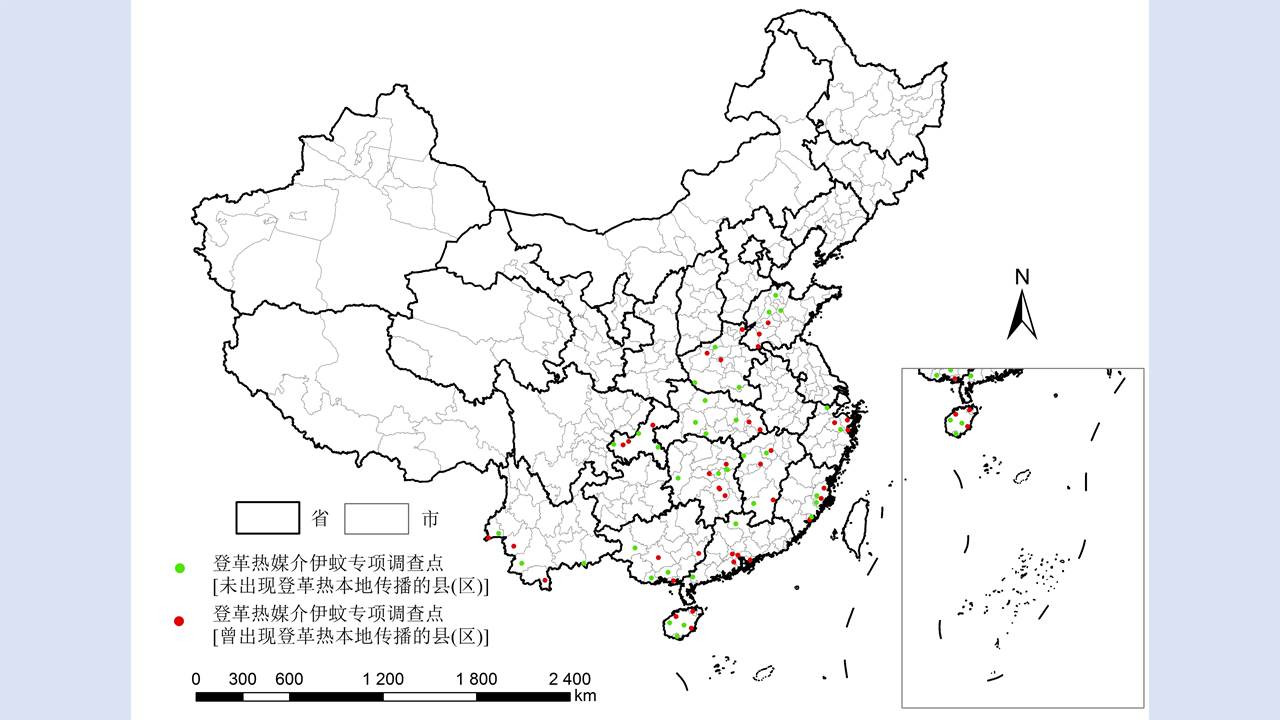
    Objective To analyze the ecological surveillance results of Aedes vector in 12 provinces (autonomous regions or municipalities) in China in 2020-2021, and to provide a scientific basis for risk assessment, prediction, early warning, and control of Aedes-borne diseases. Methods The surveillance data of larval and adult Aedes densities at the special investigation sites of Aedes vector in 12 provinces (autonomous regions or municipalities) in China were collected and statistically analyzed by SPSS 18.0 software. Results In 2020-2021, the mean Breteau index (BI) was >10.00 in Hainan, Zhejiang, and Hunan provinces and >5.00 in Guangxi Zhuang Autonomous Region (Guangxi) and Yunnan, Henan, and Shandong provinces. The mean mosq-ovitrap index (MOI) was >5.00 in Guangxi, Guangdong, Hainan, and Shandong. The mean net trap index was ≥2.00 mosquitoes/net·hour in Henan, Hubei, and Shandong and >1.00 mosquito/net·hour in Guangxi, Guangdong, Hainan, Yunnan, Fujian, and Hunan. There were no statistical differences in BI, MOI, and net trap index between class I provinces (Guangdong, Hainan, Guangxi, Fujian, Yunnan, and Zhejiang) and other classes of provinces (t=0.766, 1.030, and -0.745, all P>0.05). The mean BI in 2020-2021 was higher than that in 2017-2019 in Guangdong, Guangxi, Yunnan, and Shandong, but lower than that in the three years in other provinces. The Aedes vector was found to be active throughout the year at the investigation sites in Guangdong, Hainan, Guangxi and Yunnan, from March to December in Fujian, Zhejiang, and Hubei, and from April to November in Chongqing municipality, Shandong and Henan, and from April to December in Jiangxi. The results of BI and MOI were inconsistent in Yunnan, Guangxi, and Hubei. During the study period, the BI of Aedes vector was >5.00 in areas where dengue outbreaks and local cases occurred, and >10.00 in Ruili city in Yunnan, Cenxi city of Wuzhou in Guangxi, and Sanjiao town of Zhongshan in Guangdong; the net trap index in Cenxi city of Guangxi was >2.00 mosquitoes/net·hour. Conclusion In 2020-2021, the mean Aedes density in the provinces with local cases of dengue fever in China was high, with spatio-temporal heterogeneity among different regions. It is suggested that in the local transmission areas of dengue in China, it is necessary to adjust moderately annual surveillance periods, to continuously strengthen Aedes vector surveillance and risk assessment, and to systematically sort out the ecological investigation results of Aedes vector, so as to provide a scientific basis for the revision and improvement of Aedes vector surveillance scheme and the outbreak control of Aedes-borne diseases in China.

  • SUN Qin-tong, HAN Ying-nan, LIU Yan, WANG Xue-jun, LIU Feng, LAI Shi-hong, JING Xiao
    Chinese Journal of Vector Biology and Control. 2022, 33(1): 16-20. https://doi.org/10.11853/j.issn.1003.8280.2022.01.003
    Abstract ( ) Download PDF ( )   Knowledge map   Save
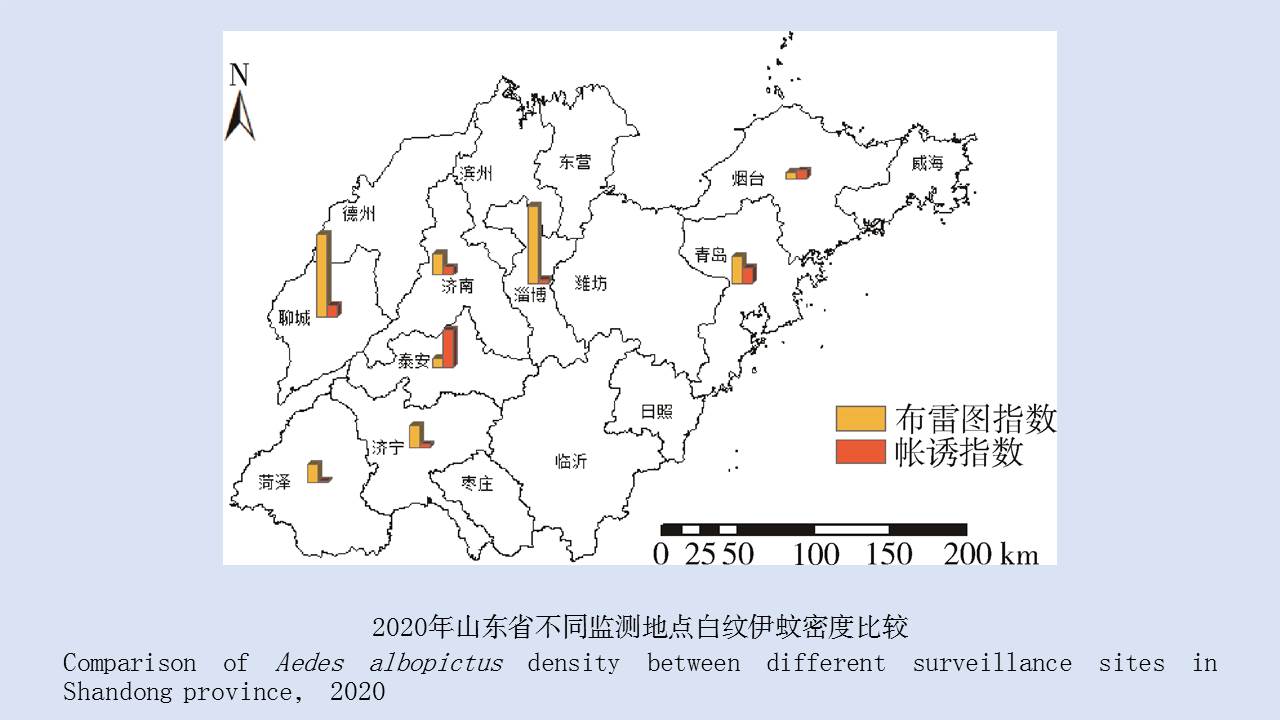
    Objective To analyze the ecological surveillance data of Aedes albopictus, the dengue vector, in Shandong province, China in 2020, and to provide a scientific basis for effective prevention and control of dengue fever. Methods From April to November 2020, Ji’nan, Qingdao, Zibo, Yantai, Jining, Tai’an, Liaocheng, and Heze were selected from the whole province as surveillance sites. The Breteau index (BI) method was used to monitor mosquito larvae, and the double-layered mosquito net method was used to monitor adult mosquitoes. Excel 2010 software was used for data colletion, and SPSS 19.0 software was used for data analysis. The Chi-square test was used to analyze the differences in Aedes vector breeding among various habitats and standing water types. Results In 2020, the mean BI of Ae. albopictus in Shandong province was 9.64, and the mean net trap index was 2.58 mosquitoes/net·hour. In terms of habitat types, urban residential areas had the highest BI (12.22), and used tire dumping grounds/waste stations/construction sites had the highest net trap index (3.59 mosquitoes/net·hour). Both mosquito surveillance methods showed that the density of Ae. albopictus was relatively high from early July to late September. The positive results of the BI method first appeared in late April; BI reached the highest value (27.17) in mid-August and became 0 in late November. The positive results of the double-layered mosquito net method first appeared in mid-May; the net trap index reached the highest value in early August and became 0 in early November. In terms of standing water types, basements/garbage in parking lots and green belts/small puddles had the highest positive rate of Aedes mosquitoes. The eight monitoring sites in Shandong province had different Ae. albopictus densities. Liaocheng had the highest BI (19.60) and Yantai had the lowest BI (1.47). Tai’an had the highest net trap index (8.91 mosquitoes/net·hour) and Heze had the lowest value (0.29 mosquitoes/net·hour). Conclusion The density of Ae. albopictus is high in Shandong province from early July to late September. It is necessary to strengthen the mosquito control in residential areas and used tire dumping grounds/waste stations/construction sites. Basements/garbage in parking lots and green belts/small puddles are important breeding sites for Ae. albopictus. People in areas with high surveillance density of Ae. albopictus should raise awareness and take timely measures to reduce the risk of local dengue outbreak.
  • LI Tian-qi, LIU Qin-mei, WU Yu-yan, LUO Ming-yu, WANG Jin-na, GONG Zhen-yu
    Chinese Journal of Vector Biology and Control. 2022, 33(1): 21-24. https://doi.org/10.11853/j.issn.1003.8280.2022.01.004
    Abstract ( ) Download PDF ( )   Knowledge map   Save
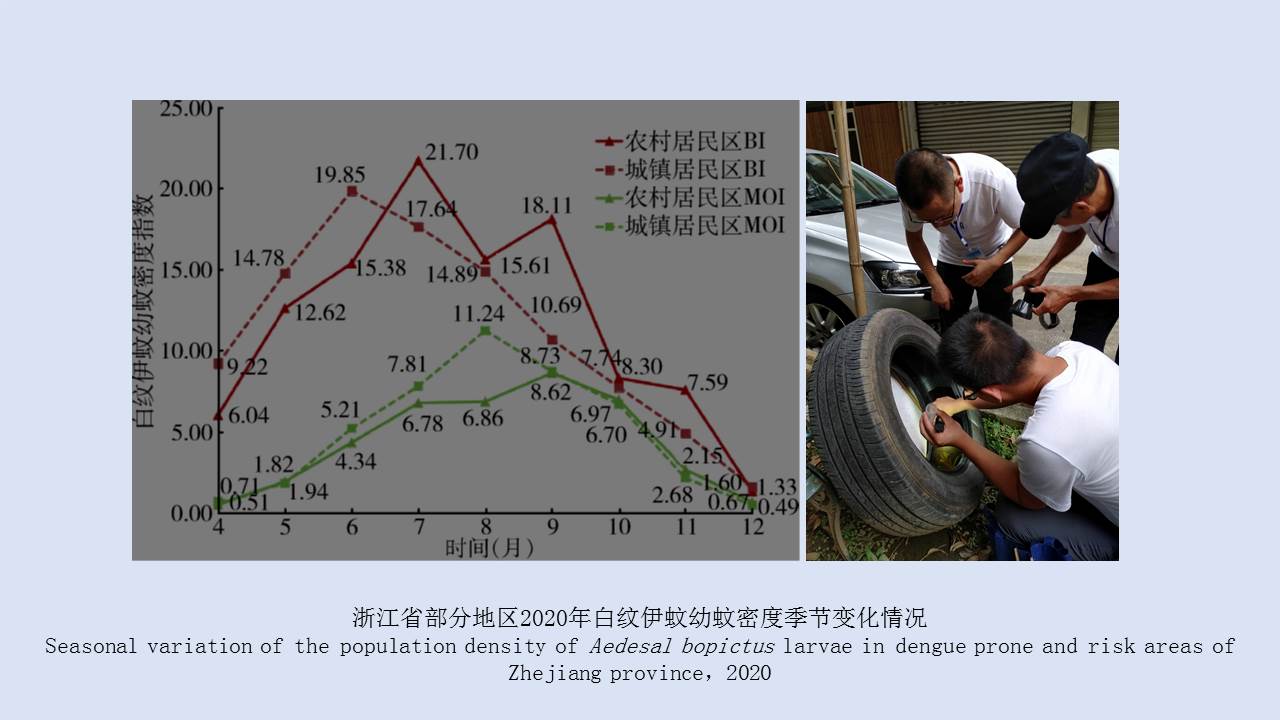
    Objective To investigate the population density and seasonal variation of Aedes albopictus larvae in dengue prone and risk areas of Zhejiang province, China, 2020, and to provide basic data for the surveillance, prevention, and control of dengue fever. Methods Six surveillance sites were selected based on the presence or absence of local dengue fever cases in the past. In April to December 2020, mosq-ovitrap and Breteau index (BI) were used to monitor the population density of Ae. albopictus every 10 days of each month; Excel 2010 software was used for data arrangement, and GraphPad Prism 6 software was used to analyze the difference and correlation between mosq-ovitrap index (MOI) and BI. Results The mean MOI was 4.75, and the positive mosq-ovitraps containing both eggs and larvae had the highest proportion of 45.52%; the surveillance sites with local dengue fever cases in the past had a significantly higher MOI than those without local cases (5.72 vs. 3.73, χ2=64.050, P <0.05). The mean BI was 11.64, and idle containers (bowls, bottles, jars, and tanks) had the highest proportion of 56.13%; the surveillance sites with local dengue fever cases in the past had a significantly higher BI than those without local cases (15.54 vs. 7.63, χ2=391.800, P<0.05). MOI was positively correlated with BI in rural residential areas (r=0.739, P<0.05), while there was no statistical correlation between MOI and BI in urban residential areas (r=0.499, P=0.171). Conclusion There is a risk of dengue fever transmission in April-November in Zhejiang province, and the investigation results show that both MOI and BI can reflect the population density of Ae. albopictus larvae, which can be used to monitor the population density of dengue vector Aedes.
  • WEI Chao, MA Hai-fang, LIAO Ning, XIONG Qi-meng
    Chinese Journal of Vector Biology and Control. 2022, 33(1): 25-29. https://doi.org/10.11853/j.issn.1003.8280.2022.01.005
    Abstract ( ) Download PDF ( )   Knowledge map   Save
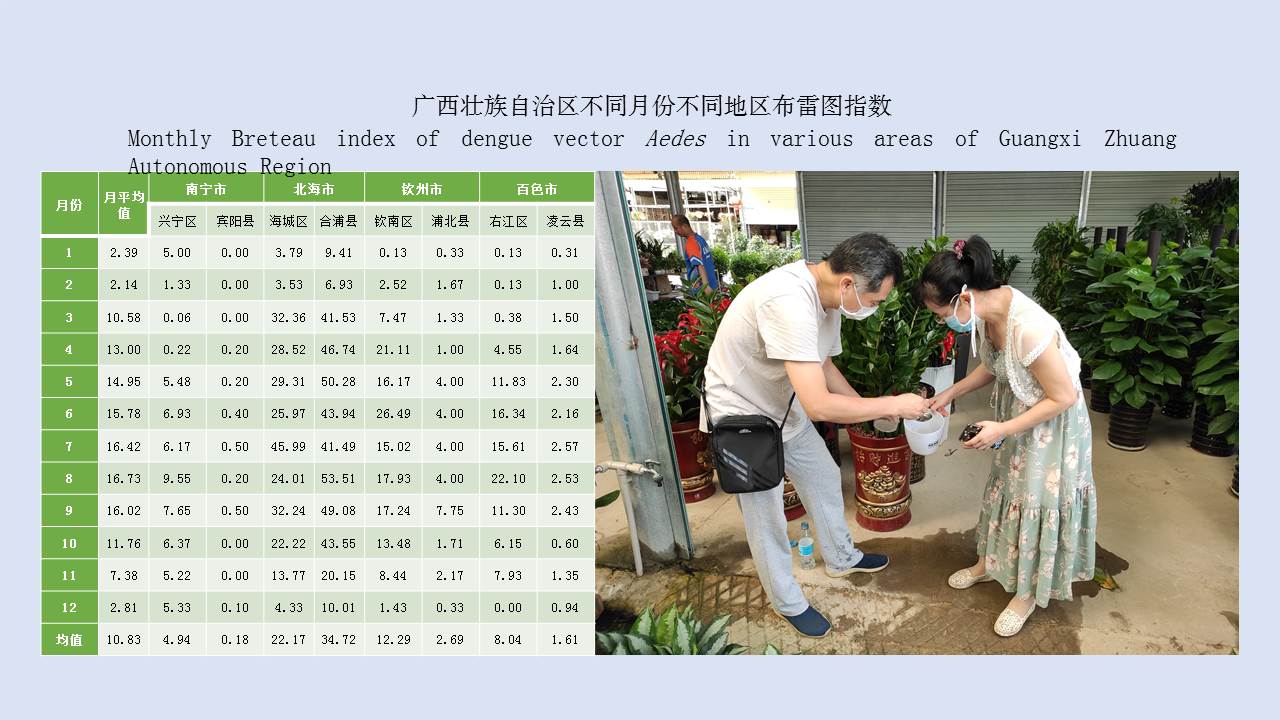
    Objective To investigate the dengue vector Aedes density and seasonal fluctuation in Nanning, Beihai, Qinzhou, and Baise, Guangxi Zhuang Autonomous Region, China, and to provide a strong basis for the scientific prevention of dengue fever. Methods According to the "Special investigation of dengue vector Aedes" issued by Chinese Center for Disease Control and Prevention, the Breteau index (BI) method, the mosq-ovitrap index (MOI) method, and the double-layered mosquito net method were used to monitor the density of larval and adult Ae. albopictus mosquitoes in 2020-2021. ArcGIS 10.5 software was used to plot the spatial distribution of surveillance sites of vector Aedes. SPSS 16.0 software and the one-sample t-test were used to perform the statistical analysis. Results In 2020-2021, the overall mean BI, MOI, and net trap index at all surveillance sites were 10.83, 9.39, and 2.04 mosquitoes/net·hour, respectively. According to the statistical analysis, At most surveillance sites, there were statistical differences between BI and the overall mean BI (all P<0.05), between the net trapping index and the overall mean net trap index (all P<0.05). At half of the surveillance sites, there were no statistical difference between MOI and the overall mean MOI (all P>0.05). The BI at all surveillance sites was higher than 5.00 from March to November, and reached the peak value (16.73) in August. The MOI at all surveillance sites was higher than 5.00 from April to October, and reached the peak value (20.86) in July. The net trap index at all surveillance sites was higher than 2.00 mosquitoes/net·hour from May to September, and reached the peak value (4.57 mosquitoes/net·hour) in July. Conclusion The density of Aedes mosquitoes in Guangxi Zhuang Autonomous Region is at a relatively high level. The results suggested it is urgent to carry out the prevention and control of adult Aedes mosquitoes from July to August and the breeding sites cleaning of Aedes larvae from August to September, so as to control the mosquito density below the safety threshold and reduce the risk of dengue outbreak.
  • ZHAO Chun-chun, ZHOU Xin-xin, LI Wen-yu, LUN Xin-chang, LIU Xiao-bo, WU Hai-xia, WANG Jun, LIU Qi-yong, MENG Feng-xia
    Chinese Journal of Vector Biology and Control. 2022, 33(1): 30-37. https://doi.org/10.11853/j.issn.1003.8280.2022.01.006
    Abstract ( ) Download PDF ( )   Knowledge map   Save
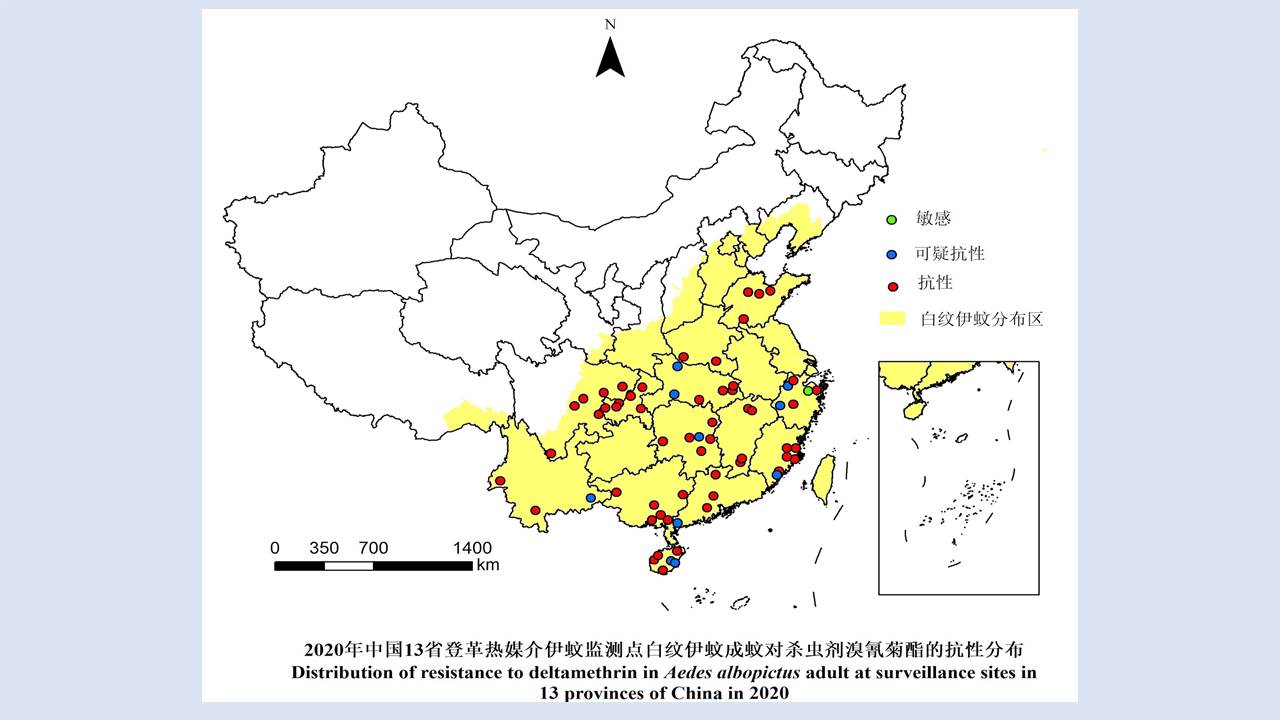
    Objective To investigate the resistance level of Aedes albopictus against some commonly used insecticides in dengue endemic provinces of China, and to provide guidance for the proper usage of insecticides and epidemic prevention and control. Methods Excel 2016 software was used to collect and sum up the bioassay data of Ae. albopictus resistance to commonly used insecticides from 80 surveillance sites in 13 provinces in China. The WHO tube method was used to monitor the resistance of adult mosquitoes against 9 insecticides, and larval dip method was used to monitor the resistance of larvae mosquitoes against 3 insecticides. According to the Implementation Plan for National Vector Surveillance (2016), the resistance level was statistically analyzed and mapped using ArcGIS 10.3 software. Results The resistance of Ae. albopictus was monitored at 80 surveillance sites in China in 2020. For pyrethroid insecticides, Ae. albopictus adults developed resistance to deltamethrin, permethrin, beta-cypermethrin and beta-cyhalothrin at 83.08% (54/65), 77.97% (46/59), 87.30% (55/63),and 79.31% (46/58) of the surveillance sites, respectively. For carbamate insecticides, Ae. albopictus adults developed resistance to propoxur in 1.49% (1/67) sites, while none of the 61 sites showed resistance to bendiocarb. For organophosphorus insecticides, the Ae. albopictus adults at the 6.45% (4/62) surveillance sites developed resistance to malathion, while the 52 and 59 sites did not develop resistance to fenitrothion and chlorpyrifos. Ae. albopictus larvae at 93.48% (43/46), 28.30% (15/53), and 25.45% (14/55) of the sites showed medium or high resistance to pyriproxyfen, propoxur and temephos, respectively. Conclusion The resistance level of adult Ae. albopictus to pyrethroid insecticides and larva to pyriproxyfen were serious in dengue endemic and risk areas in China. However, both adult and larva were more susceptible to carbamate and organophosphorus insecticides at most of surveillance sites. Local authorities and program managers should adjust their insecticide use planning for Aedes mosquito control and dengue prevention and control according to the current insecticide resistance status.
  • ZHENG Yu-ting, YANG Chun-mei, YANG Ming-dong, JIANG Jin-yong
    Chinese Journal of Vector Biology and Control. 2022, 33(1): 38-43. https://doi.org/10.11853/j.issn.1003.8280.2022.01.007
    Abstract ( ) Download PDF ( )   Knowledge map   Save
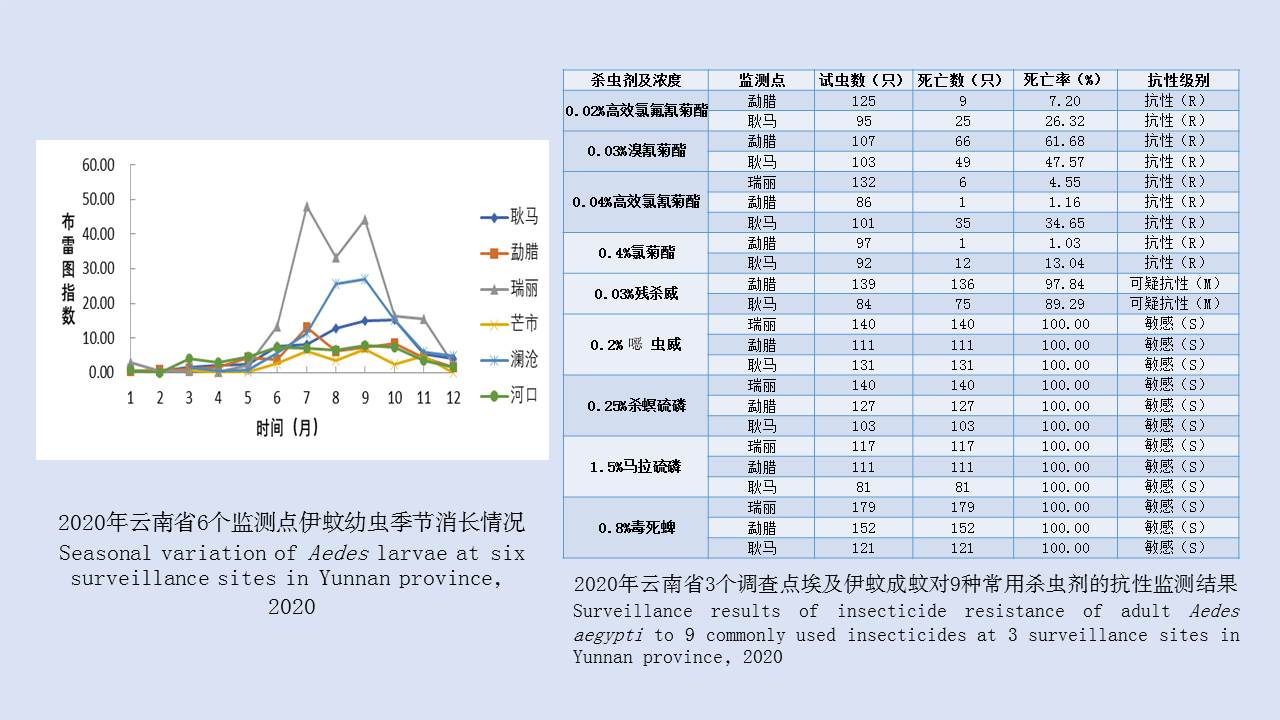
    Objective To investigate the population density and insecticide resistance of dengue vector Aedes in Yunnan border region of China, and to provide a scientific basis for rational use of insecticides to control dengue fever. Methods In 2020, Breteau index (BI) method was used to monitor the population density of dengue vector Aedes in residential areas of Ruili, Gengma, Mengla, Lancang, Hekou, and Mangshi in Yunnan border region, at a frequency of once a month in January-April and December and twice a month from May to November; the adult mosquito contact tube method was used to detect the resistance of adult Ae. aegypti and Ae. albopictus to nine insecticides, i.e., lambda-cyhalothrin, deltamethrin, beta-cypermethrin, permethrin, propoxur, bendiocarb, fenitrothion, malathion, and chlorpyrifos. Results Aedes larvae were active all year round at the field investigation sites, with the peak of BI in July-September; Of the six border counties and county-level cities, Ruili city had the highest mean BI of 15.62 and Mangshi city had the lowest mean BI of 3.03. Both Ae. aegypti and Ae. albopictus reached resistance level to lambda-cyhalothrin and permethrin and were sensitive to bendiocarb, malathion, and chlorpyrifos. Conclusion There is a high population density of dengue vector Aedes in Yunnan border region, and they have developed resistance to both lambda-cyhalothrin and permethrin. It is suggested that relevant departments should strengthen the surveillance of the density and insecticide resistance level of dengue vector Aedes larvae and guide the rational use of insecticides to slow down the development of insecticide resistance.
  • TU Tao-tian, XIAO Han-sen, MENG Feng-xia, LIU Qi-yong, LIU Xiao-bo, HE Ya-ming, JI Heng-qing
    Chinese Journal of Vector Biology and Control. 2022, 33(1): 44-47. https://doi.org/10.11853/j.issn.1003.8280.2022.01.008
    Abstract ( ) Download PDF ( )   Knowledge map   Save
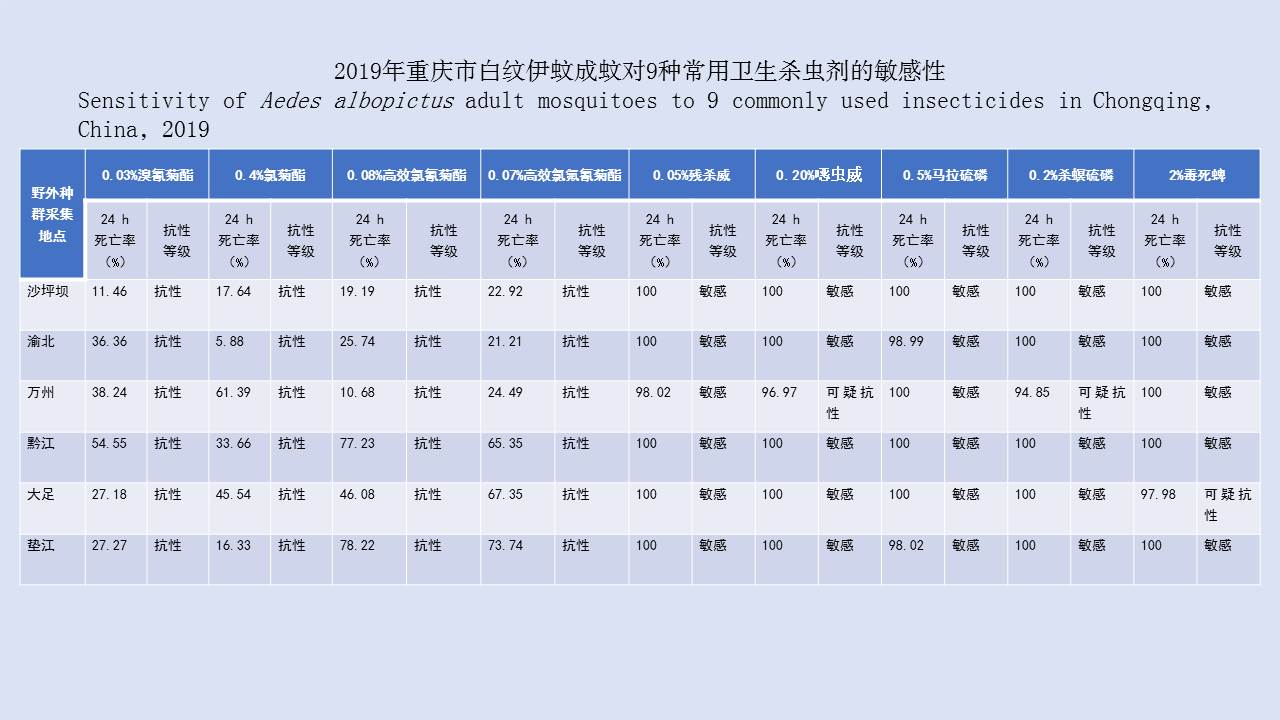
    Objective To investigate the resistance of Aedes albopictus to commonly used insecticides, after control of a dengue fever outbreak in Chongqing, China, 2019, and to provide a basis for controlling mosquito-borne diseases including dengue fever and Aedes vector. Methods From May to October, 2020, Ae. albopictus mosquitoes were collected from parks or waste tire piles in 6 districts (counties) of Chongqing and were reared for 1-2 generations in laboratory, and the larval dipping method and the adult exposure tube method were used for insecticide resistance surveillance. Results Ae. albopictus larvae from each investigation site of Chongqing had varying degrees of sensitivity to commonly used insecticides, with a resistance ratio of 0.46-7.32. The resistance ratio was 0.46-4.92 for temephos and 0.82-7.32 for propoxur. Adult Ae. albopictus mosquitoes from each investigation site of Chongqing developed varying degrees of resistance to deltamethrin, permethrin, beta-cypermethrin, and lambda-cyhalothrin, with a 24-hour death rate of 5.88%-78.22%. The adult Ae. albopictus mosquitoes in the field of Wanzhou district developed suspected resistance to bendiocarb and fenitrothion, and those in the field of Dazu district developed suspected resistance to chlorpyrifos; the adult Ae. albopictus mosquitoes in the field of the remaining investigation sites were sensitive to propoxur, bendiocarb, malathion, fenitrothion, and chlorpyrifos. Conclusion Ae. albopictus adult mosquitoes from each investigation site of Chongqing develop resistance to pyrethroids, and Ae. albopictus larvae from some investigation sites develop a low level of resistance to temephos and propoxur. It is recommended to regularly monitor the resistance level and changing trend of Ae. albopictus and to select corresponding insecticide use strategies according to the insecticide resistance of Ae. albopictus at different developmental stages.
  • Experimental Study
  • JIANG Hong-xue, YAO Dan-dan, LIN Si-liang, FENG Zhi-yong
    Chinese Journal of Vector Biology and Control. 2022, 33(1): 48-53. https://doi.org/10.11853/j.issn.1003.8280.2022.01.009
    Abstract ( ) Download PDF ( )   Knowledge map   Save
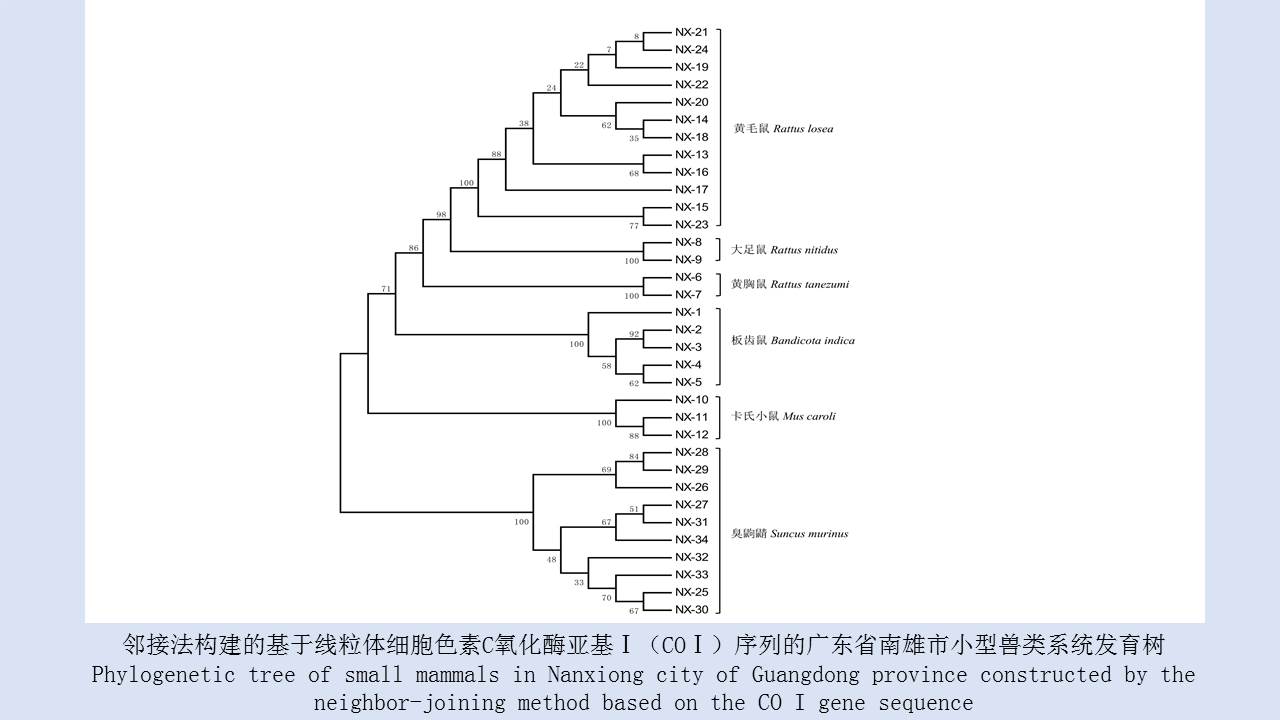
    Objective To investigate the reliability of different DNA barcoding genes in identifying small mammals by using four mitochondrial genes to identify the species of farmland rodent pests in Nanxiong city of Guangdong province, China. Methods A total of 110 samples of mouse-like rodents were captured in the farmland of Zhuji town in Nanxiong city in 2019. Genomic DNA extraction was performed for some of these samples, and universal primers were used for the amplification and sequencing of cytochrome c oxidase subunit Ⅰ (COⅠ), cytochrome B (Cytb), 16S rRNA, and mitochondrial DNA control region (D-loop) gene fragments. Rodent species was identified based on homology alignment, genetic distance analysis, and phylogenetic tree construction, and the identification results were compared with the results of conventional morphological identification. Results The DNA barcoding analysis of the four gene sequences showed that the samples belonged to 6 species in 4 genera, 2 families, and 2 orders. The D-loop gene bands of Suncus murinus were not amplified, and the Cytb gene sequence of S. murinus and the 16S rRNA gene sequence of Rattus losea were not correctly identified by BLAST. Intraspecific genetic distance was smaller than interspecific genetic distance for different rodent species and genes. The phylogenetic tree showed that individuals of the same rodent species were clustered into one branch, with a support rate of >99%. Genetic identification results were different from morphological identification results for the 6 samples. Conclusion The DNA barcoding technique is a powerful supplement to conventional morphological identification. In practical application, suitable DNA barcode genes should be selected according to the integrity and accuracy of database, and multi-gene mutual validation should be used to ensure the accuracy of identification results.
  • LI Ting, LIAO Song, XU Ye, WANG Chang-lu, WANG Jian-guo
    Chinese Journal of Vector Biology and Control. 2022, 33(1): 54-61. https://doi.org/10.11853/j.issn.1003.8280.2022.01.010
    Abstract ( ) Download PDF ( )   Knowledge map   Save
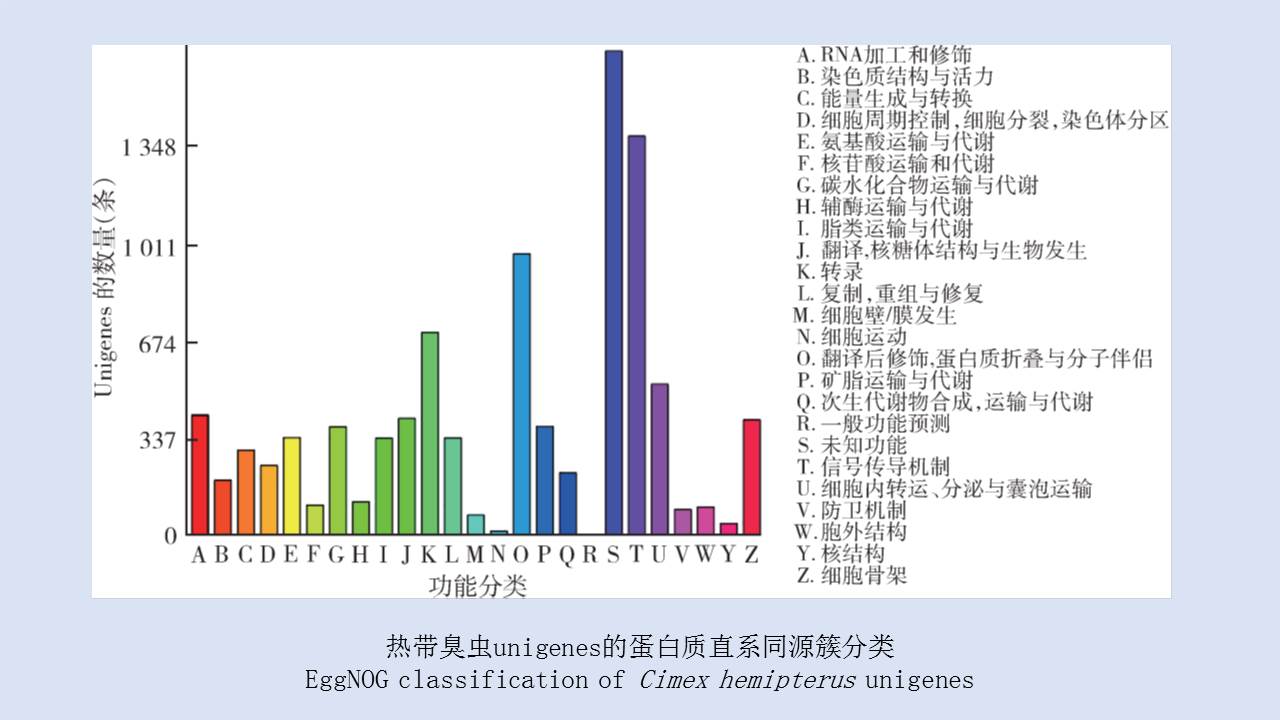
    Objective To obtain the transcriptome data of Cimex hemipterus and to provide a basis for subsequent functional genomic studies. Methods The mixed sample of C. hemipterus was sequenced on the Illumina NovaSeq 6000 high-throughput sequencing platform. Unigenes were obtained by assembling the sequencing data using the Trinity software for alignment and functional annotation against the databases of non-redundant protein sequence (NR), Gene Ontology (GO), Kyoto Encyclopedia of Genes and Genomes (KEGG), Evolutionary Genealogy of Genes: Non-supervised Orthologous Groups (eggNOG), and Swiss-Prot. The unigenes were analyzed for simple sequence repeat (SSR) loci with MISA and single nucleotide polymorphism (SNP) loci with Samtools and GATK softwares. Results A total of 5.49 Gb high-quality data were obtained from quality-controlled raw sequencing data. A total of 21 619 unigenes with a total length of 29 322 540 bp and an average length of 1 356 bp were obtained. Alignment and functional annotation of the unigenes sequences with five public databases resulted in 45 362 functional unigenes, 10 906 coding sequences (CDSs), 7 754 SSR loci, and 33 144 SNPs. Conclusion The transcriptome database of C. hemipterus was established and 21 619 unigenes were assembled for functional annotation analysis, which lays a foundation for subsequent studies of C. hemipterus in terms of functional genes, molecular marker development of SSR and SNP, genetic diversity, and genetic maps.
  • TIAN Jian-guo, ZHONG Wen-jiang, PENG Li-xia, LI Jun, HAN Rong-rong, YAO Zheng-yuan, LIN Chang-po, YU Xue-qin, QI Jing-dong, LI Gui-fu
    Chinese Journal of Vector Biology and Control. 2022, 33(1): 62-66. https://doi.org/10.11853/j.issn.1003.8280.2022.01.011
    Abstract ( ) Download PDF ( )   Knowledge map   Save
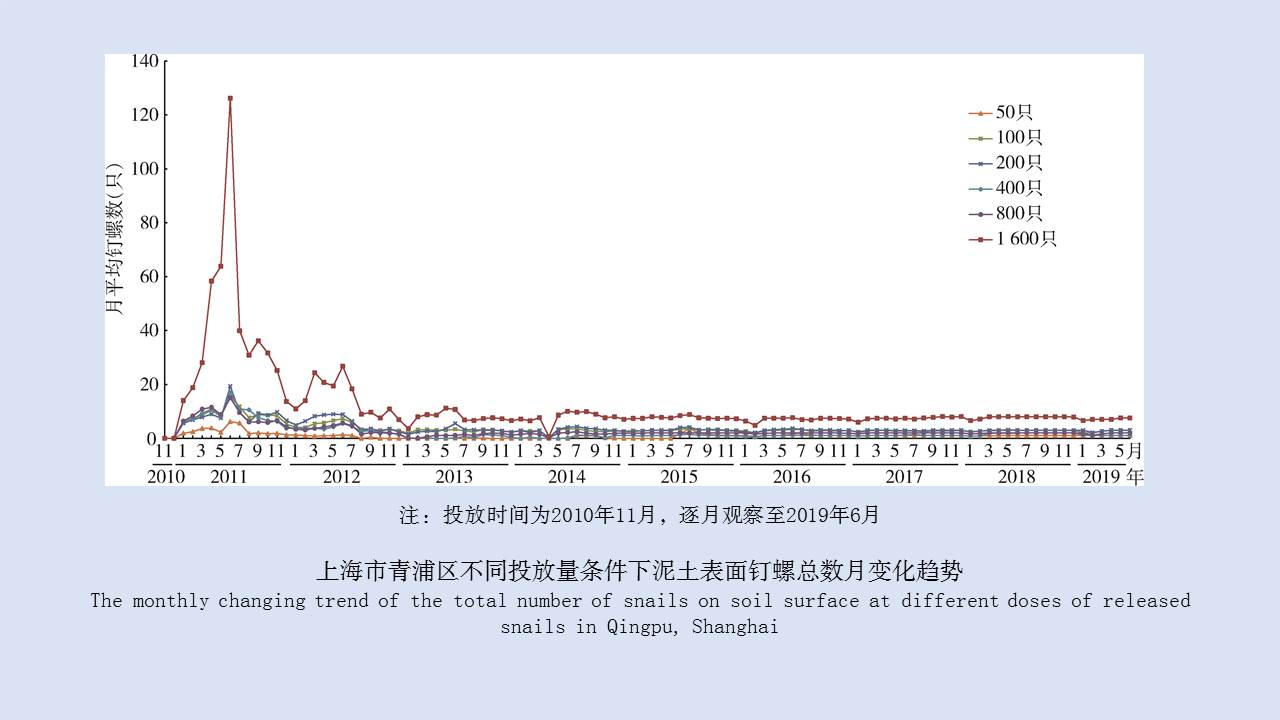
    Objective To investigate the survival and reproduction of wild imported Oncomelania snails from lakes in water network regions by the capture-mark-recapture method, and to provide a scientific basis for the survival possibility of the long-distance migration of Oncomelania snails. Methods On November 25 of 2010, 50, 100, 200, 400, 800, and 1 600 of wild Oncomelania snails (at a male/female ratio of 1∶1) from Guichi district of Chizhou city in Anhui, China, were randomly put into 6 ponds after marked by non-fading markers in Rentun Schistosomiasis Memorial Hall and were observed for 3 828 consecutive days. On May 19 of 2021, the double-layer-mesh was used to screen and wash out the snails from the ponds for classifying and counting. Excel 2007 and SPSS 10.0 softwares were used to perform a statistical analysis of continuous monitoring data and calculate the number of recapture and recapture rate. The Kruskal-Wallis H test was used to compare the difference in recovery rate between different doses of snails, and the logarithmic linear regression analysis was used to investigate the correlation between the dose of snails and the number of second-birth snails. Results A total of 1 167 snails were captured from the 6 ponds, all of which were found empty by water immersion and microscopy, and no living snail was observed. Among these snails, 366 were marked experimental snails, with a recapture rate of 11.62%, and there were 694 second-birth snails (including young snails) and 107 incomplete snails. The Kruskal-Wallis H test showed a statistical difference in recovery rate between different doses of snails (χ2=75.743, P<0.001). No linear regression relationship was observed between the dose of snails and the number of second-birth snails recycled [y=211.84lgx-403.68, F=6.543, P=0.063]. Conclusion Oncomelania snails from lakes can survive and reproduce in water network regions, but they do not have the ability for continuous survival and reproduction. The surveillance of Oncomelania snails should focus on the spread of Oncomelania snails of the same subtype in neighborhood, rather than the spread of Oncomelania snails of different subtypes from a great distance.
  • Vector Surveillance
  • ZHAO Xin, LIU Jian-hua, ZHANG Hao
    Chinese Journal of Vector Biology and Control. 2022, 33(1): 67-71. https://doi.org/10.11853/j.issn.1003.8280.2022.01.012
    Abstract ( ) Download PDF ( )   Knowledge map   Save
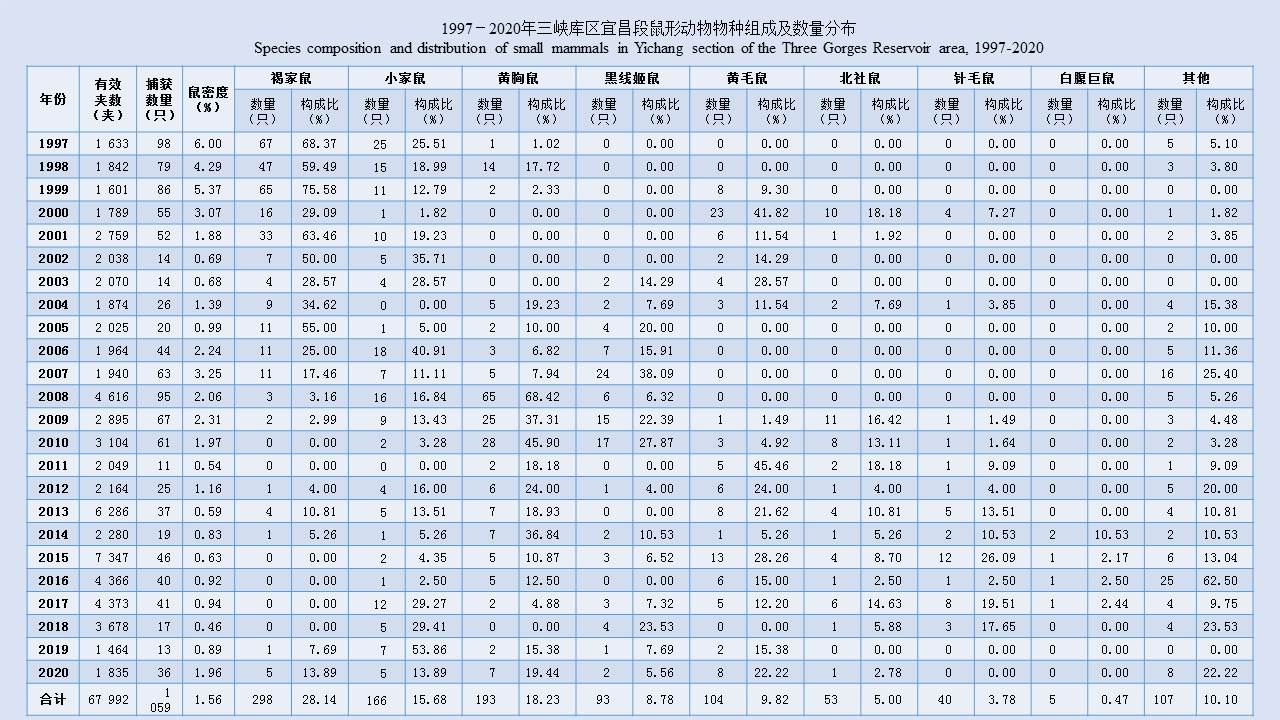
    Objective To investigate the variation in the population and density of small mammals in Yichang section of the Three Gorges Reservoir area, and to provide a basis for scientific surveillance, prevention, and control. Methods The surveillance data of small mammals in Yichang section of the Three Gorges Reservoir area in 1997-2020 were collected to analyze the changes in population distribution and density using Excel 16.0, SPSS 20.0, and Joinpoint 4.8 softwares. Results In 1997-2020, nine species of small mammals were found in Yichang section of the Three Gorges Reservoir area, and 1 059 small mammals were captured, with a mean rodent density of 1.56%. The rodent density was 2.94% in residential area and showed a trend of reduction year by year (P<0.05), and the dominant species were Rattus norvegicus, Mus musculus, and R. tanezumi. The rodent density was 1.03% in farming area and fluctuated at a relatively low level (P>0.05), and the dominant species were R. losea and Apodemus agrarius. Conclusion After the operation of the Three Gorges Project, there is no significant change in the density of small mammals in the residential and farming areas in Yichang section of the Three Gorges Reservoir area, but there is still a risk of rodent-borne diseases, and therefore, it is necessary to strengthen the surveillance of small mammals and the work of deratization.
  • KANG Dong-mei, YAN Dong, HOU Zhi-lin, REN Xing-yu, NIU Yan-fen, LAN Xiao-yu, LIU Guan-chun, DU Guo-yi, CHEN Yong-ming, LIU Xiao-lin, ZHANG Rui, MA Jie-qiong
    Chinese Journal of Vector Biology and Control. 2022, 33(1): 72-75. https://doi.org/10.11853/j.issn.1003.8280.2022.01.013
    Abstract ( ) Download PDF ( )   Knowledge map   Save
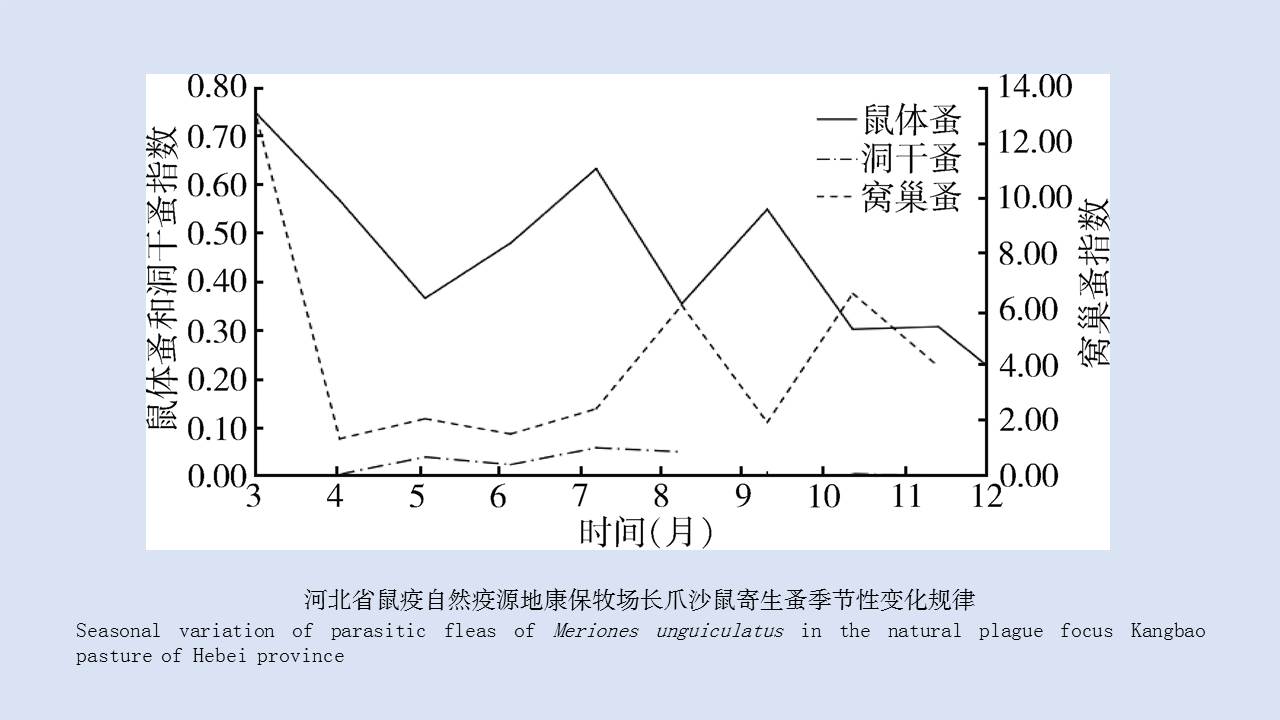
    Objective To investigate the changes in population number and structure of parasitic fleas of Meriones unguiculatus in the natural plague focus Kangbao pasture in Hebei province, China from 1981 to 2020, and to provide a basis for early warning of epizootics in this focus. Methods Excel 2010 software was used to perform year-by-year and month-by-month analyses on the data of rat body fleas, burrow fleas, and nest fleas of M. unguiculatus. The concentration degree method was used to analyze the seasonal distribution of parasitic fleas. Randomized block analysis of variance was used to analyze the flea index of different types of parasitic fleas of M. unguiculatus. Results From 1981 to 2020, a total of 4 046 fleas were collected, belonging to 17 species of 11 genera under 3 families. A total of 122 Xenopsylla conformis conformis fleas were collected from M. unguiculatus bodies from 2018 to 2020, accounting for 7.24% (122/1 684). There was no significant regularity in the infestation rate changes of body fleas, burrow fleas, and nest fleas, but the infestation rates of body fleas and nest fleas were higher than the average level in 1995, 2002-2003, 2005, and 2017-2018 when epizootics occurred. The concentration degree method found that both body fleas (M=0.3) and nest fleas (M=0.3) of M. unguiculatus had certain seasonality, and they tended to change inversely-one rose as another fell; M. unguiculatus burrow fleas had strong seasonality (M=0.7), with flea density higher in summer and autumn and lower in winter and spring. The randomized block analysis of variance showed a significant difference in the flea index between different types of parasitic fleas of M. unguiculatus (F=3.515, P=0.023), and multiple comparison showed significant differences in the flea index between any two types of body fleas, burrow fleas, and nest fleas (all P<0.05). Conclusion Plague epizootics were associated with the parasitic flea infestation rate of M. unguiculatus in the natural plague focus Kangbao pasture of Hebei province from 1981 to 2020, which provides a theoretical basis for targeted flea control measures to prevent plague.
  • WANG Chun-yu, ZHANG Jia-yong, BAI Yu-yin, DING Jun
    Chinese Journal of Vector Biology and Control. 2022, 33(1): 76-82. https://doi.org/10.11853/j.issn.1003.8280.2022.01.014
    Abstract ( ) Download PDF ( )   Knowledge map   Save
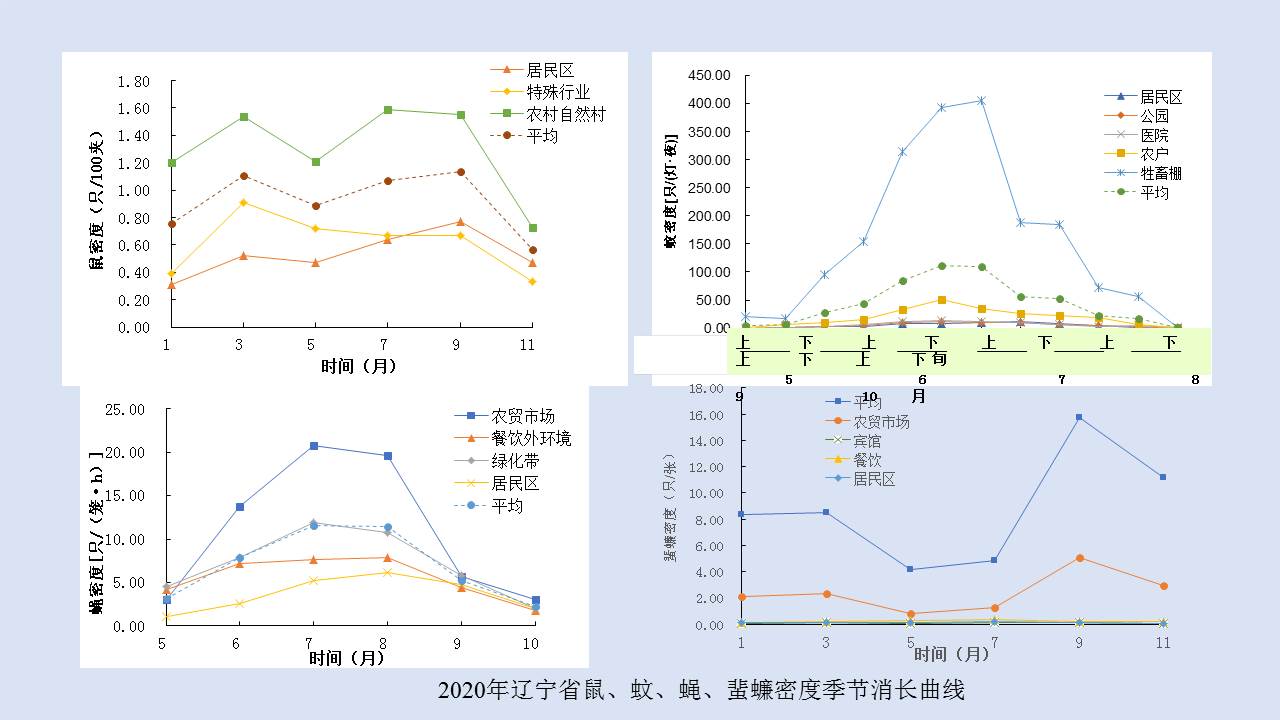
    Objective To investigate the density, species composition, dynamic variation, and changing trend of four major vectors in Liaoning province of China, i.e., rodents, mosquitoes, flies, and cockroaches, and to provide a scientific basis for the prevention and control of vectors and vector borne infectious diseases. Methods From January to December in 2020, the night trapping method and the sticky trap method were used for the surveillance of rodents and cockroaches in odd months, and the light trapping method and the cage trapping method were used for the surveillance of mosquitoes and flies from May to October, respectively. Vector surveillance data were collected from the surveillance sites in 14 prefectures of Liaoning province, and Excel 2010 and SPSS 23.0 softwares were used for statistical analysis. Results In 2020, the density of rodents in Liaoning province was 0.91 rodents/100 traps and reached the peak of 1.14 rodents/100 traps in September; as for habitats, rural natural villages had the highest rodent density of 1.28 rodents/100 traps, and there was a statistical difference in the seasonal variation of rodent density between different habitats (χ2=25.986, P<0.05); the dominant species was Rattus norvegicus, accounting for 77.69% of the total rodents captured. The density of mosquitoes was 45.67 mosquitoes/lamp·night and reached the peak of 112.20 mosquitoes/lamp·night in late July; as for habitats, livestock shed had the highest mosquito density of 160.07 mosquitoes/lamp·night, and there was a statistical difference in the seasonal variation of mosquito density between different habitats (χ2=33.115, P<0.05); the dominant species was Culex pipiens pallens, accounting for 27.99%. The density of flies was 6.97 flies/cage·hour and reached the peak of 11.56 flies/cage·hour in July; as for habitats, farmers’ market had the highest fly density of 11.12 flies/cage·hour, and there was a significant difference in the seasonal variation of fly density between different habitats (χ2=12.783, P<0.05); the dominant species was Lucilia sericata with a composition ratio of 44.77%. Cockroaches had a density of 0.62 cockroaches/paper and an infestation rate of 7.45%, and the density and infestation rate of cockroaches reached the peaked in September; serious infestation and a high density of cockroaches were observed in the key places such as farmer’ market and supermarket, and there was a statistical difference in the seasonal variation of cockroach density between different habitats (χ2=26.104, P<0.05); the absolute dominant species was Blattella germanica, accounting for 99.16%. Conclusion This study helps to gain a better understanding of the density, species composition, and dynamic variation of the main vectors in Liaoning province in 2020, and it is suggested that all cities adopt targeted and integrated control measures according to the results of vector surveillance in Liaoning province, so as to reduce the density of vectors and control related diseases.
  • WU Zhi-ming, CHU Hong-liang
    Chinese Journal of Vector Biology and Control. 2022, 33(1): 83-88. https://doi.org/10.11853/j.issn.1003.8280.2022.01.015
    Abstract ( ) Download PDF ( )   Knowledge map   Save
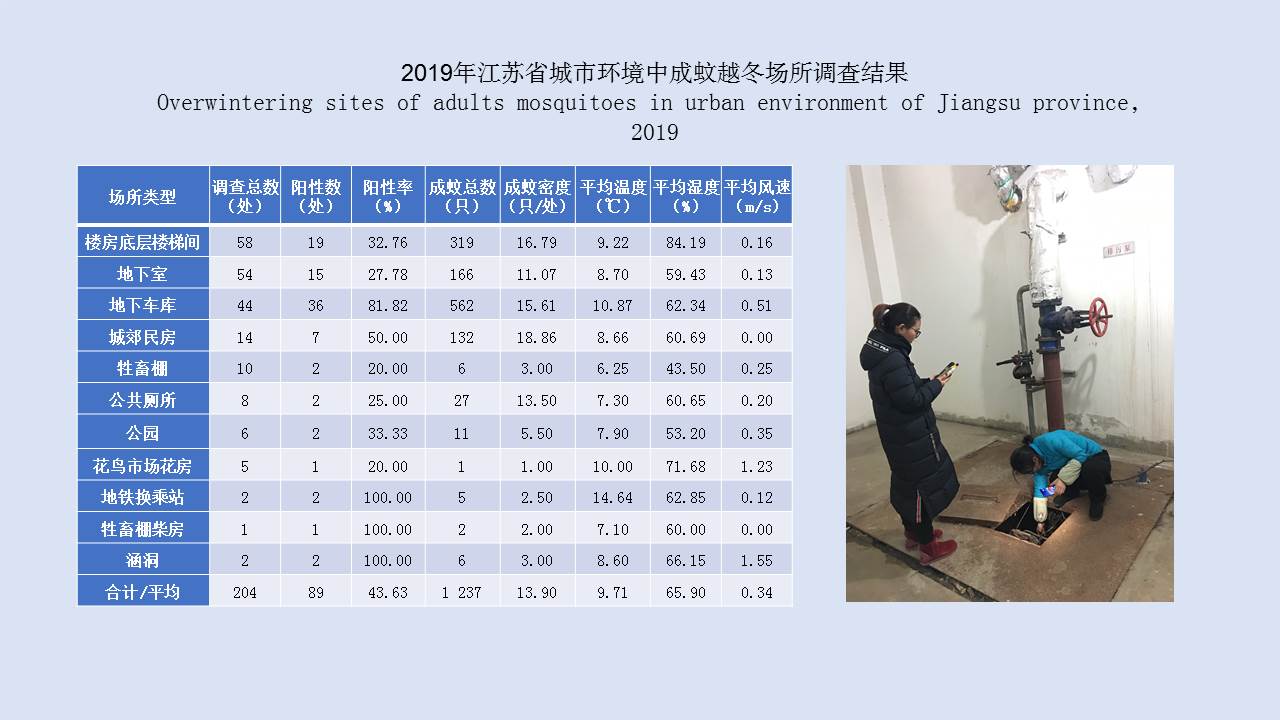
    Objective To investigate the developmental stage, species composition, and habitat of overwintering mosquitoes in the urban environment of Jiangsu province, China, and to provide a scientific basis for mosquito control and early warning of mosquito-borne diseases. Methods A survey of overwintering mosquitoes was conducted in relatively warm places during winter in the central urban and suburban areas of Nanjing, Xuzhou, Changzhou, Suzhou, Zhenjiang, Suqian, and Yangzhong, Jiangsu province, China from January 7 to 17, 2019. The resting collection method was used for adult mosquitoes, and the pipette method and spoon method were used for larvae. Results A total of 1 237 adult mosquitoes of four species were captured, including Culex pipiens pallens, Cx. tritaeniorhynchus, Anopheles sinensis, and Aedes albopictus. The proportion of Cx. pipiens pallens was 99.43%. The density of Cx. pipiens pallens was high in storied buildings’ bottom-level stairwell, basements, underground garages, suburban private houses, and public toilets, being 16.79, 11.07, 15.61, 18.86, and 13.50 mosquitoes/habitat, respectively. Three female Cx. tritaeniorhynchus mosquitoes were found in a livestock shed of Jianglou village, Pantang subdistrict, Yunlong district, Xuzhou. Three female An. sinensis mosquitoes were found in the basements of the watchtower and watch-the-river pavilion in Binjiang Park of Yangzhong. One male Ae. albopictus mosquito was found in an underground garage of Yuhuaketing neighbourhood in Yuhuatai district, Nanjing. A total of 461 Cx. pipiens pallens larvae were captured in basements’ or underground garages’ water-collecting wells, basements’ drains, containers with still water, low-lying spots with still water, and sewage pool. One Cx. pipiens pallens egg raft was collected in the water-collecting well of the underground garage of Olympic Sports Center in Xinbei district, Changzhou. In the places with both male and female mosquitoes, 42.86% (21/49) of female Cx. pipiens pallens had fat body accumulation, 16.33% (8/49) had signs of blood sucking, and 32.65% (16/49) had signs of ovarian development, of which seven ovaries presented eggs. Conclusion Cx. pipiens pallens is the dominant overwintering mosquito species in the urban environment of Jiangsu province. The overwintering places mainly include storied buildings’ bottom-level stairwell, underground garages, basements, suburban private houses, and public toilets. When environmental conditions are suitable in underground garages, basements, etc., Cx. pipiens pallens can survive a relatively warm winter as adults, larvae, and eggs. Cx. tritaeniorhynchus and An. sinensis can live in livestock sheds and basements in suburban areas.
  • CHEN Yong-ming, KANG Dong-mei, YAN Ping, YANG Shun-lin, BAI Xue-wei, ZHOU Song, WANG Hai-feng, ZHENG Nan, DU Guo-yi, CHEN Kai-le
    Chinese Journal of Vector Biology and Control. 2022, 33(1): 89-93. https://doi.org/10.11853/j.issn.1003.8280.2022.01.016
    Abstract ( ) Download PDF ( )   Knowledge map   Save
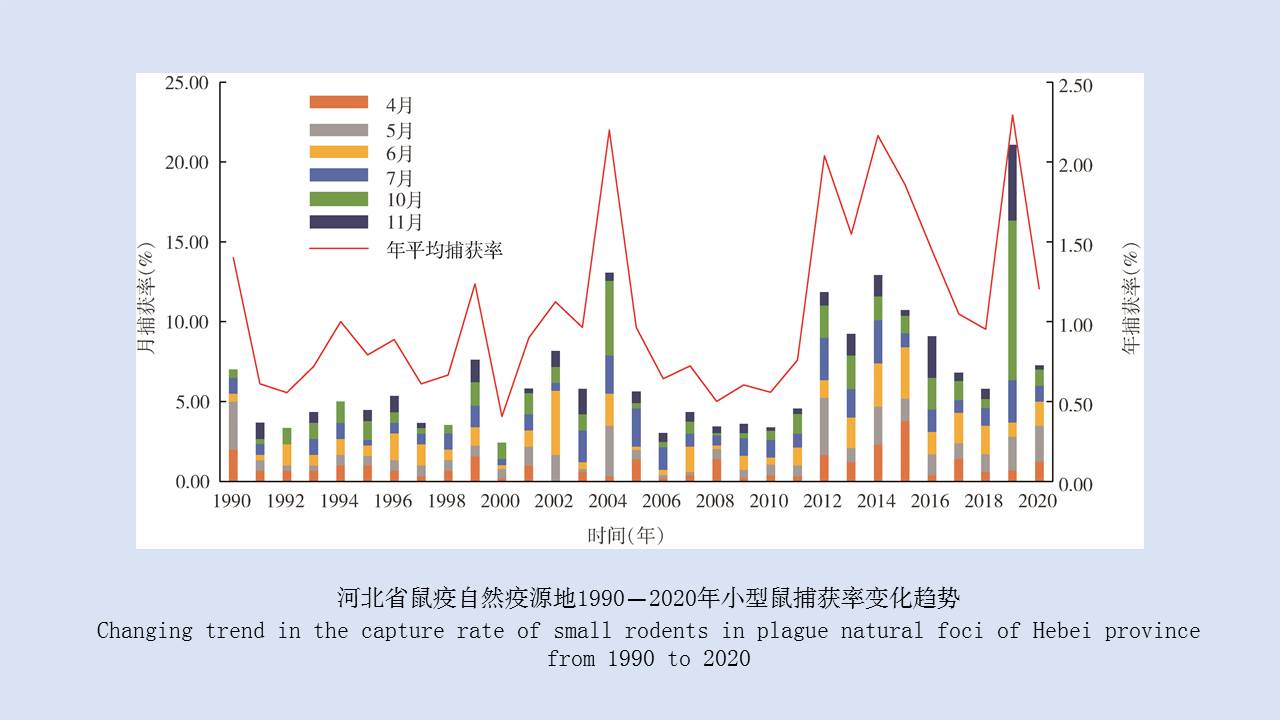
    Objective To investigate the changes in species composition and number of small rodents in natural plague foci of Hebei province, China, from 1990 to 2020, and to provide a basis for the prediction and early warning of animal epidemics in the plague foci. Methods Excel 2010 software was used to summarize and count the monthly and annual surveillance data on small rodents, and the concentration degree method was used to analyze the seasonal distribution of small rodents. Results From 1990 to 2020, a total of 112 205 clamps were placed and 1 322 rodents were caught, with a mean capture rate of 1.18%. The highest capture rate (2.30%) occurred in the year 2019, followed by the year 2004 (2.20%), and the lowest capture rate (0.41%) occurred in the year 2000. There were 9 years (1990, 1999, 2004, 2012-2016, and 2019) when the capture rate was higher than the mean value. A total of 11 species of rodents were captured, belonging to 8 genera and 4 families, among which Cricetulus barabensis (63.31%) was the dominant species. The highest number of small rodent species (8 species) was observed in 2014, and the fewest (1 species) in 1991. The number of small rodents were distributed evenly throughout the year (M=0.13), and the months with relative high numbers were June (247/1 322, 18.68%), July (259/1 322, 19.59%), and October (250/1 322, 18.91%). The interannual distribution of the number of the dominant species, C. barabensis, had been consistent with that of small rodents, with the highest number seen in 2019. The number distribution of C. barabensis showed seasonality (M=0.30) and the number was relatively high in summer and autumn, with the highest number in October (0.98%), followed by July (0.82%), June (0.71%), and November (0.71%). Conclusion The species number of small rodents has a rising tendency, with rich species composition. The significant influence of the changing trend in the small rodent species on rodent epidemic outbreaks and spread should be highlighted.
  • LIU Yu-tong, LIU Yu-hang, YUAN Dao-huan, WANG Yu-jie, QIN Jiao, WANG Jian, CHEN Hong-hui, WANG Ying-yong, CHEN Zai-xiong, NIE Hai-yan, LIU Quan-sheng
    Chinese Journal of Vector Biology and Control. 2022, 33(1): 94-99. https://doi.org/10.11853/j.issn.1003.8280.2022.01.017
    Abstract ( ) Download PDF ( )   Knowledge map   Save
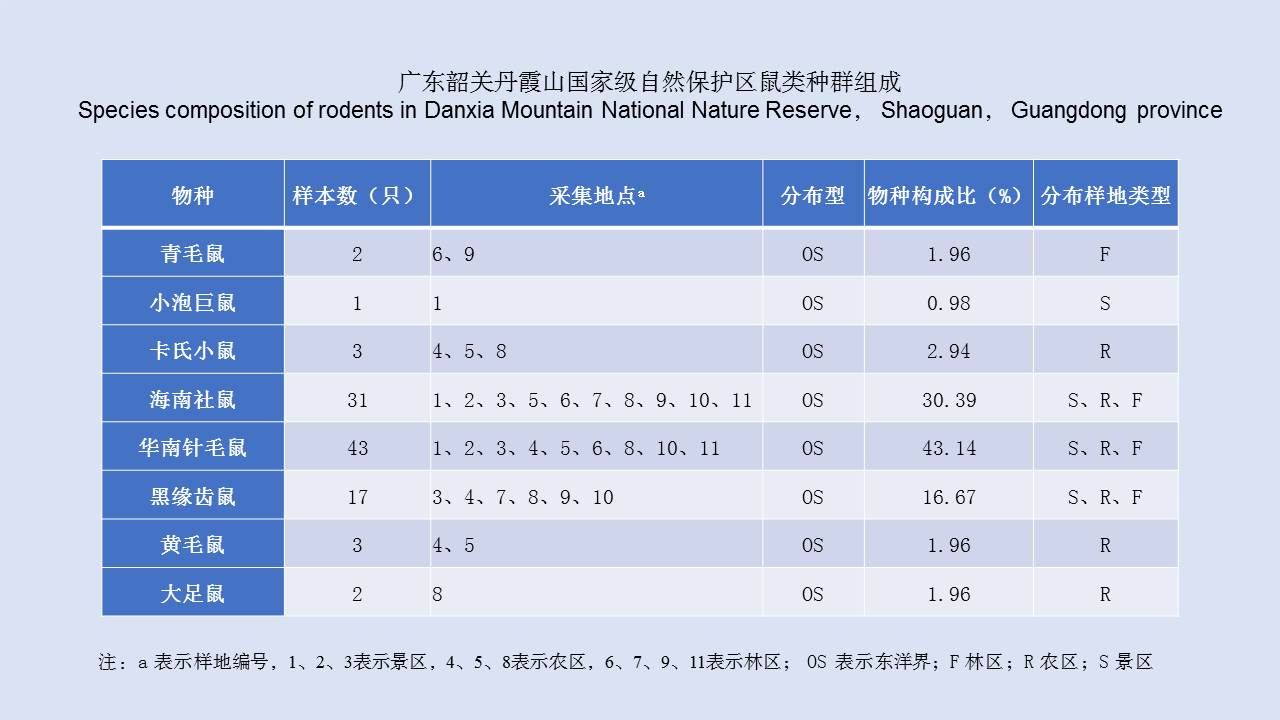
    Objective To investigate the composition and distribution of rodent species in different habitats in the Danxia Mountain National Nature Reserve in Shaoguan, Guangdong province, China, to improve the species diversity data in this area, and to provide a basis for biological conservation, production, and tourism management in the reserve. Methods Traps were used to capture rodents in 11 sites in the habitats of farmlands, forests, and scenic spots in the reserve. The independent samples Kruskal-Wallis H test was used to assess the significance of capture rate in different habitats. The diversity indices were calculated and compared based on the number of rodent species and individuals. Results A total of 102 rodents were captured. The average capture rate was the highest in farmlands (18.24%), followed by scenic spots, and forests had the lowest capture rate. The rodent species were assigned to 1 order (Rodentia), 1 family, 5 genera, and 8 species by morphological and molecular identification. The dominant species was Niviventer huang, accounting for 43.14% of the total captured rodents. N. huang was the species with the highest capture rate in farmlands (7.07%) and scenic spots (5.59%), N. lotipes was the species with the highest capture rate in forests (3.16%). Species richness and diversity indices showed the order of farmlands>forests>scenic spots. Conclusion The distribution patterns of rodents in different habitats suggest that agricultural production and tourism will create environmental conditions that increase rodent population size and diversity.
  • YAN Qing-fang, ZHAO Hong-lin, JIANG Jian-kang, DU Gui-ying, LIU Shu-xia, NING Ji-hu, CHEN Li-yong, WANG Guang-wei
    Chinese Journal of Vector Biology and Control. 2022, 33(1): 100-103. https://doi.org/10.11853/j.issn.1003.8280.2022.01.018
    Abstract ( ) Download PDF ( )   Knowledge map   Save
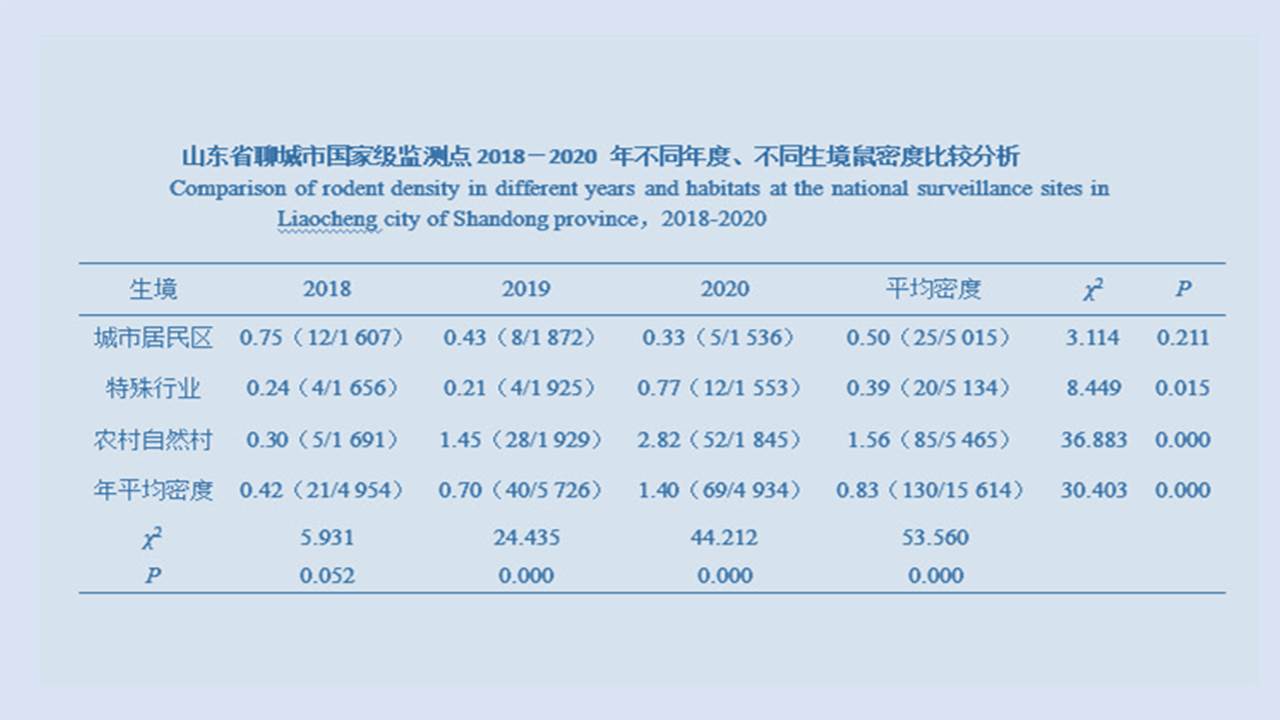
    Objective To investigate the species, density, and seasonal variation of rodents in human settlements and surrounding environment at national surveillance sites in Liaocheng city of Shandong province, China, in 2018-2020, and to provide a scientific basis for rodent prevention and control. Methods According to the requirements in the National Vector Surveillance Implementation Scheme developed by Chinese Center for Disease Control and Prevention, the trap-at-night method was used to monitor rodent density once every 2 months (in odd months) during the middle ten days of each month for surveillance, with an interval of no less than 30 days between surveillance. The three habitats of urban residential areas, special industry, and rural residential areas were established as the surveillance sites, and no less than 200 effective traps were placed at each surveillance site. Excel 2007 and SPSS 17.0 softwares were used to perform a statistical analysis of surveillance data, and the Chi-square test was used for comparison of rodent density across different years and habitats. Results The overall rodent density was 0.83% in 2018-2020, and the composition ratios of Mus musculus, Rattus norvegicus, and Apodemus agrarius were 55.38%, 42.31%, and 2.31%, respectively, with the highest rodent density of M. musculus. The mean rodent density in the three years was 0.42%, 0.70%, and 1.40%, respectively, which showed an increasing trend year by year, and there was a statistical difference in rodent density across the years (χ2=30.403, P<0.001). The rodent density was 0.50% in urban residential areas, 0.39% in special industries, and 1.56% in rural natural villages, suggesting that rural natural villages had a significantly higher rodent density than urban residential areas and special industries, and there was a statistical difference in rodent density (χ2=28.124, P<0.001; χ2=36.680, P<0.001). Inconsistency was observed in the trend of seasonal variation of rodent density in the three years, with two peaks in May and November of 2018, one peak in July 2019, and one peak in March 2020. The peak of rodent density was observed in July and November in urban residential areas, the peak of rodent density was observed in May and September in special industries, and the peak of rodent density was observed in May in rural natural villages. The peak density of M. musculus was observed in May, the density of R. norvegicus basically showed an increasing trend from month to month, and the peak density of A. agrarius was observed in November. Conclusion M. musculus is the dominant species of rodents at the national surveillance sites in Liaocheng city of Shandong province, followed by R. norvegicus. Rural natural villages will be the focus of rodent prevention and control in the future, and it is recommended to take the comprehensive long-acting prevention and control measures according to their breeding, perching habits, and seasonal variation.
  • Insecticide Resistance Surveillance
  • LYU Wen-xiang, CHENG Peng, PENG Hui, WANG Hai-yang, WANG Hai-fang, GUO Xiu-xia, ZHANG Chong-xing, LIU Hong-mei, GONG Mao-qing, LIU Li-juan
    Chinese Journal of Vector Biology and Control. 2022, 33(1): 104-107. https://doi.org/10.11853/j.issn.1003.8280.2022.01.019
    Abstract ( ) Download PDF ( )   Knowledge map   Save
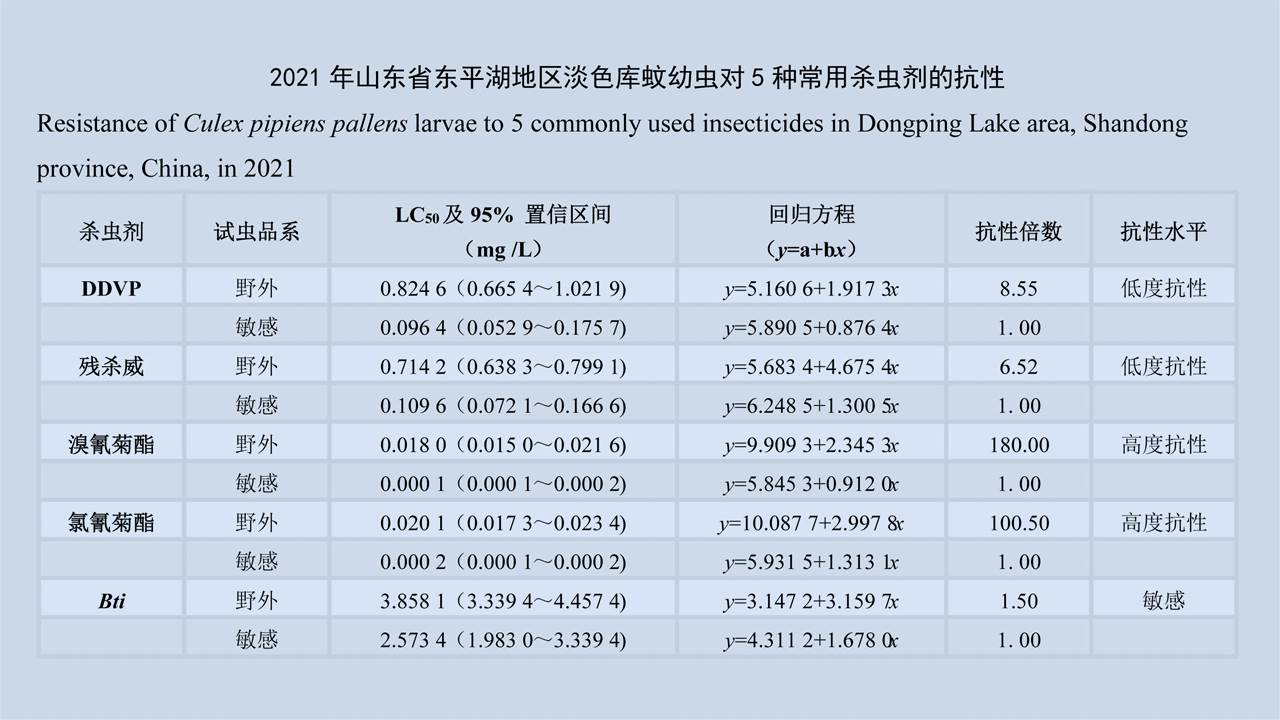
    Objective To investigate the resistance of larval and adult Culex pipiens pallens to commonly used insecticides in the Dongping Lake area of Shandong province, China, and to provide evidence for rational use of insecticides for mosquito control. Methods The field populations of Cx. pipiens pallens were collected from the Dongping Lake area on July 7, 2021, and were reared to F1 generation in the laboratory. According to the bioassay methods of World Health Organization, the impregnation method was used for larval tests, and the median lethal dose and regression equation were calculated; the cylinder bioassay was used to determine the resistance of adult mosquitoes. The results were recorded with Excel 2019 software for statistical analysis. Results The resistance ratio of Cx. pipiens pallens larvae in the Dongping Lake area was 8.55 to DDVP (low resistance), 6.52 to propoxur (low resistance), 180.00 to deltamethrin (high resistance), 100.50 to cypermethrin (high resistance), and 1.50 to Bacillus thuringiensis subsp. israelensis (susceptible). For adult Cx. pipiens pallens, the mortality rate within 24 h after 1-h insecticide exposure was 16.00% for 0.025% deltamethrin (high resistance), 20.00% for 0.025% beta-cypermethrin (high resistance), 100% for 5% malathion (susceptible), and 88.00% for 0.01% propoxur (possible resistance). Conclusion Cx. pipiens pallens mosquitoes in the Dongping Lake area of Shandong province have developed varying degrees of resistance to the commonly used insecticides. It is necessary to strengthen the monitoring of mosquito resistance to insecticides in this region and take rational mosquito control measures to mitigate the development of mosquito resistance to insecticides and improve the effect of prevention and control.
  • Vector Infectious Disease
  • LUN Xin-chang, YANG Rui, WU Hai-xia, WANG Jun, LIU Qi-yong, MENG Feng-xia
    Chinese Journal of Vector Biology and Control. 2022, 33(1): 108-113. https://doi.org/10.11853/j.issn.1003.8280.2022.01.020
    Abstract ( ) Download PDF ( )   Knowledge map   Save
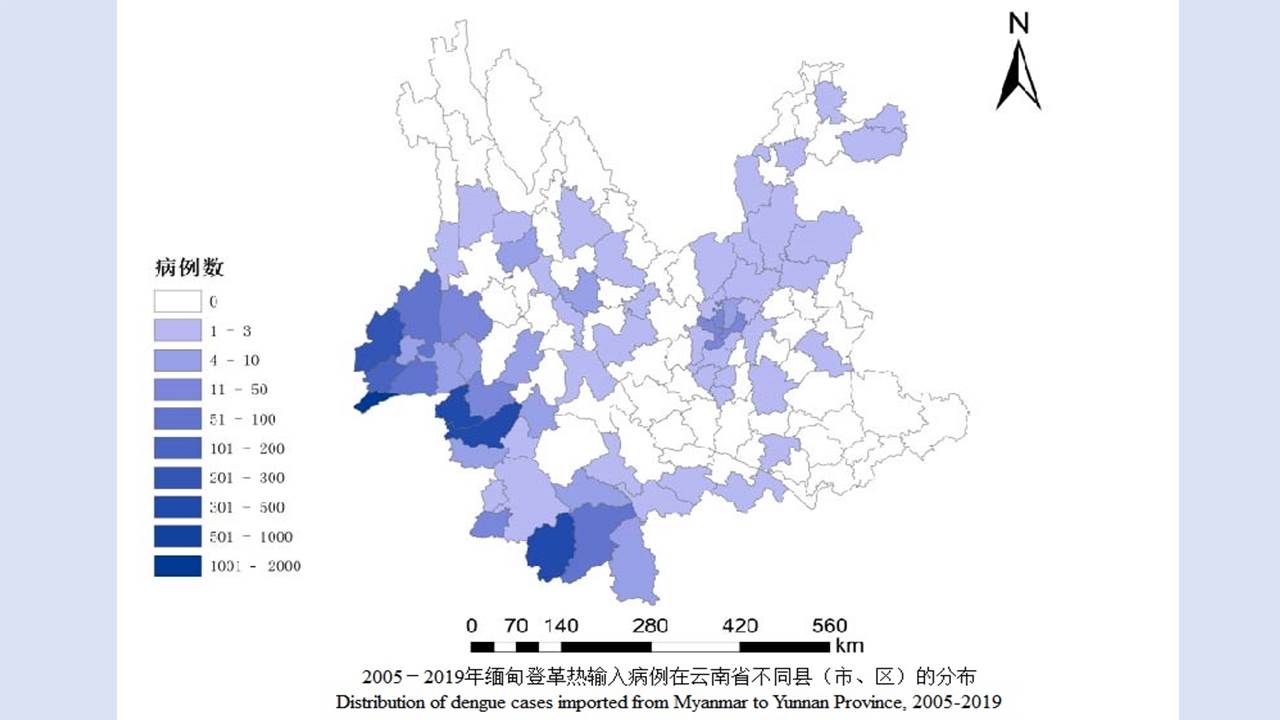
    Objective To investigate the epidemiological characteristics of transborder imported dengue fever cases in Yunnan province, China, and to provide guidance for the prevention and control of transborder imported dengue fever cases in Yunnan province. Methods Data of imported dengue fever cases in Yunnan province were obtained from the Infectious Disease Report Information Management System of China Information System for Disease Control and Prevention; Excel 2016 software was used for data collation and plotting; SPSS 19.0 software was used for statistical analysis and processing of the data; ArcGIS 10.5 software was used to plot the geographical distribution of imported dengue fever cases. Results From 2005 to 2019, there were 4 660 transborder imported dengue fever cases in Yunnan province, of which Southeast Asia cases accounted for 98.99% (4 613/4 660) and Myanmar’s cases accounted for 86.06% (3 970/4 613) of the total number of imported cases from Southeast Asia. Among the imported cases from Myanmar, the number of dengue fever cases imported into Dehong Dai and Jingpo Autonomous Prefecture accounted for 62.04% (2 463/3 970), and the cases imported in October as the peak month accounted for 35.49% (1 409/3 970). Among the imported cases from Myanmar, there were slightly more males than females, with a male-to-female sex ratio of 1.19:1; 21-30-year-old cases had the largest proportion among all age groups, accounting for 27.71% (1 100/3 970); farmers and business service providers were the main occupations, accounting for 42.95% (1 705/3 970) and 21.49% (853/3 970), respectively. Conclusion The risk of imported dengue fever in the border areas of Yunnan province is relatively high. It is recommended to reinforce joint prevention and control, strengthen the education on prevention and control of dengue fever for key groups of local residents and enhance the surveillance of imported dengue fever cases as well as the surveillance and control of Aedes vectors in key areas.
  • WANG Yan-ding, LI Zhi-qiang, WU Di, GONG Xin-ran, YANG Mei-tao, ZHNAG Wen-yi, WANG Yong
    Chinese Journal of Vector Biology and Control. 2022, 33(1): 114-119. https://doi.org/10.11853/j.issn.1003.8280.2022.01.021
    Abstract ( ) Download PDF ( )   Knowledge map   Save
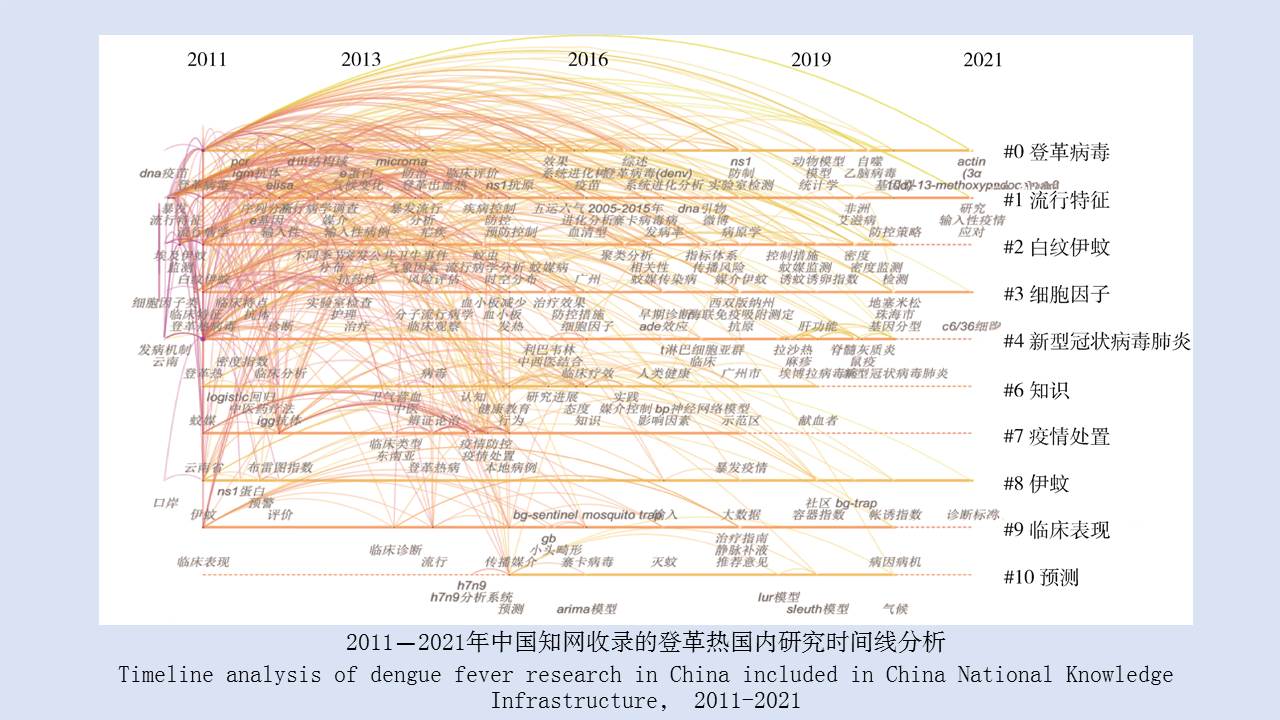
    Objective To analyze the historical development and future hot spots of dengue fever research in China, and to provide a basis and reference for research, prevention and control of dengue fever in China. Methods Data were obtained from China National Knowledge Infrastructure database; "dengue fever" and "dengue virus" were used as subject terms for the search of dengue fever-related references collected (from January 1, 2011 to April 10, 2021) in the database; a total of 1 738 references were retrieved and 1 394 references were included. Excel 2019 and CiteSpace 5.6.R5 softwares were used for analysis of the 1 394 references by authors, journals, and institutions; meanwhile, visual analysis and evolution were performed on the key words, burst terms, and timelines for the development of dengue fever-related research in China. Results During 2011-2021, the number of publications on dengue fever in China could be divided into three phases with an overall upward trend (2011-2013, 2014-2016, and 2017-2021); main publication institutions were centers for disease control and prevention, universities, and research institutes; hot spots in the field of dengue fever were dengue virus, Aedes albopictus, epidemiology, and surveillance. Conclusion In recent years, there is a growing trend of performing dengue fever-related research in China, while many challenges still exist. Governments and health authorities in high-risk areas should arouse the awareness of dengue fever among common populations; research personnel should focus on the treatment, prevention and control strategies, and risk assessment of the disease, and perform in-depth studies on the surveillance, early warning, and the cost-effectiveness in prevention and control of dengue fever.
  • WEI Zi-xin, FANG Yuan, ZHANG Yi
    Chinese Journal of Vector Biology and Control. 2022, 33(1): 120-124. https://doi.org/10.11853/j.issn.1003.8280.2022.01.022
    Abstract ( ) Download PDF ( )   Knowledge map   Save
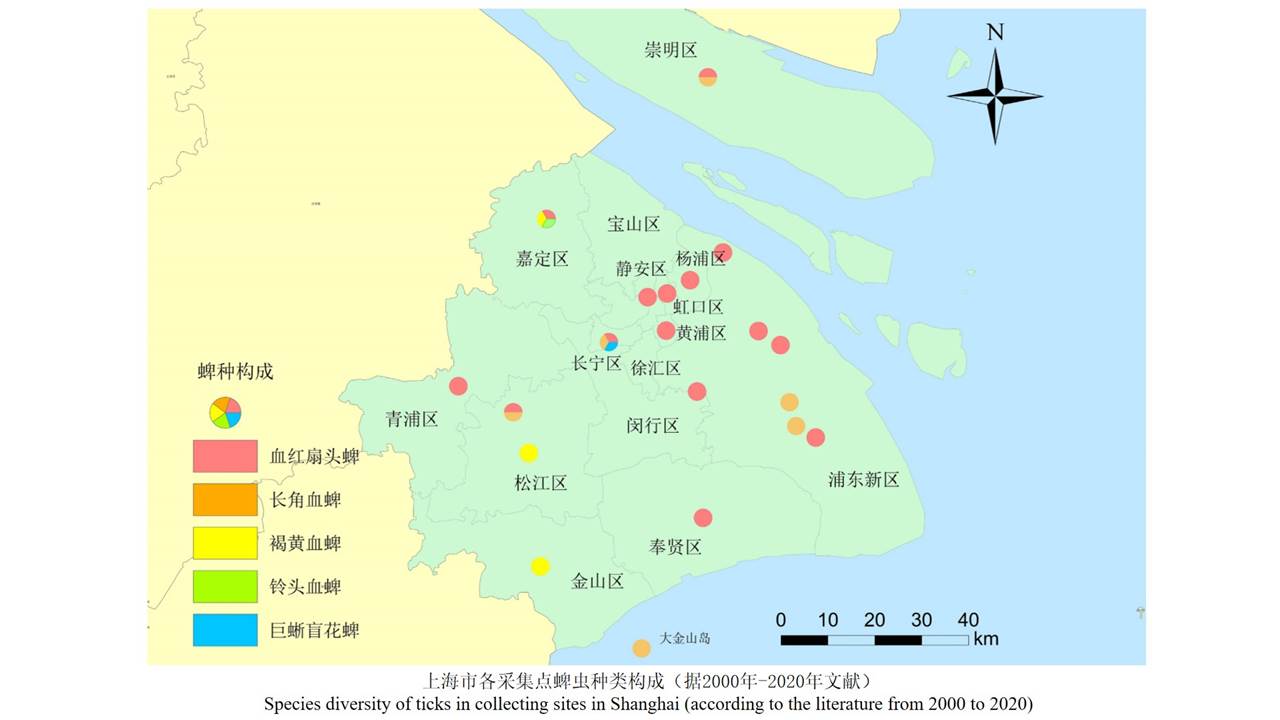
    Objective To investigate the species composition and distribution of ticks and the pathogens carried by the ticks in Shanghai, China, and to provide a scientific basis for developing local prevention and treatment measures for ticks and tick-borne diseases. Methods The four commonly used English and Chinese databases of CNKI, Wanfang Data, VIP, and PubMed were used to collect the articles on tick in Shanghai in the past twenty years (2000-2020), and related information was extracted to analyze the species and distribution of ticks and the pathogens carried by them at different investigation sites in Shanghai. Results The tick species reported in Shanghai were Rhipicephalus sanguineus, Haemaphysalis longicornis, H. campanulata, H. flava, and Amblyomma varanense, among which R. sanguineus was the most common and widely distributed tick species in Shanghai, followed by H. longicornis. The host animals for tick mainly included dogs, sheep, and rodents. Pathogens including Ehrlichia, Babesia, Coxiella, spirochete, and Brucella were detected in the tick species distributed in Shanghai. Conclusion Various tick species are observed in Shanghai, and multiple pathogens are detected, suggesting that there is a potential risk of the transmission of tick-borne diseases.
  • Early Warning and Forecast
  • ZHOU Ruo-bing, GAO Yuan, CHANG Nan, MA De-long, LI Chao, WU Hai-xia, WANG Jun, LIU Qi-yong
    Chinese Journal of Vector Biology and Control. 2022, 33(1): 125-132. https://doi.org/10.11853/j.issn.1003.8280.2022.01.023
    Abstract ( ) Download PDF ( )   Knowledge map   Save
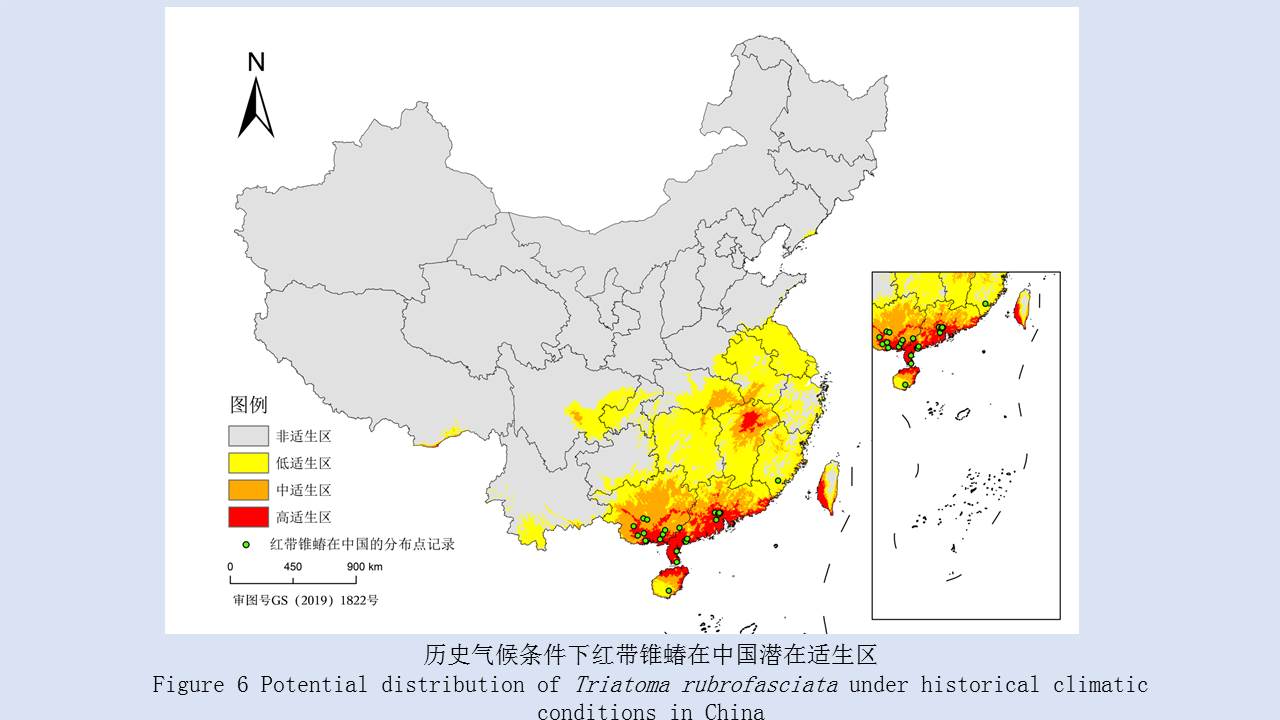
    Objective To investigate the potential distribution of Triatoma rubrofasciata in China under different climatic scenarios,to provide scientific basis for the prevention and control planning of T. rubrofasciata. Methods ENMtool and ArcGIS 10.5 softwares were used to screen out the data of the global distribution sites of T. rubrofasciata; maxent 3.4.4 and R 3.6.0 softwares were used to screen out climatic variables based on the contribution rate of environmental variables, the jackknife method, and the correlation analysis of variables; R language was used to calculate the regularization multiplier and features for MaxEnt model, and the MaxEnt model was used to project the potential distribution of T. rubrofasciata in China under the historical scenario and different scenarios in future. Results A total of 73 distribution sites of T. rubrofasciata were screened out; in the MaxEnt model, training omission rate was highly consistent with projected omission rate, and the model had an area under the receiver operating characteristic curve of 0.990. Under the historical scenario, Southeast China was the potential distribution area of T. rubrofasciata; under the ssp126 and ssp370 scenarios in future, overall distribution area tended to decrease and slightly increase, respectively, but the highly suitable distribution area tended to increase. Conclusion With the change in climate, the potential distribution area of T. rubrofasciata in China may expand from Guangdong, Guangxi, Hainan, and Taiwan to Jiangxi, Hubei, Anhui, Hunan, Fujian, Yunnan, Sichuan, and Tibet, and the highly suitable distribution area of T. rubrofasciata may exist in northern Jiangxi. The study provided a theoretical basis for the prevention and control, surveillance, and early warning of T. rubrofasciata.
  • XU Ying, LIU Hai-jiang, PANG Ying-jie, CHEN Xiao-guang, ZHANG Juan, ZHANG Jin, XU He-fei, TENG Xin-dong
    Chinese Journal of Vector Biology and Control. 2022, 33(1): 133-136. https://doi.org/10.11853/j.issn.1003.8280.2022.01.024
    Abstract ( ) Download PDF ( )   Knowledge map   Save
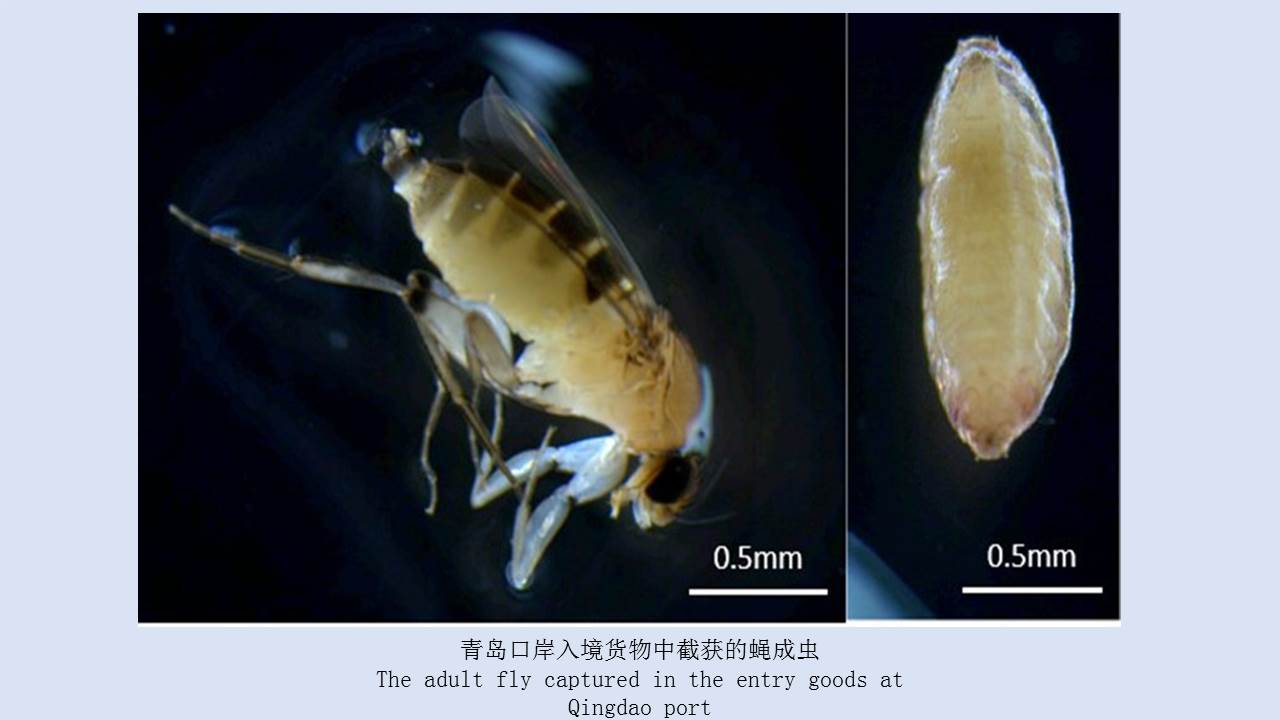
    Objective To identify the adult flies and pupae captured in the entry goods by Qingdao Airport Customs using morphological and DNA barcoding techniques. Methods Morphological identification was performed for the flies captured, and one leg of the fly and the pupae were used to extract genomic DNA. The DNA barcoding technique was used for the amplification and sequencing of the genomic DNA of this unknown fly species, and the sequences obtained were compared with those in GenBank database of National Center for Biotechnology Information and Barcode of Life Data Systems (BOLD) to construct an evolutionary tree. Results Morphological identification showed that the flies were identified as Phoridae in Diptera. DNA barcoding identification and sequence alignment showed that the DNA barcoding sequences of the adult fly and pupae were >99.00% homologous with the sequence of Megaselia spiracularis in BOLD and GenBank, and with reference to morphological identification, the species was identified as M. spiracularis. Conclusion The adult fly and pupae captured are identified as M. spiracularis, which is found in the entry goods by Qingdao Airport Customs for the first time.
  • Technology and Method
  • ZHOU Yi-bin, YAO Jun-yi, ZHU Yi-yi, ZHU Jiang, LENG Pei-en, WU Huan-yu
    Chinese Journal of Vector Biology and Control. 2022, 33(1): 137-142. https://doi.org/10.11853/j.issn.1003.8280.2022.01.025
    Abstract ( ) Download PDF ( )   Knowledge map   Save
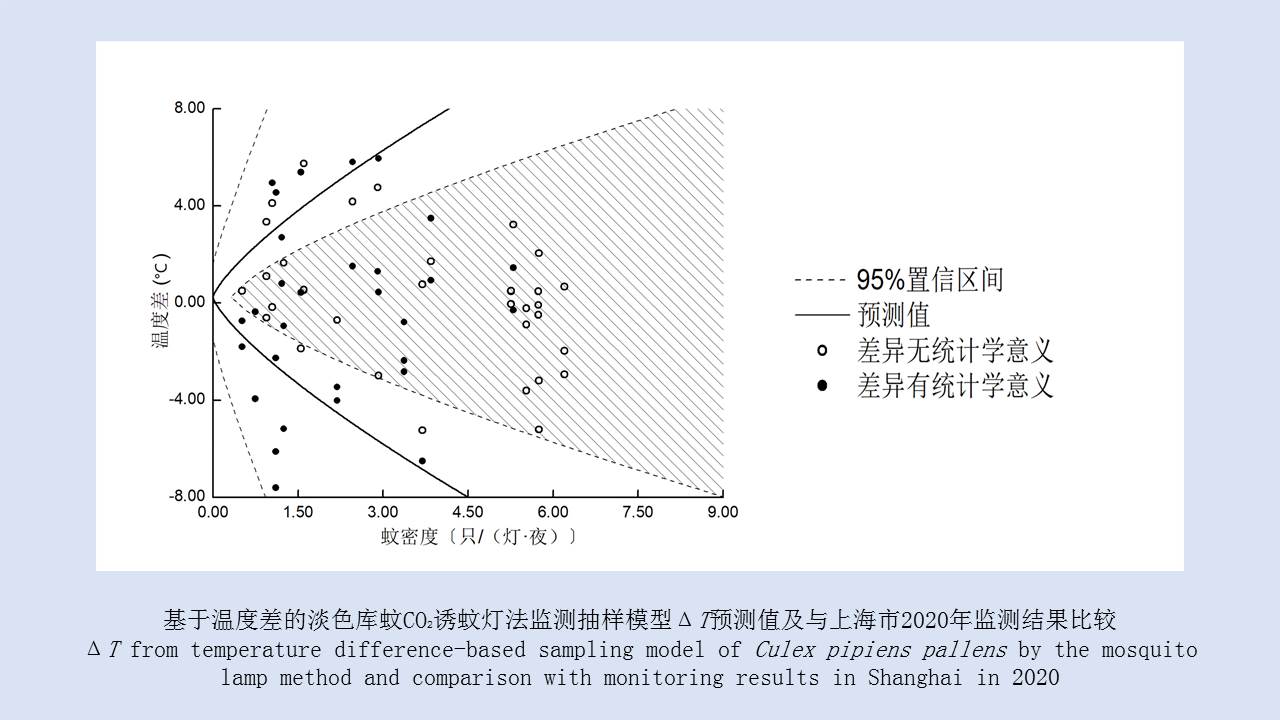
    Objective To build a temperature difference-based CO2 mosquito lamp sampling model, and to provide evidence for CO2 mosquito lamp monitoring frequency. Methods A total of 229 CO2mosquito lamps were set to monitor the density of Culex pipiens pallens every ten days (defined as one period) from April to November in 15 districts of Shanghai, China. The monitoring data of 2019 were used as the training set, and those of 2020 were used as the test set. A function of mean and standard deviation was established based on Taylor’s power law, and the sample size formula for mean comparison between two samples was substituted into the function to establish a sampling model based on density difference. A linear regression model was used to establish a regression equation of the density difference between two adjacent monitoring activities and the temperature difference (during 10 days before monitoring) between two monitoring activities. The density difference-based sampling model was substituted to construct a temperature difference-based sampling model. The Wilcoxon rank-sum test was used for mean comparison between two samples. The model was validated using accuracy, recall, and F-measure. Results In the density difference-based sampling model, for both 2019 and 2020, the difference in mean mosquito density was significant between two adjacent periods(all P<0.05), between two periods with an interval of one period(all P<0.05), and between two periods with an interval of two periods(all P<0.05), accounting for 34.78%, 59.09%, and 76.19% in 2019, respectively, and 21.74%,59.09%, and 66.67% in 2020, respectively. In the validation of the temperature difference-based sampling model with the data of 2020, the accuracy was 0.563, the recall was 0.720, and the F-measure was 0.632. Conclusion The temperature difference-based sampling model is practical, which can estimate the optimal frequency of CO2 mosquito lamp monitoring based on temperature difference. CO2 mosquito lamp monitoring frequency in Shanghai from April to November can be adjusted from once every 10 days at present to once every 20 days, and can be increased based on temperature changes.
  • WU Hai, ZHONG Sai-feng, ZHAO Qiu-yu, QUAN Yun-fan
    Chinese Journal of Vector Biology and Control. 2022, 33(1): 143-147. https://doi.org/10.11853/j.issn.1003.8280.2022.01.026
    Abstract ( ) Download PDF ( )   Knowledge map   Save
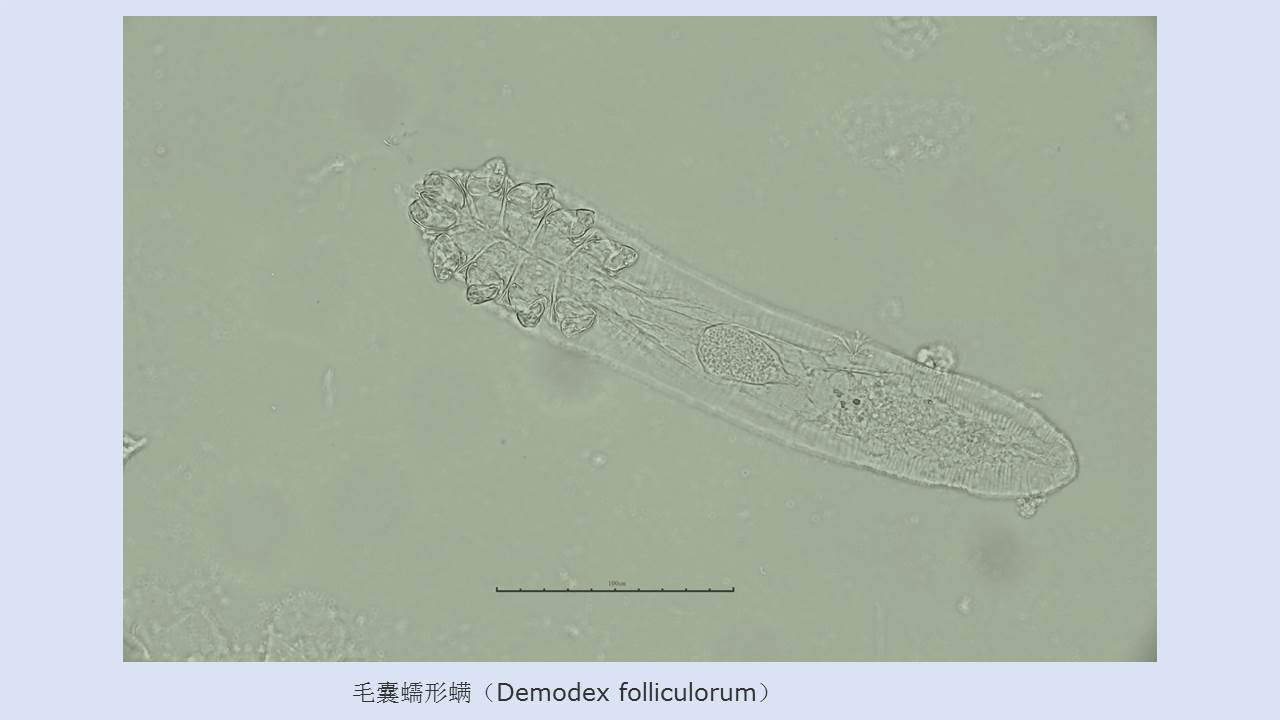
    Objective To establish a safe and rapid preparation method for long-term preservation of human Demodex specimen, and to meet the needs of experimental teaching of human parasitology. Methods Human Demodex mites were obtained by the cellophane tape method and the squeezing method and were treated with various methods to compare the sealing effect of neutral balsam, odorless mounting medium, and glycerol jelly mounting medium, and the morphology of mite was observed and photographed under the KoPa WiFi EDU software system of the digital microscope. Results The specimens with few background impurities or little grease which did not affect observation were directly sealed with odorless mounting medium or glycerol jelly mounting medium. In contrast, the specimens with excessive bubbles, grease, or hair which affected observation were first cleaned with 2% dish soap for a short period of time, then placed in 75%-100% ethanol for dehydration, and finally sealed with odorless mounting medium. If there was a high density of mites on one sheet of adhesive tape, such specimens were first soaked in 2% dish soap for a long time and then centrifuged, and the mites collected were fixed with 75% ethanol and sealed with a glycerol jelly mounting medium. Conclusion Odorless mounting medium or glycerol jelly mounting medium can replace neutral balsam as the mounting medium for preparing Demodex specimen, and 2% dish soap can remove the excess grease in specimen and easily release the mites from the adhesive tape.
  • Investigation
  • XIANG Yu-long, ZHOU Jing-zhu, LIU Ying, LIU Ping-tao, HU Yong, LIANG Wen-qin
    Chinese Journal of Vector Biology and Control. 2022, 33(1): 148-152. https://doi.org/10.11853/j.issn.1003.8280.2022.01.027
    Abstract ( ) Download PDF ( )   Knowledge map   Save
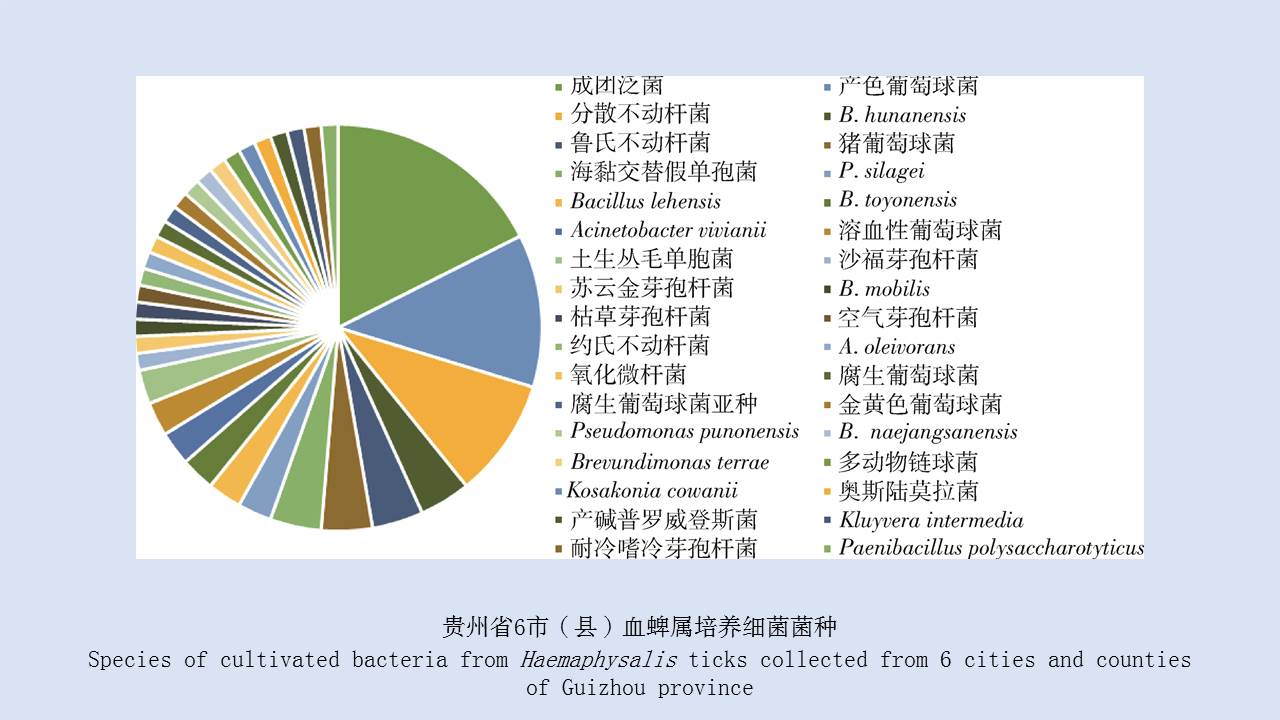
    Objective To investigate the situation of ticks and tick-borne bacteria in some areas of Guizhou province, China, and to provide a scientific basis for the prevention and control of tick-borne diseases. Methods Parasitic ticks were collected from the body surface of cattle, sheep, and rodents in Xiuwen county, Qinglong county, Xingyi city, Xingren city, Wangmo county, and Jiangkou county of Guizhou province, in April 2017 and April 2019. Morphological identification was performed on the ticks. Some ticks were selected for bacterial culture using blood agar and brain-heart infusion agar. Colonies with different morphologies were selected for bacterial passage and purification, followed by full 16S rDNA amplification and sequencing to identify the species of bacteria. Results A total of 742 on-host ticks belonging to 6 species of 3 genera were collected. Haemaphysalis longicornis was the dominant species, accounting for 69.81% of the total catches, followed by Rhipicephalus microplus, accounting for 23.05%, and the other tick species only accounted for 7.14%. A total of 188 strains of bacteria were acquired from culture, belonging to 28 genera in 3 phyla. Proteobacteria was the dominant phylum, followed by Firmicutes and Actinobacteria. Conclusion In these areas of Guizhou province, tick species are abundant, and they carry varied species of bacteria, including a variety of zoonotic pathogens. In order to prevent ticks from harming people and livestock, the investigation, monitoring, and control of ticks and tick-borne pathogens should be strengthened.
  • Review
  • WANG Chao, YAN Li-ping, LI Xin-yu, ZHANG Dong, LIU Qi-yong
    Chinese Journal of Vector Biology and Control. 2022, 33(1): 153-158. https://doi.org/10.11853/j.issn.1003.8280.2022.01.028
    Abstract ( ) Download PDF ( )   Knowledge map   Save
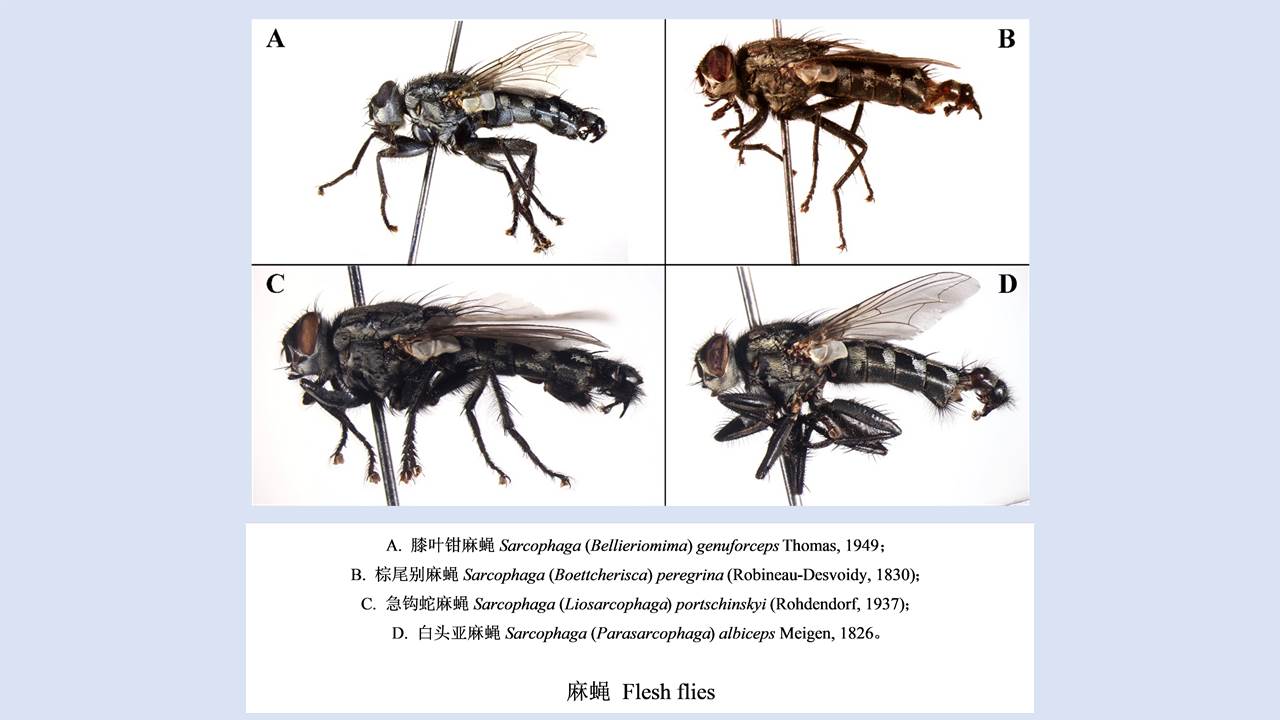
    Flies are important vectors which can carry and transmit a variety of pathogens mechanically and cause a variety of diseases. Some fly species can transmit diseases biologically. Flesh flies (Sarcophaga) are a common group of flies and have public health importance in vector surveillance. However, there are still difficulties in the identification of flesh flies. This article reviews the studies of Sarcophaga, so as to provide a reference for the taxonomy, morphology, and phylogeny of Sarcophaga and promote the research on the prevention and control of vector flies.