20 December 2023, Volume 34 Issue 6
    

  • Select all
    |
    Experimental Study
  • MA Jing, CHEN Kai-ting, GUANG Hui, ZHAO Wen-bin, YANG Yin-ran, GAO Jin-liang, CAO Mei-na
    Chinese Journal of Vector Biology and Control. 2023, 34(6): 713-718. https://doi.org/10.11853/j.issn.1003.8280.2023.06.001
    Abstract ( ) Download PDF ( ) HTML   Knowledge map   Save
    Objective To optimize the conditions for the induction expression and purification of recombinant Hq012 (rHq012) inclusion bodies of Haemaphysalis qinghaiensis.Methods The novel gene Hq012 with no homogenous sequences in the GenBank database was cloned from the cDNA expression library of H. qinghaiensis to be transfected into Escherichia coli Rosetta (DE3) using the prokaryotic expression plasmid pET-30a-Hq012. Isopropyl-β-D-thiogalactoside (IPTG) was used to induce the expression of rHq012 protein. After homogenizing the bacteria under high pressure, the inclusion bodies were dissolved in 6 mol/L guanidine hydrochloride solution. We compared the yield of the target protein obtained by first renaturation and then purification (refolding by dilution followed by purification with nickel ion affinity chromatography) and by first purification and then renaturation (purification with nickel ion affinity chromatography followed by refolding by dialysis). The obtained protein was identified by 12% sodium dodecyl sulfate polyacrylamide gel electrophoresis.Results The nucleotide sequence length of the Hq012 gene was 759 bp, containing an open reading frame of 486 bp, encoding a protein with a relative molecular mass of 18 500. The protein expression was the highest at 8-hour induction with IPTG at 0.1 mmol/L. The inclusion bodies were dissolved with 6 mol/L guanidine hydrochloride. The yield of rHq012 harvested by first renaturation and then purification was higher compared with that by first purification and then renaturation. The relative molecular mass of the protein purified by nickel ion affinity chromatography was about 17 000, which was consistent with expected results.Conclusions Induction at an concentration of 0.1 mol/L IPTG for 8 hours was the best induction condition, and the method of first refolding followed by purification was an optimal purification method for the tick-derived recombinant protein rHq012. The study provides a reference for the purification of inclusion body protein.
  • ZHANG Ya-jun, ZHAO Chun-chun, FENG Xing-ming, WANG Jia-lin, LUN Xin-chang, LIU Qi-yong, MENG Feng-xia
    Chinese Journal of Vector Biology and Control. 2023, 34(6): 719-722. https://doi.org/10.11853/j.issn.1003.8280.2023.06.002
    Abstract ( ) Download PDF ( ) HTML   Knowledge map   Save
    Objective To establish the sensitive baseline of houseflies to six commonly used insecticides, so as to provide a basis for the monitoring and control of the insecticide resistance of houseflies.Methods The topical application method was used to test the sensitivity of laboratory susceptible housefly strains to six insecticides (deltamethrin, beta-cypermethrin, permethrin, dichlorvos, propoxur, and dinotefuran) of four categories. Data from previous literature were collected for comparison. The statistical significance of sensitivity differences was determined according to whether the 95% confidence interval of the median lethal dose (LD50) overlapped. Based on the above steps, the baseline sensitivity of houseflies to the six insecticides was established.Results The baseline sensitivity of the six test insecticides against houseflies were as follows: deltamethrin (LD50=0.002 236 μg/♀, y=13.76+5.19x), beta-cypermethrin (LD50=0.003 692 μg/♀, y=9.34+3.84x), permethrin (LD50=0.007 152 μg/♀, y=10.03+4.67x), dichlorvos (LD50=0.074 20 μg/♀, y=5.02+4.44x), propoxur (LD50=0.415 9 μg/♀, y=0.93+2.43x), and dinotefuran (LD50=0.103 6 μg/♀, y=6.31+6.41x).Conclusion This study established the baseline sensitivity of houseflies through testing the sensitivity of laboratory susceptible strains to six commonly used insecticides, providing a reference for monitoring and assessing the resistance level of houseflies in China.
  • CHEN Kai-li, YANG Chen, ZHANG Yu-fan, LI Si-si, LIU Jing-ze, ZHANG Yan-kai
    Chinese Journal of Vector Biology and Control. 2023, 34(6): 723-727. https://doi.org/10.11853/j.issn.1003.8280.2023.06.003
    Abstract ( ) Download PDF ( ) HTML   Knowledge map   Save
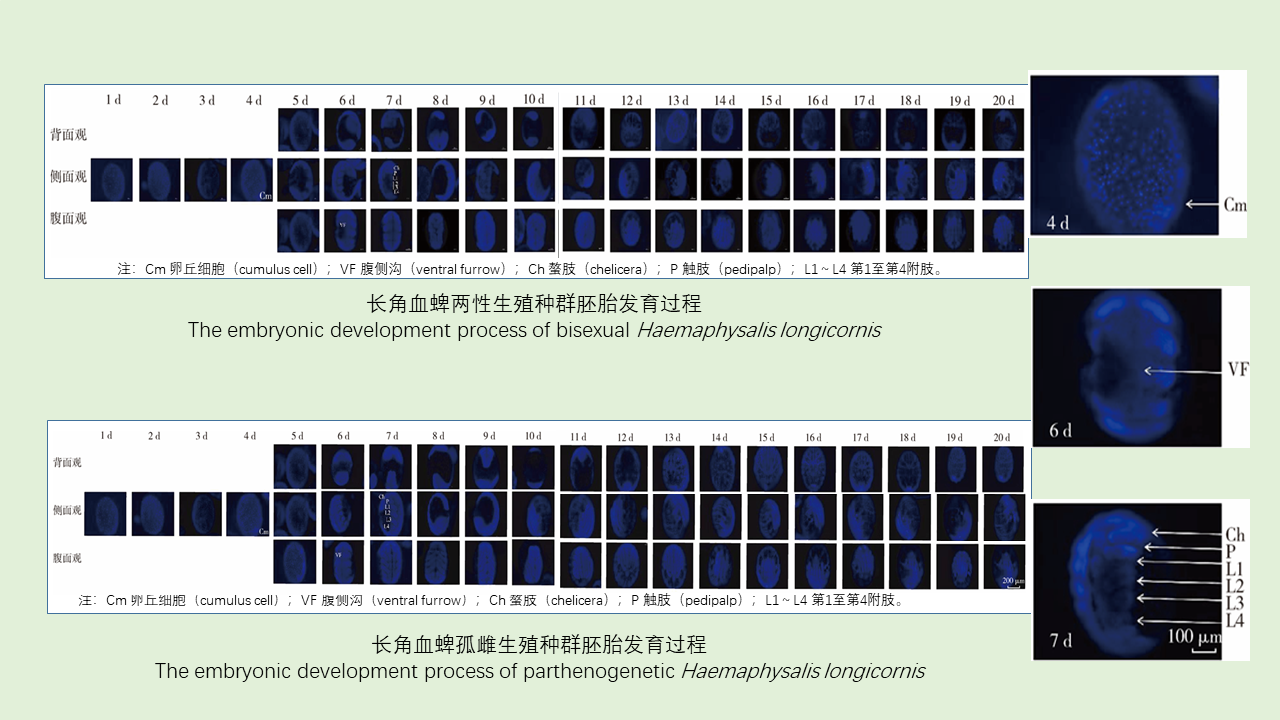
    Objective To study the embryonic development of bisexual and parthenogenetic Haemaphysalis longicornis, so as to provide a basis for dynamic prediction and control of this species.Methods The embryonic development process of H. longicornis was recorded after embryo fixation and 4',6-diamidino-2-phenylindole staining under laboratory conditions (temperature, [26±1] ℃; relative humidity, [75±5]%; photoperiod, 16L∶8D). The independent samples t-test was used for comparison of differences between groups.Results The embryonic developmental period of parthenogenetic ticks ([24.6±1.7] d) was significantly longer than that of bisexual ticks ([22.5±3.5] d) (t=2.699, P=0.010). There was no significant difference in embryonic development between the two reproductive populations. The embryonic development process was generally as following: on day 1, the nucleus could be observed in the early embryo; on day 4, the number of cells increased significantly, and the blastoderm appeared; on day 6, the embryonic body segments and ventral furrow appeared; on day 7, the head, thorax, and growth zone could be clearly distinguished, the anlagen of the three pairs of legs (1L-3L) became clear, and the fourth leg pair (4L) was significantly shorter than the first three leg pairs; on day 12, the ventral furrow closed, the fourth pair of legs began to degenerate, the other three pairs of legs became larger, the embryo contracted to the anterior ventral region, and the dorsal region began to close; on day 16, the dorsal region continued to close, and the position of the chelicerae on the head changed; on day 20, dorsal closure was completed, and the embryo began to hatch.Conclusion This study presented the embryonic developmental process of H. longicornis under laboratory conditions, providing a reference for dynamic prediction and control of H. longicornis populations.
  • Vector Surveillance
  • YU Bo, LIU Xing-yuan, WANG Yi-ping, NIU Lei, WEI Zi-tong, WANG Qiang, LIANG Hui-jie
    Chinese Journal of Vector Biology and Control. 2023, 34(6): 728-732. https://doi.org/10.11853/j.issn.1003.8280.2023.06.004
    Abstract ( ) Download PDF ( ) HTML   Knowledge map   Save
    Objective To investigate the species, distribution, seasonal variation, and pathogens of rodents at Mohe Port in Heilongjiang Province in China, so as to provide a reference for in-depth research on rodent control and the prevention and treatment of related infectious diseases in this port.Methods The night snap trapping method was used to conduct the surveillance of rodent density from May to August in each year from 2019 to 2022, for three consecutive days each month. Nested PCR and ordinary PCR methods were used to detect 11 pathogens in the samples of rodents collected, including spotted fever group Rickettsia (SFGR), Yersinia pestis, and Borrelia burgdorferi. The Chi-square test was used to compare the differences in rodent density and the positive rate of pathogens carried by the rodents.Results A total of 208 rodents of 7 species belonging to 1 order, 3 families, and 6 genera were captured. Apodemus agrarius was the dominant species in this region, accounting for 35.58%, followed by A. peninsulae, accounting for 16.83%. A total of 6 pathogens were detected, with an overall positive rate of 50.48%, among which SFGR had the highest positive rate of 40.38%, followed by Hantavirus (11.54%) and B. burgdorferi (3.85%). There were 20 rodents with co-infection of pathogens, accounting for 19.05% of the total number of rodents with positive pathogens, among which one rodent was infected with 3 pathogens.Conclusion The rodents at Mohe Port carry a variety of pathogens such as Hantavirus, B. burgdorferi, and SFGR, and it is necessary to strengthen the early warning and surveillance of rodents and rodent-borne diseases in this area.
  • JIN Bin-bin, ZHOU Qian-qian, WEI Ling-ya, DUAN Tian-xiao, WANG Ying-hong, XU Yong-jie, JIN Hui
    Chinese Journal of Vector Biology and Control. 2023, 34(6): 733-738. https://doi.org/10.11853/j.issn.1003.8280.2023.06.005
    Abstract ( ) Download PDF ( ) HTML   Knowledge map   Save
    Objective To investigate the species composition, population density, and seasonal fluctuation of flies in Hangzhou, Zhejiang Province, China from 2017 to 2021, and explore the impact of meteorological factors on fly density, so as to provide a scientific basis for fly control.Methods From April to November of 2017-2021, fly density was monitored by cage trapping method in four types of habitats in Hangzhou, including residential areas, catering-related outdoor environments, green belts, and farmers’ markets. The obtained data were analyzed using Excel 2019 and SPSS 20.0 softwares. The Chi-squared test and one-way analysis of variance were used to compare the data of different years and habitats. Correlation and regression analyses were performed on fly density and meteorological factors.Results From 2017 to 2021, a total of 4 967 fly traps were deployed in Hangzhou, collecting a total of 10 267 flies, with an overall density of 2.07 flies/cage. The dominant fly species were species of Sarcophagidae, Musca domestica, Lucilia sericata, and Chrysomya megacephala, together accounting for 74.00% of the total number of catches, with the density of Sarcophagidae flies being the highest at 0.32 flies/cage. In different habitats, the density of flies was highest in farmer’s markets at 2.79 flies/cage and lowest in catering-related outdoor environments at 1.44 flies/cage, with a statistical difference in fly density between different habitats (F=8.493, P=0.001). Among different regions of Hangzhou, Yuhang District had the highest fly density, while Jiande had the lowest fly density, with no statistical difference in fly density between regions (F=1.433, P=0.140). The overall seasonal fluctuations of fly density showed a double-peak pattern, with the peaks appearing in June and August, respectively. There was no statistical difference in the seasonality of fly density between different years (F=0.865, P=0.495). The density of flies in Hangzhou showed positive linear correlations with the average temperature, average maximum temperature, extreme maximum temperature, days of average temperature ≥18 ℃, average dew point temperature, precipitation, maximum daily precipitation, average minimum temperature, and extreme minimum temperature. Multiple stepwise regression analysis shows that the mean maximum temperature can enter the regression equation y=-1.707+0.430x (F=79.701, P<0.001).Conclusions In Hangzhou, the density of flies is the highest in the farmers' market, the peak period of activity is mainly summer, and the density of flies is affected by a variety of meteorological factors. It is recommended that comprehensive control measures should be taken as early as possible before the peak period of fly activity to control the fly density at insufficient levels.
  • GUO Bin, WU Ai-lan, CHEN Kang, JIA Xu-qiang, MA Jing-jing, XU Yue-chen, WU Zhen-hua, ZHANG Jing, JIN Xu-jing
    Chinese Journal of Vector Biology and Control. 2023, 34(6): 739-743,748. https://doi.org/10.11853/j.issn.1003.8280.2023.06.006
    Abstract ( ) Download PDF ( ) HTML   Knowledge map   Save
    Objective To investigate the distribution of ticks and the carrying status of (SFTSV) in Dongyang, Zhejiang Province, China, so as to provide a basis for the prevention and control of severe fever with thrombocytopenia syndrome.Methods In 2019-2020, two towns (subdistrict) were set as monitoring sites in each of the mountainous, hilly, and basin areas of Dongyang. The artificial drag-flag method was used to collect free-living ticks in the wild. Parasitic ticks on the body surface of host animals, such as domestic animals (sheep, cattle, and dog) and field mice, were collected by tick inspection on the body surface of animals. Tick specimens were identified. Real-time quantitative reverse transcription polymerase chain reaction was used to detect SFTSV. The difference in rates was analyzed by the Chi-square test. The difference in the number of captured ticks was analyzed by the Fisher’s exact test.Results There were 10 species of ticks belonging to 4 genera and 1 family in Dongyang. There was statistically difference in the number of free-living ticks caught in different seasons in mountainous, hilly and basin areas (P<0.001 by Fisher’s exact test), which was significantly higher in mountainous areas than in basin areas, and the tick density in the first and second quarters was significantly higher than that in the third and fourth quarters. The average density of free-living ticks was 30.83 ticks/flag·100 m. The average tick infection rate of domestic animals was 18.72%, with a tick index of 0.94, and the average tick infection rate of rodents was 8.59%, with a tick index of 0.22. The dominant populations of free-living ticks and parasitic ticks on the body surface of domestic animals and rodents were Haemaphysalis longicornis, Rhipicephalus haemaphysaloides, and Ixodes granulatus, respectively. No SFTSV was detected in 771 tick specimens from 251 groups.Conclusions Ticks are commonly found in the wild and on the body surface of animals in Dongyang, and the species are relatively rich. The density of ticks is high in spring and summer, suggesting that spring is the best time to kill ticks.
  • WANG Li-yan, ZHOU Hui, CHEN Zhong-bing, FANG Chun-fu, CAO Guo-ping, ZHU Jian-ying, ZHANG Ying, GONG Zhen-yu
    Chinese Journal of Vector Biology and Control. 2023, 34(6): 744-748. https://doi.org/10.11853/j.issn.1003.8280.2023.06.007
    Abstract ( ) Download PDF ( ) HTML   Knowledge map   Save
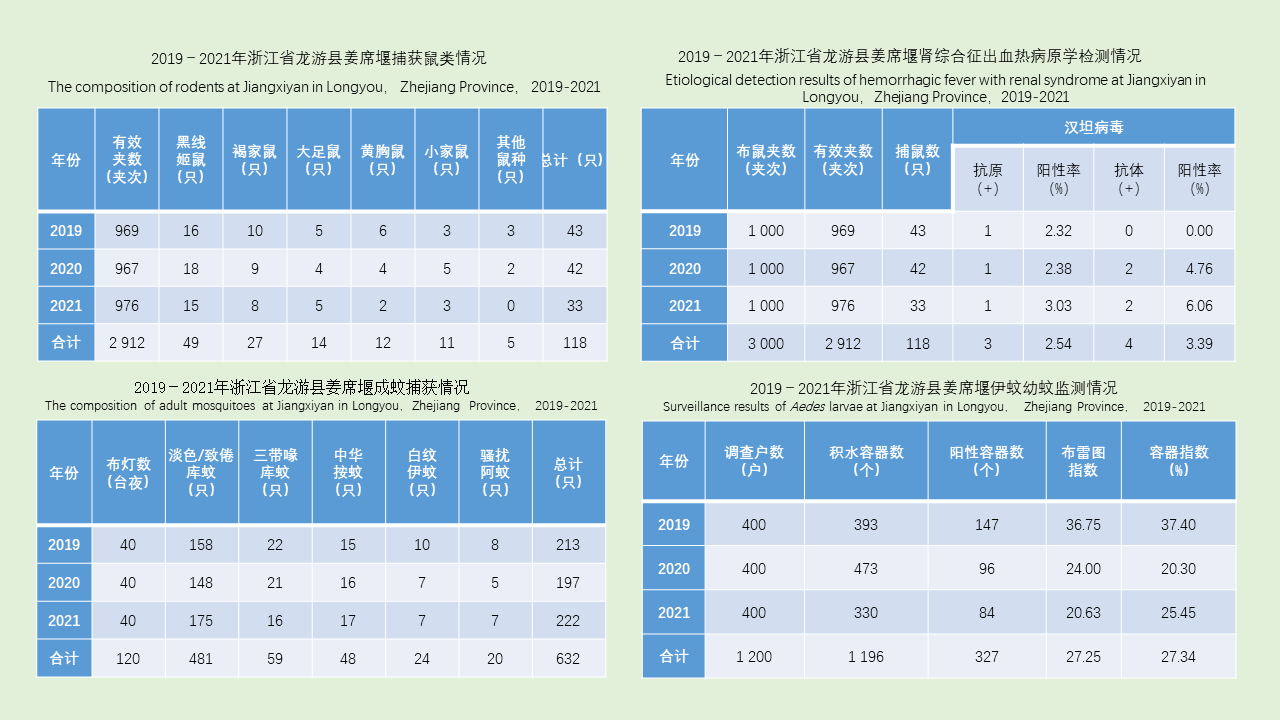
    Objective To investigate the species, density, and seasonality of main vectors in Jiangxiyan, a world heritage irrigation structure in Longyou County, Zhejiang Province, China, so as to provide a scientific basis for the prevention and control of vector-borne infectious diseases.Methods According to the Zhejiang Provincial Vector Surveillance Program, rodents, mosquitoes, and ticks were monitored at Jiangxiyan in Longyou County from 2019 to 2021. Rodents were monitored by night snap trapping, adult mosquitoes by lamp trapping, larval mosquitoes using the Breteau index (BI) method, and ticks by flag dragging and animal body surface collection. The density, species composition, and seasonal trends of vectors in different habitats were analyzed by using the descriptive epidemiological methods.Results At Jiangxiyan in Longyou County from 2019 to 2021, the overall rodent density was 4.05%, and Apodemus agrarius was the dominant species, accounting for 41.53% of the total number. A total of 118 mouse lungs were tested, with a positive rate of 2.54% for Hantavirus antigen; The positive rate of Hantavirus antibody in 118 mouse blood samples was 3.39%. Culex pipiens pallens/quinquefasciatus was the dominant mosquito species, accounting for 76.11%, followed by Cx. tritaeniorhynchus, Anopheles sinensis, and Aedes albopictus. The average BI from 2019 to 2021 was 27.25. No ticks were caught.Conclusions A. agrarius is the dominant rodent species, Cx. pipiens pallens/quinquefasciatus and Ae. albopictus are the dominant mosquito species at Jiangxiyan. Targeted comprehensive control measures should be taken to control the spread of vector and vector borne infectious diseases.
  • HOU Yin-xu, ZHANG Yan-jie, WANG Wen-jun, YANG Feng-tao, LIU Xiao-bo, MENG Feng-xia, XU Qing-hua
    Chinese Journal of Vector Biology and Control. 2023, 34(6): 749-753. https://doi.org/10.11853/j.issn.1003.8280.2023.06.008
    Abstract ( ) Download PDF ( ) HTML   Knowledge map   Save
    Objective To investigate the resistance levels of the dengue vector Aedes albopictus collected in 2021 to commonly used insecticides in Hefei, Anhui Province, China, so as to provide a scientific basis for the control of Aedes vectors and the formulation of standardized insecticide use strategies.Methods The resistance levels of Ae. albopictus collected in 2021 to commonly used insecticides were determined using the dipping method for larvae and the WHO tube method for adult mosquitoes. Using the Probit module of SPSS 22.0 software, the data from the bioassays were analyzed for the toxicity regression equation, Chi-squared value, median lethal concentration (LC50), and 95% confidence interval (CI). The mortality rate and resistance ratio were calculated to evaluated the resistance level.Results In 2021, the LC50 values of propoxur, temephos, dichlorvos, chlorpyrifos, Bacillus thuringiensis israelensis (Bti), permethrin, deltamethrin, and beta-cypermethrin against Ae. albopictus larvae in Hefei were 2.984, 0.015, 0.055, 0.004, 0.037 (259 ITU/L), 0.235, 0.103, and 0.019 mg/L, respectively. The resistance ratios were 8.29, 9.25, 0.91, 0.33, 0.84, 117.79, 257.50, and 21.13 times, respectively. Ae. albopictus larvae in Hefei were sensitive to Bti, dichlorvos, and chlorpyrifos, lowly resistant to propoxur and temephos, moderately resistant to beta-cypermethrin, and highly resistant to permethrin and deltamethrin. Adult Ae. albopictus mosquitoes in Hefei were resistant to fenitrothion and deltamethrin (24 h mortality: 21.43% and 71.60%, respectively), sensitive to chlorpyrifos and bendiocarb (24 h mortality: 100%), and possibly resistant to permethrin, beta-cypermethrin, lambda-cyhalothrin, propoxur, and malathion.Conclusions Chlorpyrifos can be used for the control of adult Ae. albopictus, while temephos and Bti can be used as the first-choice insecticides for larval control. Bendiocarb can be combined or mixed with the sensitive pyrethroids for adult mosquito control in key environments. The use of pyrethroids and fenitrothion should be reduced to delay the development of resistance and gradually restore sensitivity.

  • Vector-borne Disease
  • LI Shi-hao, ZHAO Zhong-hui, YUE Yu-juan, REN Jia-rong, LUO Lei, YANG Ming-dong, ZHAO Ning, GUO Yu-hong, WU Hai-xia, LIU Xiao-bo, LIU Qi-yong
    Chinese Journal of Vector Biology and Control. 2023, 34(6): 754-760. https://doi.org/10.11853/j.issn.1003.8280.2023.06.009
    Abstract ( ) Download PDF ( ) HTML   Knowledge map   Save
    Objective To investigate the influencing factors of dengue fever and the existing problems in prevention and control efforts against dengue fever in the representative areas of Yunnan and Guangdong provinces, China through in-depth interviews, and to put forward targeted recommendations for local prevention and control strategies against dengue fever.Methods Using a self-designed interview outline, one-to-one interviews with 25 professionals engaged in dengue fever prevention and control research, epidemiological investigations, and treatment from the cities and prefectures with severe dengue fever outbreaks in Yunnan and Guangdong provinces were conducted. Electronic interview documents were obtained and imported into MAXQDA 2020 software for thematic framework analysis, including categorization, coding, analysis, and charting.Results Through the analysis of the interview data, a total of four first-level themes were obtained: (1) the current situation of dengue fever prevention and control, i.e., the current prevention and control strategies and measures, which were summarized in four measures attributed to routine response and seven to response strategies and measures against outbreaks; (2) factors affecting dengue fever prevention and control, including two climatic factors and six social factors, among which social factors could be controlled through human intervention to control the spread of dengue fever; (3) problems in dengue fever prevention and control, including inadequate government’s attention, unbalanced and insufficient financial investment, low public participation, and a lack of assessment and supervision mechanisms, which were most frequently mentioned by experts, along with six other problems, according to the interview data; (4) key points of response to dengue fever, which were summarized in ten key points of response.Conclusions The representative areas of dengue fever in Yunnan and Guangdong provinces should establish a long-term response mechanism led by the government with multi-sectoral cooperation to fully mobilize residents to participate in prevention and control, reasonably allocate funds for prevention and control, strengthen the control of Aedes vectors, and provide a scientific basis for the sustainable and precise control of dengue fever and other Aedes vector-borne diseases in China.
  • YUE Yu-juan, LIU Xiao-bo, REN Dong-sheng, YIN Wen-wu
    Chinese Journal of Vector Biology and Control. 2023, 34(6): 761-766,818. https://doi.org/10.11853/j.issn.1003.8280.2023.06.010
    Abstract ( ) Download PDF ( )   Knowledge map   Save
    Objective To analyze the epidemiological characteristics (temporal, spatial, and demographic distributions) of indigenous and imported cases of dengue fever reported in Chinese mainland from 2005 to 2020.Methods The seasonal characteristics of dengue fever were analyzed using Excel 2010. Trend analysis was performed on the annual median age of disease onset using the Mann-Kendall test with the use of R 4.0.2. The map visualization and spatial analysis of cases were conducted using ArcGIS 10.3 software.Results A total of 81 648 indigenous cases of dengue fever were reported in 14 provinces (autonomous regions or municipalities) of Chinese mainland from 2005 to 2020. The indigenous cases were reported between May and December, concentrated between August and November (98.26%), and were distributed south from 35°36?N, mainly in Guangdong (74.01%) and Yunnan (13.74%) provinces, indicating seasonal and regional characteristics. Two major outbreaks of dengue fever occurred in 2014 and 2019, with 46 033 and 15 376 indigenous cases, respectively, adding up to 75.21% of the total indigenous cases. Among the local cases from 2005 to 2020, the male-to-female ratio was 0.99∶1; 54.93% were aged between 25 and <55 years; the top three frequent occupations were engagement in housework or unemployment (21.40%), service workers (12.46%), and retirees (11.71%). The median age of the total indigenous cases was 40 years (interquartile range [IQR]: 27-54). The difference of overall trend of the median age of indigenous cases since 2005 was not statistically significant (Z=1.510, P=0.131). There were a total of 12 701 imported cases in 30 provinces (autonomous regions or municipalities) except the Tibet Autonomous Region in Chinese mainland from 2005 to 2020. The imported cases were reported throughout a year, frequently between June and November (81.81%), and were mainly distributed in Yunnan, Guangdong, Fujian, and Zhejiang provinces, suggesting seasonal and regional characteristics. The imported cases were mainly from Southeast Asian countries including Myanmar and Cambodia. In 2019, the number of imported cases reached a peak of 5 813, accounting for 45.77% of the total imported cases. Among the imported cases from 2005 to 2020, the male-to-female ratio was 2.05∶1; 73.29% were aged between 25 and 54 years; the top three frequent occupations were farmers (24.13%), service workers (19.34%), and engagement in housework or unemployment (13.91%). The median age of the total imported cases was 33 years (IQR: 26-44). The overall trend of the median age of imported cases since 2005 was not statistically different (Z=0.413, P=0.679). A total of 15 376 indigenous cases and 5 813 imported cases reported in 2019, and the number of indigenous and imported cases reported were dramatically decreased to 616 and 158 in 2020, respectively.Conclusions Dengue fever outbreaks in Chinese mainland are still caused by imported cases, with significant seasonal and regional characteristics. The indigenous cases were mainly distributed in Guangdong and Yunnan provinces, while the imported cases were mainly from Southeast Asian countries including Myanmar and Cambodia. There was no significant change in the median age of dengue fever cases from 2005 to 2021.
  • DING Jun-fei, GUAN Peng-cheng, LI Wei
    Chinese Journal of Vector Biology and Control. 2023, 34(6): 767-771. https://doi.org/10.11853/j.issn.1003.8280.2023.06.011
    Abstract ( ) Download PDF ( ) HTML   Knowledge map   Save
    Objective To analyze the epidemiological characteristics of typhus fever in Jinzhai County, Anhui Province, China in recent ten years, so as to provide a basis for scientific control of typhus fever.Methods The descriptive epidemiological method was used to systematically analyze the characteristics of the surveillance data on cases of typhus fever in Jinzhai County from 2013 to 2022 collected from the China Information System for Disease Control and Prevention. Qualitative data were described as rates or constituent ratios, and analyzed using the Chi-squared test.Results From 2013 to 2022, 426 cases of typhus fever were reported in Jinzhai County, with a mean annual incidence of 8.23/100 000, and no deaths were reported. The incidence peak occurred between April and September (spring and summer), during which the number of cases accounted for 85.68% (365/426) of the total number of cases reported. The incidence of typhus fever was significantly higher among women than among men (χ2=30.878, P<0.001), and the male-to-female ratio was about 0.62:1. The incidence of typhus fever was highest in the age group of 60-<70 years (256.67/100 000). A vast majority of cases were farmers among occupations (93.90%). Cases were reported in 22 of 23 townships.Conclusions Cases of typhus fever were widely reported across Jinzhai County, predominantly affecting farmers and middle-aged and elderly people, with significant sex difference and seasonality. Therefore, typhus fever surveillance, prevention, and control should be strengthened for high-incidence areas and high-risk populations.
  • XIE Yan-qiong, YANG Rui
    Chinese Journal of Vector Biology and Control. 2023, 34(6): 772-776. https://doi.org/10.11853/j.issn.1003.8280.2023.06.012
    Abstract ( ) Download PDF ( ) HTML   Knowledge map   Save
    Objective To investigate the epidemiological characteristics of typhus fever in Hubei Province, China, in 2008 to 2021, so as to provide a scientific basis for formulating prevention and control strategies for typhus fever.Methods Excel 2013, SPSS 20.0, and Joinpoint 4.9.0 were used to analyze the incidence rate, population distribution, temporal and regional distribution, onset and presentation, and type of typhus fever cases reported directly via the network in Hubei Province in 2008-2021. The Chi-squared test was used to compare the differences of incidence rates.Results A total of 623 cases of typhus fever were reported in Hubei Province in 2008-2021, among which there were 438 clinically diagnosed cases with percentage of 70.30%, 13 confirmed cases, and 172 suspected cases, and no cases of death were reported. The mean annual incidence rate of typhus fever in Hubei Province was 0.005/100 000 in 2008-2015, and it continued to increase in 2016 and reached 0.388/100 000 in 2021, which was 215.56 times that in 2008. The onset of the disease showed a sporadic trend. In the past 14 years, a total of 12 cities (prefectures) and 28 counties (districts) in Hubei Province reported the cases of typhus fever, with the feature of a certain degree of geographical concentration, and the top 3 counties (districts) in terms of incidence rate were Yingshan County (93.038/100 000), Xuan’en County (19.765/100 000), and Jianshi County (12.054/100 000). The onset time was mainly from April to November, showing a pattern of bimodal distribution. The patients aged 40-<70 years accounted for the highest proportion of 76.73%, and the male/female ratio was 1:2.2. Most patients were farmers in terms of occupation (87.16%). The median time from onset to diagnosis was 4 days, and the cases mainly came from county-level general hospitals.Conclusions The prevalence of typhus fever in Hubei Province is increasing year by year, with obvious regional and seasonal characteristics, and farmers are the population with a relatively high incidence rate of typhus fever. It is recommended to strengthen health education for key populations in high-incidence regions in summer and autumn to reduce the chance of infection and control the onset and prevalence of typhus fever.
  • ZHANG Lu-qian, LI Xin-xin, NING Shao-qi, WANG Shu, NIAN Yun-peng
    Chinese Journal of Vector Biology and Control. 2023, 34(6): 777-781. https://doi.org/10.11853/j.issn.1003.8280.2023.06.013
    Abstract ( ) Download PDF ( ) HTML   Knowledge map   Save
    Objective To analyze the epidemiological characteristics of scrub typhus in Shaanxi Province, China from 2010 to 2022, and understand the incidence level of scrub typhus, so as to provide evidence for the prevention and control strategies against scrub typhus.Methods The data on cases of scrub typhus in Shaanxi Province from 2010 to 2022 were collected to analyze the incidence, the spatial, temporal, and population distribution characteristics, and the changing trend of scrub typhus with the use of Excel 2007 and SPSS 18.0 softwares. The annual percent change and average annual percent change were calculated using Joinpoint 4.9.1.0 software. The incidence rate was mapped using SuperMap 8C softwares; the peak day and peak period of incidence were calculated using the circular distribution method.Results A total of 938 cases of scrub typhus were reported in Shaanxi Province from 2010 to 2022, with no deaths. The incidence rate increased from 0.04/100 000 in 2010 to 0.52/100 000 in 2022. The cases were distributed in 60 counties and districts of 10 cities of the province, mainly in Xi’an, Ankang, Shangluo, and Hanzhong (the total cases of the four districts accounting for 97.33%). The incidence was concentrated between October and November (accounting for 59.80%), and the peak period was from August 3rd to December 5th and the peak day was Oct 4th. The cases were mainly aged 45-<75 years, accounting for 74.52%, and the male-to-female ratio was 0.97:1. In terms of occupation, farmers accounted for an overwhelming cases percentage of 87.85%. The median time from disease onset to diagnosis was 6 days.Conclusions Scrub typhus in Shaanxi Province has shown an overall increasing incidence and involved a constantly expanding range, with significant regionality and seasonality and a high incidence among middle-aged and elderly people in rural areas. In the endemic areas of scrub typhus, it is necessary to strengthen the density monitoring of rodents and chigger mites, promote health education for key populations, and ensure personal protection in field work, so as to reduce the occurrence and prevalence of scrub typhus.
  • GAO Xiong, DENG Shu-zhen, SU Gui-qin, SHEN Xiu-lian
    Chinese Journal of Vector Biology and Control. 2023, 34(6): 782-787. https://doi.org/10.11853/j.issn.1003.8280.2023.06.014
    Abstract ( ) Download PDF ( ) HTML   Knowledge map   Save
    Objective To analyze the epidemiological characteristics of scrub typhus in Honghe Hani and Yi Autonomous Prefecture (Honghe Prefecture), Yunnan Province on the border of China and Vietnam, so as to provide a scientific basis for formulating scrub typhus control strategies in the future.Methods The information on cases of scrub typhus in Honghe Prefecture from 2013 to 2022 were collected from the China Information System for Disease Control and Prevention. The data were analyzed using descriptive epidemiological methods, the Chi-squared test, the rank sum test, and concentration distribution analysis.Results A total of 8 035 cases of scrub typhus were reported in Honghe Prefecture in the past 10 years, with an average annual incidence of 17.37/100 000, including 1 death. The reported incidence of scrub typhus showed an increasing trend over the years (χ2trend=3 044.855, P<0.001). Yuanyang County reported the highest number of cases (1 888 cases, an incidence of 47.22/100 000), and Pingbian County reported the highest incidence (1 280 cases, an incidence of 82.53/100 000). The occurrence of scrub typhus had strong seasonality, with the peak period concentrated during June to September (5 854 cases, 72.86%). The cases of scrub typhus were mainly aged 30-<70 years (4 848 cases, 60.33%) and 0-<10 years (1 778 cases, 22.13%). The male-to-female ratio was 0.98:1. A majority of the cases were farmers among occupations (5 588 cases, 69.55%). The median time from disease onset to diagnosis was 10 days. The time from disease onset to diagnosis was statistically different between years (H=102.812, P=0.001) and between the northern and southern regions (bounded by the Tropic of Cancer) (H=1 087 686.000, P=0.025), with a shorter time interval in the southern region than in the northern region. The reported cases were mainly from general hospitals at the county (city) level or above, and 95.16% of them were clinically diagnosed cases.Conclusions The incidence of scrub typhus is on the rise in Honghe Prefecture, more frequent in children and middle-aged and elderly people in rural areas, with significant regional difference and significant seasonality with the peak in summer and autumn, and the time interval from onset to diagnosis is relatively long. It is necessary to strengthen scrub typhus surveillance and to reclassify it as a notifiable infectious disease to reduce the economic burden of the disease.
  • Technology and Method
  • XIAO Shan, CHEN Jian-yong, LIN Bin, LONG Jian-xun, PENG Lai, ZHU Cai-ying
    Chinese Journal of Vector Biology and Control. 2023, 34(6): 788-793. https://doi.org/10.11853/j.issn.1003.8280.2023.06.015
    Abstract ( ) Download PDF ( ) HTML   Knowledge map   Save
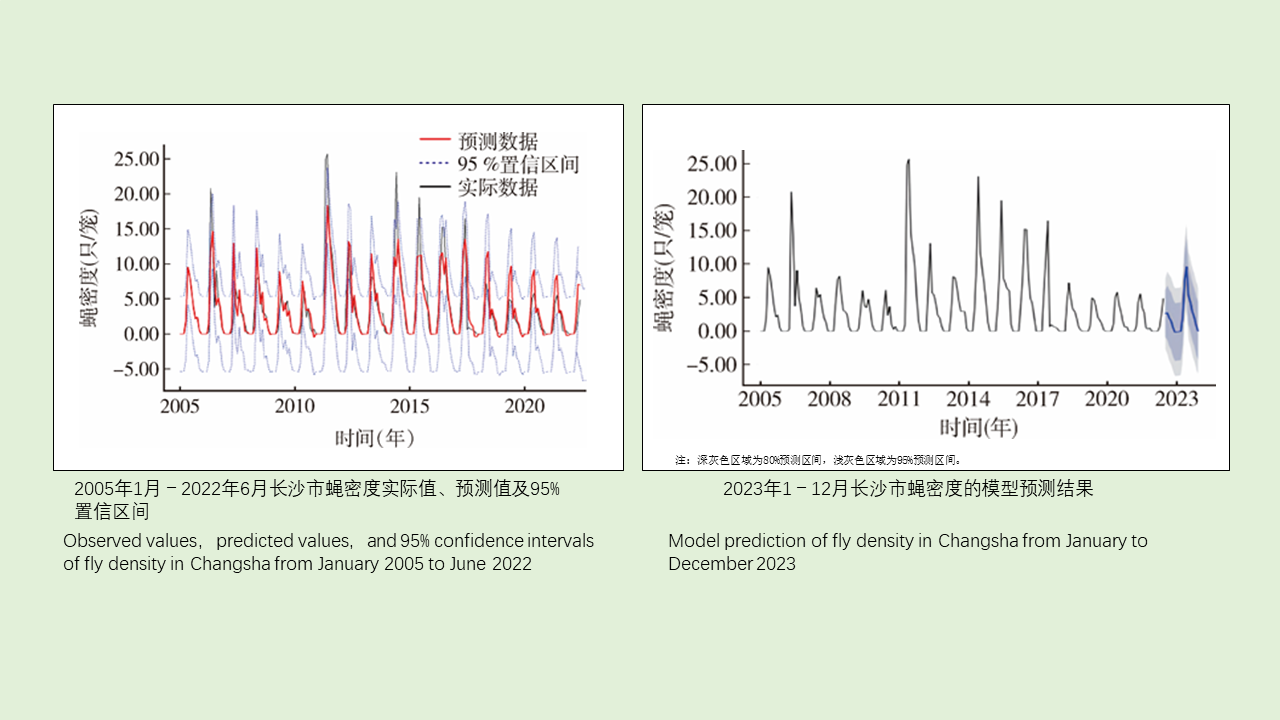
    Objective To construct an autoregressive integrated moving average model (ARIMA) of fly density in Changsha, China and to predict the fly density from January to December 2023.Methods Using the R 4.3.0, an ARIMA model was constituted with the fly density data from January 2005 to June 2022. The predicted values were compared with the observed data of July to December 2022 to evaluate the prediction effect of the model. The fly density from January to December 2023 was predicted.Results The ARIMA (1,0,0)(0,1,1)12 model was optimal with the fly density data from January 2005 to June 2022. The model showed the lowest Akashi information criterion value and Bayesian information criterion value, which were 986.50 and 996.37, respectively. The residual sequence was a white noise sequence, suggesting that the model was valid. The predicted values of fly density from July to December 2022 were basically consistent with the observed values, with the observed values falling into the 95% confidence interval of the predicted values. The root mean square error was 0.649 and the mean absolute error was 0.522. Therefore, the model can be used for short-term prediction of fly density. This model was used to predict the fly density from January to December 2023. The mean density was 2.89 flies/cage in 2023, which was lower than the mean density in 2005-2022 (3.22 flies/cage) but higher than the mean density in 2022 (1.20 flies/cage).Conclusions The ARIMA (1,0,0)(0,1,1)12 model shows high goodness of fit for the fly density data in Changsha, and can be used for the short-term prediction of fly density. The predicted data can be used as a basis for the prevention and control of fly hazard events and fly-borne diseases.
  • SUN Qi, ZHANG Guo-ying, GAO Yong-wei
    Chinese Journal of Vector Biology and Control. 2023, 34(6): 794-798. https://doi.org/10.11853/j.issn.1003.8280.2023.06.016
    Abstract ( ) Download PDF ( ) HTML   Knowledge map   Save
    Objective To analyze the seasonal distribution of severe fever with thrombocytopenia syndrome (SFTS) in Weihai, Shandong Province, China, so as to provide scientific evidence for formulating prevention and control strategies for SFTS.Methods The monthly data on SFTS cases with registered addresses in Weihai during 2011 to 2022 were collected from the China Information System for Disease Control and Prevention. The seasonal characteristics of SFTS in Weihai were analyzed by using the concentration ratio and circular distribution method through creating formulas in Excel 2007.Results From 2011-2022, the total number of cases of SFTS in Weihai was 1 231. The mean annual incidence was 4.01/100 000, and the mortality rate was 0.37/100 000. The incidence of SFTS showed a generally ascending trend during the 12 years (linear χ2=36.501, P<0.001). The concentration ratio (M) of monthly numbers of SFTS cases in Weihai was 0.66, indicating strong seasonality. The circular distribution concentration trend (r) was 0.654, the angular mean (αˉ) was 195.15°, the angular deviation (S) was 52.76°, and the Z value for the Rayleigh test was 527.144 (P<0.001). The predicted peak date was July 17, and the peak period was between May 25 and September 9.Conclusions The overall increasing incidence of SFTS in Weihai of Shandong Province deserves adequate attention to prevention and control. The strong seasonality of SFTS indicates that prevention and control strategies should be carried out prior to the peak period, so as to reduce severe cases and cluster outbreaks. The results provide a basis for scientific prevention and control of SFTS.
  • SUN Qin-tong, LIU Yan, HAN Ying-nan, HU Ju-feng, WANG Xue-jun, LIU Wen-jie, CAO Xin-yue, LAI Shi-hong, HE Qian, JING Xiao
    Chinese Journal of Vector Biology and Control. 2023, 34(6): 799-803,813. https://doi.org/10.11853/j.issn.1003.8280.2023.06.017
    Abstract ( ) Download PDF ( ) HTML   Knowledge map   Save
    Objective To analyze the lagged effects of meteorological factors on mosquito density in the urban areas of Ji’nan, China, so as to provide a basis for further scientific prevention and control of mosquitoes and mosquito-borne infectious diseases.Methods We collected the mosquito data monitored with BG-traps and the concurrent meteorological data in the urban areas of Ji’nan in 2021 to construct a distributed lag nonlinear model to study the lagged effects of air temperature, humidity, air pressure, and precipitation on the mosquito density.Results A total of 31 018 mosquitoes were captured, including Culex pipiens pallens (22 436/31 018, 72.33%), Aedes albopictus (8 570/31 018, 27.63%), and Armigeres subalbatus (12/31 018, 0.04%). When the air temperature was 23.64 ℃, the effect on mosquito density was maximum at a lag of 2 d (relative risk [RR]=1.021, 95% confidence interval [CI]:1.002-1.058). When the relative humidity was 98.00%, mosquito density was highest at a lag of 11 d (RR=1.232, 95%CI: 1.002-1.514). When the air pressure was 984.99 hPa, the mosquito density was highest at a lag of around 17 d (RR=1.376, 95%CI: 1.205-1.559). When the daily precipitation was 21.25 mm, the effect on mosquito density peaked at a lag of around 8 d (RR=1.352, 95%CI: 1.133-1.590).Conclusions Air temperature, humidity, precipitation, and air pressure have non-linear and lagged effects on mosquito density. The peak of mosquito density occurs in hot and rainy summer since high temperature and humidity can increase mosquito density. Relevant departments should take early intervention measures according to meteorological cond itions to effectively reduce the risk of mosquito-borne diseases.
  • Investigation
  • LUO Xiao-long, ZHOU Jing-zhu, HUANG Hong-wu, LI Qian, WANG Dan, SHI Wei-fang, LIANG Wen-qin
    Chinese Journal of Vector Biology and Control. 2023, 34(6): 804-808. https://doi.org/10.11853/j.issn.1003.8280.2023.06.018
    Abstract ( ) Download PDF ( ) HTML   Knowledge map   Save
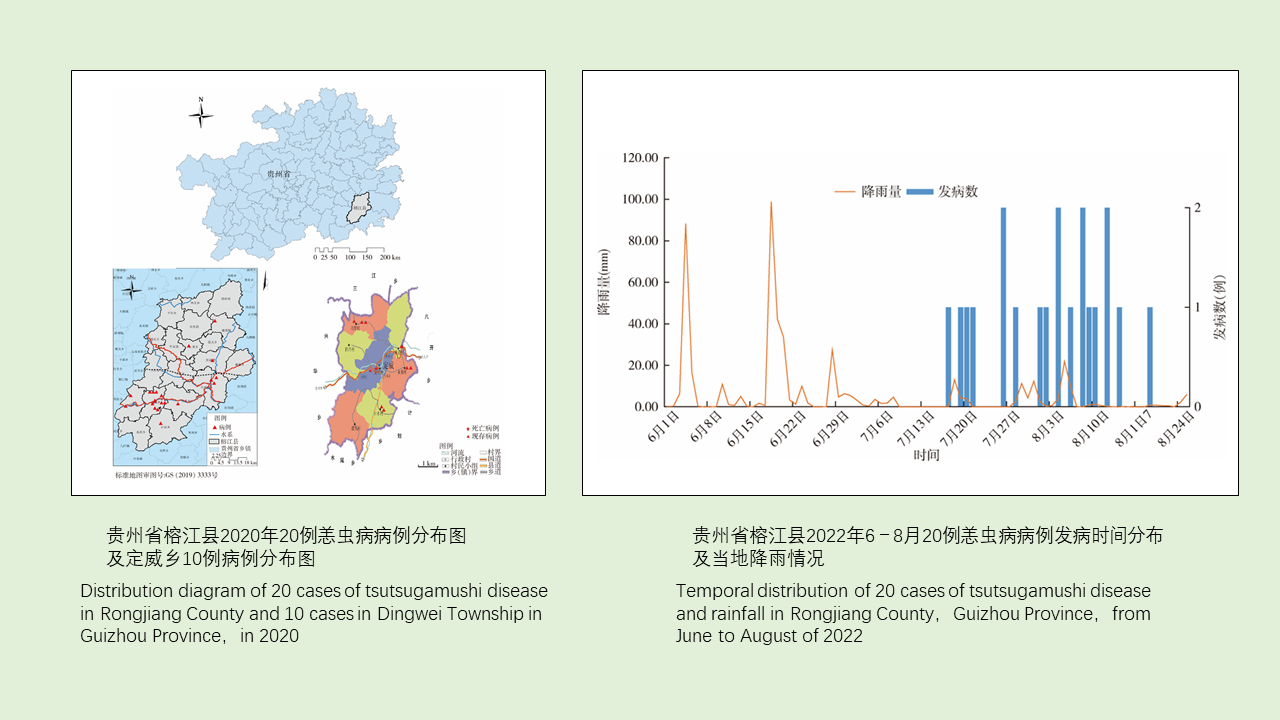
    Objective To investigate and analyze an outbreak of tsutsugamushi disease occurred in Rongjiang County, Guizhou Province, China, in 2022 in terms of onset characteristics, epidemiological characteristics and influence factors for infection, so as to provide a basis for formulating targeted prevention and control measures.Methods A uniform questionnaire was used to conduct an epidemiological survey, and indirect immunofluorescence assay was used to detect the serum samples of cases. Medical records were collected, and a host survey was conducted. Descriptive epidemiology was used to analyse the data.Results A total of 20 cases of tsutsugamushi disease were identified according to the case definition, all of whom were farmers in terms of occupation, and the epidemiological survey showed that 14 patients had been to the riverside of Duliu River. There were 9 confirmed cases, 3 clinical cases, and 8 suspected cases. All patients had the symptom of pyrexia; the patients with fear of cold and headaches accounted for 65.00% and 55.00%, respectively, those with weakness and generalized aches and pains accounted for 45.00% and 30.00%, respectively, and those with specific eschar only accounted for 25.00%. Indirect immunofluorescence assay was used to detect 8 serum samples, among which 5 samples had an IgG antibody with the titer of ≥1∶128, and 5 samples showed a 4-fold increase in antibody in the convalescence stage. The mean time from onset to consultation was 5.85 days, and the mean time from consultation to diagnosis was 2.80 days.Conclusions This is a typical outbreak of tsutsugamushi disease, with the main clinical symptoms of pyrexia, fear of cold, and headache. Activities along the river after rainstorm and flood may increase the risk of the disease. The long incubation period and atypical early symptoms of tsutsugamushi disease and a lack of awareness of the disease among local villagers and clinicians are the main factors for failing to identify and dispose this epidemic in a timely manner. It is recommended to strengthen health education, and “early warning, early identification, early diagnosis, and early treatment” of tsutsugamushi disease, to effectively reduce the harm of such diseases to human health.
  • LI Guang-shuai, XU Kun, LEI Xiao-gang, XUE Wei, JIN Liang-dong, XIE Min, YANG Xi-ping, PANG Song-tao
    Chinese Journal of Vector Biology and Control. 2023, 34(6): 809-813. https://doi.org/10.11853/j.issn.1003.8280.2023.06.019
    Abstract ( ) Download PDF ( ) HTML   Knowledge map   Save
    Objective To investigate the status of fly infestation in the urban areas of Xi’an, China, so as to provide a basis for scientific and effective prevention and control of flies.Methods Survey habitats were randomly selected in each of 11 administrative districts in Xi’an. The survey was conducted in both indoor areas and outdoor areas by visual observation. Descriptive statistical analysis was performed using WPS 14309 software. The fly infestation level was evaluated according to the Criteria for Vector Density Control-fly (GB/T 27772-2011).Results A total of 4 475 rooms of eight types of indoor habitats were selected. The rate of fly-positive rooms was 1.72%, and the fly density was 1.79 individuals/room, with the fly density control level being A. Among the habitats, the highest rate of adult fly-positive rooms was 2.48% in farmer’s markets. Among the urban areas, the highest rate of fly-positive rooms was 2.44% in Yanta District. Among the surveyed 722 outdoor habitats, the positive rate of fly breeding sites was 0.42%, with the control level being A. The urban areas harboring fly breeding sites included Huyi, Lianhu, and Weiyang districts, with the control levels all being B. Among the 2 161 fly-proof facilities, the qualified rate was 96.44%, with the control level being B. The qualified rate was lowest in farmer’s markets (92.53%) and Baqiao District (94.63%), where both control levels were C. The fly density control level of urban areas across Xi’an was B.Conclusions The creation of a Healthy City and holding major events can effectively reduce fly density by improving the city’s environmental sanitation of Xi’an and the fly density control level in urban areas of was generally good in 2022. Fly infestation was serious at farmer’s markets with low qualified rates of fly-proof facilities, and also in Yanta and Lianhu districts with a developed catering industry.
  • WANG Rong, LIU Qi-yong, GUO Yu-hong, YANG Bing-rui, ZHANG Xian-qing, LU Nan-nan, CHENG Xiao-lan, MA Bin-zhong, JIANG Ming-xia
    Chinese Journal of Vector Biology and Control. 2023, 34(6): 814-818. https://doi.org/10.11853/j.issn.1003.8280.2023.06.020
    Abstract ( ) Download PDF ( ) HTML   Knowledge map   Save
    Objective To study the seasonal distribution of mosquito density and explore the relationship between mosquito density and meteorological factors in some areas of Qinghai Province, China.Methods The data on mosquito density of five surveillance points of Qinghai Province from 2018 to 2021 were analyzed using the circular distribution method to calculate the peak day and peak period of mosquito density at each surveillance point. A multiple linear regression analysis was conducted to determine the relationship between mosquito density and meteorological factors in Xining, Golmud, and Yushu of Qinghai Province with SPSS 22.0.Results The peak day of seasonal fluctuations of mosquitoes of surveyed points in Qinghai Province was July 19, and the peak period was from June 10 to August 28. The regression equation for mosquito density and meteorological factors was y=-2.19+0.47x1+0.01x3+0.02x4 (x1, mean air temperature; x3, monthly average relative humidity; x4, monthly mean air pressure) (F=20.613, P<0.001). Mosquitoes have been found breeding in Yushu City with an altitude of 3 700 meters.Conclusions There is a certain correlation between the mosquito density in some areas of Qinghai Province and the local monthly average temperature, monthly average humidity, and monthly average air pressure, and the peak period of mosquito density is basically concentrated in mid July.
  • Review
  • DENG Si-jia, HU Ju-ping, ZHU Guo-ding
    Chinese Journal of Vector Biology and Control. 2023, 34(6): 819-823. https://doi.org/10.11853/j.issn.1003.8280.2023.06.021
    Abstract ( ) HTML   Knowledge map   Save
    Mosquitoes are important vectors of infectious diseases such as malaria and dengue fever, posing a serious threat to human health. Insecticide-based chemical control is currently one of the main strategies for vector control of mosquito-borne diseases, but the growing threat of insecticide resistance has created an urgent need for the development of additional mosquito control tools. Entomopathogenic fungi can be used as an environmentally friendly alternative to chemical insecticides, because they can control mosquitoes and mosquito-borne infectious diseases by affecting the life span and vector ability of mosquitoes and play an indirect role by modifying fungi through transgenic technology. This review provides an introduction to the main mosquito-killing fungi, such as Metarhizium anisopliae, Beauveria bassiana, and Lagenidium giganteum, and summarizes the progress of their research in mosquito control.
  • HUANG Xing-kui, ZHAO Jun, PAN Huan-hong, XIA Guang-hui, ZHANG Tian-chen
    Chinese Journal of Vector Biology and Control. 2023, 34(6): 824-827. https://doi.org/10.11853/j.issn.1003.8280.2023.06.022
    Abstract ( ) HTML   Knowledge map   Save
    Spatial information technology based on the geographic information system (GIS), global navigation satellite system (GNSS), and remote sensing (RS), known as “3S” technology, has the characteristics of wide detection range, massive information, low cost, no limitation by ground conditions, and little influence from human factors. It can realize rapid, mobile, accurate, and reliable collection, processing, and updating of a variety of spatial information and environmental information. As a new technology and means for the study of plague, the “3S” technology has achieved novel and practical research results, showing a very broad prospect for application. This paper introduces the characteristics of “3S” technology, presents the research achievements of the “3S” technology in plague source investigation, risk factor identification, prediction and early warning, and risk assessment, and discusses the prospect of applying the “3S” technology in plague-related research.