20 June 2023, Volume 34 Issue 3
    

  • Select all
    |
    Experimental Study
  • ZHANG Jun-feng, ZHANG Ya-li, WANG Rui-chen, LU Yang, ZHANG Tian-zi, FU Shi-hong, YIN Qi-kai, LI Fan, HE Ying, NIE Kai, MA Chao-feng, LIANG Guo-dong, HU Rui-ping, XU Song-tao, WANG Huan-yu
    Chinese Journal of Vector Biology and Control. 2023, 34(3): 285-290. https://doi.org/10.11853/j.issn.1003.8280.2023.03.001
    Abstract ( ) Download PDF ( )   Knowledge map   Save
    Objective To establish a duplex droplet digital polymerase chain reaction (ddPCR) detection method for Japanese encephalitis virus (JEV) and West Nile virus (WNV).Methods Based on the designed primers and probes of JEV and WNV, a duplex ddPCR detection system for JEV and WNV was established. Its sensitivity, specificity, and repeatability were explored. The sensitivity was compared with the number of cycles required for the fluorescent signal to cross the threshold in each reaction tube of dual quantitative PCR.Results The detection sensitivity of the duplex ddPCR detection system could reach 102 copies/μl for both JEV and WNV, with good specificity and repeatability. No cross-reactivity was observed with the Dengue virus, Chikungunya virus, Zika virus, Tick-borne encephalitis virus, and human genome.Conclusion The established duplex ddPCR method shows high sensitivity and specificity for JEV and WNV detection, which provides a solution for detection for the two viruses in different scenarios.
  • LIU Yu-qiu, LU Liang, LIU Peng-bo, ZHAO Ning, LI Gui-chang, LI Dong-mei, SONG Xiu-ping, WANG Jun, LIU Qi-yong
    Chinese Journal of Vector Biology and Control. 2023, 34(3): 291-297. https://doi.org/10.11853/j.issn.1003.8280.2023.03.002
    Abstract ( ) Download PDF ( )   Knowledge map   Save
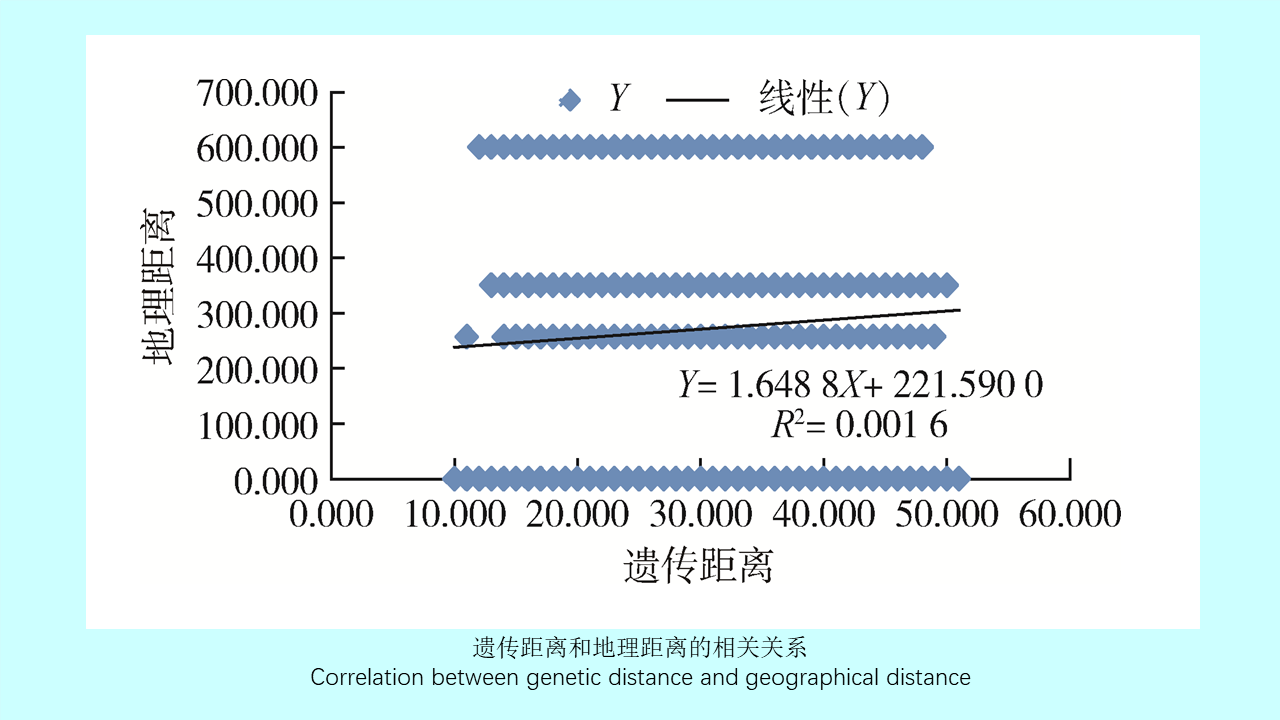
    Objective To analyze the genetic diversity of nine batches of Lasiopodomys brandtii rodents from three sample plots (New Barag Right banner, East Ujimqin banner, and Xilinhot city) of the Inner Mongolia Autonomous Region (Inner Mongolia), China by using 16 pairs of microsatellite primers.Methods A total of 275 L. brandtii rodents were trapped using snaps or cages in May, July, and September of 2021. DNA was extracted from them with magnetic beads, followed by PCR amplification with 16 pairs of fluorescent-labeled microsatellite primers. The microsatellite data were obtained using GeneMarker. The genetic diversity and structure of L. brandtii populations were analyzed using GenAIEx 6.5, Arlequin (version 30), and structure 2.3.4.Results A total of 472 alleles were detected by using 16 pairs of microsatellite primers. The average polymorphic information content was 0.821 3. The average Shannon’s information index was 1.812. Observed heterozygosity ranged from 0.478 to 0.951. Expected heterozygosity ranged from 0.575 to 0.891. According to cluster analysis and principal component analysis, the nine L. brandtii populations could be divided into four groups by month. The genetic diversity index of the four groups was May > July > September. The analysis of molecular variance showed that the variation among individuals (88.51%) was much greater than that among the groups (5.04%) and that among the populations (6.45%). The mantel test showed no significant correlation between genetic distance and geographical distance of L. brandtii (R2=0.001 6).Conclusions The L.brandtii populations sampled in Inner Mongolia had high genetic diversity. The genetic variation of L. brandtii populations was mainly observed among individuals. Seasonal variation could be the main factor affecting the genetic structure of L. brandtii populations.
  • ZANG Chuan-hui, LI Li-ming, LIU Shuo, GONG Mao-qing, WANG Wen-qian, WANG Yi-ting, LOU Zi-wei, LEI Jing-jing, CHENG Peng, LIU Hong-mei
    Chinese Journal of Vector Biology and Control. 2023, 34(3): 298-302. https://doi.org/10.11853/j.issn.1003.8280.2023.03.003
    Abstract ( ) Download PDF ( )   Knowledge map   Save
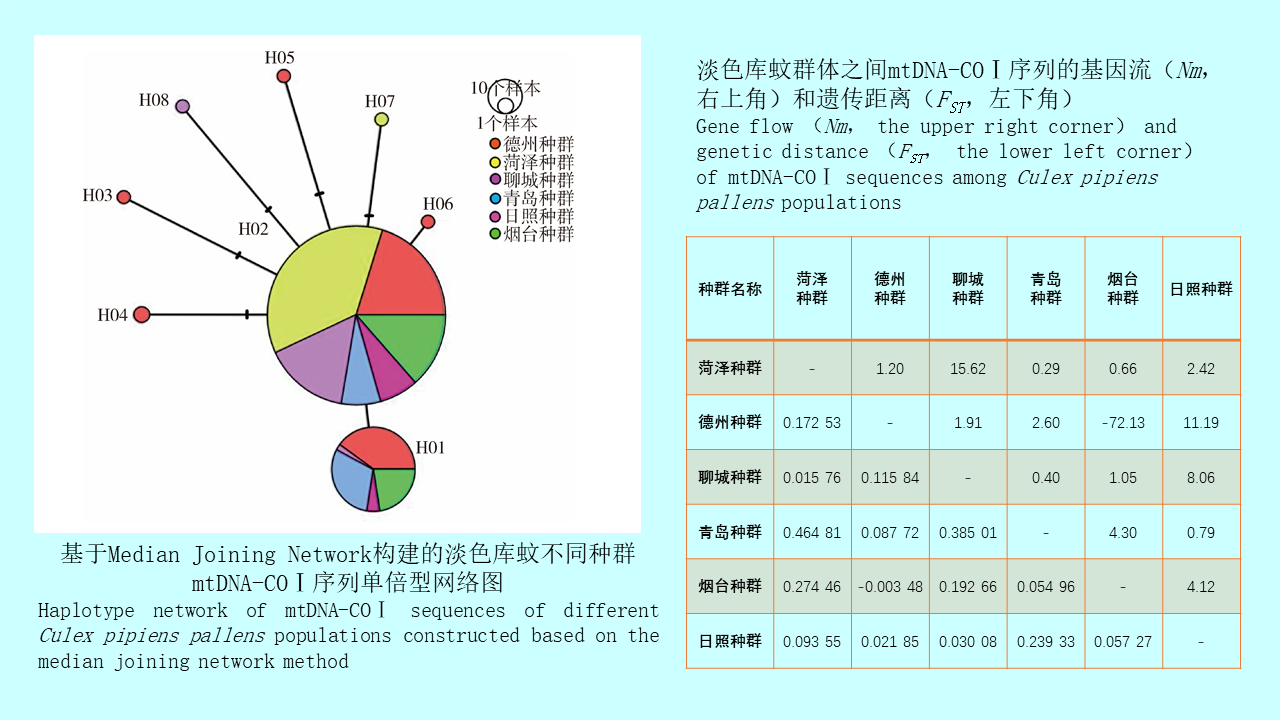
    Objective To investigate the genetic diversity, genetic differentiation, and phylogenetic relationship of Culex pipiens pallens populations in Shangdong, China.Methods Cx. pipiens pallens populations were collected in Heze, Dezhou, Liaocheng, Qingdao, Yantai, and Rizhao, Shandong province from September 2020 to September 2022. Genomic DNA was extracted from a single female adult mosquito. The mitochondrial cytochrome c oxidase subunit Ⅰ (mtDNA-COⅠ) gene sequences were amplified by polymerase chain reaction and sequenced afterwards. The acquired sequences were compared with those in the Basic Local Alignment Search Tool on the GenBank. BioEdit 7.0 was used to compare and analyze the sequencing results. DnaSP v6 was used to analyze the genetic diversity of populations. Arlequin 3.5 was used to calculate the genetic differentiation coefficient and gene flow of populations. PopART 1.7 was used to construct the haplotype network (TCS network).Results A total of 423 sequences of 603 bp were obtained from 6 Cx. pipiens pallens populations in Shandong province. The average content of A+T bases was 69.2%, which was consistent with the AT bias of mitochondrial DNA. There were eight haplotypes in the haplotype analysis, of which haplotype H01 was the dominant haplotype. The results of mtDNA-COⅠ sequence analysis showed that the population had rich genetic diversity. The results of molecular variance analysis indicated that the genetic differentiation of Cx. pipiens pallens mainly came from within the population; there was some genetic differentiation among some populations. The results of neutrality test showed that the populations of Cx. pipiens pallens in Liaocheng and Heze experienced expansion recently.Conclusions The mtDNA-COⅠ gene can be used as a molecular marker to study the genetic diversity of Cx. pipiens pallens populations. The genetic development of Qingdao population is special compared with other geographical populations.
  • MU Qun-zheng, HUA Dong-dong, LI Wen-yu, ZHOU Xin-xin, LUN Xin-chang, LI Gui-chang, WANG Jun, SONG Xiu-ping, LIU Qi-yong, MENG Feng-xia
    Chinese Journal of Vector Biology and Control. 2023, 34(3): 303-307. https://doi.org/10.11853/j.issn.1003.8280.2023.03.004
    Abstract ( ) Download PDF ( )   Knowledge map   Save
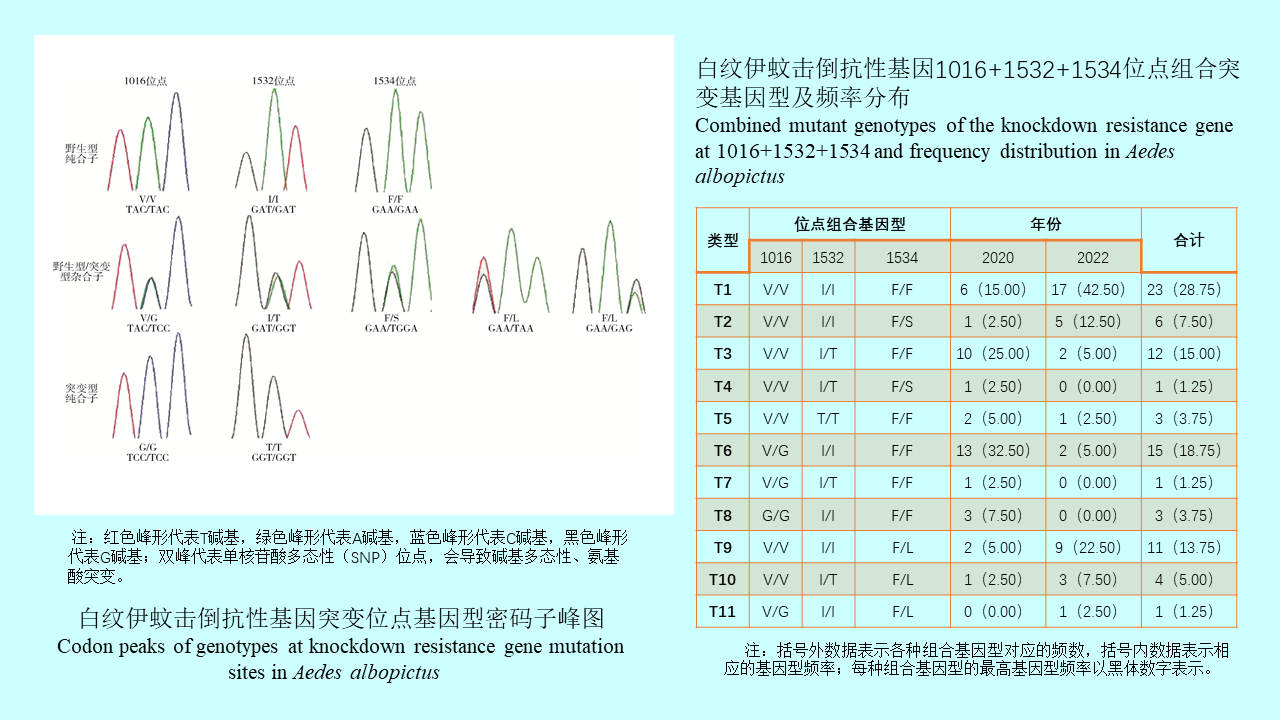
    Objective To investigate the knockdown resistance gene mutations of Aedes albopictus in Yuzhou, Henan province, China, and to provide a basis for the control of Ae. albopictus.Methods The double-layered mosquito net method was used to capture mosquitoes in Yuzhou in mid-September of 2020 and 2022. Mosquito species was identified based on morphological characteristics. The DNA of Ae. albopictus mosquitoes was extracted for knockdown resistance gene detection by sequencing.Results A total of 80 Ae. albopictus mosquitoes (40 in each year) were captured. The sequencing results showed that three knockdown resistance gene loci were found mutant in Ae. albopictus. The 1016 locus mutated from valine (Val, V) encoded by the codon GTA to glycine (Gly, G) encoded by GGA. The 1532 locus mutated from ATC-encoded isoleucine (Ile, I) to ACC-encoded threonine (Thr, T). Mutations at 1534 were most frequent, from TTC-encoded phenylalanine (Phe, F) to TCC-encoded serine (Ser, S) or Leu (Leu, L) encoded by TTA/CTC. There were 10 genotypes in total for the three mutant sites. For all the three mutant sites, wild-type homozygotes were predominant, followed by wild/mutant heterozygotes and then mutant homozygotes. There were a total of 11 combination genotypes: the frequency of wild/mutant heterozygous combination genotypes at single loci was 55.00%, which was highest; the frequency of wild homozygous combination genotypes at three loci was 28.75%; the frequency of wild/mutant heterozygous genotypes at two loci was 8.75%; and the frequency of mutant homozygous genotypes at single loci was 7.50%, which was lowest.Conclusions It was the first time to carry out knockdown resistance gene mutation detection in Ae. albopictus in Yuzhou, discovering that the mutations were frequent and complex, which requires further research in this area.
  • ZHAO Qi, FAN Jin-xing, ZHANG Ye, YUE Si-ning, LIU Ji-qi
    Chinese Journal of Vector Biology and Control. 2023, 34(3): 308-313. https://doi.org/10.11853/j.issn.1003.8280.2023.03.005
    Abstract ( ) Download PDF ( )   Knowledge map   Save
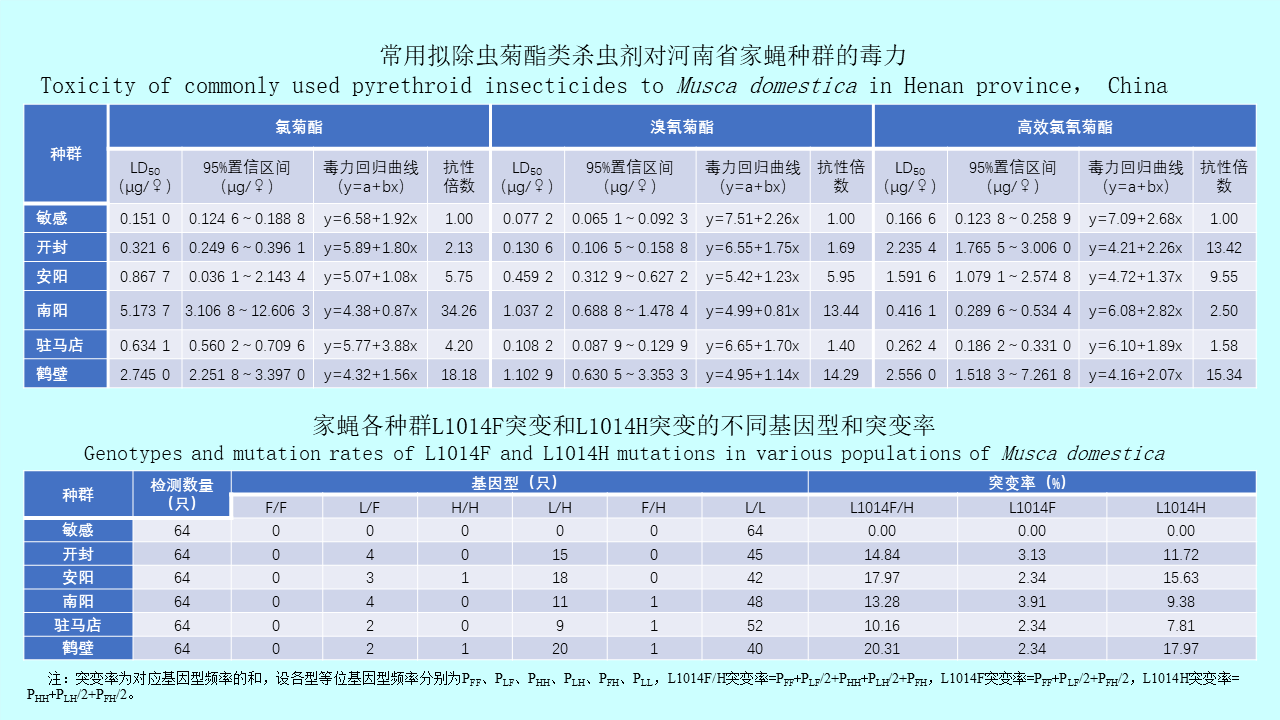
    Objective To establish the susceptibility baseline of Musca domestica to pyrethroid insecticides, and to analyze the knockdown resistance gene polymorphism in some wild populations of M. domestica in Henan province, China.Methods The susceptible strain of M. domestica was a laboratory population that had not been exposed to any insecticides. The wild populations were collected in Kaifeng, Anyang, Nanyang, Zhumadian, and Hebi cities in 2019-2021. Topical application method was used to determine the median lethal dose (LD50) of permethrin, deltamethrin, and beta-cypermethrin in female adult flies. Allele-specific polymerase chain reaction (AS-PCR) was used to determine the genotypes and mutation rates of knockdown resistance genes. Spearman correlation analysis was used to test the correlation between mutation rate and LD50. DNA sequencing was used to verified the results of AS-PCR.Results The LD50 of permethrin, deltamethrin, and beta-cypermethrin was 0.151 0, 0.077 2, and 0.166 6 μg/♀ in the susceptible strain, 0.321 6, 0.130 6, and 2.235 4 μg/♀ in Kaifeng population, 0.867 7, 0.459 2, and 1.591 6 μg/♀ in Anyang population, 5.173 7, 1.037 2, and 0.416 1 μg/♀ in Nanyang population, 0.634 1, 0.108 2, and 0.262 4 μg/♀ in Zhumadian population, and 2.745 0, 1.102 9, and 2.556 0 μg/♀ in Hebi population, respectively. Only one genotype, i.e. sensitive homozygote, was detected in the susceptible strain. Five genotypes were detected in the wild populations, including sensitive homozygote (L/L), sensitive/1014F heterozygote (L/F), sensitive/1014H heterozygote (L/H), 1014F/1014H heterozygote (F/H), and 1014H homozygote (H/H). Mutation rates in the wild populations were 14.84%, 17.97%, 13.28%, 10.16%, and 20.31%, respectively. The correlation test showed that the resistance to beta-cypermethrin was related to L1014H mutation. Five genotypes from 130 M. domestica samples were sequenced, and the accuracy of AS-PCR results was 79.23%.Conclusions The susceptibility baseline of M. domestica to pyrethroid insecticides is established in Henan, and this baseline can be used as a reference value for insecticide resistance monitoring. AS-PCR can be used for routine monitoring of resistance genes in M. domestica.
  • TAN Ai, LIU Juan, WANG Ya-wei, ZENG Jia-rui, LIU Peng
    Chinese Journal of Vector Biology and Control. 2023, 34(3): 314-318. https://doi.org/10.11853/j.issn.1003.8280.2023.03.006
    Abstract ( ) Download PDF ( )   Knowledge map   Save
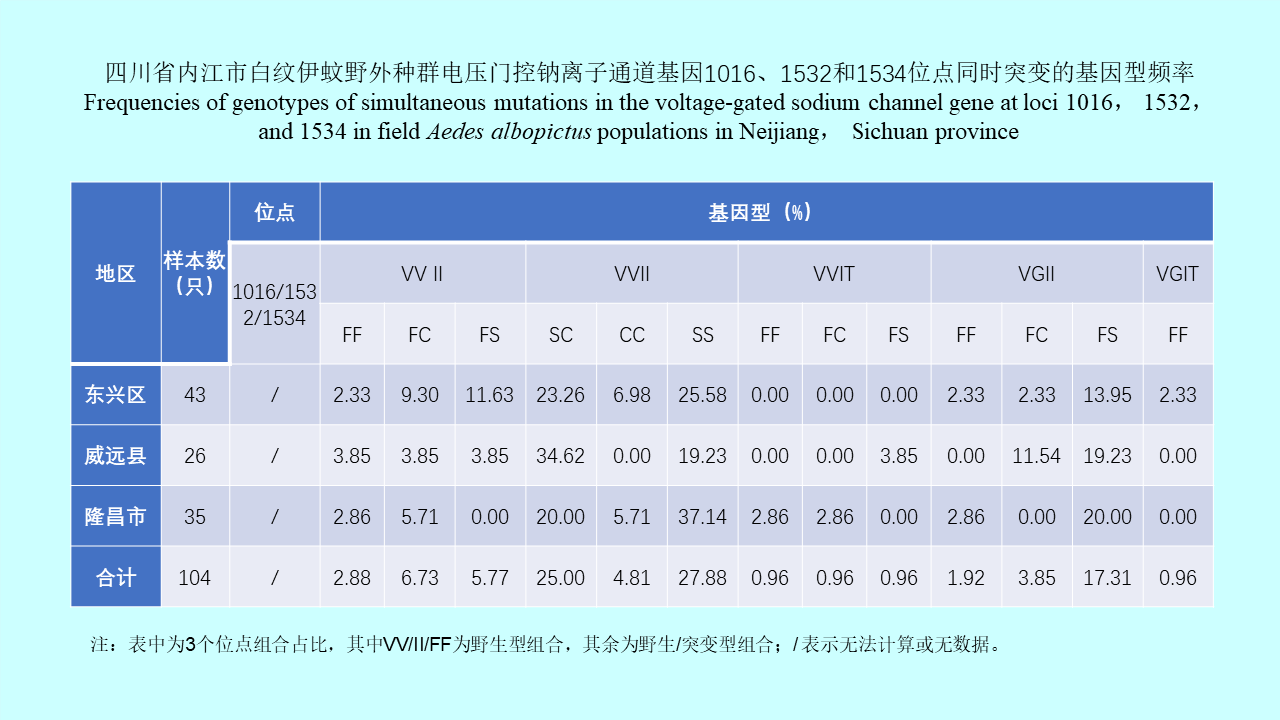
    Objective To investigate the current resistance status of Aedes albopictus to pyrethroid insecticides at the molecular level through the voltage-gated sodium channel (VGSC) genes testing in three field populations of Ae. albopictus in Neijiang, Sichuan province, China.Methods From June to July in 2021, adult mosquitoes were collected by light trapping method in the Ae. albopictus breeding sites of three counties/cities/districts in Neijiang. For mosquitoes identified as Ae. albopictus, the genomic DNA was extracted to amplify VGSC gene fragment using PCR, followed by detection of mutation types and distribution frequencies at VGSC gene resistance-related loci (loci 1016, 1532, and 1534).Results A total of 107 Ae. albopictus mosquitoes were collected and sequenced successfully. Twenty-eight (26.17%) mosquitoes were detected with the 1016G mutation, six (5.61%) with the 1532T mutation, and 100 (93.46%) with the 1534C/S mutations. The combination analysis of the three loci revealed that 76 (73.08%) mosquitoes had mutations at only one locus, and 25 (24.04%) at two loci. There were two (1.92%) mosquitoes with the wild type at 1016 and mutations at both 1532 and 1534, 22 (21.15%) with the wild type at 1532 and mutations at both 1016 and 1534, and one (0.96%) with the wild type at 1534 and mutations at both 1532 and 1016. None had simultaneous mutations at all the three loci.Conclusions The three field Ae. albopictus populations in Neijiang had frequent pyrethroid target-site mutations, with a high frequency of resistance at locus 1534, where 1534S was the dominant resistance allele, suggesting that the use of pyrethroids should be reduced in chemical control to delay resistance and improve mosquito control.
  • XIANG Yu-long, ZHOU Jing-zhu, ZHANG Yan, HU Yong, LIANG Wen-qin
    Chinese Journal of Vector Biology and Control. 2023, 34(3): 319-325. https://doi.org/10.11853/j.issn.1003.8280.2023.03.007
    Abstract ( ) Download PDF ( )   Knowledge map   Save
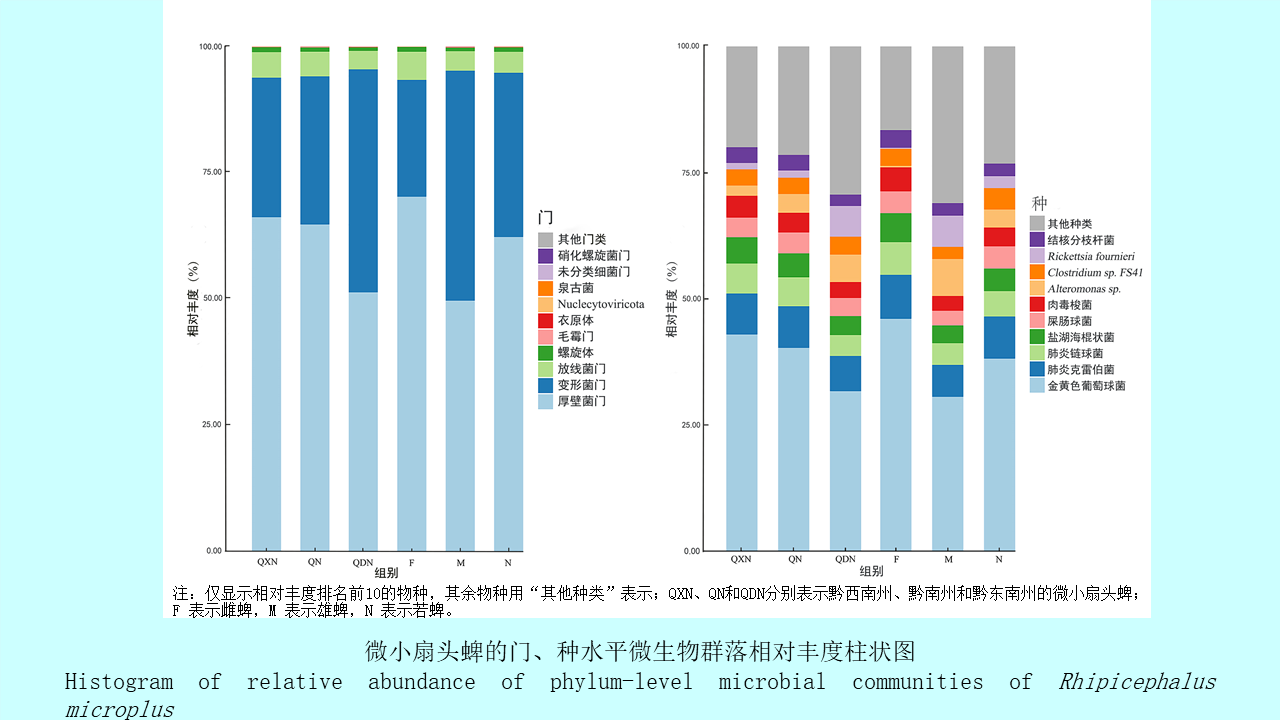
    Objective To investigate the microbiota of the dominant tick species Rhipicephalus microplus in the minority autonomous prefectures of Guizhou province, China, and to provide a scientific basis for the prevention and control of tick-borne disease.Methods Rh. microplus ticks were collected from the body surface of cattle and sheep at 18 sampling sites located in Qiandongnan Miao and Dong Autonomous Prefecture, Qiannan Buyi and Miao Autonomous Prefecture, and Qianxinan Buyi and Miao Autonomous Prefecture in April and July of 2019 and 2020. The ticks were grouped by region, growth stage, and sex, with three parallel samples in each group, followed by metagenomic sequencing. The sequencing results were processed with quality control and assembly procedures before homology alignment with the non-redundant protein database of National Center for Biotechnology Information to obtain taxonomic annotation information. R (v. 3.6.3) and GraPhlAn (v. 1.1.3) were used for visual analysis, including species composition analysis, non-metric multidimensional scaling (NMDS) analysis, and analysis of similarities (ANOSIM).Results The dominant bacterial phylum for Rh. microplus was Firmicutes (60.70%), followed by Proteobacteria (33.76%) and Actinobacteria (4.53%). Staphylococcus aureus (38.29%) was the dominant bacterial species, followed by Klebsiella pneumoniae (7.79%) and Streptococcus pneumoniae (5.26%). Several tick-borne pathogens were detected, including various genotypes of spotted fever group Rickettsia and Anaplasma phagocytophilum (1.38%). R. fournieri (2.91%) was an emerging rickettsiae detected from ticks for the first time in China, and R. japonica (1.76%) and R. monacensis (0.04%) were common tick-borne Rickettsia genotypes in China. R. fournieri and R. japonica were mainly carried by male ticks. The NMDS analysis showed that the microbiota composition of Rh. microplus differed by growth stage and sex. The ANOSIM analysis indicated reasonable grouping, with greater intergroup differences than intragroup differences (R=0.147, P=0.014).Conclusions In the minority autonomous prefectures of Guizhou province, Rh. microplus ticks have a diverse microbiota composition, carrying pathogens that may cause spotted fever and human granulocytic anaplasmosis. Therefore, vector surveillance and pathogen detection should be strengthened, and effective control measures should be taken to reduce the risk of tick-borne diseases.
  • CHAI Neng-ming, TAN Qi-long, SHU Ji-wei, YE Ling, ZHANG Tong-Jie, LI Shi-bo, ZHANG Sen
    Chinese Journal of Vector Biology and Control. 2023, 34(3): 326-330. https://doi.org/10.11853/j.issn.1003.8280.2023.03.008
    Abstract ( ) Download PDF ( )   Knowledge map   Save
    Objective To investigate the population distribution, virus-carrying status, and virus gene characteristics of host animals for Hantavirus in some areas of Zhoushan Islands, Zhejiang province, China, and to provide evidence for prevention and control of hemorrhagic fever with renal syndrome (HFRS).Methods Small mammals were captured using the night trapping method in Dinghai and Daishan areas of Zhoushan Islands, followed by species identification. The rodent density and species composition were analyzed using the Chi-square test. The small mammal’ lungs were collected to detect the nucleic acid of Hantavirus by quantitative real-time PCR. The M gene was amplified by nested PCR and sequenced for genotyping and homology analysis.Results In Dinghai and Daishan areas of Zhoushan Islands in 2021, the average rodent density was 3.42%, with 1.71% in the wild and 6.16% in residential areas. Six species of small mammals were captured. The dominant species was Apodemus agrarius in the wild and Rattus norvegicus in residential areas. The density of rodents was statistically different between Daishan Island, Yushan Island, and Dinghai Island (χ2=108.468, P<0.001), between the wild and residential areas (χ2=68.935, P<0.001), and between different species (χ2=37.749, P<0.001). Hantavirus RNA was detected in 13 small mammals lung specimens, with a positive rate of 6.70%. The M fragments of three Hantavirus RNA extracts were successfully amplified and sequenced. The homology of the three M fragments was 96.90%-97.10%, belonging to Seoul virus (SEOV, S3 subtype).Conclusions There are HFRS foci with R. norvegicus as the source of infection in Zhoushan Islands, where SEOV S3 subtype is the epidemic strain. Environmental changes may alter natural foci.
  • LI Sheng, JIN Juan, HE Jian, ZHANG Qi, YANG Xiao-yan, XIN You-quan, ZHAO Hai-hong, ZHANG Xiao-lu, BAI Ji-xiang, DAI Rui-xia
    Chinese Journal of Vector Biology and Control. 2023, 34(3): 331-335. https://doi.org/10.11853/j.issn.1003.8280.2023.03.009
    Abstract ( ) Download PDF ( )   Knowledge map   Save
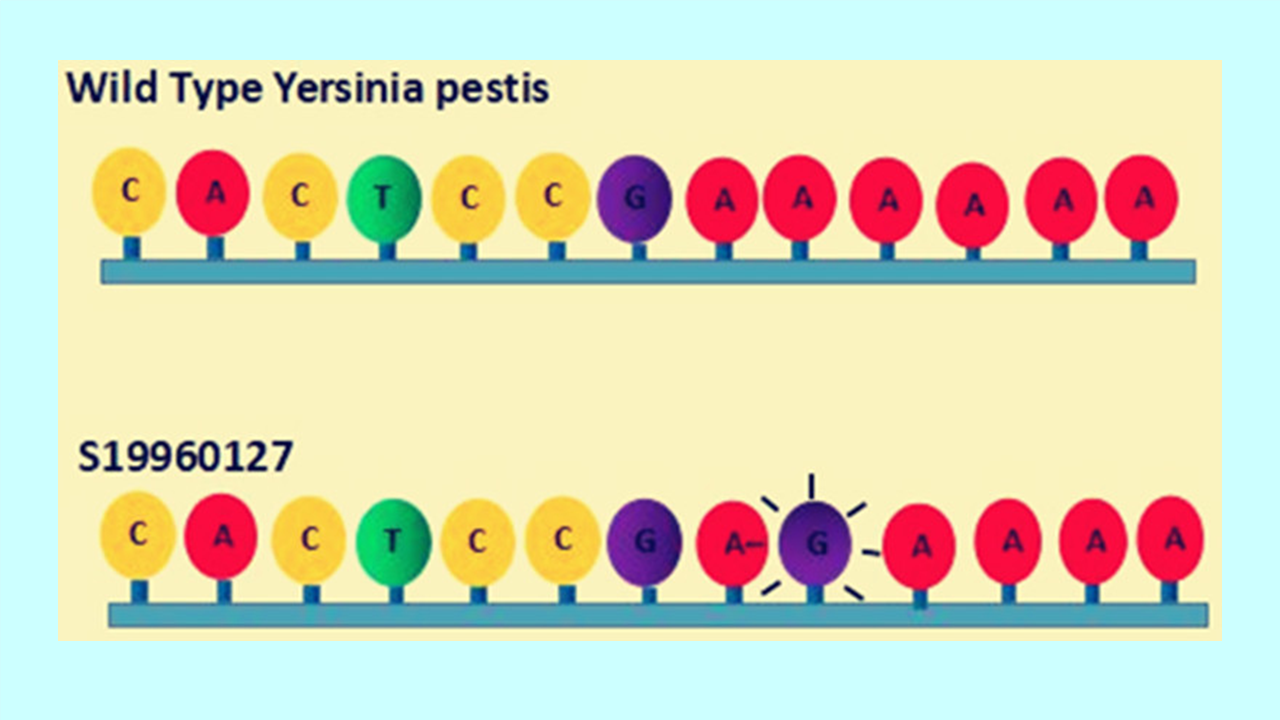
    Objective To study the sensitivity of Yersinia pestis to streptomycin in natural plague foci of Hainan Tibetan Autonomous Prefecture (Hainan prefecture), Qinghai province, China, and to provide guidance on accurate medication use in case of plague emergencies.Methods Specific primers were designed based on the gene sequence of Y. pestis. Probes were designed for the mutant locus of the gene encoding the ribosomal S12 protein (rpsL gene) of the S19960127 strain and the rpsL gene site of the wild-type Y. pestis strain. TaqMan-MGB probes were used to detect streptomycin-resistant rpsL gene mutations in 87 strains of Y. pestis that were isolated in Hainan prefecture from 1954 to 2009.Results All the 87 strains were positive for wild-type A base detection with carboxyfluorescein probes; the number of cycles required for the fluorescent signal to cross the threshold in each reaction tube (Ct) ranged from 18.74 to 21.93, and the relative fluorescence unit (RFU) peak was >2 000; for S19960127, the Ct value was 25.42, and the RFU peak was <200; the RFU peak of the negative control was <200. All the tested strains were negative for mutant G base detection with VIC probes, the Ct value ranged from 20.04 to 24.79, and the RFU peak was <200; for S19960127, the Ct value was 17.56, and the RFU peak was >1 000; the RFU peak of the negative control was <200. The results showed that A-to-G base mutation was not detected at 128 bp of the gene sequence of the 87 Y. pestis strains in the plague foci of Hainan prefecture, indicating that no streptomycin-resistant Y. pestis strains were found in the plague foci.Conclusions All the 87 strains of Y. pestis from the plague foci of Hainan prefecture were sensitive to streptomycin. In view of the generation and transmission characteristics of bacterial resistance genes, continuous streptomycin resistance surveillance and establishment of a surveillance network should be carried out in order to timely detect and control streptomycin-resistant Y. pestis strains from being transmitted.
  • HUANG Xiao-dan, XIAO Sa, HE Chang-hao, LI Zhi-jie, ZHANG Xiu-xia, LI Ya-jun, FEI Xiao-wen, DENG Xiao-dong
    Chinese Journal of Vector Biology and Control. 2023, 34(3): 336-343. https://doi.org/10.11853/j.issn.1003.8280.2023.03.010
    Abstract ( ) Download PDF ( )   Knowledge map   Save
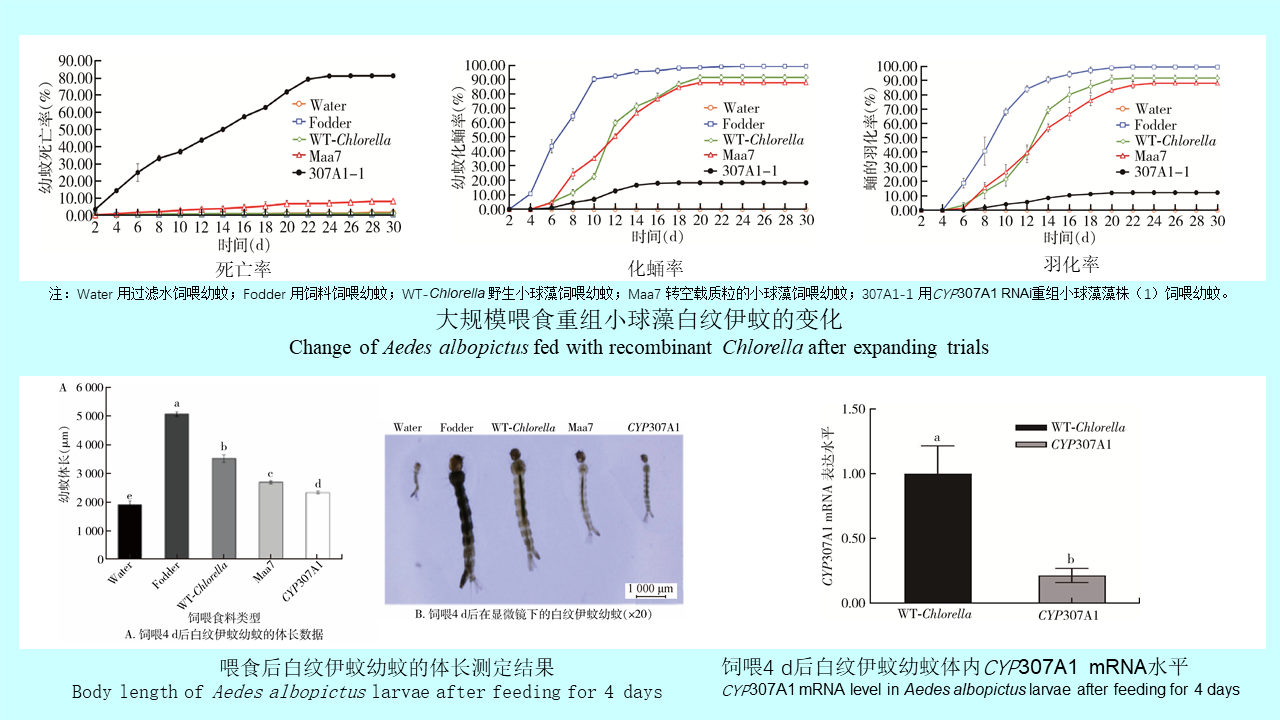
    Objective To investigate the effects of silencing the ecdysone synthesis pathway enzyme gene CYP307A1 of Aedes albopictus on the growth and development of Aedes larvae, and to provide new ideas for the prevention and control of mosquito-borne infectious diseases.Methods An RNAi expression vector targeting CYP307A1 was constructed using RNAi technology. Chlorella was used as the recipient for electrotransformation. The selected recombinant Chlorella strains were fed to Ae. albopictus larvae. WPS 2020 software was used to pool data on the mortality, pupation rate, emergence rate, body length, and quantitative real-time PCR results of the expression of CYP307A1 gene in larvae. One-way analysis of variance was performed on the mean values of all groups using SPSS 25. Origin 2019 and WPS 2020 were used to make charts.Results The 300-mosquito experiment showed that the mortality rates of larvae in the control groups fed with filtered water, feed, wild Chlorella, and Chlorella transferred with pMaa7/IR vector were 1.50%, 0.17%, 0.83%, and 8.00%, respectively; the mortality rate of larvae fed with recombinant CYP307A1 RNAi Chlorella was 80.33%, which was statistically higher than that of the control groups (P<0.05). The pupation rate and emergence rate of Aedes larvae fed with feed were 99.83% and 98.50%, respectively, while those of the group fed with recombinant CYP307A1 RNAi Chlorella were 18.50% and 98.50%, respectively. The pupation rate and emergence rate with recombinant CYP307A1 RNAi Chlorella were statistically lower than those of the control group (P<0.05). The expression of the CYP307A1 gene in Aedes larvae fed with the recombinant Chlorella was decreased by 79.00% compared with the control group (P<0.01).Conclusion Recombinant CYP307A1 RNAi Chlorella has anti-mosquito function, which shows promise in the field of biological mosquito control.
  • Vector Surveillance
  • ZHANG Xiao-yun, LIU Zheng-xiang, SU Li-qiong, LUO Jian-long, ZHU Chun-wen, HE Feng-ying, SUN Ke-xiang, SHAO Zong-ti, CAI Wen-feng
    Chinese Journal of Vector Biology and Control. 2023, 34(3): 344-350. https://doi.org/10.11853/j.issn.1003.8280.2023.03.011
    Abstract ( ) Download PDF ( )   Knowledge map   Save
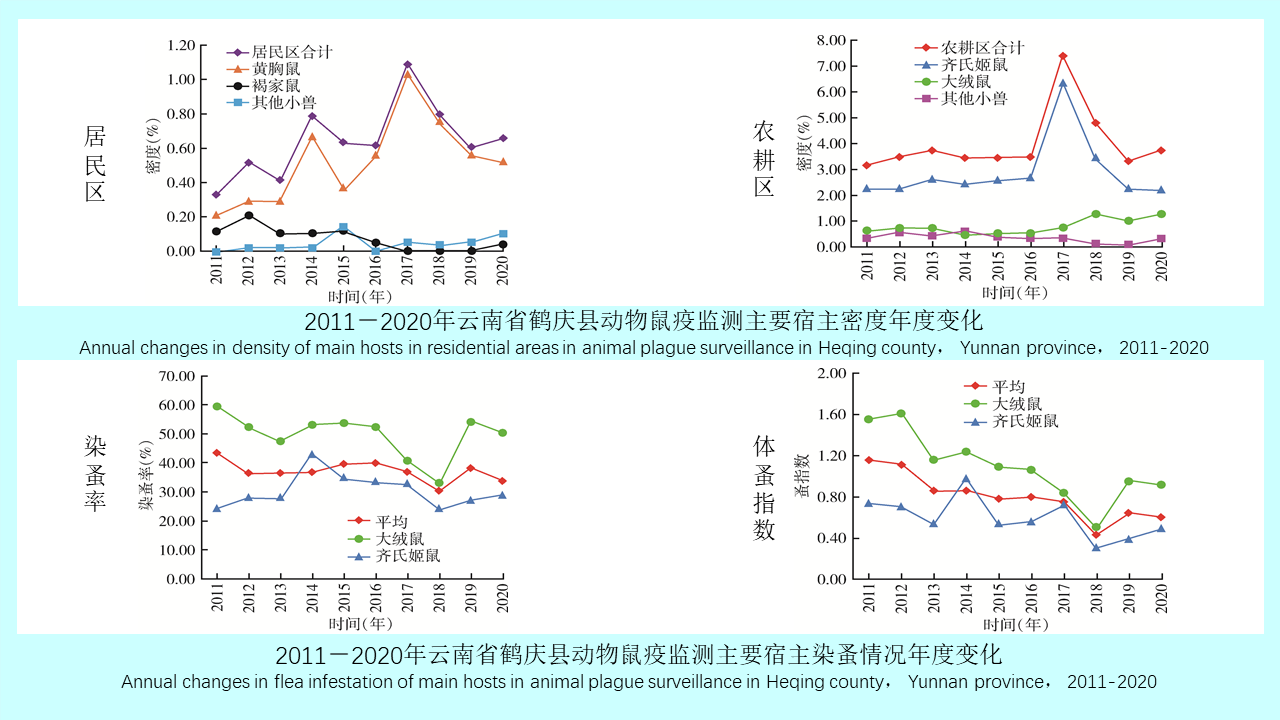
    Objective To investigate the population changes of plague hosts and vectors, monitor plague epizootics, and assess the risk of plague in Heqing county, Yunnan province, China from 2011 to 2020, and to provide a scientific basis for plague prevention and control.Methods Animal plague surveillance was carried out according to the National Plague Surveillance Program and the Yunnan Provincial Plague Surveillance Program. The surveillance data on plague hosts, vectors, etiology, and immunology in Heqing county from 2011 to 2020 were collected and analyzed.Results A total of 4 146 small mammals were captured in animal plague surveillance in Heqing county from 2011 to 2020, belonging to 10 species, 7 genera, 4 families, and 2 orders. In residential areas, Rattus tanezumi (82.89%) and R. norvegicus (10.10%) were the dominant species, while in farming areas, Eothenomys miletus (71.65%) and Apodemus chevrieri (19.67%) were the dominant species. The average small mammals densities in residential and farming areas were 0.66% and 3.89%, respectively, which were statistically different (χ2=1 770.463, P<0.001). A total of 3 229 ectoparasitic fleas were collected from the small mammals, belonging to 7 species, 7 genera, and 4 families. The flea infestation rate was 36.78 %, and the flea index was 0.78. The dominant species were Ctenophthalmus quadratus (85.81%) and Neopsylla specialis specialis (11.12%). Xenopsylla cheopis was not found. A total of 4 078 small animals and 1 587 groups of flea were examined for Yersinia pestis isolation and culture, 1 712 samples were examined for plague F1 antibody with indirect hemagglutination assay, and 354 samples were examined for plague F1 antigen with reverse indirect hemagglutination assay. In 2017, 7 and 3 strains of Y. pestis were detected in small mammals’ organs and fleas, respectively; and 3 samples of living rodents were positive for plague F1 antigen.Conclusions In the plague foci of Heqing county, the dominant species of plague hosts and vectors were prominent, with no obvious change in species composition and quantity. The increase in the density of main hosts was closely related to the occurrence and epidemic of animal plague, with a high risk of plague epizootics in recent years. It is necessary to expand plague surveillance area, improve the monitoring quality, strengthen the early warning and risk assessment, and implement comprehensive joint prevention and control measures.
  • JIN Bin-bin, WEI Ling-ya, CAO Yang, SHAO Han-wen, WANG Ying-hong, KONG Qing-xin
    Chinese Journal of Vector Biology and Control. 2023, 34(3): 351-355. https://doi.org/10.11853/j.issn.1003.8280.2023.03.012
    Abstract ( ) Download PDF ( )   Knowledge map   Save
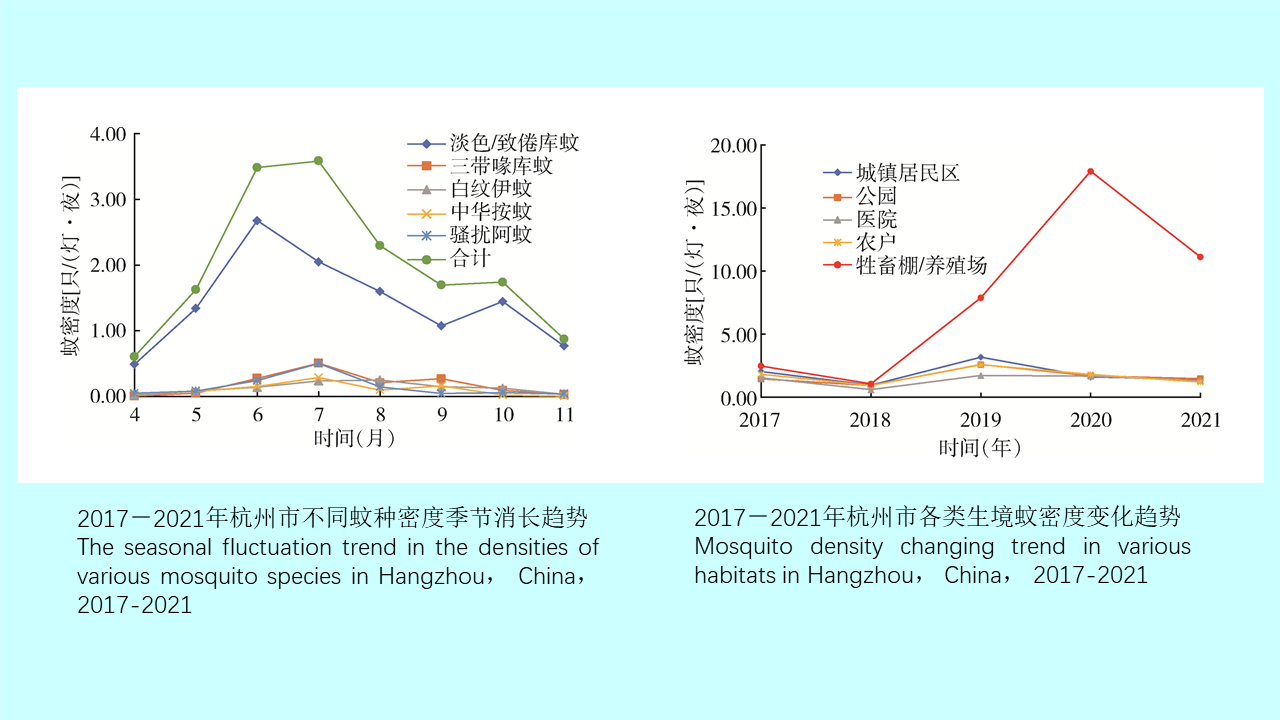
    Objective To investigate the density and seasonal fluctuations of vector mosquitoes in Hangzhou, Zhejiang province, China from 2017 to 2021, and to provide a scientific basis for vector control and mosquito-borne disease prevention.Methods The light trap method was used to investigate 15 districts/counties/cities in Hangzhou from April to November, 2017-2021, in accordance with the "National Vector Surveillance Program" and "Zhejiang Province Vector Surveillance Program". Excel 2016 software was used to summarize the monitoring data, and SPSS 21.0 software was used for statistical analysis. The Chi-square test was used for the difference of mosquito composition ratio in different years, and one-way ANOVA was used for the difference of mosquito density in different habitats.Results From 2017 to 2021, the mosquito density in Hangzhou was 1.99 mosquitoes/light·night, and Culex pipiens pallens/quinquefasciatus (71.90%) was the dominant species. The seasonal fluctuation trend of mosquito density generally showed a bimodal curve, peaking in July and October. There were statistical differences in densities of Cx. pipiens pallens/quinquefasciatus, Cx. tritaeniorhynchus, Aedes albopictus, Anopheles sinensis, and Armigeres subalbatus between different years (all P<0.001). In terms of various habitats, livestock barns/farms had the highest mean mosquito density (4.92 mosquitoes/light·night), and hospitals had the lowest (1.35 mosquitoes/light·night). There were statistical differences in densities of An. sinensis and Ar. subalbatus between various habitats (F=3.581, P=0.023; F=5.431, P=0.004). Cx. pipiens pallens/quinquefasciatus was the dominant mosquito species in various habitats, followed by Cx. tritaeniorhynchus, Ar. subalbatus, Ae. albopictus, and An. sinensis. Livestock barns/farms had the highest mosquito densities in terms of any of the above five species.Conclusions The mosquito density in Hangzhou is generally at a low level. Cx. pipiens pallens/quinquefasciatus is the dominant species. In future mosquito control, livestock barns/farms should be highlighted for special attention. Local districts/cities/counties should take targeted mosquito control measures based on their density changes, distribution, and seasonal fluctuations.
  • ZHANG Yan, ZHOU Jing-zhu, WANG Dan, SHI Wei-fang, XIANG Yu-long, HU Yong, LIANG Wen-qin
    Chinese Journal of Vector Biology and Control. 2023, 34(3): 356-361. https://doi.org/10.11853/j.issn.1003.8280.2023.03.013
    Abstract ( ) Download PDF ( )   Knowledge map   Save
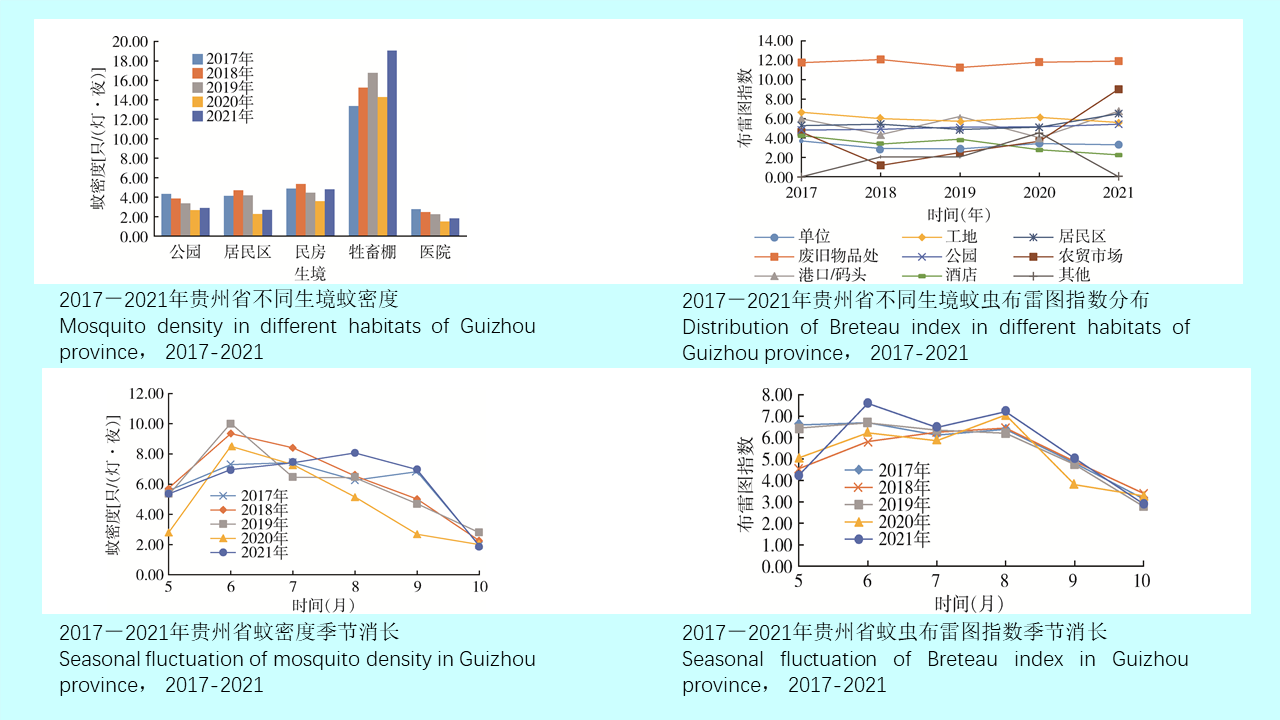
    Objective To investigate the species composition, population density, and seasonal fluctuation of mosquitoes in human settlements and surrounding environments in Guizhou province, China, and to provide a basis for risk assessment of mosquito-borne diseases and scientific and effective vector control.Methods Mosquito surveillance data from 78 provincial vector surveillance sites in Guizhou province from 2017 to 2021 were collected to analyze mosquito species composition and compare mosquito population density and seasonal fluctuations in different years, regions, and habitats. SPSS 24.0 software was used to perform analysis of variance on the Breteau index (BI) and density of mosquitoes in different habitats for risk assessment.Results A total of 131 476 female mosquitoes were captured from 2017 to 2021, with a density of 5.82 mosquitoes/light·night. Culex pipiens quinquefasciatus accounted for the highest proportion with 43.34% of the total catches, followed by Anopheles sinensis with 20.68%. Cx. pipiens quinquefasciatus was the dominant mosquito species in most cities/prefectures. Zunyi had the highest composition ratio of Cx. pipiens quinquefasciatus with a total of 17 409 catches (61.32%). There was a statistical difference in mosquito density in different areas (F=5.276, P<0.001). From 2017 to 2021, the highest densities of mosquitoes were all in livestock sheds, and Cx. pipiens quinquefasciatus was the dominant mosquito species in all habitats. The density of mosquitoes was statistically different in different habitats (F=114.368, P<0.001). Adult mosquito density by light trapping increased gradually from May, peaked during June to August, and decreased rapidly from September. BI showed two obvious peaks in June and August, respectively. The BI began to rise rapidly in May, and gradually declined in September and October. The BI was greater than 5 for each year. The areas of level-1 risk included Anshun, Guiyang, and Qiandongnan Miao and Dong Autonomous Prefecture. The BI values in Anshun in 2019 and Guiyang in 2021 were both greater than 10, indicating a level-2 risk.Conclusions Cx. pipiens quinquefasciatus and An. sinensis are the dominant mosquito species in human settlements and surrounding environments in Guizhou province. The mosquito density is high in rural habitats, especially in livestock sheds, which are major mosquito breeding sites, and mosquito control should be strengthened in such environments. The peaks of mosquito activity in Guizhou province are in June and August, which may by closely related to the unique climate and rainfall conditions of Guizhou province. Mosquito control should be done before the peak breeding season of mosquitoes to reduce the density of mosquitoes and the risk of mosquito-borne virus transmission.
  • Vector-borne Disease
  • LUN Xin-chang, YANG Rui, LIN Ling-hong, WANG Jun, GUO Yu-hong, XIU Peng-cheng, LIU Qi-yong, MENG Feng-xia
    Chinese Journal of Vector Biology and Control. 2023, 34(3): 362-371. https://doi.org/10.11853/j.issn.1003.8280.2023.03.014
    Abstract ( ) Download PDF ( )   Knowledge map   Save
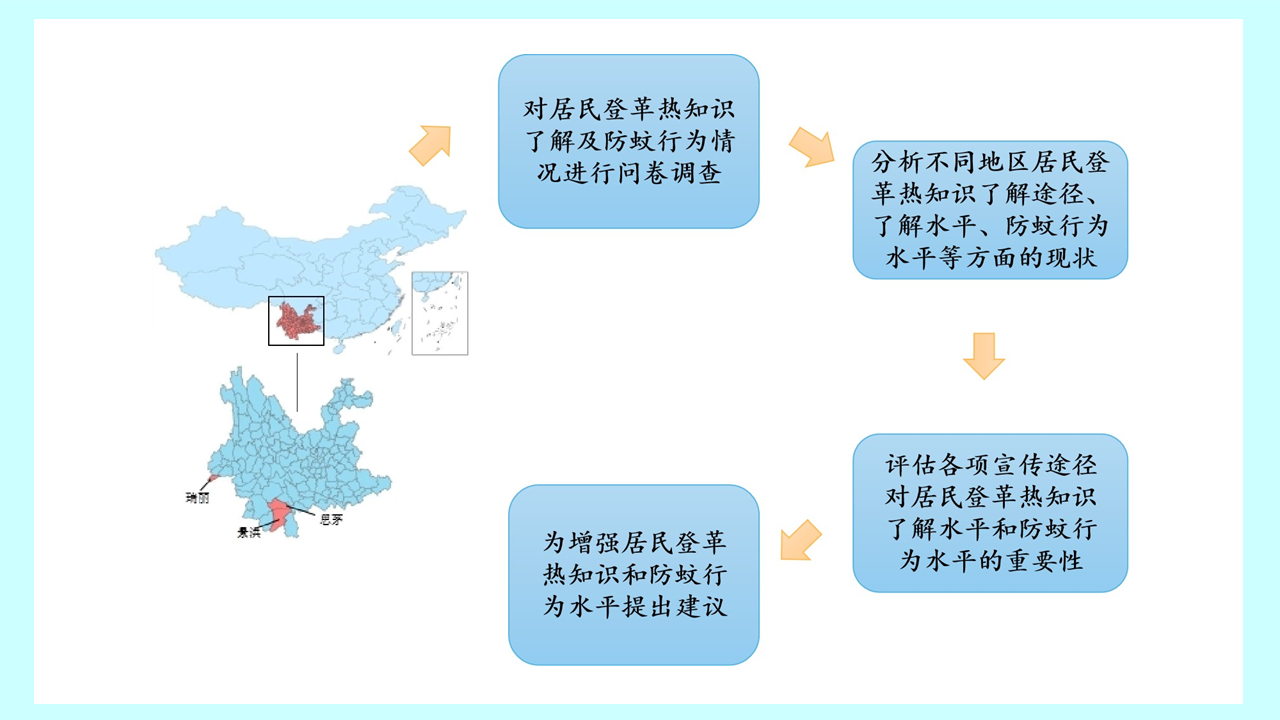
    Objective To determine the way and level of understanding dengue fever knowledge and the current situation of mosquito control behavior of residents in border areas of Yunnan province,China,to explore the publicity channel factors that affected residents' level of dengue fever knowledge and mosquito control behavior,and to put forward suggestions to improve residents' level of dengue fever knowledge and mosquito control behavior,so as to prevent the spread of dengue fever in China.Methods An offline questionnaire survey was conducted among Chinese residents aged ≥11 years living in Simao district,Ruili,and Jinghong cities. EpiData 3.1 software was used to input the questionnaire results,and SPSS 19.0 software was used for statistical analysis.Results A total of 778 questionnaires were obtained in this offline survey,and 721 respondents were aware of dengue fever,with an awareness rate of 92.67%. There were significant differences in the awareness of dengue fever among residents in Simao district,Ruili,and Jinghong cities (χ2=14.807,P=0.001). A further analysis of the questionnaire revealing the awareness of dengue fever showed that there were some differences in the way and level of understanding dengue fever knowledge and mosquito control behavior among residents in Simao district,Ruili,and Jinghong cities (P<0.05). The basic personal information and publicity channel factors influencing the level of dengue fever knowledge and mosquito control behavior among residents in the three border areas were different.Conclusions The influencing factors of media publicity channels on the level of dengue fever knowledge and mosquito control behavior among residents in Simao district, Ruili, and Jinghong cities are slightly different. According to the differences in different regions,different publicity channels should be adopted to publicize and educate residents.
  • CHEN An-xi, KONG Wei-rong, TIAN Ye, TIAN Cheng, YANG Xiao, CAO Gan, LYU Xu-feng
    Chinese Journal of Vector Biology and Control. 2023, 34(3): 372-377. https://doi.org/10.11853/j.issn.1003.8280.2023.03.015
    Abstract ( ) Download PDF ( )   Knowledge map   Save
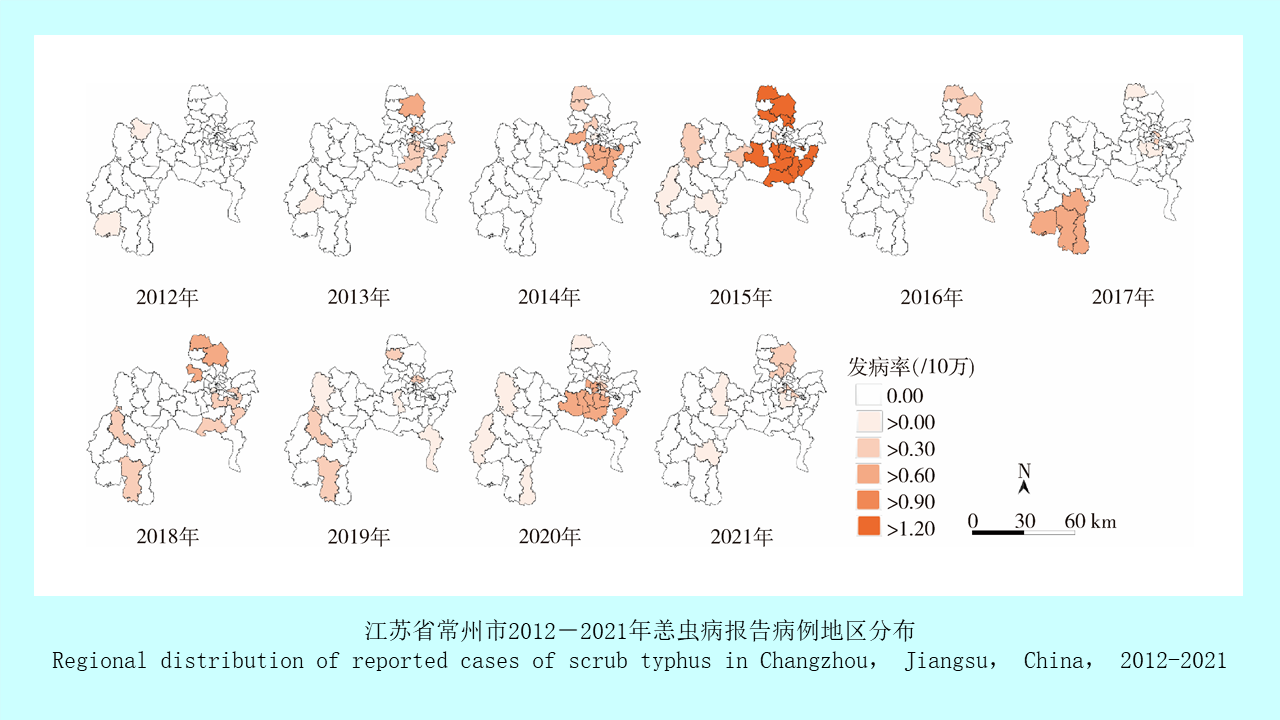
    Objective To investigate the level, trend, and epidemiological characteristics of scrub typhus in Changzhou, China, and to provide a basis for prevention and control of the disease.Methods The reported data of scrub typhus in Changzhou from January 1, 2012 to December 31, 2021 were collected from the China Information System for Disease Control and Prevention. We analyzed the incidence of the disease and described the regional, temporal, and population distribution characteristics of scrub typhus using descriptive epidemiology method.Results From 2012 to 2021, a total of 149 cases were reported in Changzhou, with a median annual reported incidence rate of 0.28/100 000, with the highest reported incidence rate of 0.74/100 000 in 2015 and the lowest rate of 0.04/100 000 in 2012. Cases were reported in all districts of Changzhou, with the top three being Wujin district (60, 40.27%), Xinbei district (34, 22.82%), and Liyang city (20, 13.42%). Most cases were reported between October and November in farmers, household workers, and unemployed persons, and in persons aged 45-69 years.Conclusions Scrub typhus surveillance should be strengthened, medical personnel should be trained to improve the diagnosis of scrub typhus, and health education for high-risk populations should be carried out, in order to prevent and control the occurrence and prevalence of scrub typhus.
  • SU Fan, SUN Ji-min, LING Feng, ZHANG Rong, LIU Ying, WANG Zhen
    Chinese Journal of Vector Biology and Control. 2023, 34(3): 378-382. https://doi.org/10.11853/j.issn.1003.8280.2023.03.016
    Abstract ( ) Download PDF ( )   Knowledge map   Save
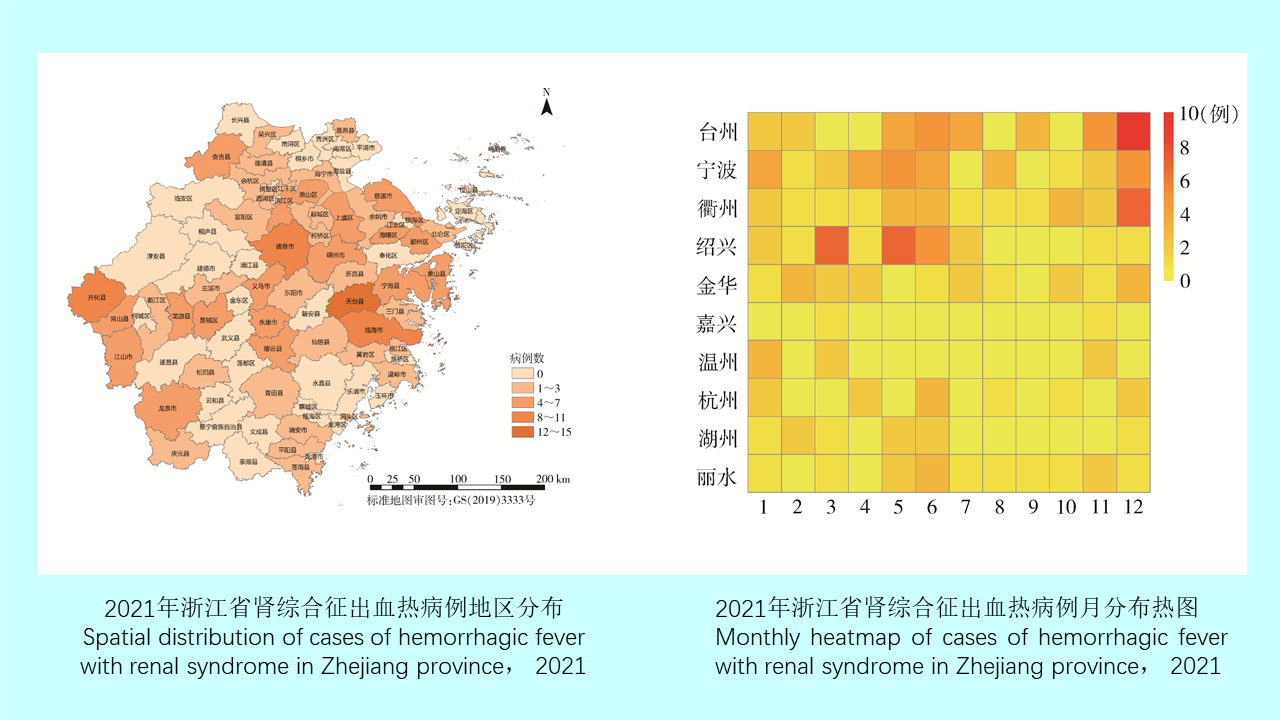
    Objective To analyze the epidemic situation of hemorrhagic fever with renal syndrome (HFRS) and the populations distribution and Hantavirus infection status of the host animals in Zhejiang province, China in 2021, and to provide scientific evidence for establishing preventive measures.Methods Descriptive epidemiological methods were used to analyze HFRS case data and host surveillance data, which were online reported in the Communicable Disease Surveillance Information Reporting and Management System of Zhejiang province in 2021. The Chi-square test was used for rate comparison.Results A total of 180 HFRS cases were reported in Zhejiang province in 2021, with a mean annual incidence rate of 0.29/100 000. Most cases were observed in Taizhou, Ningbo, Shaoxing, and Quzhou. The cases distributed throughout the year, peaking during May to June in summer and December in winter at similar levels. The high-incidence group aged over 40 years old, accounting for 76.67% (138/180) of the total cases. The main occupation was farmers, accounting for 61.67%. A total of 11 921 effective traps were set in the five surveillance sites in Zhejiang province, capturing 660 small mammals, with an average capture rate of 5.54%. A total of 660 serum samples of small mammal were detected, among which 35 (5.30%) were antibody-positive. Hantavirus was positive in 15 of 660 (2.27%) small mammal lung samples. There were statistical differences in capture rate (χ2=16.161, P<0.05), the positive rate of HFRS antibody (χ2=14.957, P=0.005), and the virus infection rate of small mammals (χ2=8.413, P=0.048) among the five surveillance sites.Conclusions HFRS was sporadic at a low level and distributed in extensive areas in Zhejiang province in 2021. The surveillance sites had generally high small mammal densities and fluctuating virus infection rates in small mammals, requiring scientific rodent control-based comprehensive prevention and control measures.
  • LI Yu-qiong, MAO Mei-juan, DUAN Xing-de, LIU Zheng-xiang, GENG Zhan-kai, LI Xing-neng, ZHANG Rong-bing, CHENG Pan, LI Chun-xia, LIU Mei-qi, SHAO Zong-ti
    Chinese Journal of Vector Biology and Control. 2023, 34(3): 383-388. https://doi.org/10.11853/j.issn.1003.8280.2023.03.017
    Abstract ( ) Download PDF ( )   Knowledge map   Save
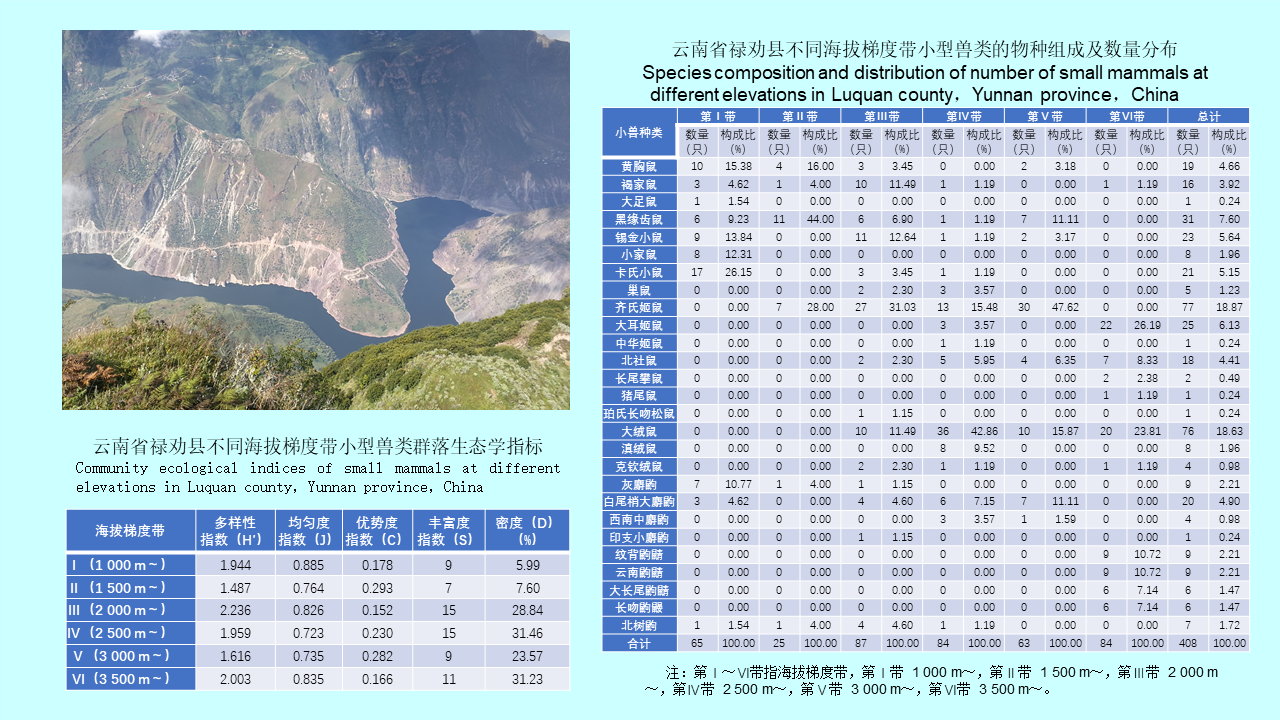
    Objective To understand the species composition, distribution, and species diversity of small mammals in Luquan county, and to provide reference basis for the prevention and control of rodent-borne diseases in Luquan county.Methods Small mammals were surveyed and sampled from residential areas, farming areas and forest areas at altitudes of 1 000-3 700 m in Luquan county. The community structure and diversity index of small mammals were calculated and analyzed by community ecology method. Chi-square analysis was used for comparison of rates.Results A total of 408 small mammals were captured, belonging to 3 orders, 7 families, 14 genera and 27 species. The total capture rate was 13.07%. The indoor dominant species were Rattus tanezumi (45.46%), R.norvegicus (36.36%) and Mus musculus (18.18%), while the field dominant species were Apodemus chinensis (19.95%) and Eothenomys miletus (19.69%). The capture rates of residential areas, farming areas and forest areas were 1.75%, 18.97%, and 31.23%, respectively, and the difference was statistically significant (χ2=268.985, P<0.001). The species richness and diversity of small mammals were the highest in farming area, and the dominance and evenness were the highest in residential area. In the altitude gradient 2 000-3 500 m, the richness and diversity are relatively high. The richness and density increase with elevation, but decrease slowly after a certain elevation gradient, showing unimodal distribution.Conclusions There are rich species and high diversity of small mammals. R. tanezumi and R. norvegicus, A. chinensis and E. miletus were dominant species in residential, farming or forest areas, respectively. This suggests that there is a potential risk for the spread of rodent borne diseases.
  • WANG Rong, LIU Qi-yong, LU Tao, ZHANG Xian-qing, MA Yong-cheng, GUO Yu-hong, MA Bin-zhong, LIU Gui-xiang, JIANG Ming-xia, CHENG Xiao-lan
    Chinese Journal of Vector Biology and Control. 2023, 34(3): 389-393. https://doi.org/10.11853/j.issn.1003.8280.2023.03.018
    Abstract ( ) Download PDF ( )   Knowledge map   Save
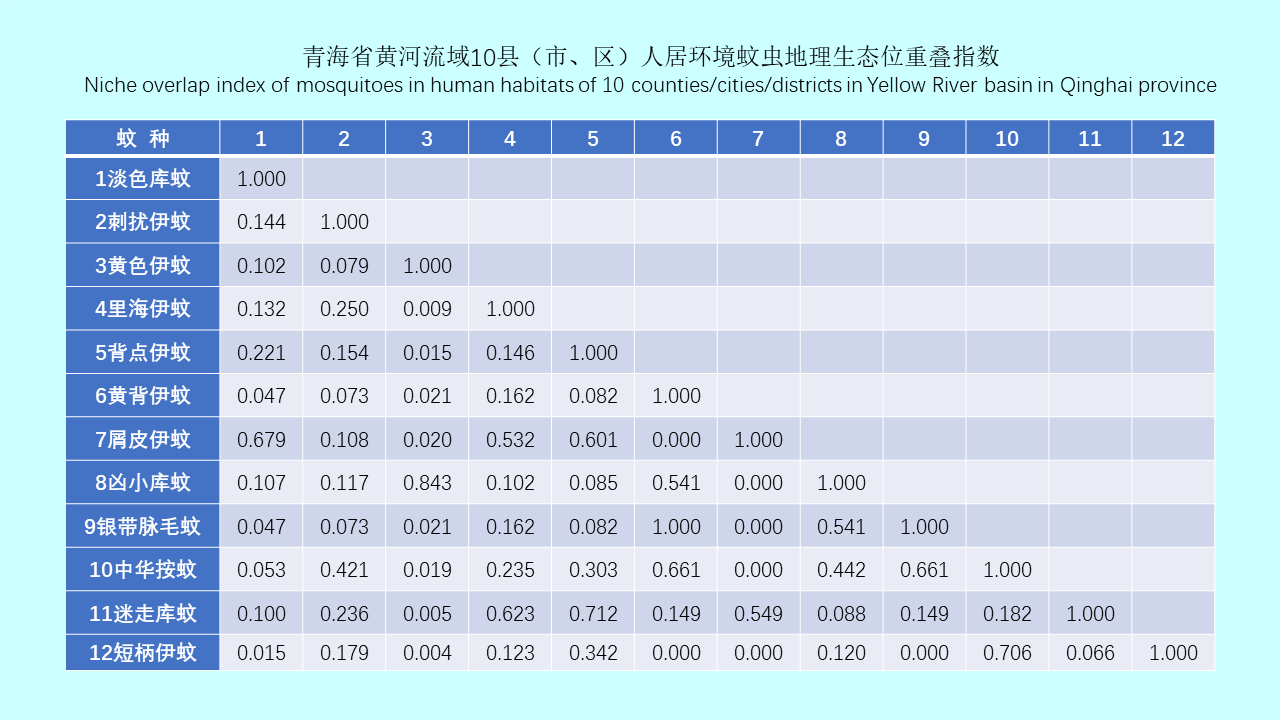
    Objective To investigate the species composition and spatial distribution of mosquitoes in the human habitats of the Yellow River basin in Qinghai province, China.Methods Ten counties/cities/districts in the Yellow River basin in Qinghai province were set as the study space. From July to September of 2018 to 2021, blood-sucking mosquitoes active at night were collected using mosquito trap lamps (Gongfu Xiaoshuai) around rural livestock pens and residential houses, followed by identification and classification. Excel 2016 was used to establish the database to calculate population dominance and niche breadth. SPSS 22.0 was used to perform hierarchical cluster analysis on the correlation coefficients between mosquito species.Results A total of 2 684 mosquitoes belonging to 12 species of 4 genera were captured,among which Aedes vexans was the dominant species with species abundance of 30.030. The species abundance of Aedes vexans, Ae. falvidorsalis, Culex pipiens pallens, and Cx. modestus is more than 10.000; The ecological breadth of Ae. detrituss, Ae. dorsalis, Ae. vexans, and Cx. pipiens pallens is more than 6; Geographic niche width of Ae. dorsalis, Cx. modestus, Anopheles sinensis, and Ae. flavescens is greater than or equal to 1.000. There were niche overlaps among 90% of mosquito species, with 13 pairs >0.50 (including one pair with a complete overlap). Ae. sergievi was found in Guide county for the first time.Conclusions Ae. vexans, Ae. dorsalis, and Cx. pipiens pallens have relatively high numbers of species, species abundance, ecological amplitude, niche breadth, and niche overlap in human habitats in the Yellow River basin of Qinghai province. These mosquito species are widely distributed and highly competitive in the plateau. It is the first time to discover Ae. sergievi, a new record in Qinghai province, China.
  • Investigation
  • LIU Dan, LI Xiao-na, Wulantuya, FAN Hong-xia, TIE Wei-fang, MA Yu-xing, MEI Bu-jun, YIN Xu-hong, CAO Min-zhi, Gaowa
    Chinese Journal of Vector Biology and Control. 2023, 34(3): 394-399. https://doi.org/10.11853/j.issn.1003.8280.2023.03.019
    Abstract ( ) Download PDF ( )   Knowledge map   Save
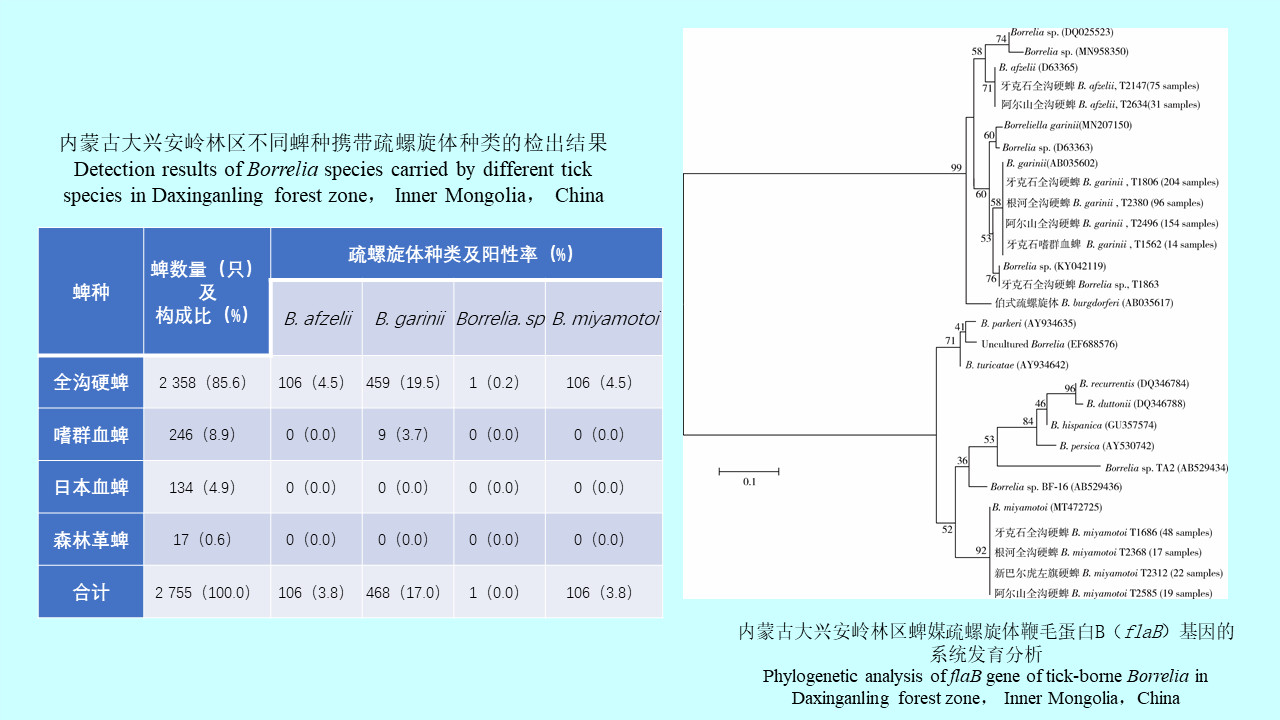
    Objective To investigate the community structure of ticks and the background of Borrelia carried by ticks in Daxinganling forest zone, Inner Mongolia Autonomous Region (Inner Mongolia), China. Methods Free tick were collected in spring and summer from 2019 to 2021, and the tick species were identified by morphological and molecular biological methods. The salivary glands of ticks were anatomically harvested for DNA extraction. The quantitative polymerase chain reaction (qPCR) of 16S rRNA was used as preliminary screening of Borrelia, and for positive specimens, the target gene flaB of Borrelia was detected by PCR and confirmed by sequencing. After sequencing of amplified sequences, the basic local alignment search tool (BLAST) was used for homology analysis, and then the phylogenetic tree was constructed by MEGA 7.0 software. Results A total of 2 755 adult ticks were collected, belonging to 4 species from 3 genera. Ixodes persulcatus was the dominant tick species in this area, accounting for 85.6% of the total number of collected ticks. PCR results showed that the positive rate of Borrelia was 24.7%, and the positive rates of B. recurrentis and B. burgdorferi were 3.8% and 20.9%, respectively. In the collected ticks, B. burgdorferi was detected in both I. persulcatus and Haemaphysalis concinna, while B. recurrentis was found only in I. persulcatus. BLAST and phylogenetic analysis results showed that some sequences derived from I. persulcatus were identified to share a high homology (97.5%-100%) with those from B. afzelii (CP003882), B. garinii (CP003866), B. miyamotoi (AB900798), and Borrelia sp. (LC170020); the sequence derived from Ha. concinna was also clustered with that from B. garinii (CP003866). The species and carrying rate of Borrelia were different among different tick species. Among the ticks collected, only I. persulcatus had the co-infection of two species of Borrelia. Conclusions In this area, the tick-borne Borrelia species, mainly B. burgdorferi and B. recurrentis, are widely found in ticks, and the carrying rate is high. Therefore, it is necessary to strengthen the targeted prevention and control of tick-borne diseases.
  • GAO Yi, MAO Yi-ping, WANG Xiao-lin, CHEN Yi-nan, ZHANG Xin-wei, GONG Zhen-yu
    Chinese Journal of Vector Biology and Control. 2023, 34(3): 400-405. https://doi.org/10.11853/j.issn.1003.8280.2023.03.020
    Abstract ( ) Download PDF ( )   Knowledge map   Save
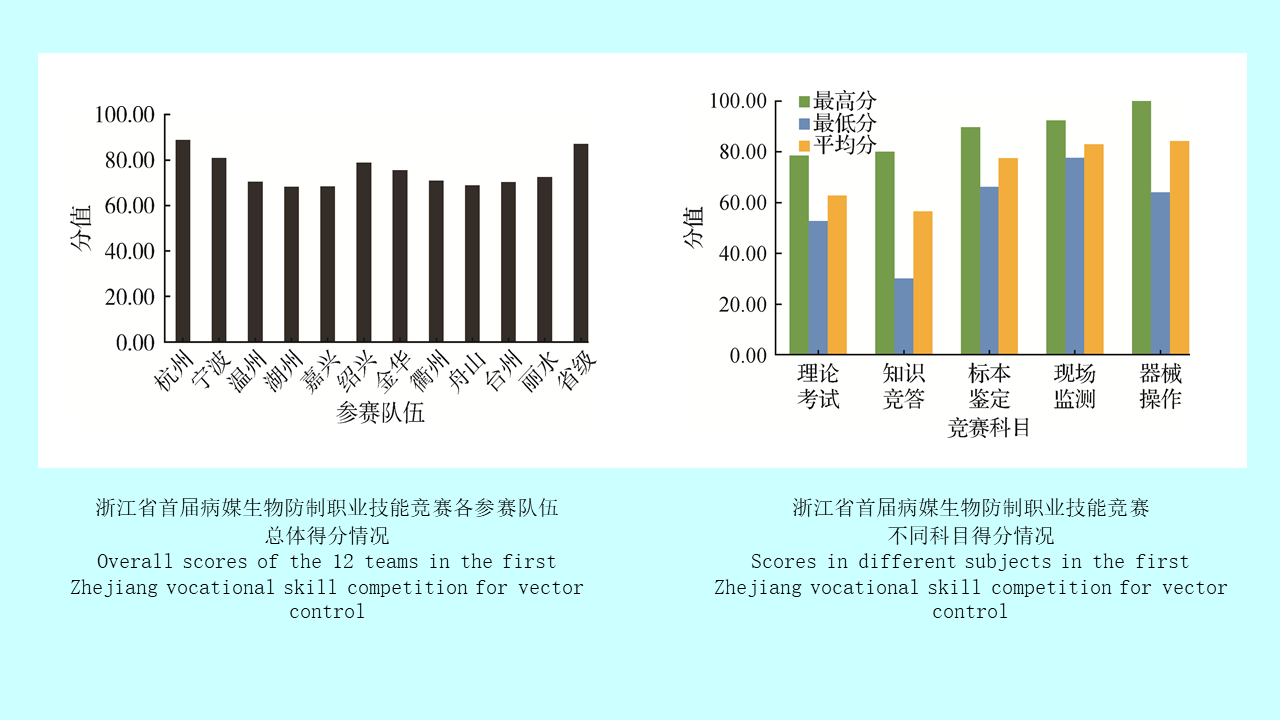
    Objective To analyze the theoretical knowledge, on-site disposal, and comprehensive analysis capacity for vector control in professional technicians in Zhejiang disease control and prevention (disease control) institutions, China, and to provide a decision-making basis for strengthening the capacity building of teams in disease control institutions.Methods Based on the first Zhejiang vocational skill competition for vector control in 2019, the knowledge of vector control, average score, and loss of points in individual item in 36 contestants from eleven municipal and one provincial disease control institutions were evaluated, and the differences in scores in different regions, different competition subjects, different knowledge categories, theoretical knowledge, and on-site operation were analyzed. SPSS 25.0 was used for difference comparison and variance analysis.Results The results were converted and standardized according to 100 points. The average score of 12 teams was 75.01 (68.13-88.77) points. The analysis of five different subjects of theory test, knowledge quiz, specimen identification, monitoring technique, and device operation showed significant differences in the scores between the theory test and the other four subjects and between the knowledge quiz and the other four subjects (all P<0.05). There were significant differences in individual scores between the contestants with different job types (full-time and part-time) and between those from institutions with different structures and personnel allocations (F=11.897, P=0.002; F=14.737, P=0.001; F=10.627, P=0.003). The analysis of theory test and knowledge quiz according to different knowledge categories showed significant differences in the scores between drug and device use and the other three knowledge categories, and between comprehensive analysis and the other three knowledge categories in the theory test (all P<0.05); for the knowledge quiz, there were significant differences in the scores between the basic knowledge and monitoring evaluation, between the basic knowledge and disposal technique, between species identification and monitoring evaluation, between species identification and disposal technique, between monitoring evaluation and drug and device use, and between drug and device use and disposal technique (all P<0.05). The species identification showed that there were significant differences in the scores between mosquito feature description and the other three key assessment points, and between cockroach or fly feature description and the other three key assessment points (all P<0.05). There were significant differences in the scores between rodent monitoring records and the other key assessment points, and between fly monitoring records and the other key assessment points (all P<0.05). In the device operation subject, significant differences were observed in the scores between drug liquid preparation and personal protection, between drug liquid preparation and post-treatment, and between actual operation and post-treatment (all P<0.05).Conclusions The competition shows that the professional technicians from Zhejiang province’s disease control institutions are generally at a high level. However, there are still insufficient knowledge coverage of the contestants, certain differences in the mastery degree between regions. The vector control teams construction are weakened in the disease control institutions. There are shortcomings and weaknesses in some knowledge categories, especially species identification, basic knowledge, and drug and device use. It suggests that it is necessary to strengthen the systematic training of professionals, highlight basic knowledge and skills training such as on-site operation, and strengthen the construction of internal teams and personnel allocation, so as to improve the overall level of vector prevention and control in Zhejiang province.

  • YANG Jin-ting, HUANG Xiao-bin, WANG Yu-juan, GUO Xian-guo, ZHANG Xian-zheng, YANG Hui-juan, ZHENG Xiao-yan
    Chinese Journal of Vector Biology and Control. 2023, 34(3): 406-411. https://doi.org/10.11853/j.issn.1003.8280.2023.03.021
    Abstract ( ) Download PDF ( )   Knowledge map   Save
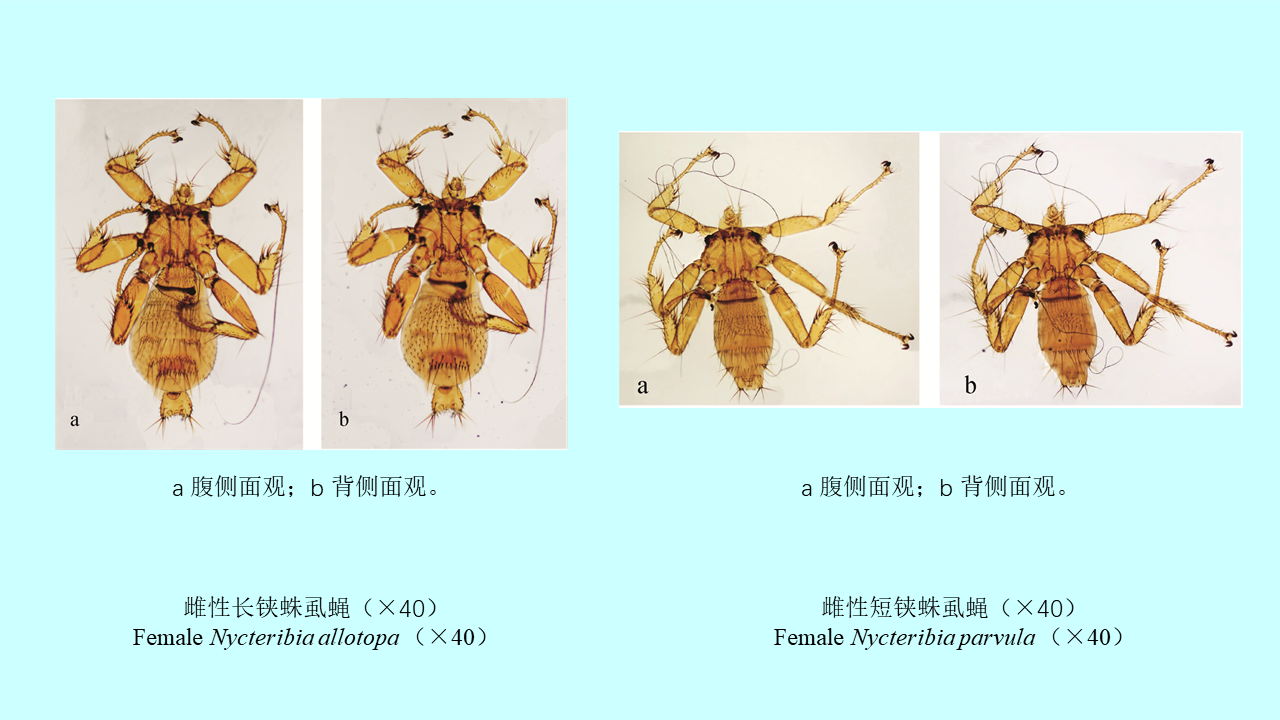
    Objective To preliminarily understand the situation of ectoparasitic infestation on Miniopterus fuliginosus in some regions of Yunnan province, China as well as related ecological patterns.Methods From 2020 to 2022, M. fuliginosus was captured by mist nets at six sampling sites (Fumin county and Jinning district in Kunming, Mouding county in Chuxiong Yi Autonomous Prefecture, Zhanyi district in Qujing, Binchuan county in Dali Bai Autonomous Prefecture, and Simao district in Pu’er in Yunnan province), followed by ectoparasite collection for sorting and identification. The constituent ratio (Cr ), prevalence (PM ), mean abundance (MA), and mean intensity (MI) of ectoparasites on M. fuliginosus were calculated. The dominance index (Y) was used to determine the dominant species of ectoparasites on M. fuliginosus. The patchiness index (m*/m) was used to determine the spatial distribution of dominant species. The association coefficient (V) was used to analyze the relationship between dominant species. The Fisher’s exact test and nonparametric rank sum test were used to analyze the sex difference of ectoparasitic infestation.Results A total of 77 M. fuliginosus bats were captured, with 498 ectoparasites collected from their body surfaces, which mainly included gamasid mites (Cr =33.53%, PM=55.84%, MA=2.17, and MI=3.88) and bat flies (Cr =64.66%, PM=93.51%, MA=4.18, and MI=4.47). The dominant species were Nycteribia allotopa (Y=0.293) and N. parvula (Y=0.203). The patchiness index analysis showed that both N. allotopa (m*/m=1.366) and N. parvula (m*/m=2.460) were distributed in an aggregated way on different host individuals. The association coefficient analysis showed a positive association between N. allotopa and N. parvula (V=0.248, P=0.026). There were no statistical differences in the prevalence rates of bat flies, gamasid mites, and all ectoparasites between male and female M. fuliginosus.Conclusions Ectoparasitic infestation was prevalent on M. fuliginosus in Yunnan province, with low species diversity and simple community structure that mainly included gamasid mites and bat flies.
  • TIAN Peng, SUN Xiao-dong, DUAN Kai-xia, XU Yan-chun, ZHOU Yao-wu, GUO Xiang-rui, LI Shi-gang, LIN Zu-rui
    Chinese Journal of Vector Biology and Control. 2023, 34(3): 412-416. https://doi.org/10.11853/j.issn.1003.8280.2023.03.022
    Abstract ( ) Download PDF ( )   Knowledge map   Save
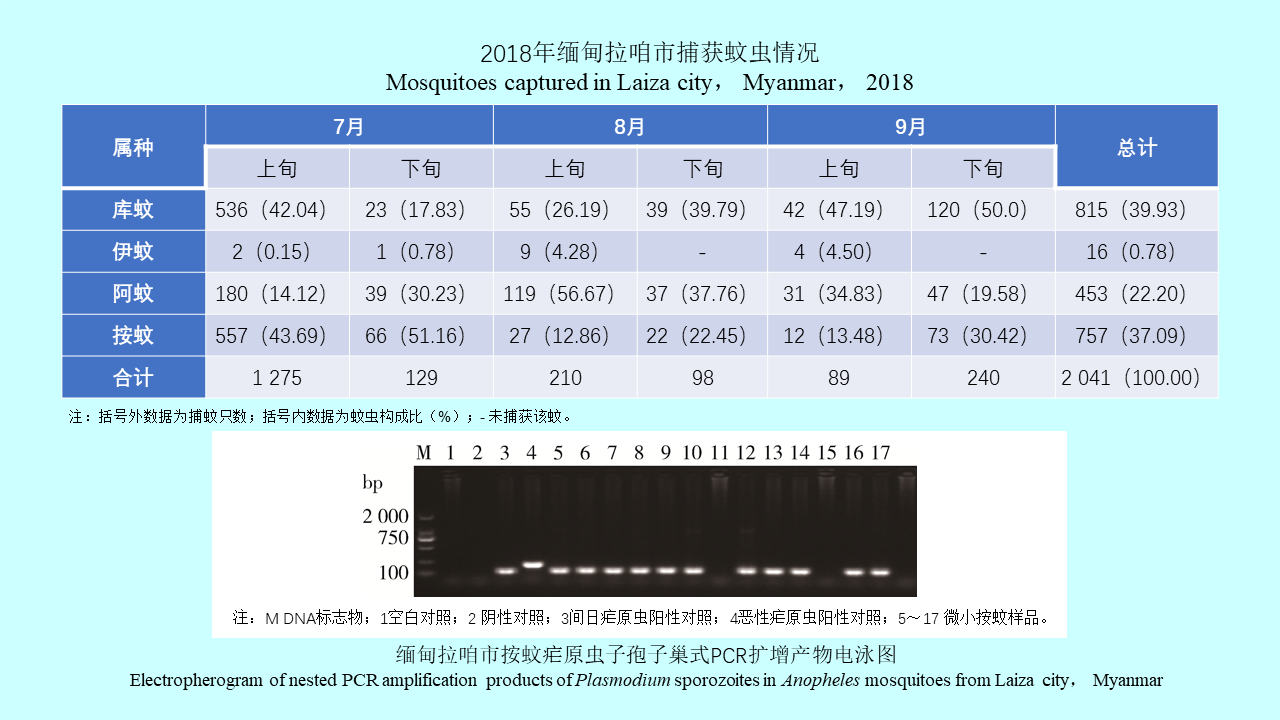
    Objective To investigate mosquito species and Plasmodium sporozoite infection in Anopheles mosquitoes in Laiza city, Myanmar, and provide a basis for local malaria control and prevention.Methods Four residential sites were selected in Laiza city (within 2 km from the border), and five human houses were selected at each site for capturing mosquitoes. Mosquitoes were collected with a light trap each inside and outside every house overnight for three days, twice per month from July to September, 2018. Mosquito species were determined by morphological identification. The positive rate of Plasmodium sporozoite infection in Anopheles mosquitoes was examined by using nested PCR, with five Anopheles mosquitoes per group.Results A total of 2 041 mosquitoes of four genera were collected, including 815 (39.93%) Culex mosquitoes, 16 (0.78%) Aedes mosquitoes, 453 (22.20%) Armigeres mosquitoes, and 757 (37.09%) Anopheles mosquitoes. There were 10 Anopheles species, in which An. minimus was the local dominant species, accounting for 85.87% (650/757), followed by An. culicifacies (5.02%). A total of 667 An. minimus mosquitoes in 135 groups were examined by PCR. Among them, 11 groups were positive for the target fragment of P. vivax, all labeled as An. minimus, with a detection rate of 8.15%. In the positive 11 groups, at least one An. minimus mosquito in each group carried P. vivax sporozoites, and the minimum Plasmodium sporozoite infection rate in An. minimus mosquitoes was 1.69% (11/650). The minimum infection rates of Zhatugong and Chunmuweng sites were 1.74% and 1.89%, respectively, without statistical difference (χ2=0.012, P=0.912). The infection rate was zero at Jiyangka and Penlongyang sites.Conclusions An. minimus was the dominant Anopheles species in Laiza city, Myanmar, which was the main vector for local malaria transmission, with a high rate of Plasmodium sporozoite infection.
  • TIAN Xiao-dong, DAI Pei-fang, ZHAO Jun-ying, DONG Hai-yuan, CHENG Jing-xia
    Chinese Journal of Vector Biology and Control. 2023, 34(3): 417-421. https://doi.org/10.11853/j.issn.1003.8280.2023.03.023
    Abstract ( ) Download PDF ( )   Knowledge map   Save
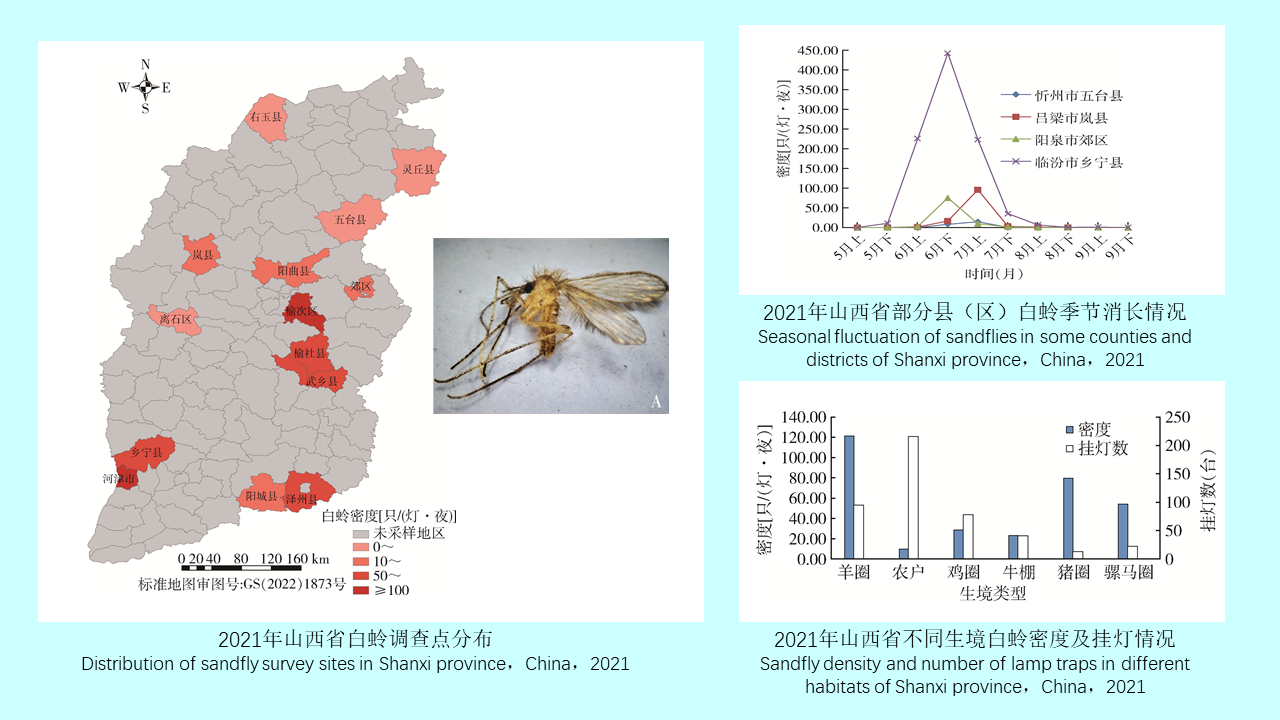
    Objective To investigate the species, distribution, density, and seasonal fluctuation of sandflies in different areas of Shanxi province, China, and to provide a scientific basis for the risk assessment and control of kala-azar.Methods From May to September in 2021, sandflies were captured with light trapping in different habitats in 14 counties/cities/districts of 11 prefectures of Shanxi province. The non-bloodsucking female sandflies were randomly selected from different areas and identified by morphological and molecular biological methods. Excel 2010 software was used to construct the database, followed by analysis of sandfly catches by habitat or month. The distribution of sandflies was mapped using ArcGIS 10.7.Results A total of 19 006 sandflies were captured, with an average density of 40.87 sandflies/light·night. The seasonal fluctuation of sandflies throughout the year showed a single-peak distribution. Sandflies were first caught in the first half of May, and the density peaked during the second half of June to the first half of July, after which the density decreased rapidly. Sandflies were captured in six environmental types: farmyards, sheep pens, cattle sheds, chicken pens, pig pens, and mule/horse sheds. Sheep pens had the highest density of 121.39 sandflies/light·night, and farmyards had the lowest density of 9.63 sandflies/light·night. Of the 432 sandflies identified by morphology, one was Sergentomyia squamirostris, and the rest were Phlebotomus chinensis. Another 110 sandflies were randomly selected for molecular biological identification: four were S. squamirostris, and the remaining 106 were P. chinensis. P. chinensis was the absolute dominant species.Conclusions Sandflies distributed in all the 14 counties/cities/districts of the 11 cities of Shanxi province. P. chinensis was the dominant species of sandflies in Shanxi province, which was the main vector for kala-azar transmission. They were mainly distributed in rural areas, especially in livestock/poultry-raising places, where environmental management and sandfly control should be strengthened to reduce the risk of kala-azar transmission.
  • Review
  • JIANG Ning, MA Ya-jun, BAI Jie, PENG Heng
    Chinese Journal of Vector Biology and Control. 2023, 34(3): 422-427. https://doi.org/10.11853/j.issn.1003.8280.2023.03.024
    Abstract ( ) Download PDF ( )   Knowledge map   Save
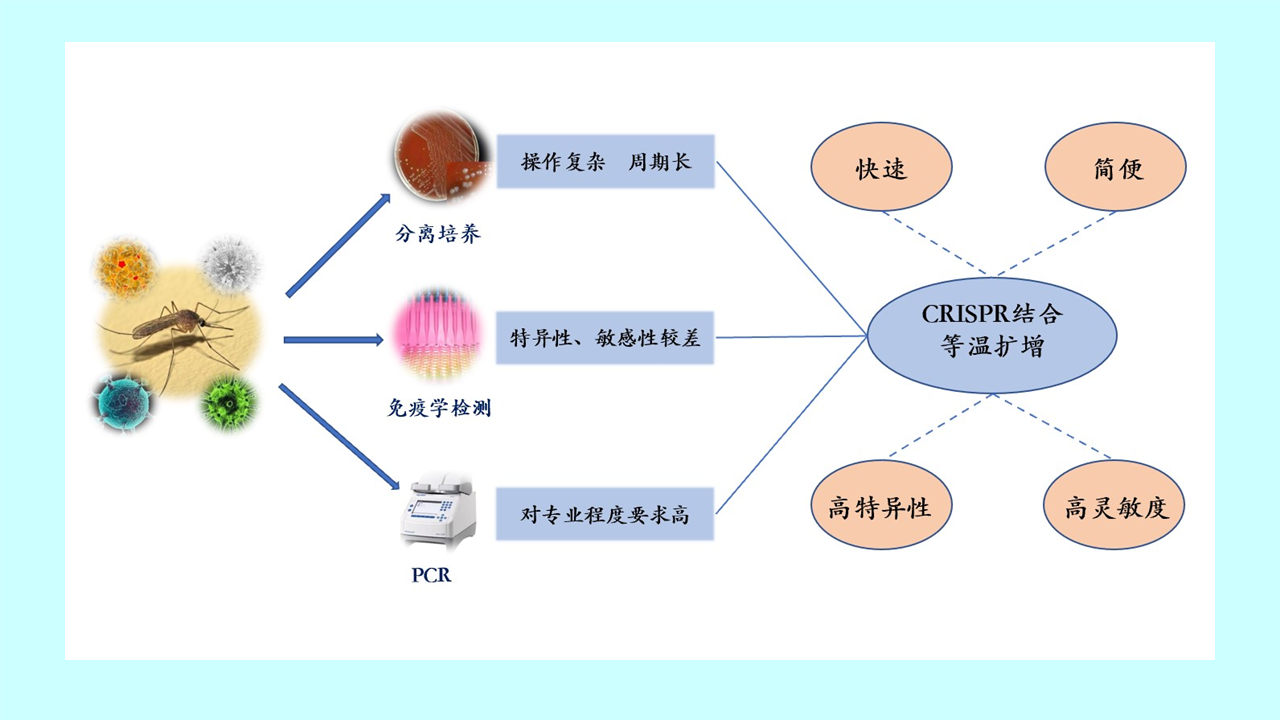
    Mosquito-borne viruses are transmitted mainly by mosquitoes during blood feeding. These viruses include more than 100 species and can cause many infectious diseases and seriously threaten human health. The accurate and rapid detection of mosquito-borne viruses in field is an important part of preventing and controlling mosquito-borne diseases. Field detection allows earlier disease prevention and control and helps control the outbreaks and epidemics of mosquito-borne diseases. However, current detection methods mainly target clinical samples and cannot be used for on-site detection of viruses in mosquito samples. This paper reviews the detection methods for mosquito-borne viruses, including the classical isolation and culture, antigen detection, and nucleic acid detection methods, as well as the new technologies developed rapidly in recent years, such as isothermal amplification and clustered regularly interspaced short palindromic repeats-associatied (CRISPR-Cas). The characteristics of these methods are analyzed, and the directions of developing technologies for monitoring mosquito-borne viruses in field are discussed.
  • HU Xiao-yu, LI Zeng-kui, LI Zhong-yu, GENG Peng-cheng, ZHANG Shu-yun, GAO Dong, LIU Pei-qi, LI Hao-lin, HE Yong-cai, JIANG Shuo, CHEN Qiang, KANG Ming, LI Ji-xu, LI Ying
    Chinese Journal of Vector Biology and Control. 2023, 34(3): 428-439. https://doi.org/10.11853/j.issn.1003.8280.2023.03.025
    Abstract ( ) Download PDF ( )   Knowledge map   Save
    Ticks can transmit a wide range of pathogens, posing a serious threat to human and animal health. In order to lay the theoretical foundation for tick control in Asia and Africa, we review the reports published in the past five years on ticks and tick-borne pathogens in Mongolia, China (only Xinjiang Uygur Autonomous Region and Qinghai province), Pakistan, and Egypt along the migration routes of migratory birds. The highest number of tick species (51) were reported in Pakistan, followed by Xinjiang and Qinghai of China, Egypt, and Mongolia. Only 11 tick species were reported in Mongolia. Most of the ticks found in these regions belonged to the family Ixodidae. The majority of reported tick-borne pathogens were zoonotic, including the genera of Anaplasma, Rickettsia, and Coxiella. Birds are hosts of various ticks and potential carriers of tick-borne pathogens. Therefore, the migration of birds from East Africa to West Asia may facilitate the spread of ticks and tick-borne pathogens along these regions.
  • GUO Xiao-lian, YANG Kun
    Chinese Journal of Vector Biology and Control. 2023, 34(3): 440-446. https://doi.org/10.11853/j.issn.1003.8280.2023.03.026
    Abstract ( ) Download PDF ( )   Knowledge map   Save
    This article reviews the research advances in biological characteristics and vectorial capacity of Anopheles sinensis, so as to evaluate the vector transmission efficiency of An. sinensis. It is found that An. sinensis has low vectorial capacity to transmit malaria, but it still has the possibility of keeping the prevalence of malaria; while there is a lack of quantitative research on the transmission of other diseases. With the global warming and social development, in view of the impact of temperature and host changes on An. sinensis, and in consideration of the need for prevention and control of emerging or neglected infectious diseases, it is necessary to strengthen the quantitative research on vectorial capacity of An. sinensis.