20 April 2022, Volume 33 Issue 2
    

  • Select all
    |
    Expert Forum
  • XU Ai-ling, LI Dong-mei, LIU Qi-yong
    Chinese Journal of Vector Biology and Control. 2022, 33(2): 161-170. https://doi.org/10.11853/j.issn.1003.8280.2022.02.001
    Abstract ( ) Download PDF ( )   Knowledge map   Save
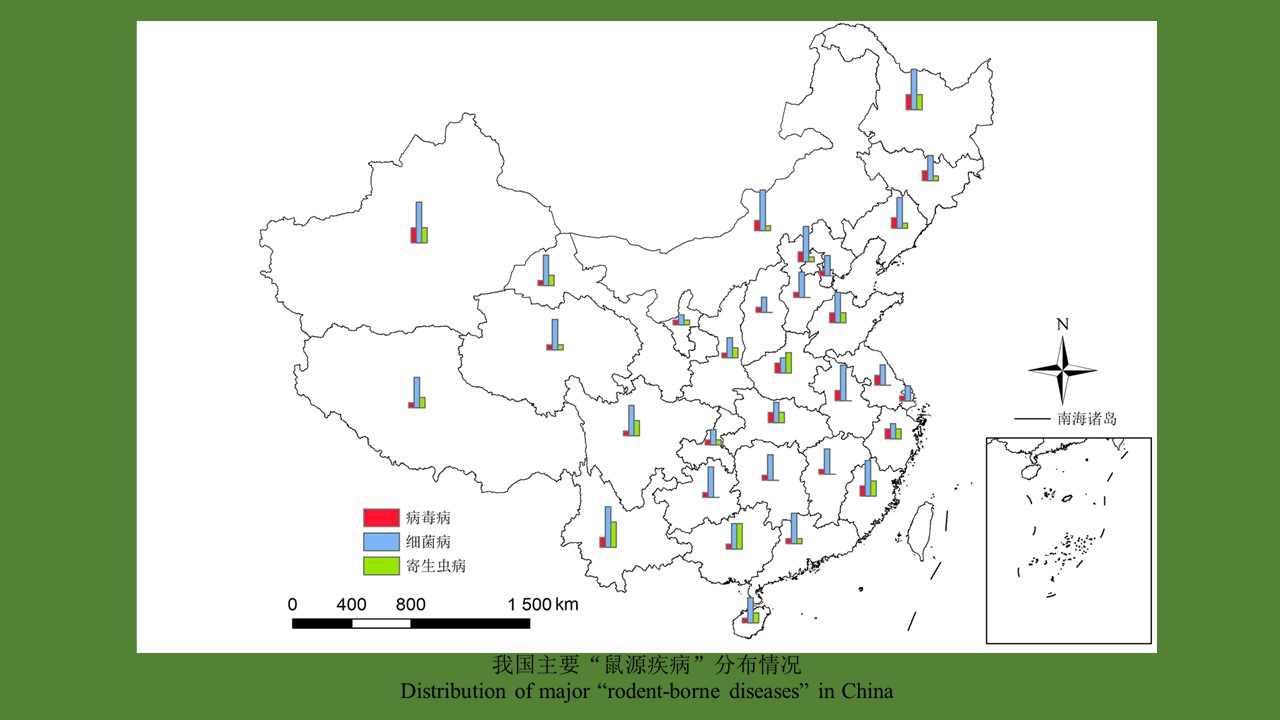
    Objective To investigate the basic concept of "rodent-borne diseases" suitable for national vector surveillance and the list of "rodent-borne diseases" in China. Methods Related keywords were used to search for the articles on "rodent-borne diseases" in the databases and websites of SinoMed,CNKI,Wanfang Data,Super Star Digital Library,PubMed,and Web of Science,and the definition of "rodent-borne diseases" was summarized to determine its concept and coverage. A total of 27 diseases were selected to form the list of major "rodent-borne diseases" in China for expert consultation. Results A total of 178 references were used to formulate the basic concept of "rodent-borne diseases" and its inclusion criteria,and 18 experts consulted all agreed to the concept of "rodent-borne diseases". The information table of "rodent-borne diseases" in China was developed, including 5 viral diseases,12 bacterial diseases, and 8 parasitic diseases. Conclusion "Rodent-borne diseases" are a group of infectious diseases that seriously affect human health,and its basic concept and inclusion conditions are proposed to provide a reference for the comprehensive surveillance of disease-related pathogens carried by rodents and promote the establishment of more perfect control strategies.
  • Experimental Study
  • LI Wen-yu, ZHOU Xin-xin, LUN Xin-chang, MA De-long, LIN Ling-hong, SONG Xiu-ping, LU Liang, LIU Qi-yong, WANG Jun, WANG Chun-lan, MENG Feng-xia
    Chinese Journal of Vector Biology and Control. 2022, 33(2): 171-176. https://doi.org/10.11853/j.issn.1003.8280.2022.02.002
    Abstract ( ) Download PDF ( )   Knowledge map   Save
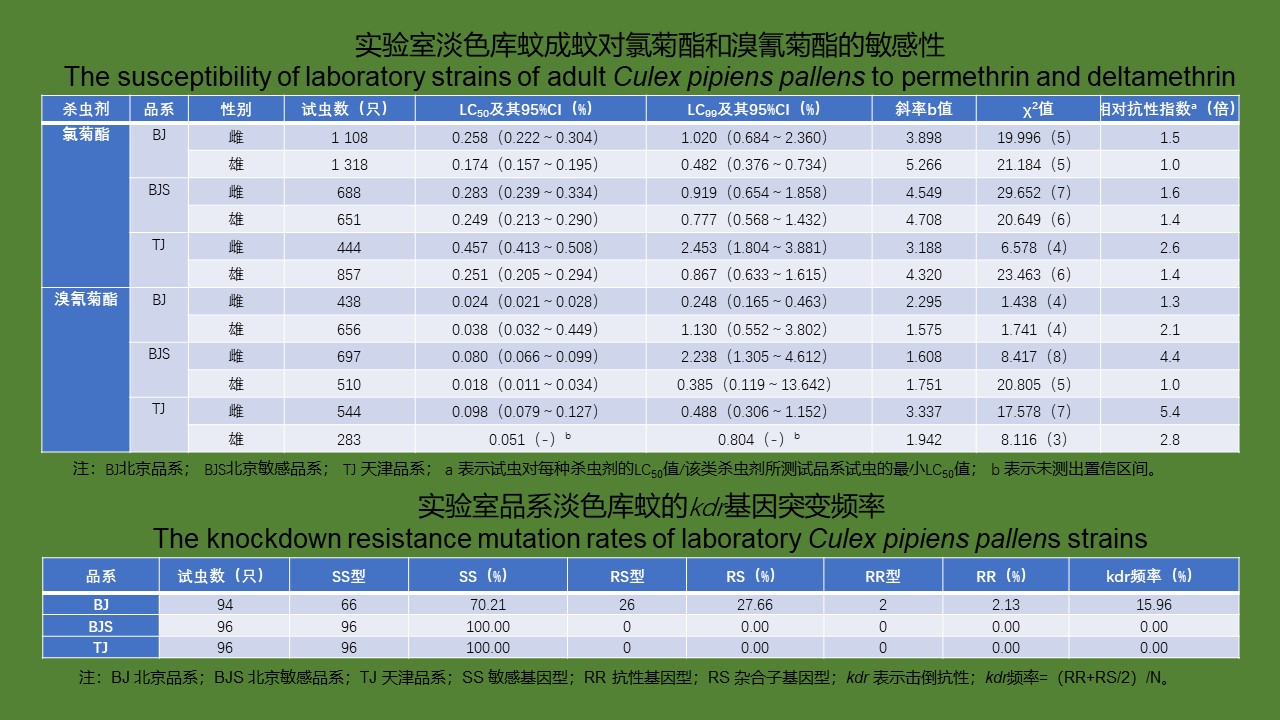
    Objective To study the factors affecting the sensitivity of adult Culex pipiens pallens to pyrethroid insecticides, and to provide evidence for the insecticide resistance surveillance and the control of adult Cx. pipiens pallens. Methods The WHO tube test was performed on laboratory Cx. pipiens pallens strains (the Beijing[BJ] strain, Beijing sensitive[BJS] strain, and Tianjin[TJ] strain) to evaluate the insecticide susceptibility of adult test mosquitoes to permethrin and deltamethrin under different conditions. Results In female adult mosquitoes, the sensitivity to permethrin was the BJ strain ≈ the BJS strain > the TJ strain (≈ meaning no significant difference in sensitivity between the two strains), and the median lethal concentrations (LC50) were 0.258% (0.222%, 0.304%), 0.283% (0.239%, 0.334%), and 0.457% (0.413%, 0.508%), respectively. In male adult mosquitoes, the sensitivity to permethrin was the BJ strain > the BJS strain ≈ the TJ strain, and the LC50 values were 0.174% (0.157%, 0.195%), 0.249% (0.213%, 0.290%), and 0.251% (0.205%, 0.294%), respectively. The sensitivity of female adult mosquitoes to deltamethrin was the BJ strain > the BJS strain ≈ the TJ strain, and the LC50 values were 0.024% (0.021%, 0.028%), 0.080% (0.066%, 0.099%), and 0.098% (0.079%, 0.127%), respectively. The sensitivity of male adult mosquitoes to deltamethrin was the BJ strain ≈ the BJS strain, and the LC50 values were 0.038% (0.032%, 0.449%) and 0.018% (0.011%, 0.034%), respectively. The knockdown resistance mutation rate was 15.96% in the BJ strain, while no mutation of the gene was detected in the BJS strain and TJ strain. Under laboratory conditions, the natural mortality of male adult Cx. pipiens pallens was higher than that of female mosquitoes at any age. Under the same conditions, male adult mosquitoes were more sensitive to the insecticides than female adult mosquitoes. The toxicity of deltamethrin was 3.5-10.8 times that of permethrin. Conclusion Age and sex can affect the insecticide susceptibility of adult mosquito populations. Therefore, when carrying out insecticide resistance monitoring or efficacy evaluation, test mosquitoes should be homogeneous.
  • WU Si-han, ZHOU Xin-xin, KE Xue-mei, LI Yu-wei, CHEN Bin, HUANG Jing-wen, CHEN Hua-fang, LIN Min-zhen, LEI Lei, GUO Zhi-nan, MENG Feng-xia
    Chinese Journal of Vector Biology and Control. 2022, 33(2): 177-182. https://doi.org/10.11853/j.issn.1003.8280.2022.02.003
    Abstract ( ) Download PDF ( )   Knowledge map   Save
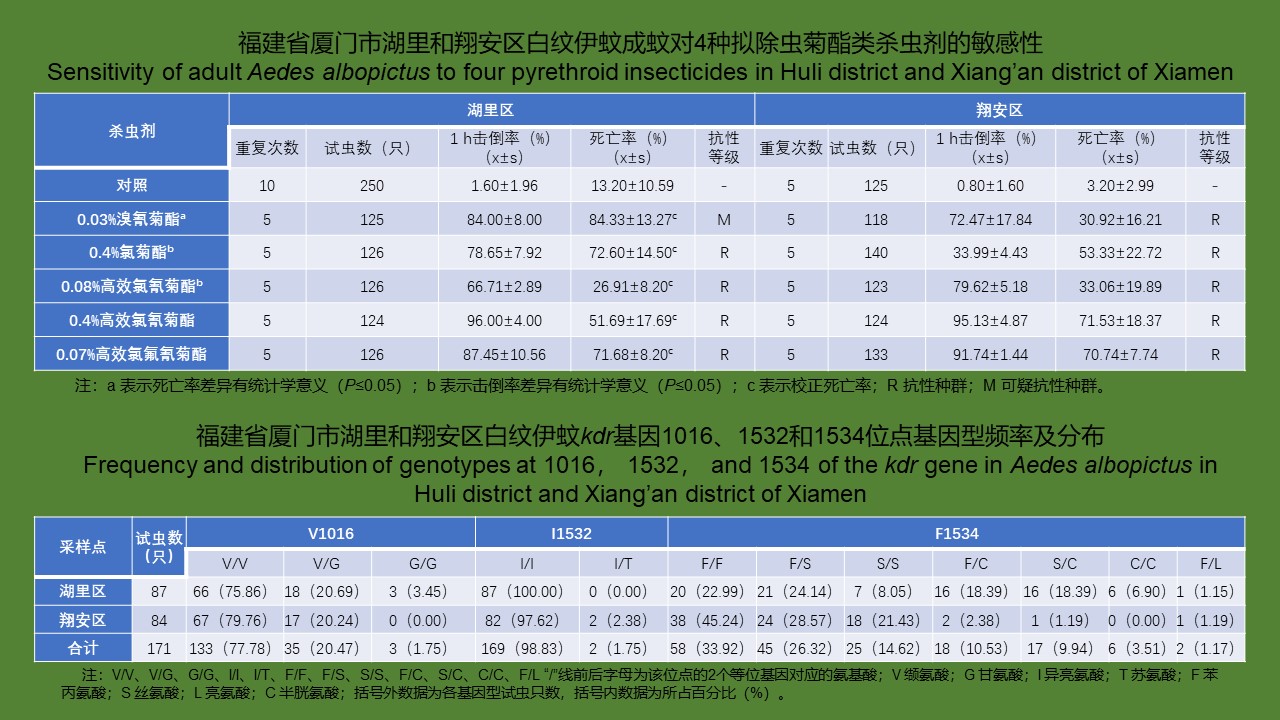
    Objective To understand the sensitivity of Aedes albopictus to pyrethroid insecticides in Xiamen, China, and to detect the mutants of knockdown resistance genes (kdr), so as to provide a scientific basis for the control of Ae. albopictus in this area. Methods In July 2020, the larvae and pupae of Ae. albopictus were collected in different sampling sites in Huli district and Xiang'an district of Xiamen, and reared in the laboratory. The resistance of larvae and pupae to pyrethroid insecticides was determined according to the WHO tube test. The genomic DNA of individual Ae. albopictus was extracted and the knockdown resistance gene mutation was detected by PCR amplification followed by sequencing. Results The mosquitoes collected in Huli district and Xiang'an district of Xiamen were exposed to 0.03% deltamethrin, 0.4% permethrin, 0.08% beta-cypermethrin, 0.4% beta-cypermethrin, or 0.07% lambda-cyhalothrin for 24 h, and showed mortality rates of 84.33%, 72.60%, 26.91%, 51.69%, 71.68%, 30.92%, 53.33%, 33.06%,71.53%, and 70.74%, respectively. All the populations were resistant except that the population from Huli showed suspected resistance to deltamethrin. The kdr gene was detectable in 171 mosquitos, which showed no mutation at S989, I1011, and L1014, but had mutations at V1016, I1532, and F1534. The mutation frequency was the highest at F1534, followed by V1016, and the lowest at I1532. The allele mutation frequency of 1016G in Huli and Xiang'an was 13.79% and 10.71%, respectively. The 1532T showed low mutation frequency of 1.19% in Xiang'an and zero in Huli. There were three mutant alleles at F1534 (mainly 1534S), and the mutation frequency was 36.31% in Xiang'an and 29.31% in Huli. The mutation frequency of 1534C varied greatly between Xiang'an (1.79%) and Huli (25.29%). The mutation frequency of 1534L was the lowest, which was 0.60% in Xiang'an and 0.57% in Huli. Conclusion Adult Ae. albopictus in Huli district and Xiang'an district of Xiamen has developed resistance to deltamethrin, permethrin, beta-cypermethrin, and lambda-cyhalothrin, and shows high frequency of mutations in the kdr gene. The monitoring of drug resistance of Ae. albopictus in Xiamen should be strengthened, chemical insecticides should be used reasonably, and scientific integrated control measures should be taken.
  • WANG Qiu-hui, WANG Hao-cheng, HAN Qian, LIAO Cheng-hong
    Chinese Journal of Vector Biology and Control. 2022, 33(2): 183-190. https://doi.org/10.11853/j.issn.1003.8280.2022.02.004
    Abstract ( ) Download PDF ( )   Knowledge map   Save
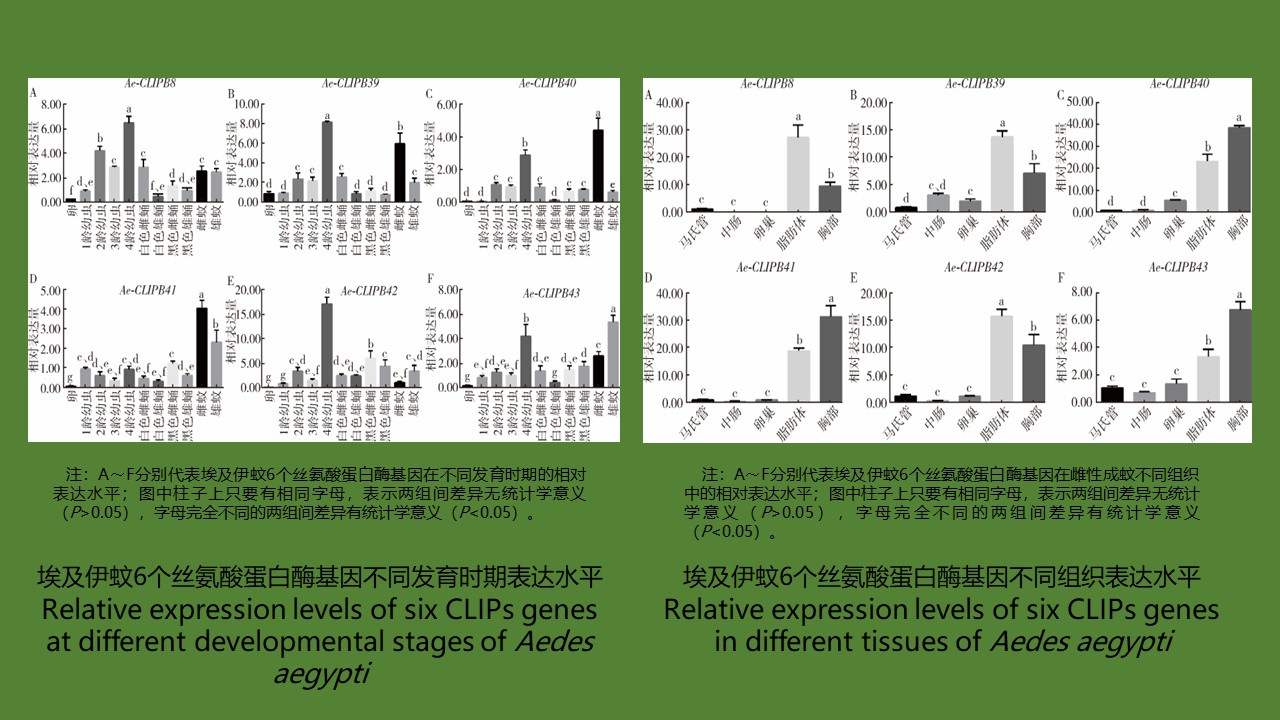
    Objective To systematically analyze six clip-domain serine protease (CLIPs) genes in Aedes aegypti, so as to provide a theoretical basis for the study of their innate immune function in Ae. aegypti. Methods The bioinformatics software Clustal Omega was used to analyze the similarity of CLIPs among species, SOPMA was used to predict the secondary structure of CLIPs, and MEGA 7.0 software was used to construct a phylogenetic tree. RT-qPCR was performed to study the expression levels of CLIPs genes in Ae. aegypti from egg to adult and in different tissues of non-blood-fed adult female mosquitoes. The kinetics of immunity induction by CLIPs against infection with different bacterial species was studied by infecting female adult mosquitoes with bacteria. One-way ANOVA was used for statistical comparisons.Results Six CLIPs genes of Ae. aegypti were obtained from GenBank at NCBI. Bioinformatics analysis showed high amino acid sequence similarity in the carboxyl terminal of the six CLIPs genes. Random coils accounted for highest proportion (53.82%-62.50%) in the secondary structure of these proteins. The phylogenetic analysis showed that the six CLIPs genes were divided into two branches, one had high homology with two CLIPs genes in Anopheles gambiae, and the other branch had high homology with the SP5 of Drosophila melanogaster. The results of temporal and spatial expression profiles showed that the expression levels of the six CLIPs genes in Ae. aegypti were relatively high in the 4th instar larva and adult mosquitoes but low in pupal stage. The expression levels were different in different tissues of female adult mosquitoes, with high expression in thorax and fat body but low expression in malpighian tubule, midgut, and ovary. In terms of bacterial infection, the six CLIPs had different induction kinetics, suggesting that CLIPs in Ae. aegypti have specific response to microbial infection. Conclusion Random coils account for the highest proportion in the six CLIPs of Ae. aegypti. The six CLIPs have high homology with the CLIPs in other insect species. The spatiotemporal expression profiles show that the six CLIPs have different expression patterns during the development of Ae. aegypti and in different tissues of adult mosquitoes. They have different induction kinetics in response to infection with different bacterial species.
  • LIU Wen-juan, ZHANG Ke-xin, CHENG Peng, ZHANG Xin-yu, ZHANG Qian, ZHANG Zhong, ZHANG Rui-ling
    Chinese Journal of Vector Biology and Control. 2022, 33(2): 191-200. https://doi.org/10.11853/j.issn.1003.8280.2022.02.005
    Abstract ( ) Download PDF ( )   Knowledge map   Save
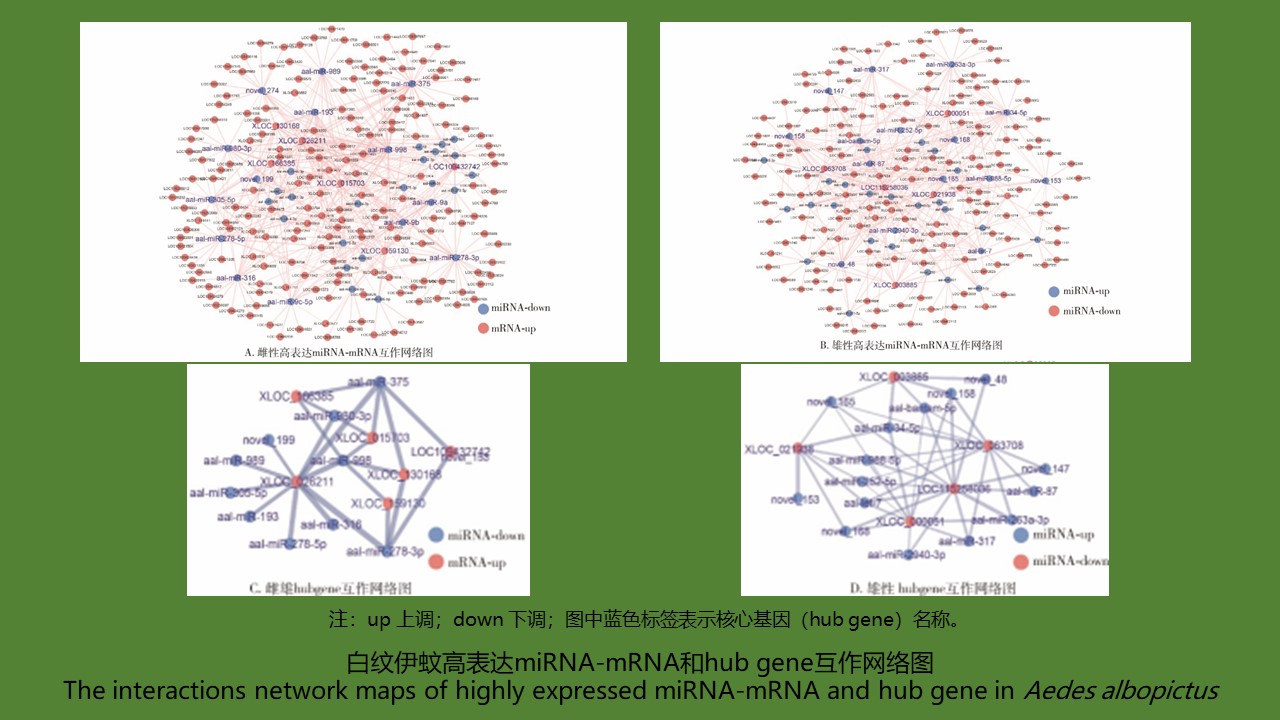
    Objective To investigate differentially expressed miRNAs between male and female Aedes albopictus and their target mRNAs,explore miRNA-mRNA regulatory relationship in male and female Ae. albopictus,and predict the potential function of key genes, and to provide evidence for clarifying the regulatory mechanisms of sex differentiation of Ae. albopictus. Methods Through small RNA library construction and mRNA sequencing analysis,differentially expressed miRNAs and mRNAs between female and male Ae. albopictus were identified. Bioinformatic tools were used to predict the target mRNAs of the differentially expressed miRNAs. The miRNA-mRNA interaction networks were constructed using the overlapping results between the predicted target mRNAs and the sex differentially expressed mRNAs. GO and KEGG enrichment analysis were performed on the target mRNAs of miRNAs to predict the possible functions of miRNAs. Results A total of 74 sex differentially expressed miRNAs were screened out,including 8 sex-specific miRNAs. A total of 470 female-specific miRNA-mRNA pairs (down-regulated miRNAs,up-regulated mRNAs) and 481 male-specific miRNA-mRNA pairs (up-regulated miRNAs,down-regulated mRNAs) were acquired. The interaction network and functional enrichment analyses determined 4 mRNAs associated with the sex differentiation and reproduction of Ae. albopictus and 17 miRNAs that directly regulated these mRNAs. Conclusion We constructed sex differentially expressed miRNA-mRNA interaction networks of Ae. albopictus,and acquired 17 miRNAs and 4 mRNAs that were related to sex differentiation, laying the foundation for further research on the role of miRNAs in regulating the sex differentiation of Ae. albopictus.
  • TAN Xiao-ning, REN Xin-yue, XIE Xue-yan, CHEN Yan-hua, XIA Qian-feng, KANG Xun
    Chinese Journal of Vector Biology and Control. 2022, 33(2): 201-206. https://doi.org/10.11853/j.issn.1003.8280.2022.02.006
    Abstract ( ) Download PDF ( )   Knowledge map   Save
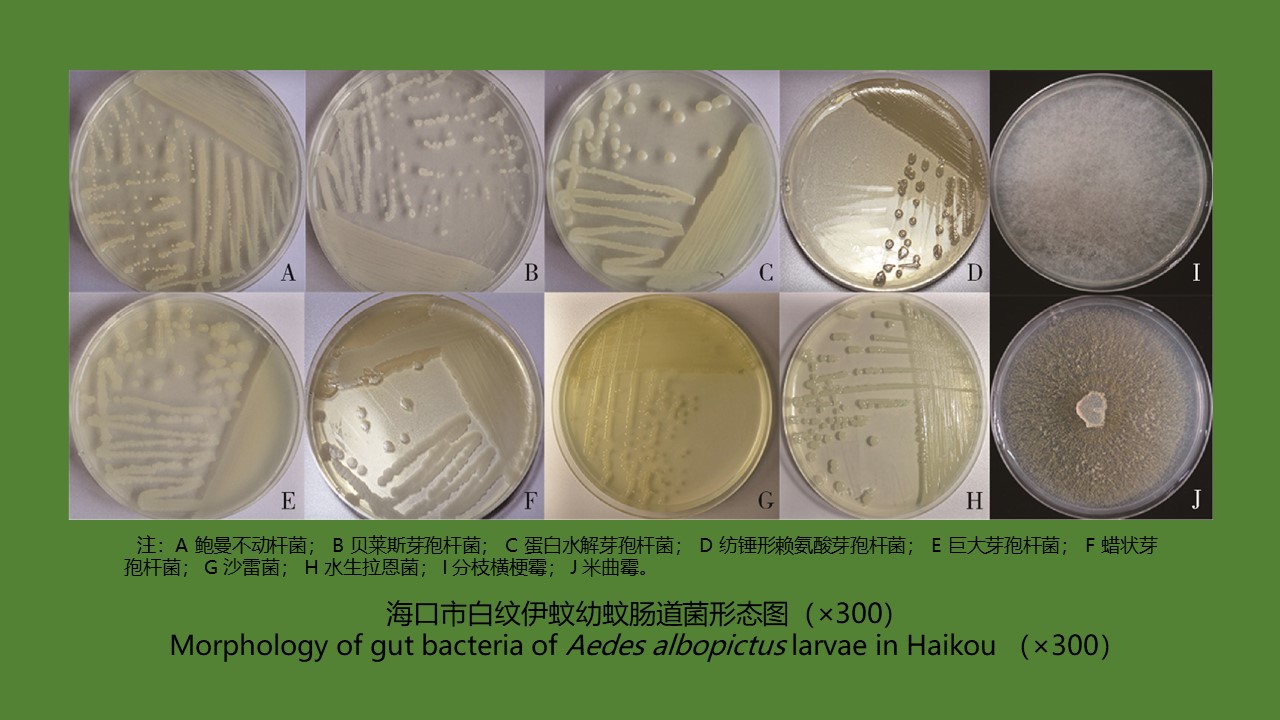
    Objective To study the species and diversity of gut microbiota of Aedes albopictus larvae collected in Haikou and five surrounding sites, China. Methods Ae. albopictus larvae were collected in Haikou and five surrounding sites in 2019. Polymerase chain reaction amplification and product sequencing were performed for gut microbiota of the larvae. The nucleotide sequences of the larvae and gut microbiota were analyzed for homology through the National Center for Biotechnology Information database. Results A total of 8 strains of bacteria and 2 strains of fungi, belonging to 4 genera in 4 families of 2 phyla, were identified in the gut microbiota of Ae. albopictus larvae, with the dominant microflora from the Firmicutes. Bacillus cereus was isolated from the intestinal tract of the larvae in Xiyixia village and Dading village of Haikou city, and Gaodui village, Baoluo town of Wenchang city Fungi were isolated only from the larvae in Changgong village of Lingao county. Ae. albopictus larvae in Xiyixia village, Haikou had the most species of bacteria isolated from the intestinal tract, including B. velezensis, Lysinibacillus fusiformis, B. cereus, and Acinetobacter baumannii. Conclusion Gut bacteria of Ae. albopictus larvae are mainly from the Firmicutes in Haikou and five surrounding sites. The species diversity of bacteria is greater than that of fungi among gut microbiota.
  • JIA Xiao-kai, WANG Ying, GAO Chun-hua, ZHOU Dan-dan, WEI Fu-rong
    Chinese Journal of Vector Biology and Control. 2022, 33(2): 207-210. https://doi.org/10.11853/j.issn.1003.8280.2022.02.007
    Abstract ( ) Download PDF ( )   Knowledge map   Save
    Objective To investigate the insecticidal effect of three commercially available aerosols on Cimex lectularius and Attagenus unicolor japonicus, and to investigate the sensitivity of these two types of sanitary pests to different insecticidal aerosols. Methods According to the national standard GB/T 13917.2-2009, the cylinder method was used to determine the knockdown rate of C. lectularius and A. unicolor japonicus after 20-min exposure to the aerosols, and the mortality rate at 48 h and 72 h were observed. The Chi-square test was used to compare the 20-min knockdown rate and mortality rate between different groups. Results In the killing test to A. unicolor japonicus, the 20-min knockdown rate, and the mortality rate at 48 h and 72 h of A. unicolor japonicus were all 100% after exposure to the three commercially available aerosols; in the killing test to C. lectularius, the knockdown rates of C. lectularius were 100%, 98.33%, and 90.00%, respectively, after 20-min exposure to No. 1, No. 2, and No.3 aerosols, but the mortality rates of C. lectularius were 100% at 48 h and 72 h after exposure to the three aerosols. There was no significant difference in 20-min knockdown rate between different groups (χ2=3.000, P>0.05). Conclusion The killing effect of three commercially available aerosols on C. lectularius and A. unicolor japonicus measured according to the method of the national standard GB/T 13917.2-2009 showed that relatively high knockdown and killing rates can be achieved.
  • Vector Surveillance
  • YU Juan, BIAN Xiang, XIE Bing, ZHAO Yong-bo, BI Ge-yue, DU Xia-yan, BI Li-fang, LI Dong-mei, RAO Hua-xiang
    Chinese Journal of Vector Biology and Control. 2022, 33(2): 211-215. https://doi.org/10.11853/j.issn.1003.8280.2022.02.008
    Abstract ( ) Download PDF ( )   Knowledge map   Save
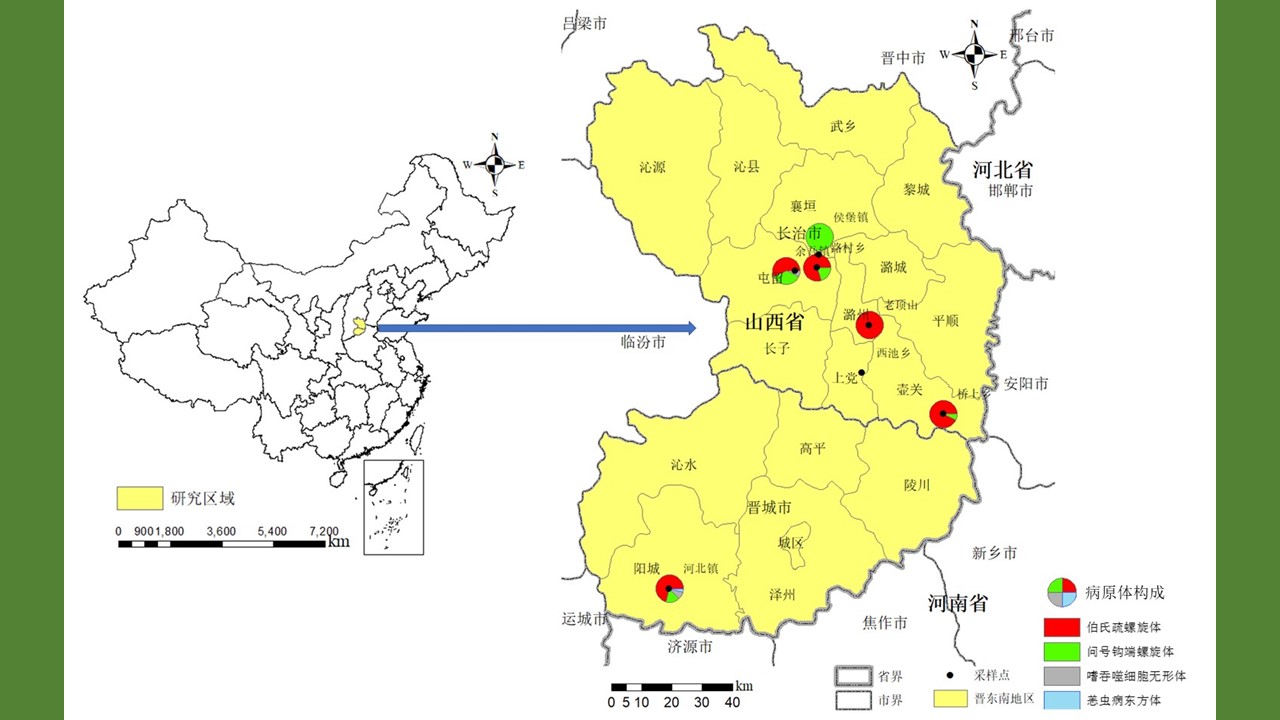
    Objective To investigate the prevalence of Borrelia burgdorferi, Leptospira interrogans, Rickettsia typhi, Anaplasma phagocytophilum, Orientia tsutsugamushi, and Francisella tularensis in rodents in the southeast of Shanxi province, China, and to provide a scientific basis for the prevention and control of local natural focal diseases. Methods Seven sampling sites were selected in the southeastern region of Shanxi province in July 2020 and May 2021, and rodents were captured by the night trapping method. The spleen and kidney tissues of rodents were collected under aseptic conditions for detection of the above six pathogens by real-time polymerase chain reaction. The difference in pathogen detection rate among different species, sexes, tissues, and habitats of rodents was analyzed by the χ2 test or Fisher's exact test. Results In total, 248 rodents from 8 species were captured, including Mus musculus, Apodemus agrarius, Niviventer confucianus, Caryomys inez, A. draco, Rattus tanezumi, Cricetulus triton, and A. peninsulae. Except A. peninsulae, four pathogens namely B. burgdorferi, L. interrogans, A. phagocytophilum, and O. tsutsugamushi were detected in the other 7 species of rodents, with detection rates of 21.77% (54/248), 5.24% (13/248), 1.21% (3/248), and 0.40% (1/248), respectively (χ2=200.097, P<0.001). R. typhi and F. tularensis were not detected. The detection rate of B. burgdorferi was the highest in the forest region and was statistical different between different habitats (χ2=17.906, P<0.001). B. burgdorferi was mainly detected in N. confucianus and A. agrarius, with a higher detection rate in kidney tissue than in spleen tissue (χ2=5.310, P=0.021). The detection rate of L. interrogans was the highest in the village, but was comparable between different habitats (Fisher's exact test, P=0.971). L. interrogans was mainly detected in R. tanezumi, with no statistical difference in the detection rate between spleen and kidney tissues (χ2=0.773, P=0.379). In addition, 11 rodents were found to have mixed infection with two pathogens. Conclusion B. burgdorferi and L. interrogans are the main pathogens prevalent in the rodents in southeastern Shanxi, which may have the possibility to cause human diseases. Therefore, corresponding prevention and control measures should be taken into consideration by relevant authorities.

  • LI Yi-na, CHEN Yu-fei, YUN Tuo-ya, BAI Xiao, LIU Li-fei, HAO Yan-yang, LU: Nan-nan, ZHANG Sheng, LI Hong, LI Bin, JIN Mu-zi
    Chinese Journal of Vector Biology and Control. 2022, 33(2): 216-220. https://doi.org/10.11853/j.issn.1003.8280.2022.02.009
    Abstract ( ) Download PDF ( )   Knowledge map   Save
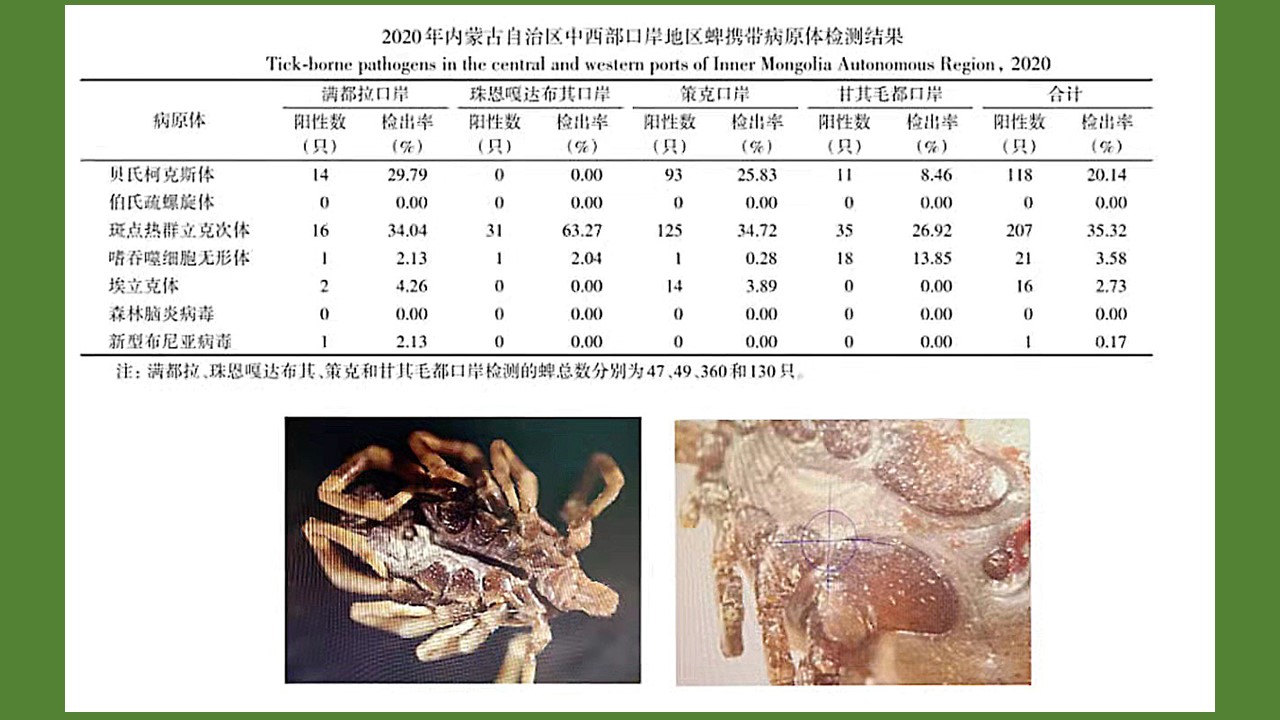
    Objective To investigate the distribution of ticks and tick-borne pathogens in the central and western ports areas of the Inner Mongolia Autonomous Region (Inner Mongolia), China. Methods From April to July 2020, ticks at Ceke, Ganqimaodu, Mandula and Zhuengadabuqi ports of Inner Mongolia were collected and identified. Reverse transcription polymerase chain reaction (RT-PCR) and PCR were used to detect the Coxiella burnetii, Ehrlichia, spotted fever group Rickettsiae, Borrelia burgdorferi, tick-borne encephalitis virus, Anaplasma phagocytophilum, and severe fever with thrombocytopenia syndrome bunyavirus (SFTSV) in tick samples. The Chi-square test was used to analyze tick-borne pathogens in different regions. Results A total of 586 parasitic ticks from four species were identified. The dominant tick species were Dermacentor nuttalli at Mandula port (93.62%) and Zhuengadabuqi port (100%), and Hyalomma asiaticum at Ceke port (99.17%) and Ganqimaodu port (100%). The PCR results showed that C. burnetii was carried in 118 ticks, spotted fever group Rickettsiae in 207 ticks, A. phagocytophilum in 21 ticks, Ehrlichia in 16 ticks, SFTSV in 1 tick, and multiple pathogens in 80 ticks. Conclusion The central and western ports of Inner Mongolia are located in the border regions between China and Mongolia, where the tick-borne pathogens are complex. It is necessary to further strengthen tick-borne disease surveillance and prevention in this region.
  • ZHU Xin-hong, WU Yin-ping, WANG Jin-na, DONG Xuan-jun, CHEN Mo-jiao, LOU Ting
    Chinese Journal of Vector Biology and Control. 2022, 33(2): 221-224. https://doi.org/10.11853/j.issn.1003.8280.2022.02.010
    Abstract ( ) Download PDF ( )   Knowledge map   Save
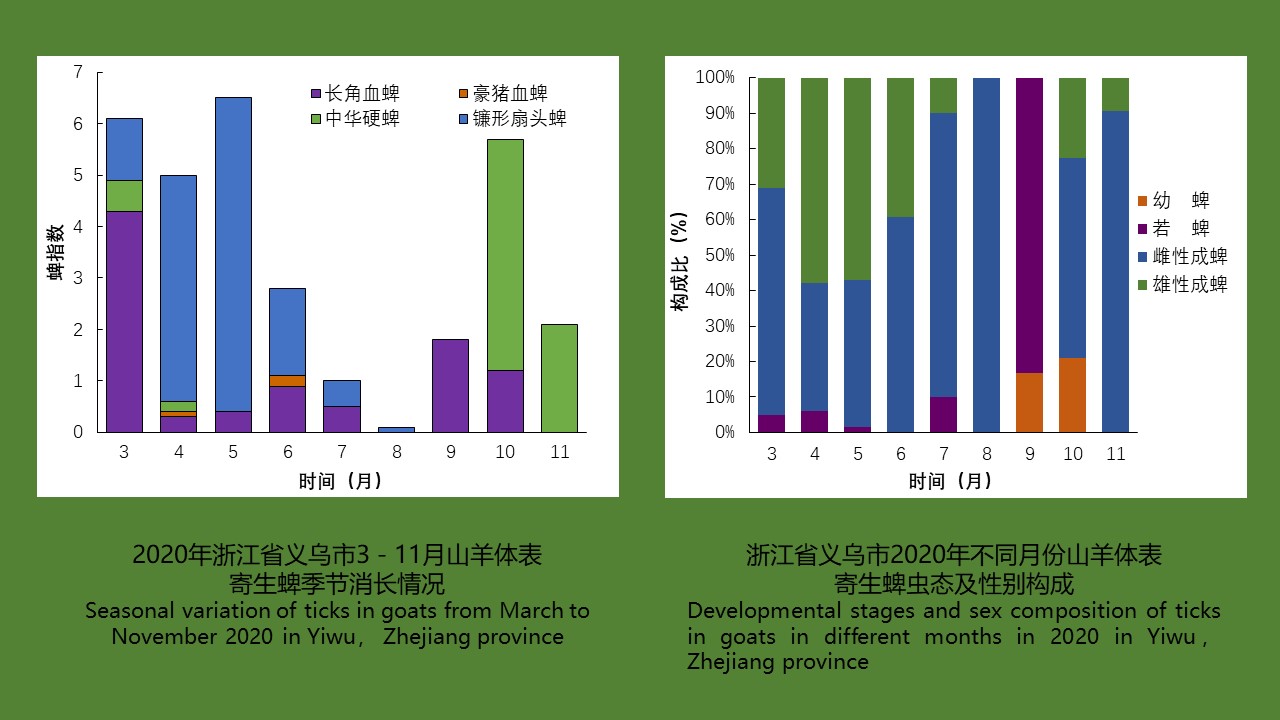
    Objective To investigate the infestation of parasitic ticks in goats in Yiwu, Zhejiang province,China,and to provide a basis for the prevention and control of ticks and tick-borne diseases. Methods A herd of free range goat in Yiwu was selected, and the parasitic ticks on the body surface of goats were monitored in the last ten days of each month from March to November 2020. The species of collected ticks were identified and the number was recorded;the parasitism of ticks in goats was analyzed. Results A total of 90 grazing goats were monitored from March to November 2020,among which 68 (75.56%) were positive for ticks. A total of 311 ticks were captured, with a tick index of 3.46; There were 4 species of ticks, the dominant tick species was Rhipicephalus haemaphysaloides, accounting for 45.02% (n=140) of the total,followed by Haemaphysalis longicornis,accounting for 30.23% (n=94). Tick index was relatively high from March to May and in October. Larval, nymphal, and adult ticks were caught all year round. Five goats (5.56%) were concurrently infected with 3 species of ticks,and 14 goats (15.56%) were concurrently infected with 2 species of ticks. Conclusion The positive rate of ticks in goats is relatively high in Yiwu. Ticks are active all year round,with the peaks in March-May and October. Enough attention should be paid to this.
  • WANG Chun-yu, BAI Yu-yin, ZHANG Jia-yong, DING Jun
    Chinese Journal of Vector Biology and Control. 2022, 33(2): 225-229. https://doi.org/10.11853/j.issn.1003.8280.2022.02.011
    Abstract ( ) Download PDF ( )   Knowledge map   Save
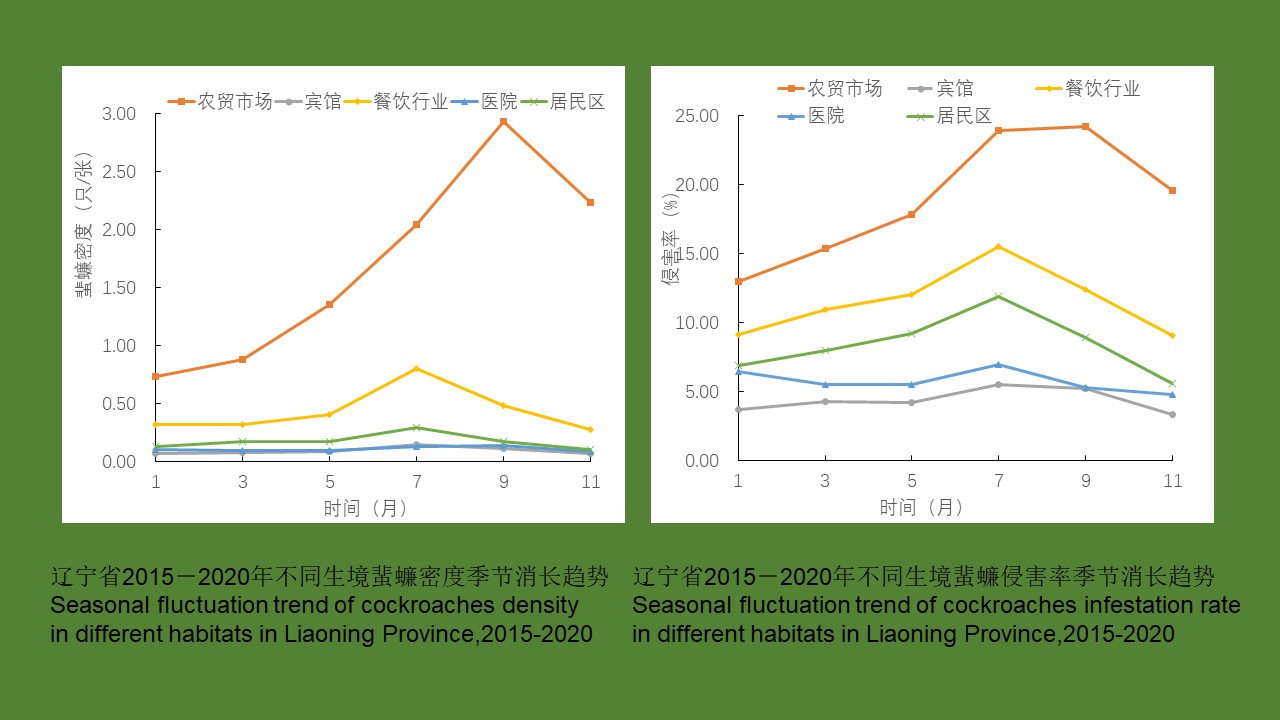
    Objective To master the density, infestation rate, and species composition of cockroaches in Liaoning province, China and analyze the seasonal fluctuation trend of cockroaches, and to provide a scientific basis for the control of cockroaches. Methods The cockroach surveillance data from vector surveillance sites in fourteen cities of Liaoning province from 2015 to 2020 were collected and statistically analyzed using Excel 2010 and SPSS 23.0 softwares. The density and species composition of cockroaches were analyzed, and the density difference and seasonal fluctuation trend of cockroaches in different years and different habitats were compared. Results A total of 47 940 cockroaches were captured in the vector surveillance sites in Liaoning province from 2015 to 2020, with a mean density of 0.52 cockroach/paper and an infestation rate of 10.45%. Blattella germanica was the dominant cockroach species, accounting for 97.91% of the total number of the captured cockroaches. Cockroaches in different habitats showed significant differences in the surveillance density and infestation rate, which were much higher in farm produce markets and supermarkets than in other habitats, followed by in the food and beverage industry, residential areas, hospitals, and hotels. The seasonal fluctuation trend of cockroach density showed a unimodal curve in 2015, 2019, and 2020, a bimodal curve in 2018, a polymodal curve in 2016 and 2017, and a unimodal curve in farm produce markets and the food and beverage industry. The seasonal fluctuation trend of cockroach infestation rate showed a unimodal curve in 2015-2018, a bimodal curve in 2019 and 2020, a bimodal curve in farm produce markets, and a unimodal curve in the food and beverage industry and residential areas. The peaks of cockroach density and infestation rate occurred from July to September. Conclusion The cockroach density in Liaoning province showed a downward firstly and then upward trend from 2015 to 2020, and the infestation rate showed a downward trend. The dominant species was B. germanica. The infestation of cockroaches is serious in key industries including farm produce markets and supermarkets. In combination with the seasonal fluctuation trend of cockroach density and infestation rate, surveillance and control should be strengthened and integrated control measures shall be taken before the peak of cockroach activity (from July to September) to reduce cockroach density and control cockroach-related diseases.
  • LI Bing-hui, ZHU Hai-long, MA Xiao-fang, WANG Wei, SONG Fu-cheng, JIANG Hong-rong, SUN Qin-tong, FU Qi-qi
    Chinese Journal of Vector Biology and Control. 2022, 33(2): 230-233. https://doi.org/10.11853/j.issn.1003.8280.2022.02.012
    Abstract ( ) Download PDF ( )   Knowledge map   Save
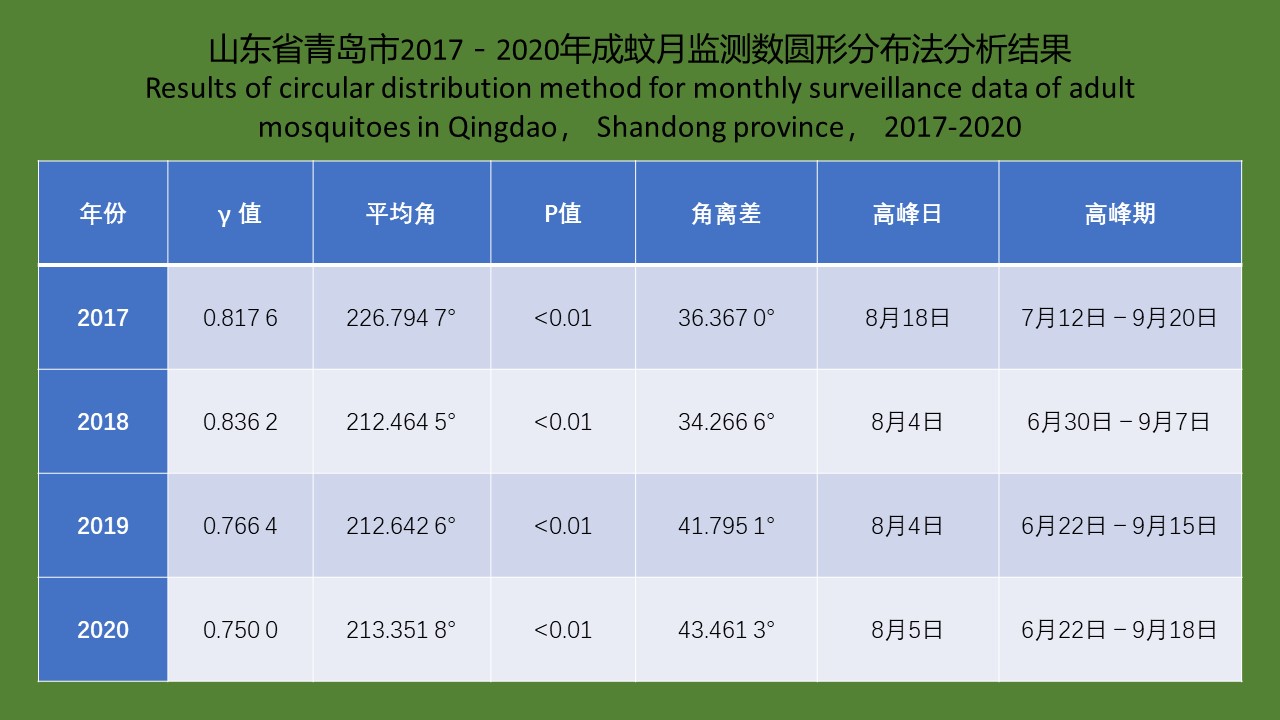
    Objective To explore the application of the concentration degree method and circular distribution method in analyzing the seasonal characteristics of mosquitoes, and to provide a scientific basis for risk evaluation, surveillance, warning, and precise control of mosquitoes and mosquito-borne diseases. Methods Surveillance data of adult mosquitoes at national mosquito surveillance sites in Qingdao from 2017 to 2020 were selected to analyze the magnitude of seasonality using the concentration degree method, the peak day and peak period of seasonal fluctuations using the circular distribution method, and the seasonal fluctuation peaks of each year using the Watson-William test. Results The concentration degree (M) of monthly surveillance data of adult mosquitoes in Qingdao, 2017-2020 was 0.807 4, indicating strong seasonal fluctuations of adult mosquitoes. The circular distribution analysis showed that the central tendency (γ) was 0.805 1, the average angle(α) was 223.298 1°, the angular deviation (S) was 37.728 1°, and Z value for the Rayleigh's test was 19 951.328 (P<0.01), indicating that the peak day was on August 15, and the peak period was from July 8 to September 22. There was a statistical difference in the average angle from 2017 to 2020 (F=282.922, P<0.01), indicating that the peak of seasonal changes was different in different years. Conclusion Adult mosquitoes show strong seasonal fluctuations in Qingdao from 2017 to 2020, peaking during July to September. The peak of seasonal changes varies from year to year.
  • WANG You-jun, ZHANG Xue-tai, WU Jia-hui
    Chinese Journal of Vector Biology and Control. 2022, 33(2): 234-238. https://doi.org/10.11853/j.issn.1003.8280.2022.02.013
    Abstract ( ) Download PDF ( )   Knowledge map   Save
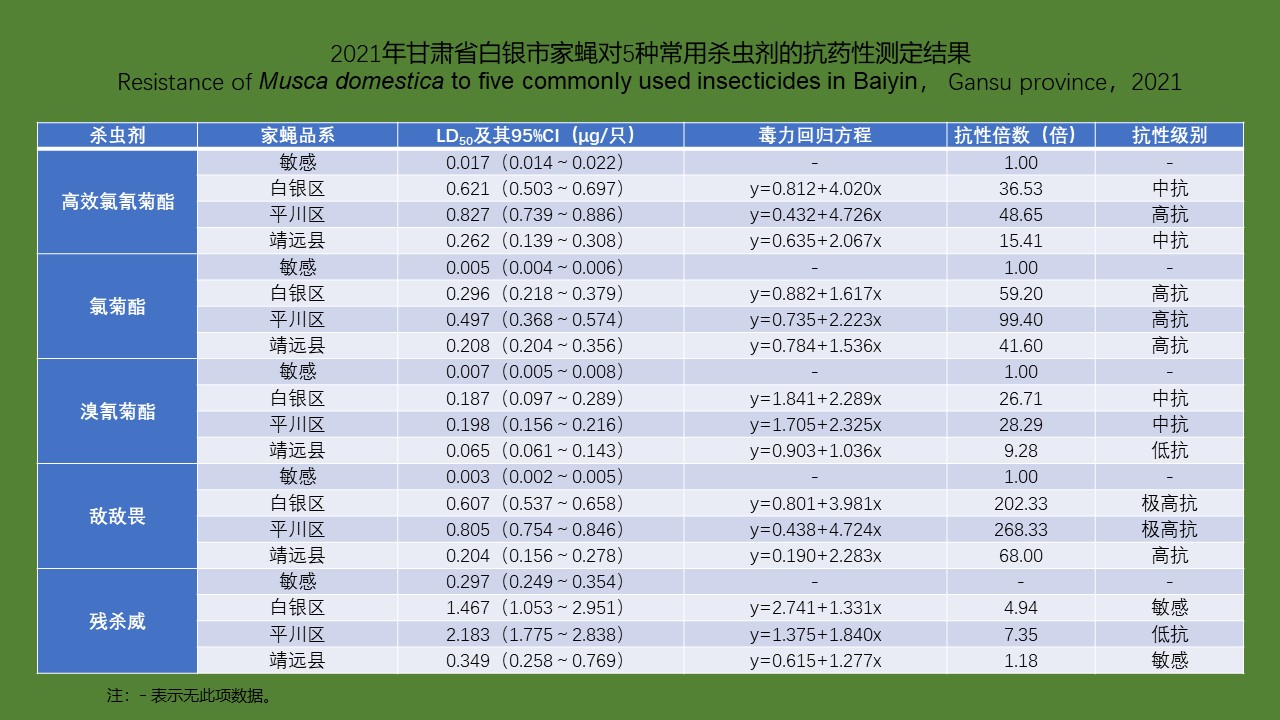
    Objective To investigate the resistance of Musca domestica to commonly used insecticides in Baiyin city, Gansu province, China, and to provide evidence for rational use of insecticides, and scientific and sustainable vector control. Methods The WHO micro-drop method was used to determine the resistance to commonly used insecticides of female M. domestica 3-5 days after emergence. Results M. domestica in both Baiyin district and Pingchuan district of Baiyin developed extremely high resistance to DDVP (202.33 and 268.33 times, respectively) and high resistance to pyrethroid insecticides. The median lethal dose (LD50) values of beta-cypermethrin, permethrin, and deltamethrin for M. domestica were 0.621, 0.296, and 0.187 μg/fly in Baiyin district, respectively, and 0.827, 0.497, 0.198 μg/fly in Pingchuan district, respectively. The LD50 of propoxur in Baiyin district and Pingchuan district were 1.467 and 2.183 μg/fly, respectively, which belong to a low resistance level. The resistance levels to the five insecticides were significantly higher in Baiyin district and Pingchuan district (succeeded in creating the national healthy cities) than in Jingyuan county (not applying for the national healthy city; all P<0.05). Conclusion M. domestica in Baiyin city has developed resistance to organophosphate and pyrethroid insecticides. It is recommend to conduct long-term and continuous vector resistance surveillance to guide scientific and rational use of insecticides, and adopt comprehensive sustainable control strategies focusing on environmental governance and physical control.
  • Vector Infectious Disease
  • FENG Yu-liang, LIN Shi-hua, PAN Ming, CAO Yi-ou, LI Wei
    Chinese Journal of Vector Biology and Control. 2022, 33(2): 239-244. https://doi.org/10.11853/j.issn.1003.8280.2022.02.014
    Abstract ( ) Download PDF ( )   Knowledge map   Save
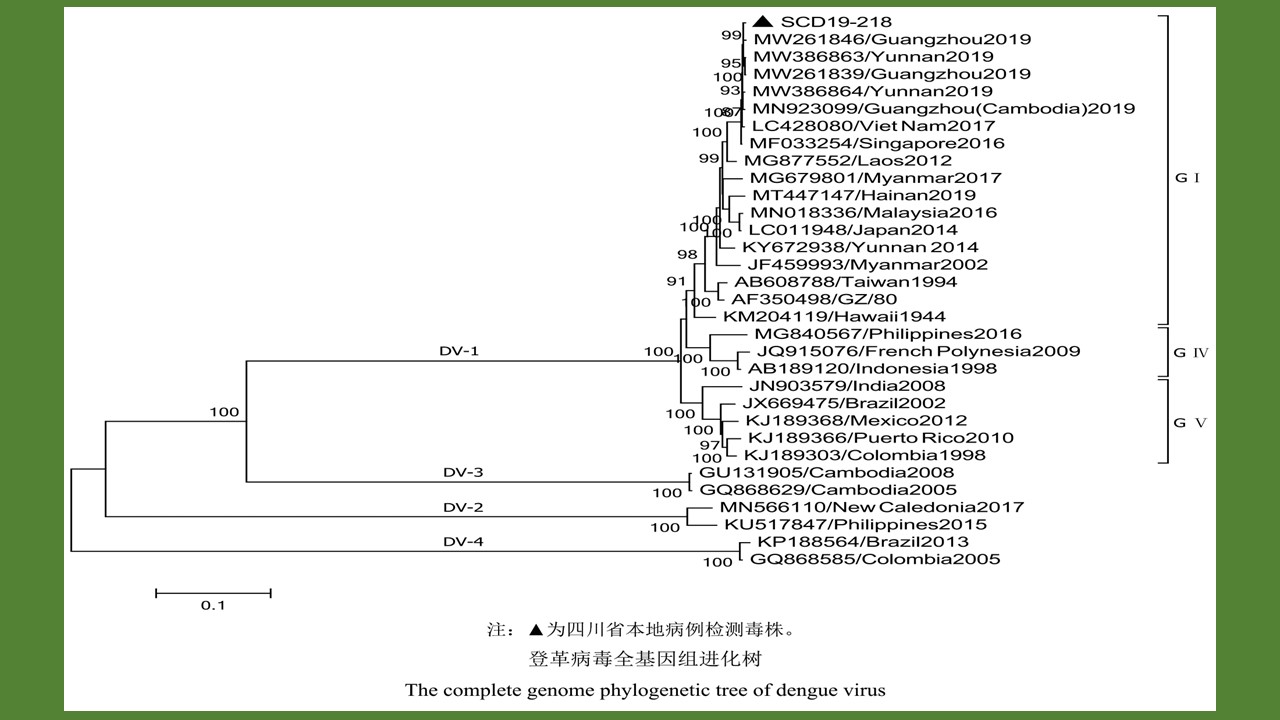
    Objective To sequence the complete genome of Dengue virus from the first local dengue outbreak in Sichuan province, China, 2019, and to analyze its molecular biological characteristics and possible origin. Methods Nucleic acids were extracted and whole genome sequences were amplified and sequenced from local case specimens that tested positive by real-time PCR, followed by homology analysis, phylogenetic analysis, and variation analysis. Results The complete genome sequence of one virus strain and the partial genome sequences (containing the E gene) of two virus strains were obtained. The complete genome was 10 706 bp long, encoding 3 393 amino acids. Homology and phylogenetic analyses showed that the epidemic strain in Sichuan province had high homology to the Guangzhou (China) strain isolated in 2019, the Guangzhou strain imported from Cambodia in 2019, the Yunnan province (China) strains isolated in 2019, the Vietnam strain isolated in 2017, and the Singapore strain isolated in 2016, belonging to the same branch in the phylogenetic tree. Compared with the prototype strain of Dengue virus type 1, the Sichuan strain had 589 nucleotide variations and 64 amino acid mutations that were scattered, but no alteration occurred at the key amino acid sites affecting virulence. Conclusion The first local dengue fever outbreak in Sichuan province, 2019 may be caused by imported cases from Cambodia, and the pathogen was the Dengue virus type 1, genotypeⅠ. The strain of Dengue virus isolated from Sichuan province has no marked alteration in virulence-related genes, but the biological significance of the point mutations in some sites remains to be further studied.
  • FAN Jian-hua, GAO Yang, ZHU Jin, HUANG Qiang, LI Jun-ming, SU Mei-hui, ZHANG Hai-lin
    Chinese Journal of Vector Biology and Control. 2022, 33(2): 245-251. https://doi.org/10.11853/j.issn.1003.8280.2022.02.015
    Abstract ( ) Download PDF ( )   Knowledge map   Save
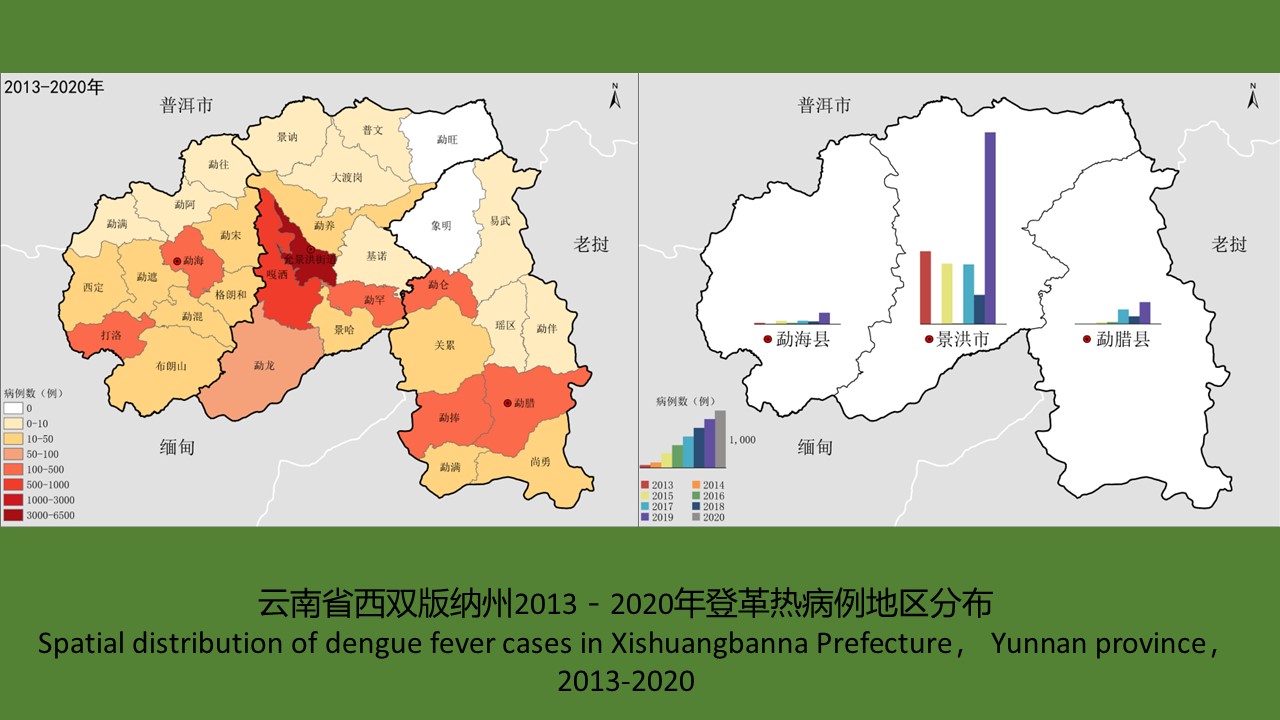
    Objective To investigate the epidemiological characteristics of dengue fever and the distribution characteristics of the vector Aedes mosquitoes in Xishuangbanna Dai Autonomous Prefecture (Xishuangbanna Prefecture) of Yunnan province, China, 2006-2020. Methods The descriptive epidemiological method was used to analyze the data of cases of dengue fever. The Breteau index (BI) method was used to monitor the density of Aedes larvae. Species identification was performed for some mosquitoes collected. Excel 2010 and ArcGIS 10.2 softwares were used for database construction and plotting. SPSS 17.0 software was used to perform correlation analysis. Results A total of 8 583 confirmed cases of dengue fever were reported in Xishuangbanna Prefecture, 2006-2020, with 767 (8.94%) imported cases and 7 816 (91.06%) local cases. The mean annual incidence rate was 118.77/100 000, with the highest incidence of 327.44/100 000 in 2019. Dengue fever epidemics occurred almost every year in Jinghong city, Mengla county, and Menghai county of Xishuangbanna Prefecture, with the number of cases in the three regions accounting for 84.97% (7 293/8 583), 10.42% (894/8 583), and 4.61% (396/8 583), respectively. In Jinghong city, the annual incidence rate averaged 223.74/100 000, and reached as high as 614.02/100 000 in 2019. Cases of dengue fever were reported in 93.75% (30/32) of all townships in the prefecture, and 10 townships in Jinghong city and Mengla county had local epidemics. Imported cases were reported in each month through a year, while local cases were distributed from June to December, with a peak from August to October. The patients were aged from 5 months to 93 years, mainly between 20 and 59 years. The male-to-female ratio was 1.01:1. Most patients were commercial workers and service providers, farmers, retirees, household workers and unemployed persons. The BI was 10-50 from June to October and BI<10 in the other months, at four larval density surveillance sites of Xishuangbanna Prefecture, 2013-2020. The BI was higher in Jinghong city than in other counties in all months through the years. Ae. albopictus was found in all townships in Jinghong city, Mengla county and Menghai county, and Ae. aegypti was found in 21 townships. Among the 9 066 larvae and adult mosquitoes collected, Ae. albopictus accounted for 35.24% (3 195/9 066), Ae. aegypti accounted for 33.65% (3 051/9 066), and other mosquito species accounted for 31.11% (2 820/9 066). Conclusion There were only imported cases of dengue fever in 2006-2012 and 2020, and both imported and local epidemics occurred in 2013 and 2015-2019 in Xishuangbanna Prefecture. Imported cases from Laos and Myanmar were the main cause of local epidemics in Xishuangbanna Prefecture. The seasonal distribution of dengue fever was closely associated with the increase in mosquito density. There was no year-round transmission or cross-year transmission of dengue fever in the prefecture, and dengue fever in this area is still an imported disease. Surveillance and management of imported cases and regular mosquito control are important measures to prevent dengue epidemics in the region.
  • GAO Yang, XU Shi-qi, WANG Li-na, GUO Wen-ping, LIU Ming
    Chinese Journal of Vector Biology and Control. 2022, 33(2): 252-257. https://doi.org/10.11853/j.issn.1003.8280.2022.02.016
    Abstract ( ) Download PDF ( )   Knowledge map   Save
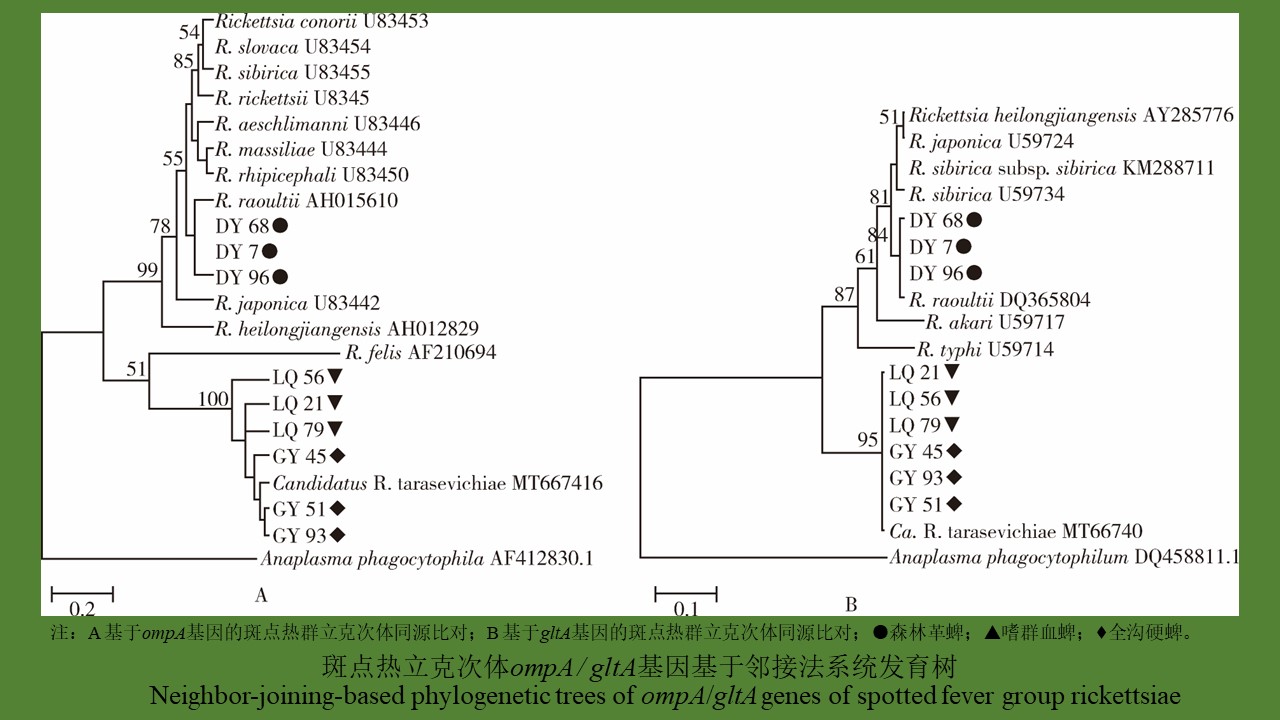
    Objective To investigate the status of spotted fever group rickettsiae (SFGR) infection and SFGR species in ticks in Saihanba National Nature Reserve of Hebei province, China, to perform homology analysis for SFGR in ticks, and to provide a theoretical basis for the prevention and control of tick-borne diseases. Methods Free-living ticks were collected by cloth dragging in Saihanba National Nature Reserve. After DNA extraction, PCR was used to amplify the outer membrane protein A gene (ompA) and citrate synthase gene (gltA) of SFGR, and sequencing was performed on the positive samples, followed by molecular phylogenetic analysis. Results A total of 919 free-living ticks were collected in Saihanba National Nature Reserve, including 546 Ixodes persulcatus ticks, 242 Haemaphysalis concinna ticks, and 131 Dermacentor silvarum ticks. There were 72 SFGR-positive ticks, with an overall positive rate of 7.8%. The positive rate was 6.2% (34/546) in I. persulcatus, 9.5% (23/242) in H. concinna, and 11.5% (15/131) in D. silvarum. There was no statistical difference in SFGR infection rate between different tick species (χ2=1.261, P=0.263). Sequence alignment of the ompA and gltA genes revealed that two species of SFGR were present in the area, being Rickettsia raoultii and Candidatus R. tarasevichiae. The molecular phylogenetic analyses of the two genes showed that SFGR carried by D. silvarum was clustered with R. raoultii (AH015610 and DQ365804) in GenBank, and the rickettsiae carried by I. persulcatus and H. concinna were clustered with Candidatus R. tarasevichiae (MT667416 and MT66740) in GenBank. Conclusion R. raoultii and Candidatus R. tarasevichiae are present in Saihanba National Nature Reserve. In order to avoid threatening public health, it is necessary to strengthen the prevention and control of ticks and tick-borne diseases in the area.
  • WU Jian-hua, HU Ming-ming, ZHENG Yan-juan, ZHENG Yong-kang, WU Zhen-jun
    Chinese Journal of Vector Biology and Control. 2022, 33(2): 258-261. https://doi.org/10.11853/j.issn.1003.8280.2022.02.017
    Abstract ( ) Download PDF ( )   Knowledge map   Save
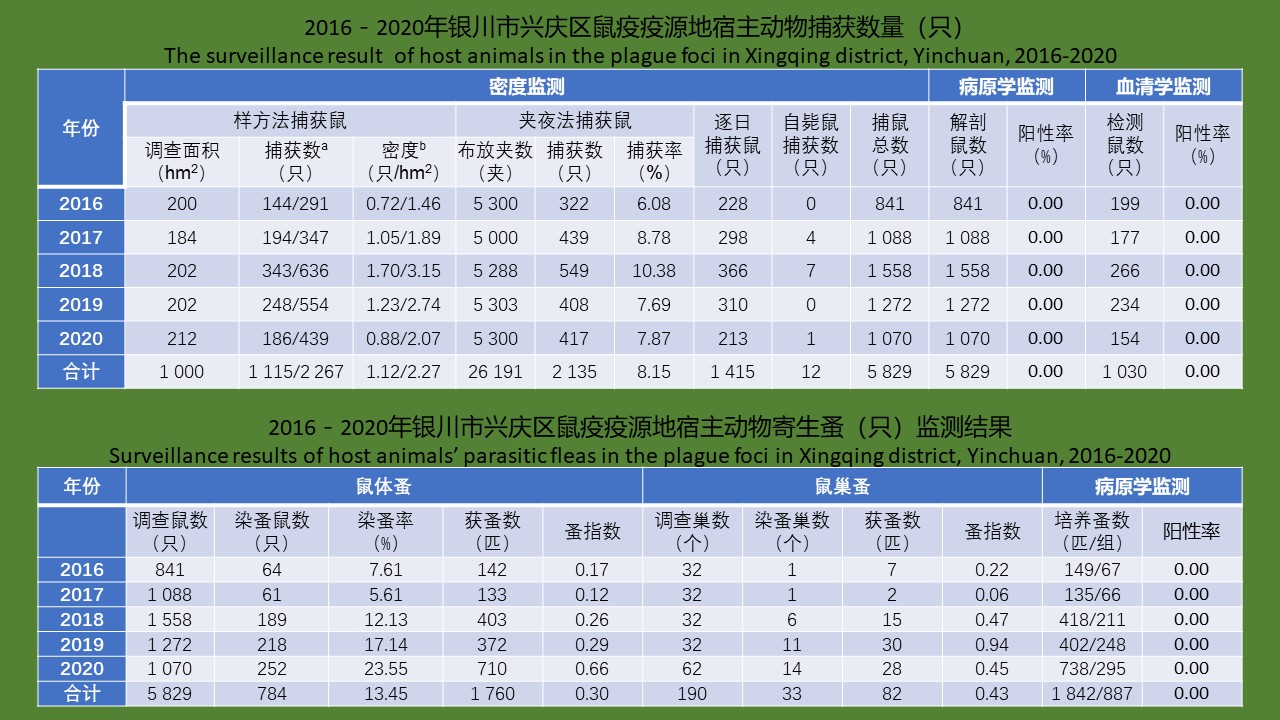
    Objective To analyze the current situation and risk factors of the natural plague foci of gerbils in Xingqing district, Yinchuan, Ningxia Hui Autonomous Region (Ningxia), China, and to provide a reference for the early warning of the risk of plague outbreak. Methods The plague surveillance data in Xingqing district, Ningxia from 2016 to 2020 were collected and analyzed for the species, density, habitat distribution, etiology, and serology surveillance results of the plague host animals by descriptive epidemiological methods. Results A total of 5 829 rodents of 11 species in 8 genera of 4 families were captured in the natural plague foci of gerbils in Xingqing district, Yinchuan from 2016 to 2020, with Meriones meridians and M. unguiculatus as dominant species. The mean density of primary hosts was 1.12 rodents/hm2, and the capture rate of rodents by night snap-trapping method was 8.15%. The flea infection rate of host animals was 13.45%, with the flea index of 0.30; 1 842 cultured fleas of 887 groups were obtained in 5 829 rodents dissected, and no Yersinia pestis was isolated, which was determined as negative; 1 030 sera were conducted indirect hemagglutination test and showed negative results. Conclusion The density of rodents is high in the plague foci of gerbils in Xingqing district, Ningxia, and there is still a possibility of plague epidemic among animals in the future. The surveillance, early warning, publicity, and education in the plague foci should be further strengthened to prevent plague epidemic among animals and the occurrence of human plague.
  • Early Warning and Forecast
  • MA De-long, LI Chao, ZHOU Ruo-bing, LI Wen-yu, LI Wen, GAO Yuan, WANG Jun, LIU Qi-yong, ZHANG Qin-feng
    Chinese Journal of Vector Biology and Control. 2022, 33(2): 262-267. https://doi.org/10.11853/j.issn.1003.8280.2022.02.018
    Abstract ( ) Download PDF ( )   Knowledge map   Save
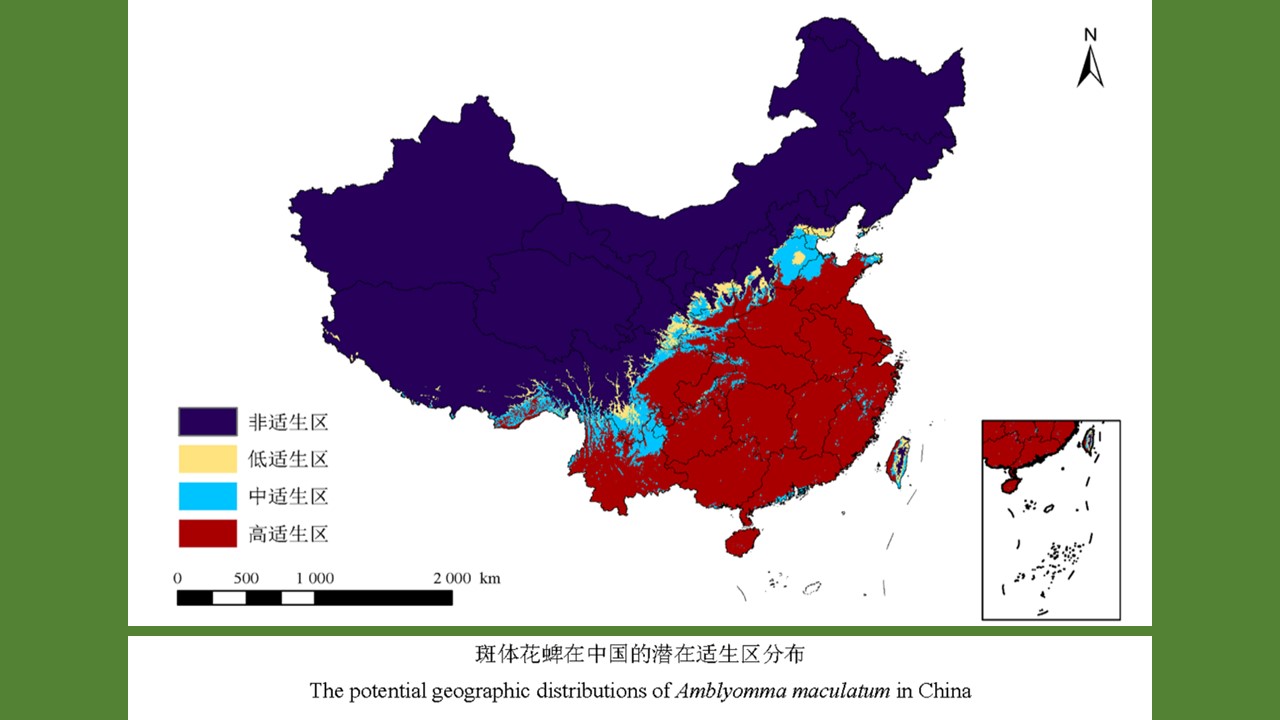
    Objective To project the suitable region in China for Amblyomma maculatum distribution and the grade of the region through analysis of climatic environmental factors and the distribution of A. maculatum, and to provide a scientific basis for the prevention and control of invasive species. Methods The collated distribution data, combined with environmental data provided by WorldClim, were collected to project the suitable region of A. maculatum using the ecological niche model based on the genetic algorithm for rule-set prediction(GARP). SPSS 25.0 software was used to perform the one-sided Chi-square test, plot the receiver operating characteristic curve, and calculate the area under the curve (AUC) to validate the model. Results A total of 11 environmental factors were included in the model through screening. The AUC of the model was 0.927, suggesting good predictive ability of the model. The potential suitable regions of A. maculatum in China were located in South China, East China, and Central China. The high, middle and low suitable habitats are distributed from southeast to northwest, and the farthest reaches Sichuan, Shaanxi, Shanxi and northern Hebei. Conclusion The GARP ecological niche model is more reliable in projecting the suitable region of A. maculatum. There are a lot of suitable regions in China, and the relevant departments should carry out targeted prevention.
  • DU Yu-zhuang, CUN De-jiao, YAO Xiao-yan, YANG Yi-tao, SHAO Li-jun, ZHANG Yi, TIAN Na, LI Lan-hua
    Chinese Journal of Vector Biology and Control. 2022, 33(2): 268-272. https://doi.org/10.11853/j.issn.1003.8280.2022.02.019
    Abstract ( ) Download PDF ( )   Knowledge map   Save
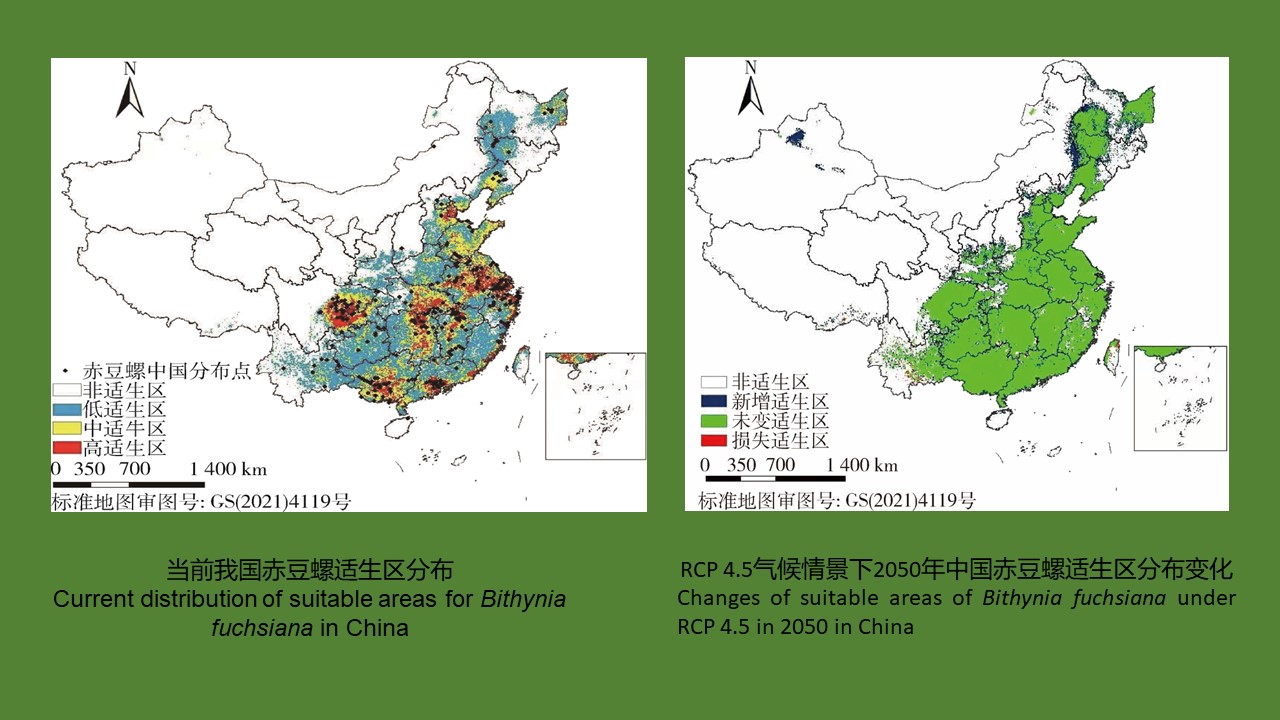
    Objective To analyze the environmental factors that affect the distribution of Bithynia fuchsiana and to project the distribution of B. fuchsiana in China in the current climate and climate in 2050. Methods Publications on B. fuchsiana from January 1, 2000 to July 15, 2021 were retrieved from CNKI, Wanfang Data, VIP Data, CBMdisc, PubMed, and Web of Science. Information about the distribution of B. fuchsiana in China and environmental factors was obtained. A maximum entropy model was used to analyze the influences of environmental factors on the distribution of B. fuchsiana and to project its suitable habitats in China. Results Among the environmental factors, elevation (30.30%), precipitation in the driest month (26.90%), mean monthly temperature range (12.40%) and normalized difference water index (12.20%) were the key factors affecting the distribution of B. fuchsiana. Currently, the suitable habitat area of B. fuchsiana was 2 442.30 thousand km2 in China, including highly suitable area (356.00 thousand km2), moderately suitable area (705.70 thousand km2) and marginally suitable area (1 380.60 thousand km2). The suitable habitats would expand to the north and increase by 450.50 thousand km2 under the representative concentration path (RCP) 4.5 emissions scenario in 2050. Conclusion Altitude is the main factor affecting the distribution of B. fuchsiana, and in the future climate change would expand the distribution of B. fuchsiana in China.
  • Technology and Method
  • YAO Dan-dan, HUANG Li-sheng, JIANG Hong-xue, LIN Si-liang, FENG Zhi-yong
    Chinese Journal of Vector Biology and Control. 2022, 33(2): 273-276. https://doi.org/10.11853/j.issn.1003.8280.2022.02.020
    Abstract ( ) Download PDF ( )   Knowledge map   Save
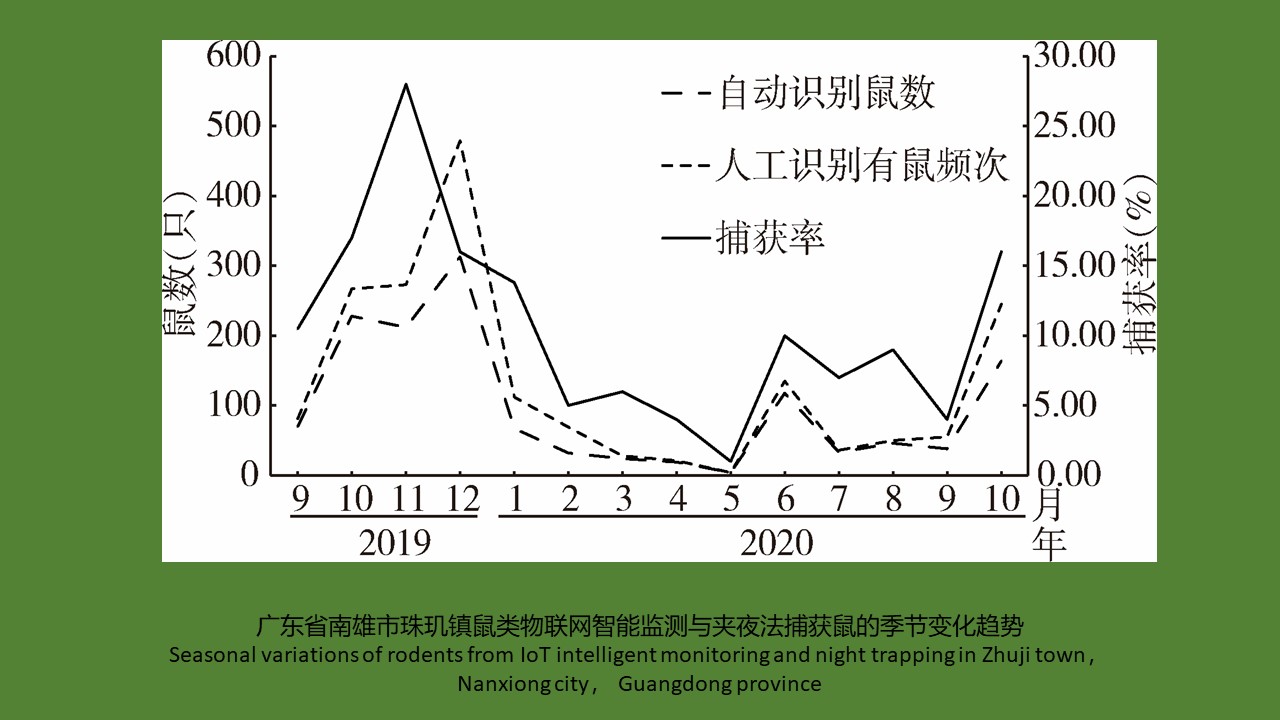
    Objective To perform a preliminary study on the applicability of intelligent monitoring system based on internet of things (IoT) for agricultural rodent pests in Guangdong province, China, and to provide a scientific basis for accurate prevention and control of rodents. Methods Intelligent monitoring terminals were set up in Zhuji town, Nanxiong city of Guangdong province for real-time monitoring. Rodent population density was investigated using the night snap-trapping method every month for comparative analysis. SPSS 19.0 software was used for regression and correlation analyses. Results From September 2019 to October 2020, 1 457 rodents were detected by the IoT intelligent monitoring system, and the accuracy of intelligent recognition was 95.26%. The night snap-trap and the IoT intelligent monitoring showed a similar seasonal trend of rodent density but different community structures of rodents, mainly in the proportions of Rattus losea and Bandicota indica. Among the rodents captured by the night snap-trapping method, the proportion of R. losea was as high as 71.69% and the proportion of B. indica was only 4.22%. In contrast, the proportion of R. losea and B. indica monitored by IoT intelligent monitoring system was 50.41% and 21.97%, respectively. The IoT intelligent monitoring system showed that rodent species competed for distribution spaces and the maximum numbers appeared at different time points. Conclusion IoT intelligent monitoring can be used to replace manual rodent capture and overcome the low stability and accuracy associated with traditional night snap-trapping method. Although it can be used for rodent monitoring in agricultural areas of Guangdong province, the technology of IoT intelligent monitoring needs to be further improved.
  • Taxonomic Identification
  • FAN Xiao-chen, LIU Lu-yao, FANG Yu, CHU Ling-miao, FENG Rui, LI Fei-yan, PAN Ruo-xi, WANG Shao-sheng, SUN En-tao
    Chinese Journal of Vector Biology and Control. 2022, 33(2): 277-280. https://doi.org/10.11853/j.issn.1003.8280.2022.02.021
    Abstract ( ) Download PDF ( )   Knowledge map   Save
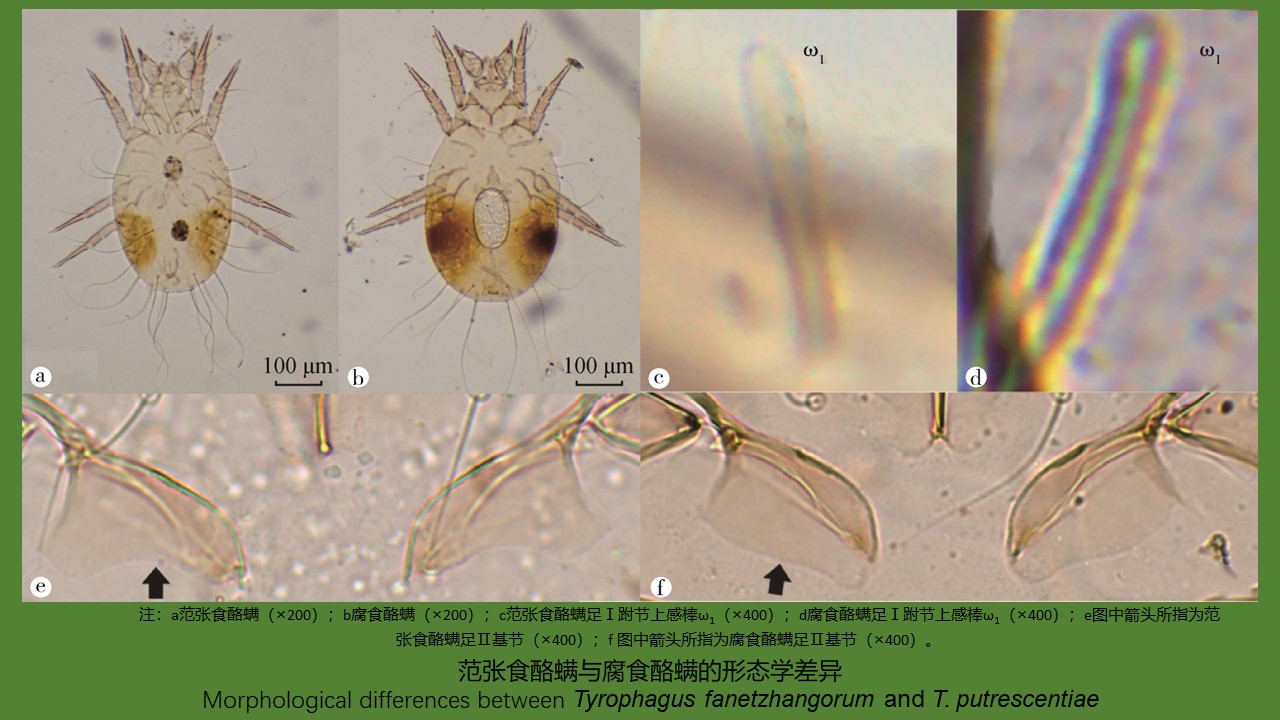
    Objective To identify Tyrophagus fanetzhangorum and T. putrescentiae by morphological and molecular methods. Methods Samples were collected from houses and stored products, and individual mites were selected for pure culture. The cultured adult mites were used to prepare slide specimens for morphological identification based on the taxonomic keys of Astigmata. Subsequently, genomic DNA was extracted from individual mites for the PCR amplification, and sequencing of mitochondrial cytochrome c oxidase subunit Ⅰ gene (CO Ⅰ). The resulting sequences were subjected to homology search using BLAST in NCBI. The CO Ⅰ sequences of T. fanetzhangorum and T. putrescentiae were aligned using Clustal Ⅹ 1.83. Sequence analysis was performed using MEGA Ⅹ, and a phylogenetic tree was constructed using the maximum likelihood method. Results The posterior 1/3 of the coxal plate Ⅱ of T. fanetzhangorum was concave, the inferior margin was "S" shaped, and the distal 2/3 of solenidion ω1 on tarsus Ⅰ obviously widened. The coxal plate Ⅱ of T. putrescentiae was triangular, the inferior margin was straight or slightly concave, and the solenidion ω1 on tarsus Ⅰ widened at the distal 1/4. The CO Ⅰ gene sequences of the isolated T. fanetzhangorum and T. putrescentiae showed >99.00% similarity with the CO Ⅰ gene sequences of T. fanetzhangorum and T. putrescentiae in GenBank. The phylogenetic tree showed that T. fanetzhangorum and T. putrescentiae clustered into a branch with a bootstrap value of 100%. Conclusion Identification of T. fanetzhangorum and T. putrescentiae can be performed based on morphological characteristics or molecular analysis of the COⅠ gene. The combination of morphological and molecular identification can improve the accuracy of the identification of closely related mite species.
  • Investigation
  • LUN Xin-chang, YANG Rui, LIN Ling-hong, WANG Jun, GUO Yu-hong, XIU Peng-cheng, LI Hong-bin, ZHU Jin, GAO Yang, LIU Qi-yong, MENG Feng-xia
    Chinese Journal of Vector Biology and Control. 2022, 33(2): 281-288. https://doi.org/10.11853/j.issn.1003.8280.2022.02.022
    Abstract ( ) Download PDF ( )   Knowledge map   Save
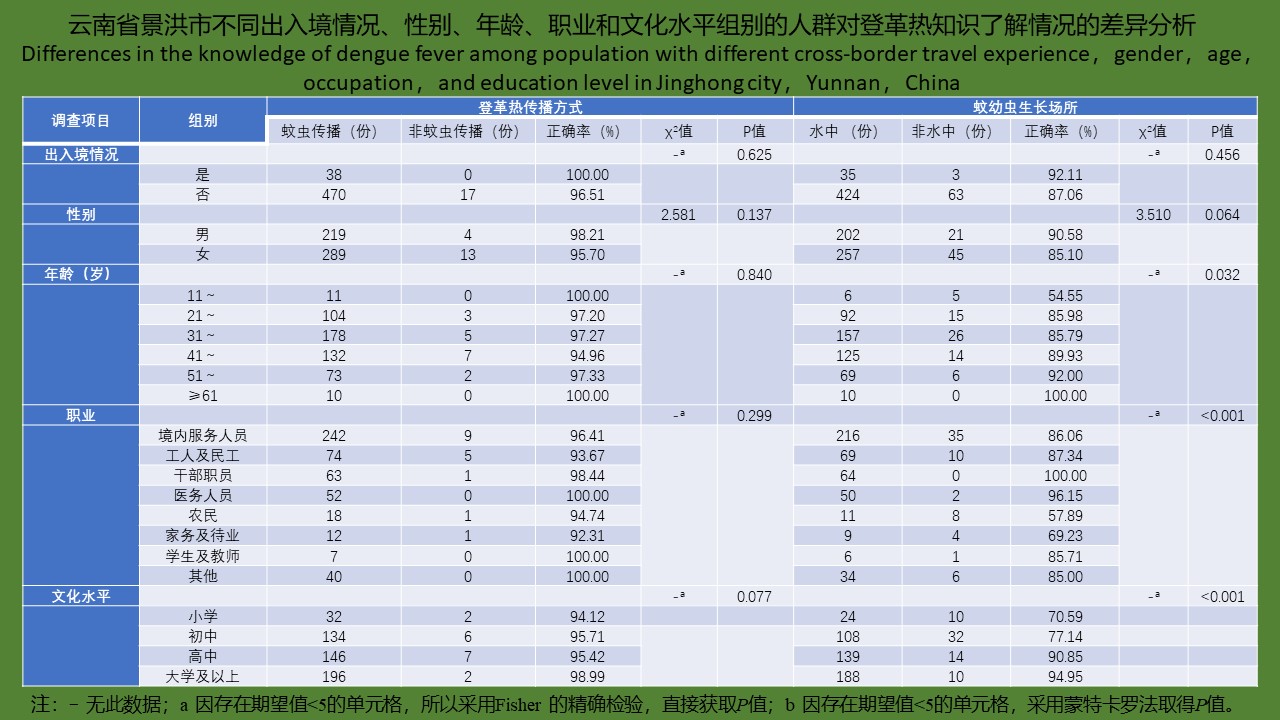
    Objectives To understand the knowledge, attitude, and practice toward dengue fever among residents in Jinghong city and the priorities of publicity and education,and to provide guidance and suggestions for better prevention and control of dengue fever in Jinghong. Methods The residents ≥ 11 years old living in Gasa town,Gaozhuang and Fortune Center of Jinghong were surveyed using offline questionnaires, and the other residents of Jinghong were surveyed online. Data from questionnaires were entered into Epidata 3.1, and SPSS 19.0 software was used for descriptive statistical analysis and Chi-square or other tests. Results A total of 558 questionnaires were collected through online and offline surveys. The results showed that 93.89% of residents were bitten by mosquitoes. Bites mostly occurred in lawns,bushes,and at home,and various measures were used to prevent mosquito bites. With symptoms of fever,headache, and joint pain,91.73% of residents would go to hospitals for treatment. Among the residents surveyed, 525 had heard of dengue fever (94.09%),and 96.76% and 87.43% of them were aware of the fact that dengue fever is transmitted by mosquitoes and larvae live in water,respectively. In terms of the routes to learn about dengue fever, community publicity accounted for the largest proportion of 74.10%, and the highest proportion (66.41%) of residents wished to learn more about dengue via the same route. Meanwhile, 86.10% of residents believed that avoiding mosquito bites was the most effective way to prevent and control dengue fever. Conclusion Residents in Jinghong city were aware of the transmission route of dengue fever, mosquito breeding environment,and prevention and control measures, but the awareness of mosquito breeding environment was less than that of dengue fever transmission route, and the prevention and control of mosquitoes need to be further strengthened. Community publicity, television, radio, and explanation by healthcare provider can be used to increase the publicity and education of residents on the prevention and control of dengue fever.
  • YU Hong-min, NAN Xiao-wei, SI Xiao-yan, CHEN Ji-lai, LU: Wei, SHI Ting, FAN Meng-guang
    Chinese Journal of Vector Biology and Control. 2022, 33(2): 289-292. https://doi.org/10.11853/j.issn.1003.8280.2022.02.023
    Abstract ( ) Download PDF ( )   Knowledge map   Save
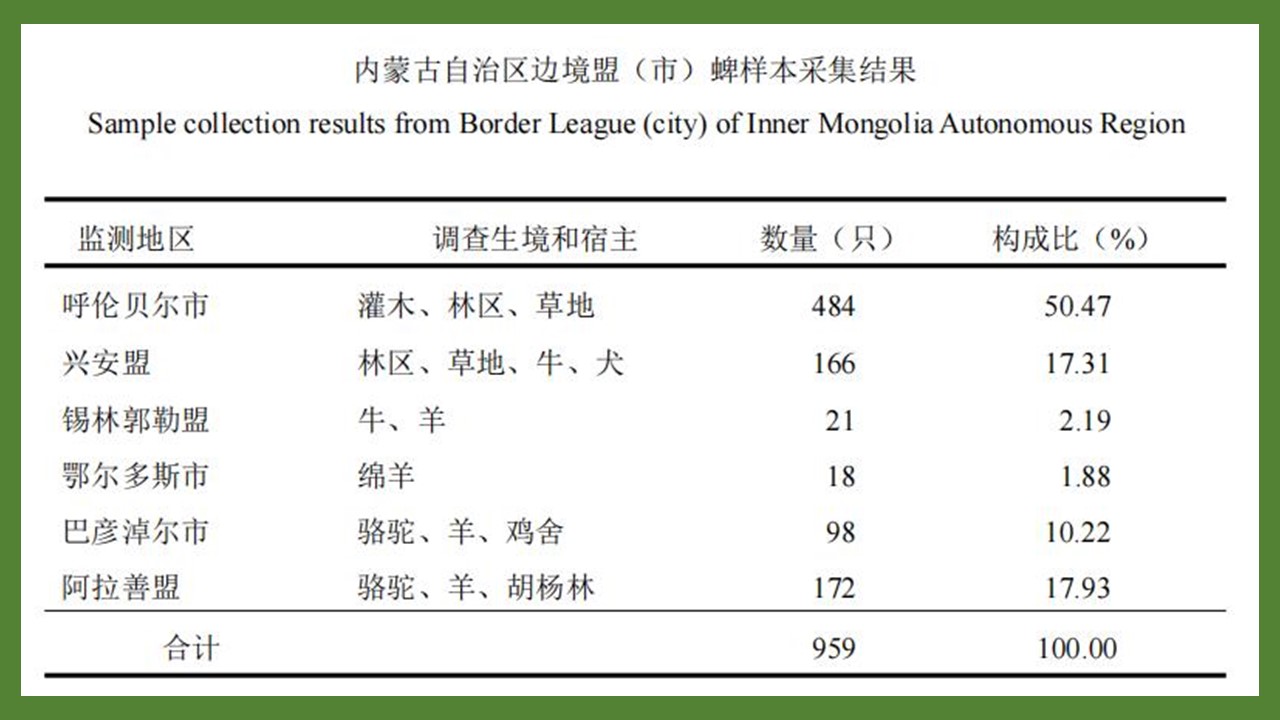
    Objective To understand the species composition and distribution of ticks in border port areas in Inner Mongolia, to add data to the tick population database, and to provide a basis for the control of tick-borne diseases. Methods From March to June 2019, free-living and parasitic ticks were collected in 15 banners (counties) of six leagues (prefectures) in Inner Mongolia Autonomous Region with flagging cloth or from the body surface of hosts. The collected ticks were used for morphological identification and species distribution analysis. Results A total of 959 ticks were collected. A total of 10 species of 6 genera of 2 families were identified by morphological identification, of which Dermacentor silvarum was dominant (566, 59.02%), and the highest number of 484 ticks were collected in Hulun Buir city (50.47%). The highest number of ticks were collected from grasslands, followed by sheep. Conclusion The border port areas in Inner Mongolia are inhabited by various tick species. It is necessary to enhance tick surveillance to prevent tick-borne infectious diseases.
  • CHEN Yong-ming, KANG Dong-mei, DU Guo-yi, YAN Dong, LIU Guan-chun, ZHOU Song, ZHENG Nan, LAN Xiao-yu, YANG Ai, MA Yong, ZHANG Xiao-lei, WEN Lin, SUN Fei, WANG Xiao-yan
    Chinese Journal of Vector Biology and Control. 2022, 33(2): 293-296. https://doi.org/10.11853/j.issn.1003.8280.2022.02.024
    Abstract ( ) Download PDF ( )   Knowledge map   Save
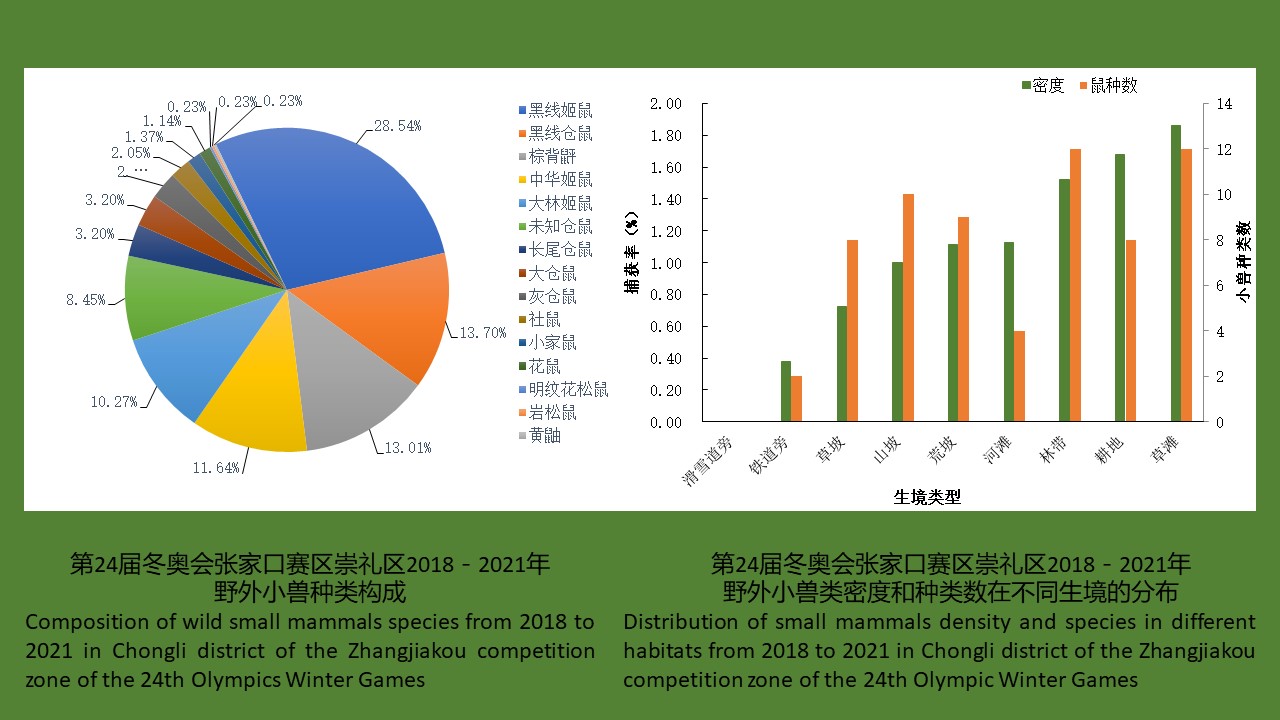
    Objective To understand the changes in the size and structure of small mammals populations from 2018 to 2021 in the Zhangjiakou competition zone of the 24th Winter Olympic Games, and to provide the basis for the prediction and warning of small mammals-related diseases in this area. Methods Field investigation of small mammals was carried out in two towns and eight townships of Chongli district, which are the locations of facilities of the Zhangjiakou competition zone of the 24th Winter Olympic Games. Using the 5 m clamp line method, 6-8 sampling sites were selected randomly every month, and 1-2 representative habitats with different type or altitude were selected at each site (100 mousetraps per habitat). Excel 2010 software was used to summarize the monthly and yearly survey data of small mammals. By using the methods of concentration degree and linear correlation, the seasonal distribution of small mammals and the distribution characteristics in different habitats were analyzed. Results In 2018-2021, 438 small mammals (hereinafter referred to as rodents) were captured using 33 610 clamp-times, with an average capture rate of 1.30%. The rodents belonged to 2 orders, 4 families, 9 genera, and 12 species, with Apodemus agrarius as the dominant species (125, 28.54%). The year with the highest rodent density was 2019, and the capture rate was 2.09%. The year with the highest number of rodent species was 2020, and 12 species were captured. The density of rodents showed large seasonal variations (M=0.58) in a bimodal pattern, with the first peak in March of spring and the second peak in August of autumn. The species of rodent showed seasonal variations (M=0.31) in a unimodal pattern. The density of rodents increased with elevation, and the capture rate was 0.22% (low elevation), 1.06% (medium elevation), and 2.00% (moderately high elevation). Most species of rodents were captured at medium elevation (10 species), followed by moderately high elevation (4 species) and low elevation (3 species). There was a positive correlation between rodent density and species in different habitats (r=0.823, P=0.006). The changes of rodent density and species were most significant in grassland, farmland, forest belt, and hillside. Conclusion In the Chongli district in Zhangjiakou competition zone of the 24th Winter Olympic Games, rodents have high population, rich species composition, and strong seasonal variation. The distribution of rodents in different habitats showed specific patterns. The changes in rodent density and species composition in key areas should be monitored. Attention should be paid to epidemic trend of rodent-borne diseases and the important influence of their transmission.
  • WANG Qiang, QIAN Ling-yuan, WANG Jian-long, JING Chen-ye, WU Wen-jue, TANG Jing-wen, ZHANG Shou-gang
    Chinese Journal of Vector Biology and Control. 2022, 33(2): 297-300. https://doi.org/10.11853/j.issn.1003.8280.2022.02.025
    Abstract ( ) Download PDF ( )   Knowledge map   Save
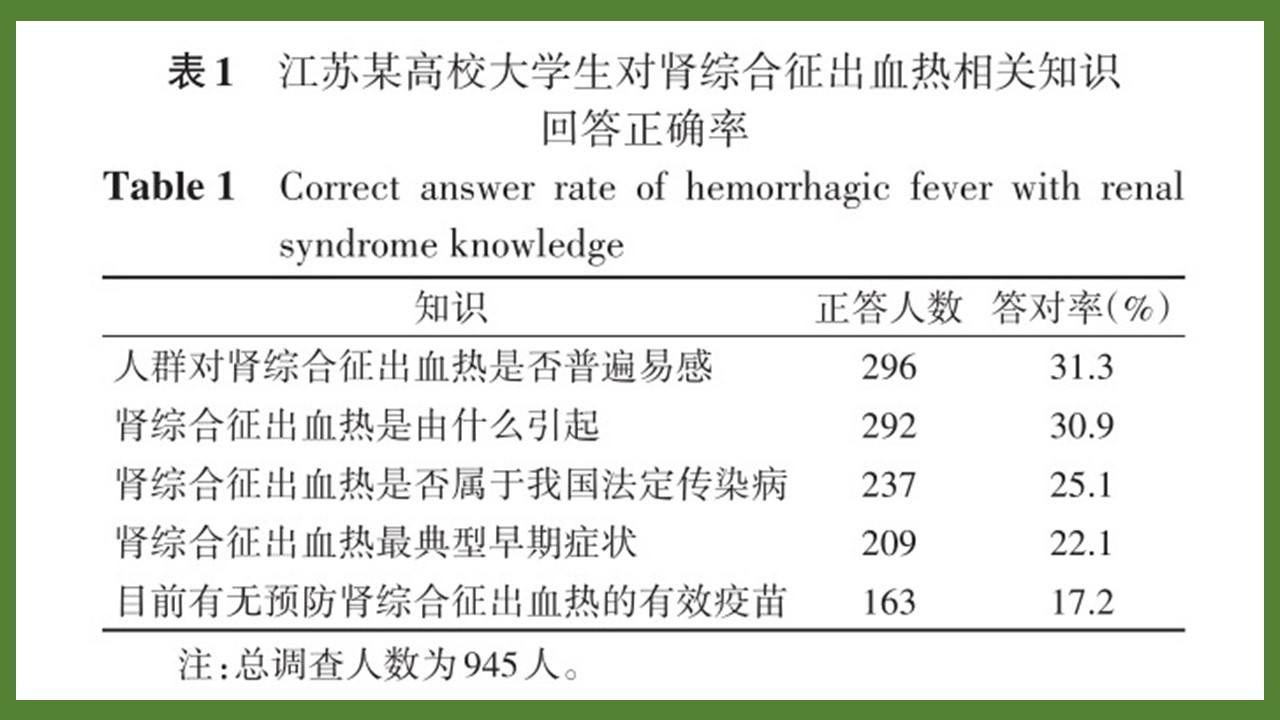
    Objective To investigate the knowledge, attitude, and practice on hemorrhagic fever with renal syndrome (HFRS) among undergraduates and the influencing factors, and to provide a scientific basis for health education on HFRS-related knowledge. Methods A stratified cluster sampling method was used, and 960 medical students and non-medical students were selected in this study. A self-designed questionnaire survey about HFRS was conducted. Results The overall correct answer rate of HFRS knowledge was only 5.5% in the undergraduates, and the pass rate was 29.6%. The Chi-square analysis revealed there were significant differences among different grades and between majors (both P<0.05). The multivariate logistic regression analysis showed that grade and major were the influencing factors for HFRS knowledge (both P<0.05). In terms of the attitude to disease prevention and control, 81.3% of the students thought that it was necessary to publicize the knowledge of rat control and HFRS. Conclusion The undergraduates in this university had a relatively low knowledge level of HFRS. It is urgent to carry out health education and knowledge popularization of HFRS and other infectious diseases, strengthen the awareness of prevention, and prepare for the effective prevention of the prevalence of such infectious diseases.
  • LIU Ge, ZHANG Hui, KAMAILE Ji-ge-er, BAI Cen, ZHANG Zhao-guan, MENG Yong-wen, JIA Li, WANG Dong-sheng, YIN Da, YIN Xiao-ping
    Chinese Journal of Vector Biology and Control. 2022, 33(2): 301-304. https://doi.org/10.11853/j.issn.1003.8280.2022.02.026
    Abstract ( ) Download PDF ( )   Knowledge map   Save
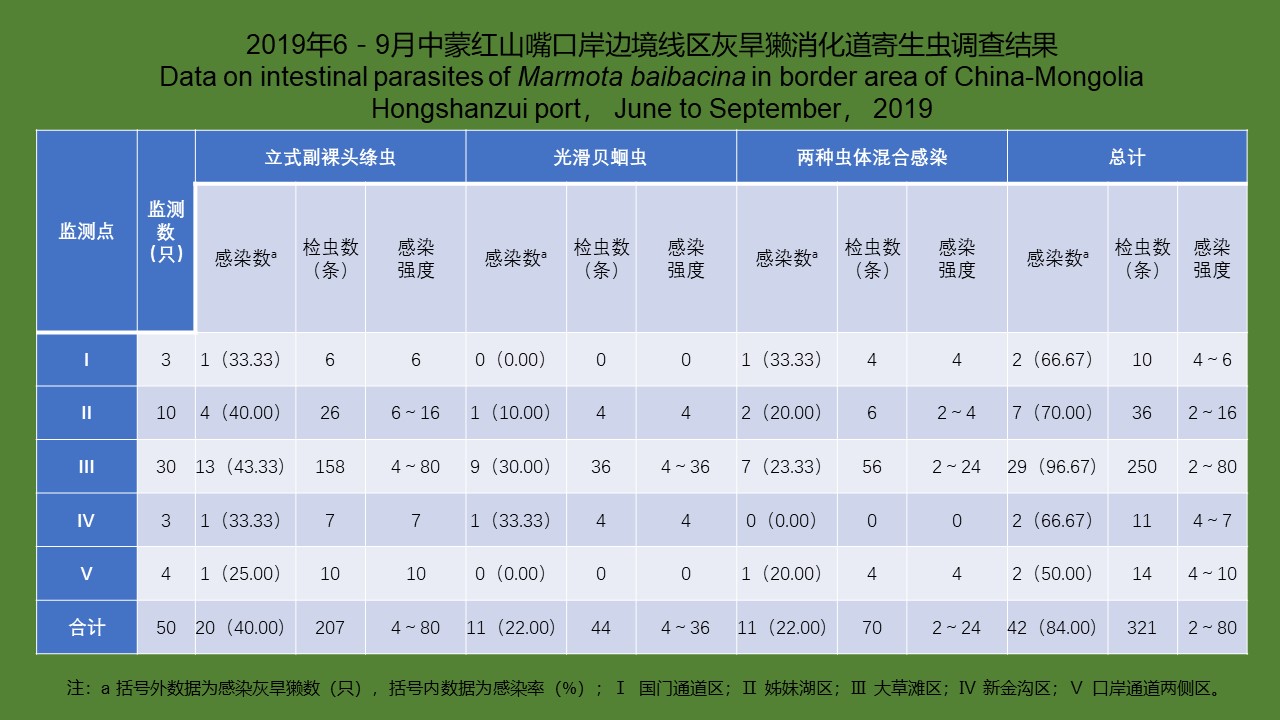
    Objective To provide basic data for understanding and preventing the spread of zoonotic parasitic diseases caused by Marmota baibacina across the border between China and Mongolia. Methods In 2019, M. baibacina was captured by patrol and trapping in the border area of China-Mongolia Hongshanzui port, and investigated the distribution and epidemiological characteristics of intestinal parasites in M. baibacina. The species of the parasites was identified after hematoxylin staining, dehydration, xylene clearing, and paraffin embedding. Results Two species of parasites, Paranoplocephala ryjikovi and Baylisascaris laevis, were found in the intestine of 50 M. baibacina, with an overall infection rate of 84.00%. A total of 321 parasites were obtained, with infection intensities of 2-80. Excretion of tapeworm segments from the marmots was observed, and eggs were detected in feces. The infection was prevalent across the whole border area of Hongshanzui. Conclusion It is the first time to find P. ryjikovi and B. laevis in the intestine of M. baibacina in the border area of China-Mongolia Hongshanzui port, which provides a basis for preventing the international spread of zoonotic parasitic diseases across the China-Mongolia border area and promoting the healthy development of animal husbandry.
  • Review
  • YIN Ying-xuan, WU Yin-juan, HE Qing, HE Yong-xin, GAO Ruo-xi, LIU Qi-yong, LI Xue-rong
    Chinese Journal of Vector Biology and Control. 2022, 33(2): 305-312. https://doi.org/10.11853/j.issn.1003.8280.2022.02.027
    Abstract ( ) Download PDF ( )   Knowledge map   Save
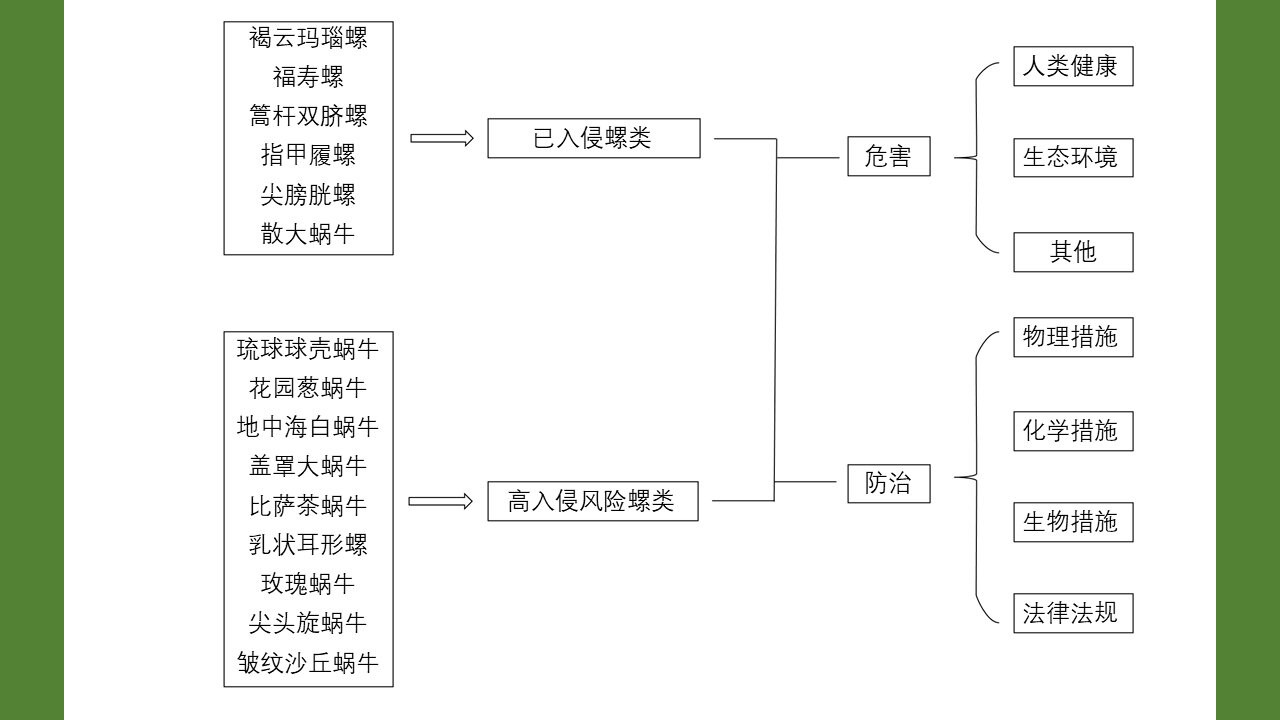
    Cross-border exchanges have been increasing with the progress of globalization. Frequent human migration has contributed to tremendous development of economy and society, and at the same time brought in invasive alien species, causing considerable influences and hazards to native species, ecological environment, human health, and social economy in China. This paper summarizes the status, hazards, and control strategy of primary invasive snails in China, which provides a basis for the prevention and control of invasive alien snails.
  • YANG Xu-song, JIANG Shu-ya, DONG Hao-wei, PENG Heng, MA Ya-jun
    Chinese Journal of Vector Biology and Control. 2022, 33(2): 313-319. https://doi.org/10.11853/j.issn.1003.8280.2022.02.028
    Abstract ( ) Download PDF ( )   Knowledge map   Save
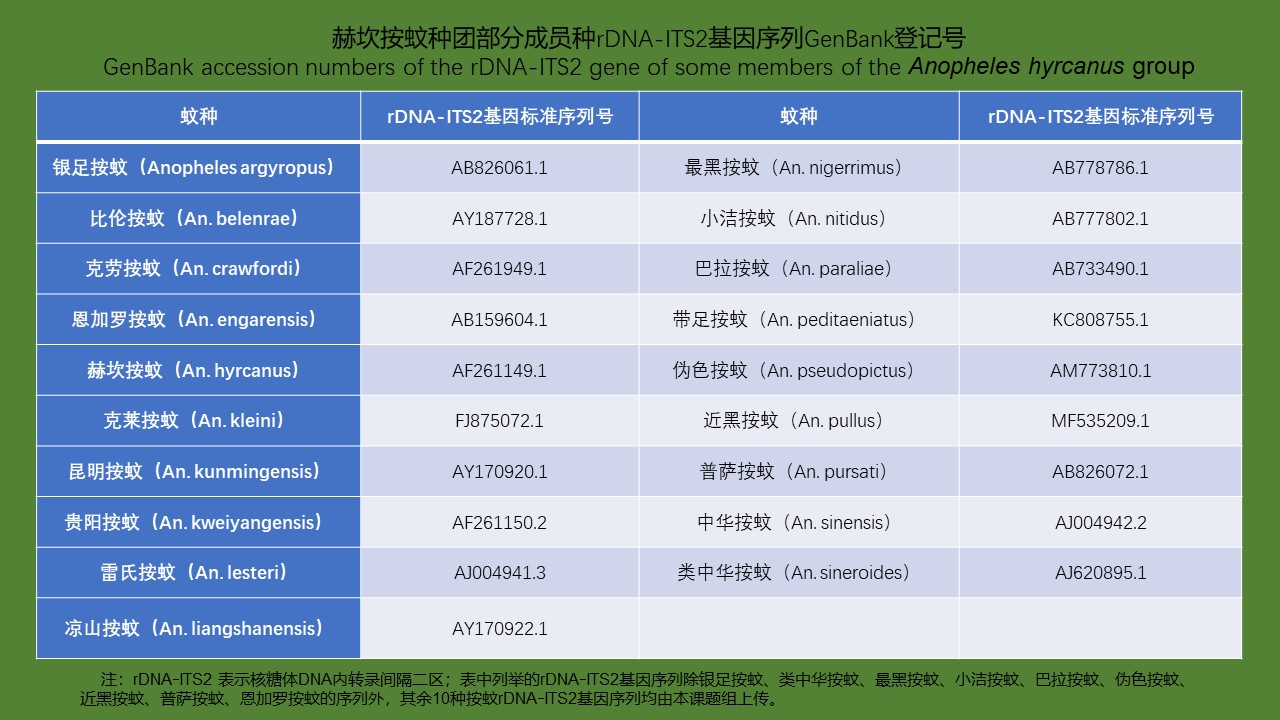
    Anopheles hyrcanus group is widely distributed. Some members are important malaria vectors, and some can transmit diseases such as filariasis and Japanese encephalitis, which have important medical significance. Nowadays, the taxonomy of An. hyrcanus group is mainly based on morphological characteristics and molecular characteristics. However there are still controversies over the taxonomic status of some species. This article reviews the medical importance and distribution of the members of An. hyrcanus group and the research advances in taxonomy of the An. hyrcanus group.