20 October 2021, Volume 32 Issue 5
    

  • Select all
    |
    Expert Forum
  • GAO Han, WANG Si-bao
    Chinese Journal of Vector Biology and Control. 2021, 32(5): 509-512. https://doi.org/10.11853/j.issn.1003.8280.2021.05.001
    Abstract ( ) Download PDF ( )   Knowledge map   Save
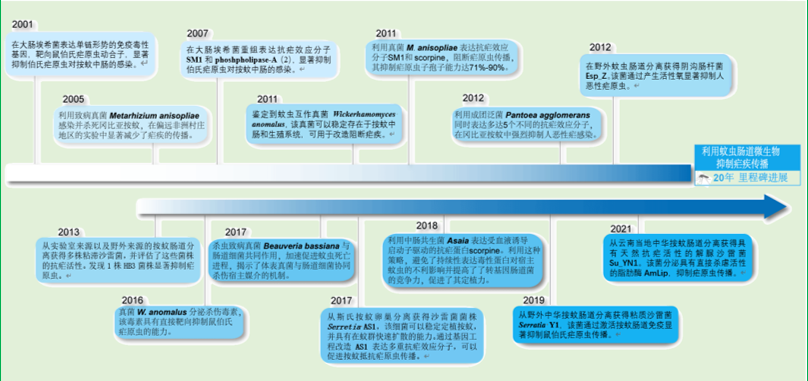
    Malaria is a life-threatening disease caused by Plasmodium parasites,which are transmitted to people through the bites of female Anopheles mosquitoes. The mainstay of current malaria control programs relies on insecticides to control vector mosquito population density and antimalarial drugs to treat infections. However,the emergence and increasing spread of mosquito insecticide resistance and parasite drug resistance have stalled the progress against malaria over the past few years,and call for new intervention strategies. Impeding malaria parasite infection in the vector Anopheles mosquito is a novel strategy to block malaria transmission at the source. The strategy of symbiotic control, using gut microbiota to inhibit parasite development in the mosquito midgut, has been regarded as a promising way to thwart malaria transmission. In this paper the development of symbiotic control including paratransgenesis during the past two decades has been summarized and the future direction of this promising malaria-control strategy has been discussed.
  • A Centery of Commitment to People's Health by the Communist' Party of China
  • LIU Qi-yong, LIU Xiao-bo
    Chinese Journal of Vector Biology and Control. 2021, 32(5): 513-518. https://doi.org/10.11853/j.issn.1003.8280.2021.05.002
    Abstract ( ) Download PDF ( )   Knowledge map   Save

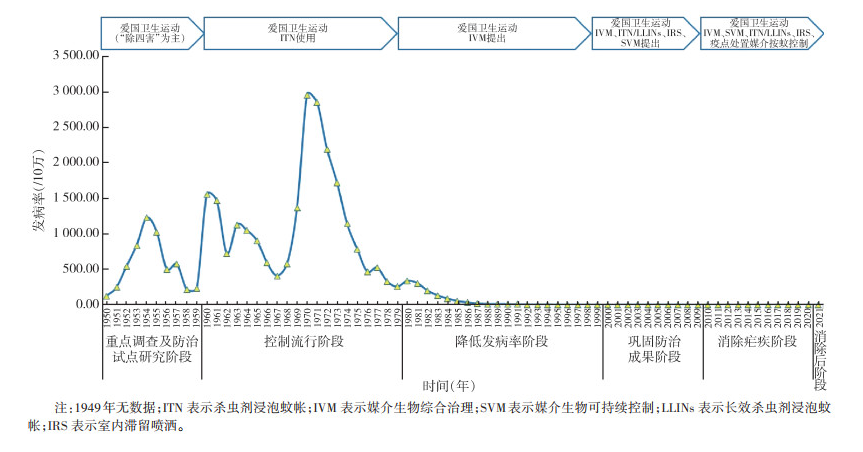
    Malaria is a major vector-borne disease transmitted by the bite of Anopheles mosquito,which has caused a heavy disease, economical and social burden to China. After long-term effective malaria control and elimination actions,China was officially granted a malaria-free certification by the World Health Organization (WHO) in June 30, 2021. From "Eliminate the four pests to prevent diseases" initiated by the Patriotic Health Campaign Committee in the early years of the founding of the people’s Republic of China,to the integrated mosquito management strategy in the 1980s, to the sustainable vector management proposed in 2004,and then to Anopheles control of the epidemic spot in the stage of malaria elimination,the Anopheles control strategies and techniques in China have been evolved and innovated with stratified sustainable Anopheles control in the past 70 years,which has played a key role in malaria elimination in China. At present,there are still severe challenges and great pressure in controlling the risk of re-transmission caused by malaria importation and maintaining the malaria-free in China. It is necessary to continue to carry out sustainable control of Anopheles in China,and share the stratified sustainable Anopheles control strategies and practical experience for actively participating in the global action to eliminate malaria,so as to contribute Chinese efforts to realizing the vision of a Malaria-Free world and a community of common health for mankind.

  • Malaria Prevention and Control Special Topics
  • FU Wen-bo, YAN Zhen-tian, GUO Jing, CHEN Bin
    Chinese Journal of Vector Biology and Control. 2021, 32(5): 519-525. https://doi.org/10.11853/j.issn.1003.8280.2021.05.003
    Abstract ( ) Download PDF ( )   Knowledge map   Save
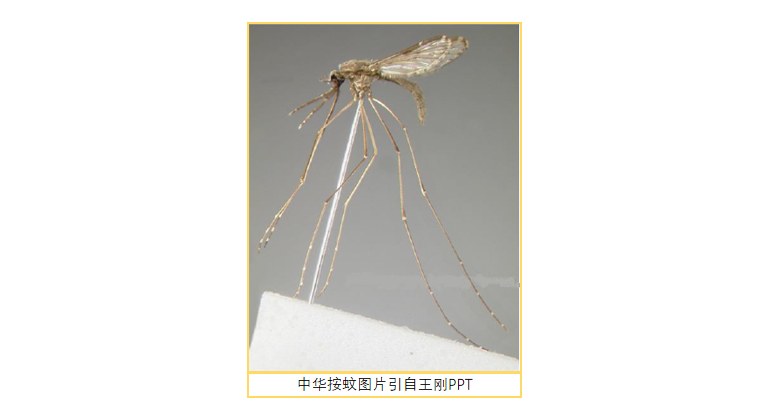
    The mosquitoes in the genus Anopheles are important disease vector, with 8 subgenera and 480 species known worldwide and 2 subgenera and 62 species in China, and are the unique genus of human malaria vector. The malaria still kills hundreds of thousands of people worldwide each year, with most of them being children under the age of five. China has made a decisive achievement in malaria control, and announced the elimination of local malaria transmission in China. The achievement has been granted by World Health Organization; however there are still imported cases every year. The elimination of malaria stems from effective vector control, as well as basic and applied scientific research relate Anopheles. With the change of climate and environment, the main malaria transmission vector species and their biological and ecological features are also potentially changing, and the surveillance and control of vectors remain an important issue that needs attention. In this paper, the taxonomic and phylogenetic studies of Anopheles, the ecology and transmission capability of the major malaria vectors, and the surveillance and control of Anopheles in China are reviewed, in order to provide a useful reference for the control of vector mosquitoes and related infectious diseases.
  • ZHOU Qiu-ming, LIN Lin, DONG Hao-wei, YUAN Hao, BAI Jie, LI Xiang-yu, PENG Heng, MA Ya-jun
    Chinese Journal of Vector Biology and Control. 2021, 32(5): 526-532. https://doi.org/10.11853/j.issn.1003.8280.2021.05.004
    Abstract ( ) Download PDF ( )   Knowledge map   Save
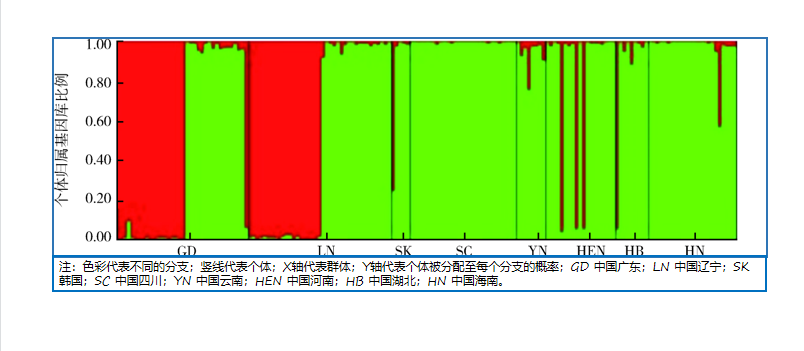
    Objective To determine the genetic variation and structure of Anopheles lesteri populations in China using microsatellite loci, and to explore the factors affecting population genetic differentiation. Methods Adult mosquitoes were captured using a sucking tube. An. lesteri was identified based on morphology and rDNA ITS2. Genescan was performed in 9 microsatellite loci. Based on the fragment length polymorphism of microsatellite DNA, genetic diversity within and between populations were calculated. Structure software was used to estimate cluster number and effective population size. Results A total of 216 An. lesteri adults were identified in 17 collection sites, which were pooled into 9 populations for analysis. The mean number of alleles in the populations of An. lesteri ranged from 3.22 to 7.44, the mean expected heterozygosity and the observed heterozygosity were 0.48-0.71 and 0.33-0.47, respectively. The pairwise fixation index ranged from -0.01 to 0.25 (mean, 0.13). The variation within populations (86.55%) was greater than variation between populations (13.45%) that was positively correlated with geographic distance. Structure software showed that An. lesteri populations could be divided into cluster I (populations from Guangdong and Liaoning provinces of China) and cluster II (populations from Hainan, Hubei, Henan, Yunnan, and Sichuan provinces of China, and South Korea). Conclusion The genetic variation of An. lesteri populations in China mainly exists among individuals, with moderate variation levels, and the genetic structure of populations follows the isolation-by-distance model. An. lesteri belongs to two gene pools. Yunnan population was the original gene pool, which gradually migrated to east and north of China and led to the appearance of individuals in the second gene pool.
  • DONG Hao-wei, NAN Chun-yan, ZHOU Qiu-ming, YUAN Hao, LI Xiang-yu, PENG Heng, MA Ya-jun
    Chinese Journal of Vector Biology and Control. 2021, 32(5): 533-540. https://doi.org/10.11853/j.issn.1003.8280.2021.05.005
    Abstract ( ) Download PDF ( )   Knowledge map   Save
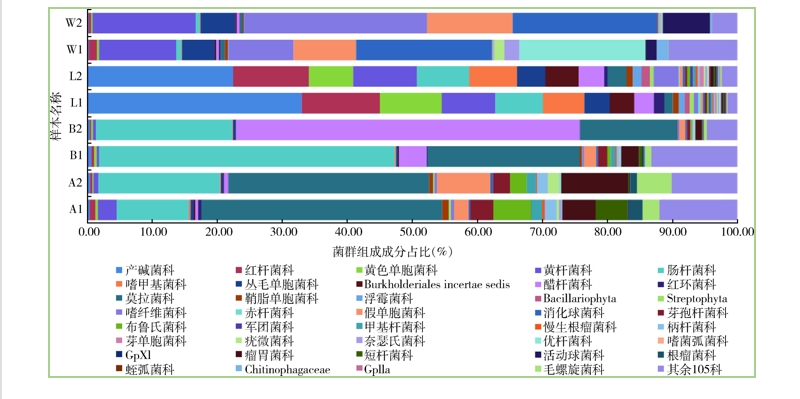
    Objective To investigate the differences in the microbial composition in Anopheles sinensis and water in larvae breeding site. Methods An. sinensis adults were collected from Jiading district, Shanghai, China and divided into unfed (A) and fed (B) groups. Water samples were collected from paddy fields in the same area (W). Metagenomic DNA was extracted and the 16S rDNA V4 region was subjected to Illumina Miseq high-throughput sequencing. The sequence number and operational taxonomic units (OTUs) were used for statistical analysis of the composition and abundance of microflorae, the richness and diversity of bacterial communities, and changes in bacterial composition across communities, which were compared with the microbial composition in An. sinensis larvae (L). Results The numbers of high-quality sequences and clustered OTUs were 129 056/2 622.5 (A), 171 734/3 324.5 (B), and 225 890.5/2 997 (W), respectively. The clustered OTUs were assigned to 20 phyla, 144 families, and 295 genera. The bacterial richness as indicated by Chao1 index was in the order of B>W>A. The bacterial diversity was B>W>A (Simpson index) or A>B>W (Shannon index). The dominant bacteria in fed and unfed adults were Proteobacteria and Firmicutes, and the abundant genera were Acinetobacter (A, 41.35%; B, 25.71%) and Pantoea (A, 10.85%; B, 12.70%). Asaia was the most abundant (40.85%) in fed adults. In paddy field water, the dominant bacteria were Firmicutes, Bacteroides, and Proteobacteria. The genera with >10.00% abundances were Desulfosporosinus (24.19%), Flectobacillus (19.48%), Flavobacterium (15.27%), Pseudomonas (12.19%), and Alkalibacter (10.28%). As shown by the t test, the numbers of phyla with statistical differences between A, B, and L were 1 (B/A), 9 (L/A), and 9 (W/A). Principal component analysis showed similar bacterial diversity among samples in the same group, and heatmap showed that W and L clustered into one clade, while B and A into another clade. Conclusion An. sinensis adults are dominated by Acinetobacter, Pantoea, and Asaia. The composition of bacteria in paddy field water is similar to those in larvae living in the water as well as fed and unfed female mosquitos.
  • ZHAO Qiong-yao, QIU Xing-hui, YANG Yan, LUO Xing, SONG Xiao-ming, JIA Yong-chao
    Chinese Journal of Vector Biology and Control. 2021, 32(5): 541-545. https://doi.org/10.11853/j.issn.1003.8280.2021.05.006
    Abstract ( ) Download PDF ( )   Knowledge map   Save
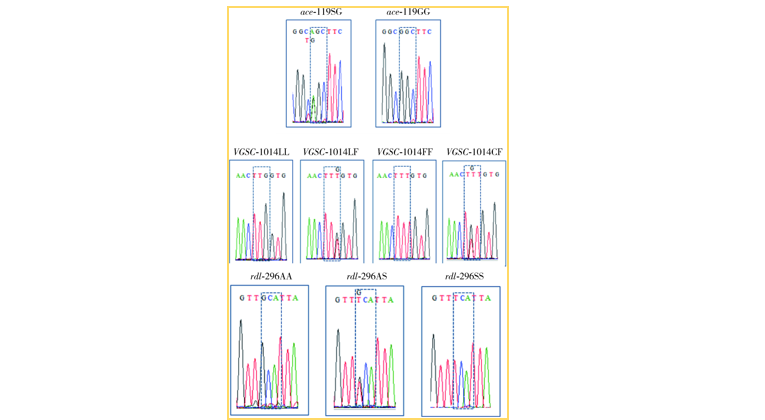
    Objective To investigate the mutations of insecticide resistance-related genes through a sequencing analysis of the target genes of insecticides in Anopheles sinensis collected in Guangyuan of Sichuan province, China, and to provide guidance for the chemical control of An. sinensis in this region. Methods A total of 35 female An. sinensis mosquitoes collected in Jianshe village of Longtan township in Guangyuan of Sichuan province in September 2018 were selected, and genomic DNA was extracted after the abdomen was removed. PCR was used to obtain the gene fragments of acetylcholinesterase (ace), voltage-gated sodium channel (VGSC), and gamma-amino butyric acid receptor Rdl subunit (rdl), and then a sequencing analysis was performed. Results In comparison to the gene sequence of reference species, 20.00% of the 35 An. sinensis mosquitoes had resistance mutations, with a frequency of 5.71% for ace resistance allele (119 S), 7.14% and 1.43% for VGSC resistance alleles (1014F and 1014C), and 14.29% for rdl resistance allele (296S). Although there was a low proportion of An. sinensis mosquitoes with resistance mutations (<20.00%), mutations of multiple target genes were observed in more than 70.00% of the mosquitoes with mutation. Conclusion There is a certain proportion of resistance alleles in this An. sinensis population, with a genetic basis of developing high-level resistance, and the presence of mosquitoes with multiple target gene mutations indicates that this An. sinensis population has the possibility of developing into a multidrug-resistant population.
  • ZHU Su-juan, JIN Xing-yi, XU Wei-min, WEI Ling-ya, SUN Zhou, KONG Qing-xin, CHEN Jun-fang
    Chinese Journal of Vector Biology and Control. 2021, 32(5): 546-550. https://doi.org/10.11853/j.issn.1003.8280.2021.05.007
    Abstract ( ) Download PDF ( )   Knowledge map   Save
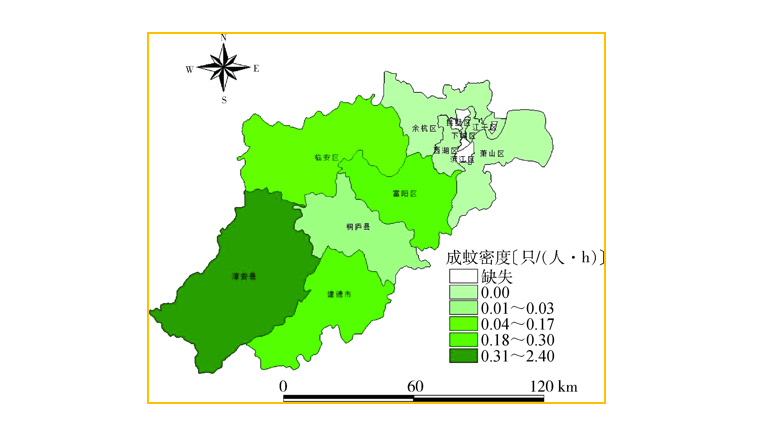
    Objective To investigate the population density of Anopheles vector of malaria after elimination of malaria in Hangzhou, China, and to provide a basis for risk assessment of imported malaria transmission and development of control strategy. Methods Ten districts, counties, or cities in Hangzhou were selected as malaria vector monitoring sites from 2018 to 2019. The density of adult (malaria vector) and larval mosquito populations were monitored by lamp-trapping, human-trapping, and dip survey methods. The data of confirmed cases of vivax malaria in Hangzhou from 2016 to 2020 were collected. The characteristics of malaria vector and epidemic were analyzed. Results A total of 1 686 mosquitoes were captured by lamp-trapping from 2018 to 2019. Of malaria vectors, only An. sinensis (116, 6.88%) was captured in the suburb and rural areas. A total of 834 An. sinensis adults were captured by human-trapping. The density was the highest in late July, which was 0.56 mosquitoe/person-hour in suburb areas and 5.63 mosquitoes/person-hour in rural areas (20.50 mosquitoes/person-hour in Chun'an county). Only 373 An. sinensis larvae were captured by dip survey in rice fields, with the density of 0.70, 0.05, and 0.02 larva/dip in Chun'an county, Tonglu county, and Lin'an district, respectively. The density of larvae was the highest in late July (0.54 larva/dip on average). From 2016 to 2020, 12 imported cases of vivax malaria were reported in Hangzhou, mainly in Yuhang district and Xihu district. The mean time from onset to diagnosis was (7.08±8.24) d. Conclusion An. sinensis is the only malaria vector consistently present in Hangzhou, which is mainly found in rural areas and varies significantly across seasons. Undetected imported cases of vivax malaria still pose a risk of transmission in Hangzhou.
  • ZUO Li-juan, KE Chun-rong, LIU Ying, LUO Jian-long
    Chinese Journal of Vector Biology and Control. 2021, 32(5): 551-552. https://doi.org/10.11853/j.issn.1003.8280.2021.05.008
    Abstract ( ) Download PDF ( )   Knowledge map   Save
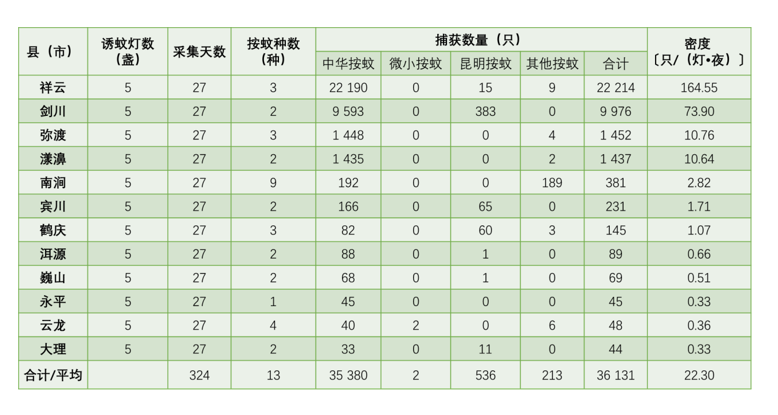
    Objective To investigate the distribution of malaria vectors Anopheles after the elimination of malaria in 12 counties and cities in Dali Bai autonomous prefecture (Dali prefecture), Yunnan province, China; to assess the local risk of imported malaria retransmission, and to provide a basis for consolidating local achievements of malaria elimination and formulating local technical schemes for preventing imported malaria retransmission after elimination of malaria. Methods The study was conducted from July to September in 2017. According to the altitude, each county (city) was divided into high, middle, and low stratifications, and one natural village from each stratification was selected as the survey site. The all-night light trapping method and half-night human-bait method were used. One barn or human room in the east, west, south, north, and middle of each survey site was selected as an observation point. The all-night light trapping method was used to catch mosquitoes at each survey site for 3 consecutive nights per month, and the half-night human-bait method was used to catch mosquitoes at each low-altitude survey site once a month. Results A total of 13 species of Anopheles mosquitoes were captured, among which An. sinensis was distributed in all these 12 counties and cities; An. minimus was only caught in Yunlong county; An. kunmingensis was distributed in 7 counties and cities, i.e., Xiangyun county, Jianchuan county, Binchuan county, Heqing county, Eryuan county, Weishan county, and Dali city. The results of all-night light trapping method showed that Xiangyun county had the highest density of Anopheles mosquitoes (164.55 mosquitoes/light·night). The results of half-night human-bait method showed that only Jianchuan county and Heqing county had Anopheles mosquitoes caught, and the densities were 0.72 mosquitoes/net·h and 0.06 mosquitoes/net·h, respectively. Conclusion Considering the imported malaria cases in 2018-2020, Dali city is at risk of retransmission of Plasmodium vivax; Yunlong county is potentially at risk of retransmission of multiple malaria; the other 10 counties are all potentially at risk of retransmission of P. vivax. It is suggested that related departments should keep strengthening the team building for malaria control and the surveillance work of malaria vectors Anopheles.
  • Experimental Study
  • GUO Xiu-xia, CHENG Peng, LIU Li-juan, WANG Hai-fang, ZHANG Chong-xing, WANG Huai-wei, GONG Mao-qing
    Chines Journal of Vector Biology and Control. 2021, 32(5): 553-559. https://doi.org/10.11853/j.issn.1003.8280.2021.05.009
    Abstract ( ) Download PDF ( )   Knowledge map   Save
    Objective To clone the ultraviolet sensitive opsin (UV-opsin) gene of Aedes albopictus, to characterize the sequences of UV-opsin gene and its encoded protein, and to provide a molecular basis for the study of its biological function. Methods The degenerate primers were designed according to the conserved sequences of the UV-opsin gene from mosquitoes, and the UV-opsin gene of Ae. albopictus was amplified by RT-PCR. The PCR product was purified and ligated into the pET28a(+) vectors with EcoRⅠ digestion and XhoⅠ to construct a prokaryotic expression plasmid. The positive recombinant plasmid was identified by PCR and sequenced. Structural features and function were analyzed and predicted using Expasy, Protparam, Tmpred, and ScanProsite. Sequence homology was analyzed by Clustal X 1.81 and a phylogenetic tree was constructed using MEGA 6.0 software. Results The cDNA sequence of Ae. albopictus UV-opsin was obtained, which was 1 146 bp in full length (including termination codon) and encoded 381 amino acid residues. The predicted molecular weight was 42 500 and the isoelectric point was 7.06. The homology was 99.74% with Ae. albopictus (XP_029730343) and 96.85% with Ae. aegypti (ABF18478). The phylogenetic tree showed that insects from the same genera and orders clustered together. Aedes was clustered with the genus Culex, and then with Anopheles. This UV-opsin had 7 transmembrane topology domains, 1 G-protein-coupled receptor, 4 N-myristoylation sites, 3 N-glycosylation sites, 1 tyrosine kinase phosphorylation site, 3 protein kinase C phosphorylation sites, and 2 casein kinase Ⅱ phosphorylation sites. The UV-opsin contained conserved motifs LRTPSN, DRY and QAKK, which were critical for its function. Conclusion The UV-opsin gene sequence of Ae. albopictus is cloned, which has the structural characteristics of opsins. The results provide a foundation for further research on the function of Ae. albopictus UV-opsin gene.
  • LI Jing, TONG Ying, ZENG Xiao-peng, ZHOU Xiao-jie
    Chines Journal of Vector Biology and Control. 2021, 32(5): 560-563. https://doi.org/10.11853/j.issn.1003.8280.2021.05.010
    Abstract ( ) Download PDF ( )   Knowledge map   Save
    Objective To investigate the changes in the water loss rate and palatability of cockroach-killing gel baits at different time after application. Methods Three commercially available common gel baits were selected: gel bait P (effective constituent: 2.15% imidacloprid), gel bait W (0.5% dinotefuran), and gel bait S (0.5% dinotefuran). Water loss rate was determined by weighing the gel baits over a period of 20 days. The palatability of gel baits to Blattella germanica was determined by observing the feeding behavior of cockroaches during the same period. The analysis of variance and non-parametric test were used to compare the water loss rate and palatability of the gel baits. Results The three gel baits were dotted indoors for 20 days. Water volatilization mainly occurred in the first day, and the water loss rate was (39.73±0.05)% for gel bait P, (32.49±0.04)% for gel bait W, and (22.99±0.16)% for gel bait S, with a statistical difference between the baits (F=179.966,P=0.005). The weight of the gel baits was generally unchanged during the following 20 days. Under the fresh condition, the feeding frequency and total feeding time of the three gel baits were in the order of P>W>S. The feeding frequency and total feeding time decreased over time for all the three baits. After 7 days, there were no statistical differences in feeding frequency and total feeding time between gel bait P [(14.33±3.54]times and (518.00±237.91) s, respectively) and gel bait W [(15.67±4.85)] times and (414.00±263.92) s, respectively) (F=0.246, P=0.631; F=0.428, P=0.528); both gel baits P and W showed statistically higher feeding frequencies and statistically longer total feeding time compared with gel bait S [(4.33±2.21)] times and (38.50±19.75) s, respectively) (F=14.038, P=0.002, P=0.001; F=7.536, P=0.007, P=0.034). After 14 days, gel bait P had better palatability than gel baits W and S. Conclusion The water loss of the gel baits mainly occurs in the first day after placement. The gel baits have the best palatability in the fresh state, and show different degrees of decreases in palatability with time. In general, gel baits P and W have the best palatability within 7 days. It was not found for the correlation between water loss rate and palatability for the three gel baits.
  • YUE Xi-hong, SHI Shen, YUAN Jiang-ling, AN Ran, XU Jia-li, ZHAO Guo-yu, AI Shan-aibibule, AISHAN Jiang-hadeer, YANG Hong-cai, XIA Lian-xu, ZHANG Yu-jiang
    Chines Journal of Vector Biology and Control. 2021, 32(5): 564-569. https://doi.org/10.11853/j.issn.1003.8280.2021.05.011
    Abstract ( ) Download PDF ( )   Knowledge map   Save
    Objective To evaluate the plague transmission efficiency of Xenopsylla skrjabini in various vector efficiency evaluation models. Methods The vector efficiency index of X, skrjabini was acquired by the experimental method for plague transmission efficiency of fleas. The vector efficiency of X, skrjabini was calculated using the Wheeler (1954), Kartman (1956), and Macdonald-modified vector efficiency models. Results The vector efficiency of X, skrjabini was 0.02 based on the Wheeler (1954) and Kartman (1956) vector efficiency model, and 3.2 based on the Macdonald-modified vector efficiency model, which was higher than the reference value (2.0) for a plague epizootic based on the this model. Conclusion The experiment of plague transmission efficiency of fleas should be guided by the goal of the experiment, and adopt suitable vector efficiency experimental methods and vector efficiency evaluation models. The vector efficiency result of X, skrjabini indicates that this flea species can transmit plague among host animals under the natural zoological condition
  • Vector Surveillance
  • MU Qun-zheng, LI Xin-ying, LIU Rong-rong, YANG Jun, LI Dong-mei, LU Liang, LI Gui-chang, HOU Yong, LI Ming, SONG Xiu-ping, MENG Feng-xia, LIU Qi-yong
    Chines Journal of Vector Biology and Control. 2021, 32(5): 570-575. https://doi.org/10.11853/j.issn.1003.8280.2021.05.012
    Abstract ( ) Download PDF ( )   Knowledge map   Save
    Objective To investigate the species composition and distribution of ectoparasitic chigger mites on the rodents in some areas of Heihe, Heilongjiang province, China. Methods Rodents were captured using rat snap traps in Aihui district, Xunke county, and Wudalianchi of Heihe in mid-September, 2015. Chigger mites were collected from the body surface of rodents. The species of chigger mites was identified according to their morphologic characteristics, and the species of rodents and pikas were identified by morphology and DNA barcoding technique. The species composition, chigger infestation rate, chigger index in each area and habitat were calculated and analyzed. The nucleic acid of Orientia tsutsugamushi was detected by nested PCR. Results A total of 170 rodents were captured, involving 8 species of 6 genera from 3 families under 2 orders. Myodes rutilus (38.26%), Ochotona mantchurica (34.78%), and M. rufocanus (14.78%) were the dominant species in the volcanic geopark of Xunke county. Apodemus agrarius was the dominant species in the farmland of Wudalianchi (76.67%) and Aihui district (64.00%). Or. tsutsugamushi was negative in all rodents captured. No chigger mite was found on the bodies of rodents from Wudalianchi and Aihui district, while 11 256 chigger mites were found on rodents from Xunke county, belonging to 5 species of 2 genera, with the dominant mite species Neotrombicula gardellai (87.50%). The main hosts of chigger mites were O. mantchurica, M. rutilus, and M. rufocanus. Conclusion The different areas of Heihe have distinct species compositions of rodents, and different species of rodents carry distinct numbers of chigger mite.
  • SHI Yan-li, ZHAO Jian-guo, HAN Qian
    Chinese Journal of Vector Biology and Control. 2021, 32(5): 576-581. https://doi.org/10.11853/j.issn.1003.8280.2021.05.013
    Abstract ( ) Download PDF ( )   Knowledge map   Save
    Objective To investigate the mixed densities and activity patterns of mosquitoes in three different types of pig farms in the central and western parts of Hainan province, China, and construct the basic data of mosquito activity in pig farms, and to provide a reference for scientific control and prevention of mosquitoes. Methods Mosquitoes were monitored by the lamp trap method, animal-bait net trap method, and pig sty landing mosquito collection method. Excel 2010 software and SPSS 26 software were used to process the number of mosquitoes to analyze the seasonal fluctuations of mosquitoes in different types of pig farms, the diurnal and nocturnal activity pattern of mosquitoes in the farmer’s backyard pig sty, and the landing index of mosquitoes in the traditional pig farm. The Pearson’s chi-squared test was used to compare mosquito composition between different types of pig farms. Results The annual average density of mosquitoes was (4.79±4.32) mosquitoes/lamp·hour in the farmer’s backyard pig sty, (15.31±16.51) mosquitoes/lamp·hour in the traditional pig farm, and (15.16±11.20) mosquitoes/lamp·hour in the modern pig farm. The mosquitoes mainly involved 5 species of 5 genera in any of the three pig farms. Culex tritaeniorhynchus was the dominant species in all the three pig farms, with the composition ratios of 70.33%, 89.64%, and 93.95%, respectively. There was a statistical difference in the proportion of the major mosquito species between the three pig farms (χ2=8 410.560, P<0.001). The seasonal fluctuation of mosquitoes differed between the three farms, presenting as a single-peak pattern, a wavy pattern, and a double-peak pattern, respectively, with the activity of mosquitoes peaked in October, November, and July and September, respectively. In the farmer’s backyard pig sty, mosquitoes showed a diurnal-nocturnal activity pattern of double peaks in the morning and evening. The average landing index of mosquitoes reached up to (154.50±30.71) mosquitoes/pig·hour in the traditional pig farm. Conclusion All the three types of pig farms have relatively high mosquito densities. They have distinct compositions of major mosquito species and seasonal fluctuations of mosquitoes. Mosquito prevention and control should be carried out scientifically according to the mosquito activity pattern of the pig farm.
  • ZHANG Jia-lin, HUANG Fa-yuan
    Chines Journal of Vector Biology and Control. 2021, 32(5): 582-585. https://doi.org/10.11853/j.issn.1003.8280.2021.05.014
    Abstract ( ) Download PDF ( )   Knowledge map   Save
    Objective To investigate the density, seasonal variation, and distribution of the dengue vector Aedes in Anhui province of China, and to provide a basis for the prevention and control of dengue fever. Methods Breteau index (BI, from May to October in 2015-2019) and the double mosquito net method (from May to October in 2015) were used for the surveillance of the dengue vector Aedes in 16 cities of Anhui province, and to analyze the density and distribution of Aedes. Excel 2007 and SPSS 17.0 softwares were used for analysis, and the F test was used to analyze the difference in container index (CI) between different breeding sites. Results In 2015-2019, the BI of Ae. albopictus larvae ranged from 8.87 to 12.05, and the CI of Ae. albopictus larvae ranged from 7.21 to 9.17. The peak values of BI and CI were mainly observed in July to September. Idle containers were the most important breeding site, accounting for 47.97% of all breeding sites. There was a statistical difference in CI between different breeding sites (F=27.856, P=0.010). In May to October of 2015, the mean density of adult Ae. albopictus mosquitoes ranged from 0.67 to 5.87 mosquitoes/net∙hour, and the peak value was observed in July to August. Conclusion Ae. albopictus is widely distributed and has a relatively high density in Anhui province, and there is a high risk of the occurrence and prevalence of dengue fever. Therefore, integrated management should be strengthened to prevent mosquito infestation.
  • SI Xiao-yan, BAI Guo-hui, SONG Li-tao, SHI Ting, NAN Xiao-wei, CHEN Ji-lai, ZHANG Zhong-bing, GAO Yu-long, HE Rui-xia, GUO Hui-min
    Chines Journal of Vector Biology and Control. 2021, 32(5): 586-589. https://doi.org/10.11853/j.issn.1003.8280.2021.05.015
    Abstract ( ) Download PDF ( )   Knowledge map   Save
    Objective To investigate the species composition, distribution, seasonal variation, and density of rodents in different environments by analyzing rodent surveillance data in human settlements of Inner Mongolia autonomous region (Inner Mongolia), China, in 2017-2019, and to provide a reference for rodent prevention and control in Inner Mongolia. Methods The trap-at-night method and the path method were used to monitor rodent density once every two months (in odd months), and monitoring was performed in the middle ten days of each odd month, with an interval of no less than 30 days. Surveillance sites were selected from three habitats of urban residential area, special industry, and rural villages, and more than 200 effective traps were placed at each surveillance site in each odd month. Excel 2013 software was used for data analysis, SPSS 25.0 software was used for statistical analysis, and the chi-square test was used for comparison of rates. Results The mean rodent density in Inner Mongolia was 0.53% in 2017-2019, and the dominant species was Mus musculus, followed by Rattus norvegicus, with a composition ratio of 67.57% and 25.94%, respectively, and the other rodent species accounted for 6.49%. There were two peaks in rodent density, namely spring of 2018 and winter of 2019, and the density was generally low in the summer and the autumn. Rural villages had the highest rodent density of 1.10%, and there was also a significant difference in rodent density between different habitats (χ2=51.188, P<0.001). Conclusion There are differences in rodent density and seasonal variation between different years and habitats. Therefore, comprehensive prevention and control measures should be taken to effectively reduce rodent density in human settlements and fundamentally control the risk of rodent-borne diseases.
  • GU Zeng-qi, WU Shu-xing, CUI Fa-zeng, JIA Liang, HUANG Liang, ZHANG Ye
    Chines Journal of Vector Biology and Control. 2021, 32(5): 590-593. https://doi.org/10.11853/j.issn.1003.8280.2021.05.016
    Abstract ( ) Download PDF ( )   Knowledge map   Save
    Objective To investigate the species distribution and breeding habitats of sandflies, and to provide a scientific basis for the risk assessment of sandflies and the formulation of prevention and control strategies for kala-azar. Methods Light traps were used to collect sandflies in different habitats of Sanmenxia, Henan province, China from July to August in 2018. The collected sandflies were frozen before sorting, putting into tubes, and marking. Then fresh samples were randomly selected and dissected for species identification. SPSS 22.0 software was used for statistical analysis. The chi-square test was used to compare the sandfly distribution between groups. Results All counties (cities, districts) in Sanmenxia had kala-azar vector sandflies, and a total of 1 369 sandflies (38.03 sandflies/lamp·night) were collected using the light traps. There was a statistical difference in sandfly distribution between different areas and habitats (χ2=571.957, P<0.001). There was also a statistical difference in sandfly distribution between the three types of habitats (cave dwellings, tile-roofed adobe house, and brick house) (χ2=341.209, P<0.001). The overall sex ratio of sandflies was 2.05:1, with a statistical difference between five habitats (χ2=262.201, P<0.001). Specifically, females accounted for relatively high proportions in human settlements, pigpens, sheepfolds, followed by cowsheds, while males accounted for a relatively high proportion in chicken coop. Via molecular identification, the sandfly species were identified as Phlebotomus chinensis, Sergentomyia khawi, and Se. squamirostris. Conclusion Sandflies are widely distributed in specific rural environment of Sanmenxia. Preventing imported cases and controlling internal vectors, strengthening the comprehensive control in barns, and targeted monitoring and early warning of sandflies in tourism and canine habitats may effectively prevent the recurrence and transmission of kala-azar.
  • WANG Zhuo, WU Qiong, JIN Mei-song, XING Yue-peng, YANG Yi-jun, WU Yi-min
    Chines Journal of Vector Biology and Control. 2021, 32(5): 594-598. https://doi.org/10.11853/j.issn.1003.8280.2021.05.017
    Abstract ( ) Download PDF ( )   Knowledge map   Save
    Objective To investigate the infection and genotype distribution of Bartonella in the rodents in the Changbai Mountains in China. Methods Rodents were captured in Kuandian,forest regions in Ji'an, and arable lands in Mishan in the Changbai Mountains;the rodents were tested for Bartonella rpoB DNA by PCR and the positive amplification products were sequenced and underwent phylogenetic analysis. Results In the 178 rodent spleen specimens tested,77 were positive,with a positive rate of Bartonella of 43.26%. The positive rates in the wild rodents were 66.15%,46.15%,and 8.33%,respectively,in Kuandian,Ji'an,and Mishan,with statistical differences in the infection rate of Bartonella between the three regions (χ2=37.957,P <0.001). Among different rodent species,the positive rates of Bartonella were 16.67%, 33.33%, 50.00%, and 26.67%, respectively, for Rattus norvegicus, Apodemus peninsulae, A. agrarius, and Cricetulus triton,with a statistical difference in the infection rate between the four species (χ2=8.420,P=0.038). Sequencing and phylogenetic analysis showed that four species of Bartonella (B. grahamii, B. taylorii, B. phoceensis, and B. fuyuanensis) were detected from the rodents in the Changbai Mountains. Conclusion Bartonella infection is common in rodents in the Changbai Mountains,which is characterized by genotype diversity and host diversity of Bartonella.
  • HU Yuan-feng, TAN Liang-fei
    Chines Journal of Vector Biology and Control. 2021, 32(5): 599-603. https://doi.org/10.11853/j.issn.1003.8280.2021.05.018
    Abstract ( ) Download PDF ( )   Knowledge map   Save
    Objective To investigate the density, infestation rate, seasonal variation, distribution, and population composition of cockroaches in Ezhou of Hubei province, China, and the insecticide resistance of Blattella germanica to eight insecticides, and to provide a scientific basis for the prevention and control of cockroach. Methods In 2016-2020, the sticky trap method was used to monitor the density of cockroaches in six types of habitats, i.e., farmers’ market, supermarket, hotel, catering environment, hospital, and residential area, in Ezhou, and in 2018 and 2020, the residual film method recommended by the World Health Organization was used to determine the insecticide resistance of B. germanica. Excel 2007 software was used for statistical analysis, SPSS 17.0 software was used to perform the Chi-square test of the density, infestation rate, and composition ratio of cockroaches, and median knockdown time (KT50) was calculated for the results of insecticide resistance. Results The density and infestation rate of cockroaches showed a trend of gradual reduction year by year in Ezhou in 2016-2020, with the highest density of 0.28 cockroaches/trap and the highest infestation rate of 14.37% in 2016, and the lowest density of 0.14 cockroaches/trap and the lowest infestation rate of 6.37% in 2020. Seasonal variation was observed for cockroaches, and a peak was observed in July, with a density of 0.41 cockroaches/trap and an infestation rate of 17.37%. The highest density and infestation rate of cockroaches were observed in catering environment (with a density of 0.46 cockroaches/trap and an infestation rate of 19.51%) and farmers’ market (with a density of 0.31 cockroaches/trap and an infestation rate of 15.57%), followed by hotel and supermarket, and the low density and infestation rate were observed in residential area and hospital. B. germanica was the most numerous species and accounted for 93.55% of total catch, followed by Periplaneta fuliginosa and P. americana, accounting for 5.54% and 0.91%, respectively. The resistance ratios of B. germanica to deltamethrin, beta-cyfluthrin, lambda-cyhalothrin, tetramethrin, permethrin, azamethiphos, alpha-cypermethrin, and acephate were 9.86, 5.08, 3.61, 2.34, 1.76, 1.52, 1.27, and 1.18 between 2018 and 2020, respectively. Conclusion B. germanica is the dominant species of cockroaches in Ezhou of Hubei province, with peak density in July, and catering environment and farmers’ market have the highest infestation rate. B. germanica has moderate resistance to deltamethrin and beta-cyfluthrin and low resistance to lambda-cyfluthrin, tetramethrin, permethrin, azamethiphos, alpha-cypermethrin, and acephate.

  • Technology and Method
  • HAN Xiao-li, ZHAO Yong, GAO Wen, MA Li-hua, SONG Ji-wen
    Chines Journal of Vector Biology and Control. 2021, 32(5): 604-607. https://doi.org/10.11853/j.issn.1003.8280.2021.05.019
    Abstract ( ) Download PDF ( )   Knowledge map   Save
    Objective To analyze the seasonal characteristics of mosquito distribution in Hebei province, China from 2016 to 2019 using the circular distribution method based on seasonal decomposition, and to evaluate the feasibility of its application in the statistical analysis of mosquito surveillance data. Methods Excel 2007 and SPSS 19.0 softwares, as well as seasonal decomposition method, were used to decompose the seasonal characteristics of mosquito density in Hebei province from 2016 to 2019, and the seasonal trend of mosquito density was analyzed. The t-test was used to compare the original mosquito density and the original fitted mosquito density. The seasonal index and the circular distribution method were used to speculate the peak day and peak period of mosquito density in Hebei province. Results The mosquito density data in Hebei province from 2016 to 2019 were decomposed seasonally, and a season model of its trend was established as follows: Ÿt = (1.328+0.072t-0.001t2) + St (Ÿt: the predicted mosquito density in a month, t: serial number, St: seasonal index, F=2.679, P<0.05). The original fitted mosquito density obtained through the predicted value of trend T and the seasonal index had a basically consistent trend with the original mosquito density. The mosquito density data in Hebei province from 2016 to 2019 had obvious seasonality, which increased first and then decreased. The peak day of mosquito density was August 2, and the peak period was observed from June 27 to September 5. Conclusion When meeting the application conditions, the circular distribution method based on periodic decomposition has a good application value in analyzing mosquito surveillance data and seasonal characteristics.
  • REN Fei-lin, SHEN Jian-yong, FU Yun, LIU Guang-tao, PENG Cai-wei
    Chines Journal of Vector Biology and Control. 2021, 32(5): 608-612. https://doi.org/10.11853/j.issn.1003.8280.2021.05.020
    Abstract ( ) Download PDF ( )   Knowledge map   Save
    Objective To investigate the effect of Breteau index (BI) versus mosquito ovitrap index (MOI) in the continuous surveillance of Aedes albopictus larva density, as well as the difference in density surveillance methods between different types of residential area. Methods From April to December in 2020, Ae. albopictus density was monitored once in the first, middle, and last ten days of each month by the BI and MOI methods in different habitats of Huzhou, Zhejiang province, China. SPSS 19.0 software was used to perform the t-test and a one-way analysis of variance to investigate the difference in density index between different surveillance methods and months.The repeated measure analysis of variance was used to compare BI and MOI between different methods and types of residential area. Results Both BI and MOI methods showed that the density of Ae. albopictus larvae increased first and then decreased over time from April to December. Comparison of BI and MOI from August to November based on the t-test showed that BI was higher than MOI in November (t=2.672, P=0.012). Pairwise comparison of BI from August to November showed that BI in August and in September was statistically higher than that in October and in November (P<0.05), and pairwise comparison of MOI showed that MOI in August, September, and October was statistically higher than that in November (P<0.05). The repeated measure analysis of variance showed a statistical difference between months (F=17.222, P<0.001) from August to November; there was no statistical difference between different methods (F=0.001, P=0.999), while there was a statistical difference between different types of residential area (F=8.096, P=0.008). The repeated measure analysis of variance for BI from August to November showed a statistical difference between months (F=12.144, P=0.002); there was no interaction between type of residential area and month (F=2.645, P=0.095), but there was a statistical difference in BI between different types of residential area (F=11.744, P=0.004). The repeated measure analysis of variance for MOI from August to November showed a statistical difference between months (F=8.062, P=0.001); there was no interaction between type of residential area and month (F=1.063, P=0.375), and there was no statistical difference in MOI between different types of residential area (F=0.197, P=0.664). Conclusion The density of Ae. albopictus larvae monitored by BI and MOI is consistent in most cases, but BI and MOI can replace each other only when internal environment is relatively consistent. MOI is better than BI in case of great changes in environmental conditions.
  • WANG Jin-na, WANG Xiao-lin, HOU Juan, GUO Jun-xiang, WU Yu-yan, LIU Qin-mei, LI Tian-qi, LUO Ming-yu, GONG Zhen-yu
    Chines Journal of Vector Biology and Control. 2021, 32(5): 613-617. https://doi.org/10.11853/j.issn.1003.8280.2021.05.021
    Abstract ( ) Download PDF ( )   Knowledge map   Save
    Objective To introduce the construction experience of "four pests-free villages" in Zhejiang province, China, and to explore the construction standard and assessment indices of the "four pests-free villages". Methods Based on the construction standards of "mosquito-free villages" and "fly-free villages" and in combination with the construction experience of pilot villages and relevant national and local standards, the construction standard of "four pests-free villages" was discussed and constantly optimized in specific construction activities. Results The construction of "four pests-free villages" needed to be assessed comprehensively from the overall condition of villages, organization and management, health education, comprehensive prevention and control of the "four pests", daily management, and density control level. The density control levels of mosquitoes and flies were based on the relevant density control indices of "mosquito-free villages" and "fly-free villages", respectively. The density control levels of rodents were as follows: capture rate ≤1.0%, positive rate of indoor rat traces ≤1.0%, and outdoor path index ≤1.0. The density control levels of cockroaches were as follows: sticky trapping rate of cockroaches ≤1.0%, infestation rate of adult and nymph cockroaches by visual observation ≤1.0%, cockroach oocyst detection rate ≤1.0%, and cockroach trace detection rate ≤3.0%. Conclusion The construction standard is feasible to some degree in practice and can provide reference for the construction of "four pests-free villages".
  • Investigation
  • WU Li-qun, ZHOU Liang-cai, CHEN Xiao-min
    Chines Journal of Vector Biology and Control. 2021, 32(5): 618-623. https://doi.org/10.11853/j.issn.1003.8280.2021.05.022
    Abstract ( ) Download PDF ( )   Knowledge map   Save
    Objective To investigate the risk of non-disease hazards caused by vectors in different types of places of the 7th CISM Military World Games (CWG), to provide a scientific basis for vector control, and to ensure the successful hosting of the 7th CWG. Methods The instrument method was used to monitor vector density; visual observation method was used to check the equipment of rodent- and fly-proof facilities; the expert consultation method was used to assess the risk of non-disease hazards caused by vectors in different types of places during the 7th CWG. Results Based on the vector surveillance data in 2016-2018, the mean capture rate of rodents was 0.75%, the mean density of flies was 2.61 flies/cage, the mean density of cockroaches was 0.87 cockroaches/sheet·night, and the mean density of mosquitoes was 34.24 mosquitoes/lamp·night. The surveillance results of vector density in the places for the 7th CWG showed that the mean capture rate of rodents was 0.20%, the mean density of flies was 4.96 flies/cage, the mean density of cockroaches was 0.11 cockroaches/sheet·night, and the mean density of mosquitoes was 16.11 mosquitoes/lamp·night. The examination of vector-proof facilities showed that among the 197 places or units associated with the 7th CWG, 169 were found to have unqualified rodent-proof facilities, with an unqualified rate of 85.79%, and 130 were found to have unqualified fly-proof facilities, with an unqualified rate of 65.99%. Comprehensive assessment by experts indicated that vector bites and nuisance were rated as a high risk in military athletes’ village, competition stadiums, and media center, a low risk in key hotels for reception, and a moderate risk in other related places; vector contamination of environment and food and ugly sight were rated as a low risk in stadiums for opening and closing ceremonies, key hotels for reception, and competition stadiums and a moderate risk in other related places; vector destruction of electricity power facilities was evaluated as a high risk in competition stadiums, a low risk in key hotels for reception and designated hospitals and a moderate risk in other related places. Conclusion Targeted countermeasures for vector risk prevention should be adopted according to the results of vector surveillance, investigation of protective facilities, and risk assessment of vector hazards, so as to ensure that no serious hazards caused by vector occur during the 7th CWG.
  • LIU Ge, ZHANG Hui, YIN Xiao-ping, GIGER Kamaile, KU Jun-tao, MENG Yong-wen, ZHANG Zhao-guan, BAI Cen, MA Chao-jun, ZHANG Hui
    Chines Journal of Vector Biology and Control. 2021, 32(5): 624-628. https://doi.org/10.11853/j.issn.1003.8280.2021.05.023
    Abstract ( ) Download PDF ( )   Knowledge map   Save
    Objective To investigate the characteristics of hypodermosis in rodents in the border areas between China and Mongolia in Junggar basin, and to provide a basis for the prevention and control of zoonotic myiasis. Methods From 2019 to 2020, the one-day bow-shaped clamp trap method was used to catch rodents in the border areas of China-Mongolia ports in Junggar basin. The rodents were inspected to collect ecto- and endoparasites. Morphological methods were used to identify the species of maggot larvae. An analysis was performed on the epidemic characteristics and risk warning of hypodermosis in Citellus undulatus. Results In the border areas of Hongshanzui and Takeshiken China-Mongolia ports, 339 rodents were caught, among which 49 were infected with hypodermosis. Among the 21 Clethrionomys rutilus rodents, 2 (9.52%) were infected with the first instar maggot larvae. Among the 318 C. undulates rodents, 47 (14.78%) were infected with hypodermosis. A total of 102 maggot larvae in various stages were collected from C. undulates, with an infection intensity of 2.17. The maggots appeared in June, peaked in July and August, and disappeared at the end of September. They parasitized mainly on the abdomen and roots of the limbs of rodents, and a few were subcutaneous on the back. The pathogen of hypodermosis that infected C. undulates was identified as the third instar maggot larvae of Oestroderma schubini, (Diptera: Hypodermatidae). Conclusion Hypodermosis is first recorded in C. undulatus in the border areas between China and Mongolia in Junggar basin, and this is of important practical significance for the monitoring of zoonotic myiasis and the early warning of the transmission risk of pathogenic flies.
  • WANG Mei-qing, CHEN Hui, YAO Run, JIANG Feng, ZHAN Xiao-dong, LI Chao-pin
    Chines Journal of Vector Biology and Control. 2021, 32(5): 629-632. https://doi.org/10.11853/j.issn.1003.8280.2021.05.024
    Abstract ( ) Download PDF ( )   Knowledge map   Save
    Objective To investigate the breeding status and diversity of acaroid mites in the ground dust flour in some areas of Xuzhou, Jiangsu province, China. Methods Ground dust flour was collected from steamed bun shops, pancake shops, and baked wheat cake shops in a food market in Xuzhou; acaroid mites were isolated from the samples via direct microscopy method and were made into slide specimens for mite species identification and statistical analysis. Results A total of 58 647 acaroid mites were detected from 460 grams of ground dust flour, which belonged to 9 species of 8 genera of 4 families. The dominant species was Tyrophagus putrescentiae. The mean breeding densities of acaroid mites in the ground dust flour of the steamed bun shops, pancake shops, and baked wheat cake shops were 151.70, 116.28, and 71.28 mites/g, respectively, and the mean breeding density was 127.49 mites/g. The species richness, species diversity, and species evenness were highest in the pancake shops, followed by the baked wheat cake shops and steamed bun shops; the species dominance was highest in the baked wheat cake shops, followed by the steamed bun shops and pancake shops; the species similarity of acaroid mites was relatively high between the two of the three sites. Conclusion The ground dust flour in Xuzhou is heavily infested with acaroid mites, which should be given enough attention. Meanwhile, prevention and control measures should be strengthened to reduce mite-induced risks to humans.
  • Control Experiment
  • HE Ya-ming, JI Heng-qing, PENG Guo-xiong, XIAO Han-sen, TU Tao-tian, ZHANG Ying, YU Zhan, LIU Zong-ling, WANG Xiu-juan, LI Ming
    Chines Journal of Vector Biology and Control. 2021, 32(5): 633-636. https://doi.org/10.11853/j.issn.1003.8280.2021.05.025
    Abstract ( ) Download PDF ( )   Knowledge map   Save
    Objective To evaluate the effects of the Metarhizium anisopliae CQMa421 bait in controlling Blattella germanica in both laboratory and field settings, and to provide a reference for the application of fungal insecticides in the control of hygiene pests. Methods The M. anisopliae CQMa421 baits at different concentrations were prepared, and their effects on the population density of B. germanica were measured in the laboratory and field settings. SPSS 25.0 software was used to analyze mortality, median lethal time (LT50), median lethal concentration (LC50), and 90% lethal concentration (LC90) to evaluate the cockroach-killing effects of the M. anisopliae CQMa421 baits. The chi-square test was used to compare mortality between groups. Results The laboratory test showed that after feeding B. germanica for 12 days with the M. anisopliae CQMa421 bait at 1×10⁸ spores/g, LT50was (6.85±0.24) days. In the field test, after placing the M. anisopliae CQMa421 bait at 1×10⁸ spores/g (1 box/per 2.5 m2) for 30 days, the relative density of B. germanica decreased by 93.22%. Conclusion The M. anisopliae CQMa421 bait at 1×10⁸ spores/g can effectively control the population density of B. germanica.
  • DENG Hui, LIU Li-ping, XU Qi-ai, LIAN Zhan-min, DUAN Jin-hua, CHEN Zong-jing, LU Rui-peng, SHEN Xiu-ting, YIN Wei-xiong, WU Jun, LIN Li-feng
    Chines Journal of Vector Biology and Control. 2021, 32(5): 637-641. https://doi.org/10.11853/j.issn.1003.8280.2021.05.026
    Abstract ( ) Download PDF ( )   Knowledge map   Save
    Objective To investigate the efficacy of three mosquito attractants (Attractant A, B, and C), carbon dioxide (CO2) at different flow rates and attractant combined with CO2in attracting Aedes albopictus, to screen out the optimal combination, and to provide a scientific basis for the application of chemical pheromone monitor in the field work of Ae. albopictus surveillance. Methods A remote-controlled chemical pheromone mosquito trap monitor was used to perform the trapping test. A total of 200 Ae. albopictus mosquitoes were placed in the simulation room, and the trapping test was conducted for the three mosquito attractants, CO2 at different flow rates, and attractant combined with CO2, and efficacy was observed after 24 hours. The Chi-square test and the logistic regression analysis were used to compare and analyze the efficacy of different attractants and CO2 flow rates in trapping Ae. albopictus. Results CO2 at a flow rate of 80, 150, and 200 ml/min had mean trapping rates of 50.42%, 64.67%, and 74.33%, respectively, and attractant A, B, and C had mean trapping rates of 66.40%, 70.30%, and 53.00%, respectively. Attractant A combined with CO2 at a flow rate of 80, 150, and 200 ml/min had mean trapping rates of 66.67%, 67.33%, and 79.67%, respectively, and attractant B combined with CO2 at a flow rate of 80, 150, and 200 ml/min had mean trapping rates of 70.67%, 78.67%, and 82.33%, respectively. Conclusion In the simulation test, the remote-controlled chemical pheromone mosquito trap monitor with the application of mosquito attractant and CO2 has a marked effect in trapping Ae. albopictus, which is better than the use of attractant or CO2 alone. The surveillance method can be used for field surveillance and control of vector Aedes mosquitoes.
  • Review
  • XIAO Han-sen, HE Ya-ming, JI Heng-qing
    Chines Journal of Vector Biology and Control. 2021, 32(5): 642-646. https://doi.org/10.11853/j.issn.1003.8280.2021.05.027
    Abstract ( ) Download PDF ( )   Knowledge map   Save
    Cockroaches are of common hygiene pest worldwide that seriously threatens human health. Because they like to hide in the dark environment, placing baits has become an important way to kill cockroaches indoors. However, the long-term use of conventional chemical insecticides is harmful to the human body and the indoor environment, and also leads to the development of insecticide resistance in cockroaches. Therefore, it is particularly important to develop safe and effective cockroach-killing baits. This article summarized the current advances in the research and application of cockroach-killing baits, in order to facilitate the exploration of new methods to prevent and control cockroaches in the future.
  • ZHAO Jing-yang, WU Wen-jing, LI Zhi-qiang, KE Yun-ling, ZENG Wen-hui, ZHOU Hong
    Chines Journal of Vector Biology and Control. 2021, 32(5): 647-652. https://doi.org/10.11853/j.issn.1003.8280.2021.05.028
    Abstract ( ) Download PDF ( )   Knowledge map   Save
    Termites cause great damage worldwide, especially to agricultural and forestry products and houses. Economic globalization and frequent international trade have increased the risk of long-distance transmission of termites. It is necessary to strengthen international exchanges and cooperation in termite control. Traditional buildings in Japan mostly have wooden structures that have been seriously damaged by termites. Therefore, Japan has advanced technologies and a long history of termite management. Literature on termite control by Japanese scholars, as well as official announcements, regulations, and standards issued by administrative departments were collected in this article. On this basis, the research on termite species and control technologies was summarized and the termite management authorities, laws, regulations, and technical standards in Japan were introduced. The management model and certification system of Japanese termite control industry were described in detail. Finally, termite control practices in China and in Japan were compared to show measures that may be adopted in China. Under the "Belt and Road" initiative, this review provided a reference to strengthen the management of termite control industry, formulate policies and measures, and promote international cooperation in China.