20 August 2022, Volume 33 Issue 4
    

  • Select all
    |
    Special Topics|Vector Surveillance in Zhejiang Province
  • WU Yu-yan, LI Tian-qi, LIU Qin-mei, WANG Jin-na, LUO Ming-yu, GONG Zhen-yu
    Chinese Journal of Vector Biology and Control. 2022, 33(4): 453-457. https://doi.org/10.11853/j.issn.1003.8280.2022.04.001
    Abstract ( ) Download PDF ( )   Knowledge map   Save
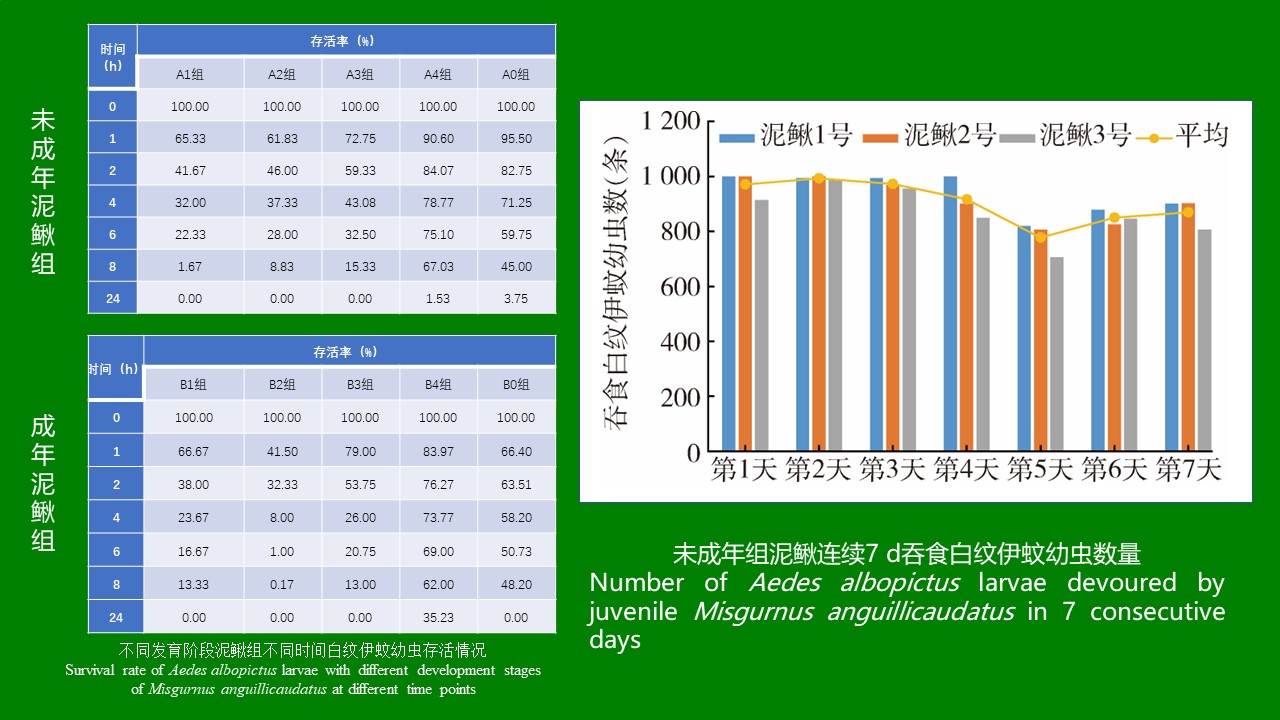
    Objective To investigate the effect of Misgurnus anguillicaudatus endemic to China in controlling the larvae of Aedes albopictus, and to provide new ideas for biological control of mosquitos. Methods M. anguillicaudatus individuals were divided into two juvenile and adult groups. After weighing and fasting for 24 h, they were put into tanks with 100, 200, 400, and 1 000 larvae/basin. Gambusia affinis with the same weight was used as control group (multiple G. affinis fish with the same average weight as the two groups of M. anguillicaudatus were used). The numbers of larvae and pupa were counted at 1, 2, 4, 6, 8, and 24 h to compare the ability to devour the larvae of Ae. albopictus between M. anguillicaudatus at different growth stages and between M. anguillicaudatus and G. affinis. Results Each juvenile M. anguillicaudatus devoured 984 larvae per day on average, while each adult M. anguillicaudatus devoured 647 larvae per day on average. With the same density of Ae. albopictus larvae, juvenile M. anguillicaudatus devoured more larvae than G. affinis of the same weight (F=58.051, P<0.001), whereas adult M. anguillicaudatus devoured fewer larvae than G. affinis of the same weight (F=23.162, P<0.001). A 7-day experiment was conducted with juvenile M. anguillicaudatus for continuous devouring of larvae. The results showed stable daily devouring of larvae in the short and medium term. There were no significant differences in the number of mosquito larvae devoured per day (χ2=2.650, P=0.266), and the number was significantly higher than that of G. affinis of the same weight (χ2=16.758, P=0.001). Conclusion M. anguillicaudatus has good ability to devour Ae. albopictus larvae, and can be used as a new method to control mosquito larvae in small water bodies in residential areas.
  • WEI Ling-ya, KONG Qing-xin, CAO Yang, WANG Hui-min, SHEN Lin-hai, WANG Ying-hong
    Chinese Journal of Vector Biology and Control. 2022, 33(4): 458-461. https://doi.org/10.11853/j.issn.1003.8280.2022.04.002
    Abstract ( ) Download PDF ( )   Knowledge map   Save
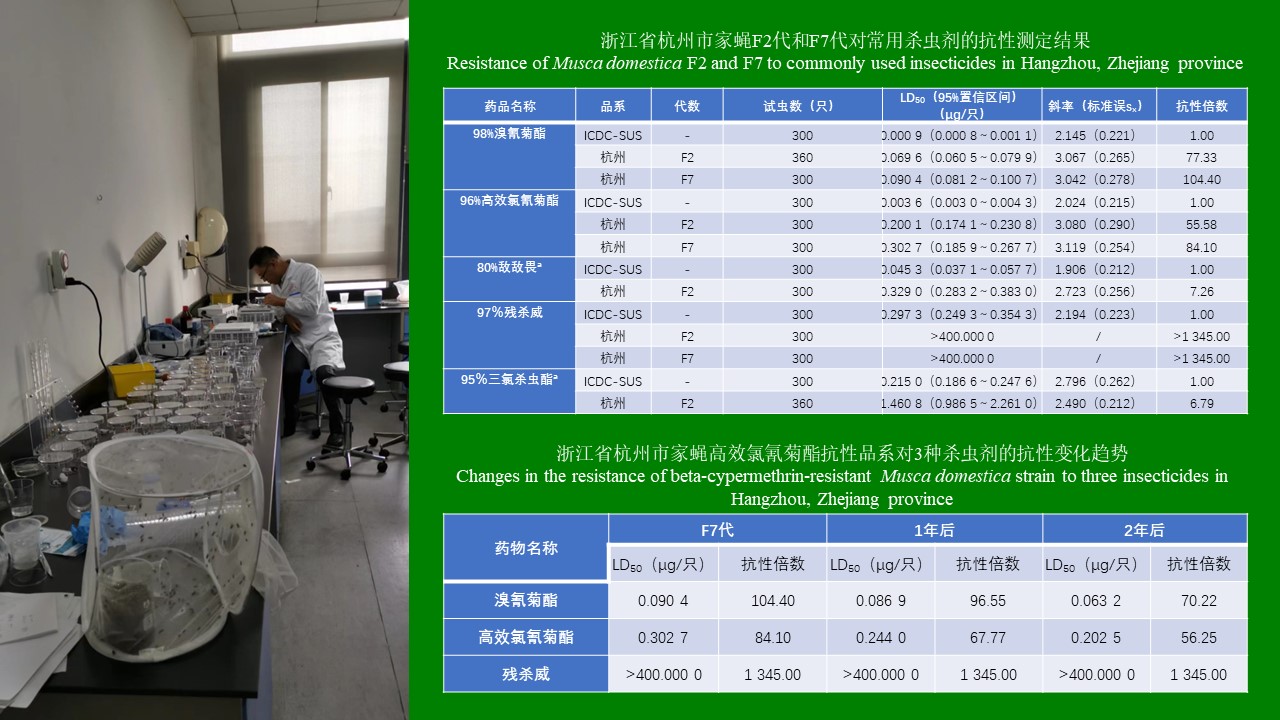
    Objective To screen and purify stable strains highly resistant to beta-cypermethrin using the field samples of Musca domestica in Hangzhou, China. Methods Houseflies were collected from different locations in Hangzhou, and adult houseflies were screened by direct spray with beta-cypermethrin. After screening for 5 generations, the houseflies were maintained for two years. Resistance was determined using topical application method for F2 against deltamethrin, beta-cypermethrin, dichlorvos, triclosan, and propoxur, for F7 against deltamethrin and beta-cypermethrin, and for houseflies maintained for 1 and 2 years against deltamethrin and beta-cypermethrin. The resistance data of sensitive strains were provided by the department of infectious diseases, Zhejiang provincial center for disease control and prevention. Results The F2 generation of M. domestica in Hangzhou developed resistance to the five commonly used insecticides. The LD50of propoxur was >400.000 0 μg/♀, with the highest resistance and R/S >1 345.00. Resistance to other insecticide showed R/S between 6.79 and 77.33. The R/Sfor deltamethrin was 77.33 (LD50=0.069 6μg/♀) and the R/S for beta-cypermethrin was 55.58 (LD50=0.200 1 μg/♀). After being screened with beta-cypermethrin for 5 consecutive generations, compared with F2, F7 showed 29.89% and 51.27% increases in resistance to deltamethrin and beta-cypermethrin, respectively. After 2 years of normal rearing, the beta-cypermethrin-resistant strain showed decreased resistance as compared with the F7 generation; however, compared with sensitive strains, the R/S values for deltamethrin and beta-cypermethrin were 70.22 and 56.25, respectively, and the resistance remained at high levels. The LD50 for propoxur remained above 400.000 0 μg/♀. Conclusion After being screened with beta-cypermethrin for 5 generations and maintaining for two years, relatively stable beta-cypermethrin-resistant strains of M. domestica in Hangzhou were obtained, which lays a foundation for further research on the resistance mechanism of M. domestica.
  • LI Tian-qi, WU Yu-yan, LIU Qin-mei, LUO Ming-yu, WANG Jin-na, GONG Zhen-yu
    Chinese Journal of Vector Biology and Control. 2022, 33(4): 462-465. https://doi.org/10.11853/j.issn.1003.8280.2022.04.003
    Abstract ( ) Download PDF ( )   Knowledge map   Save
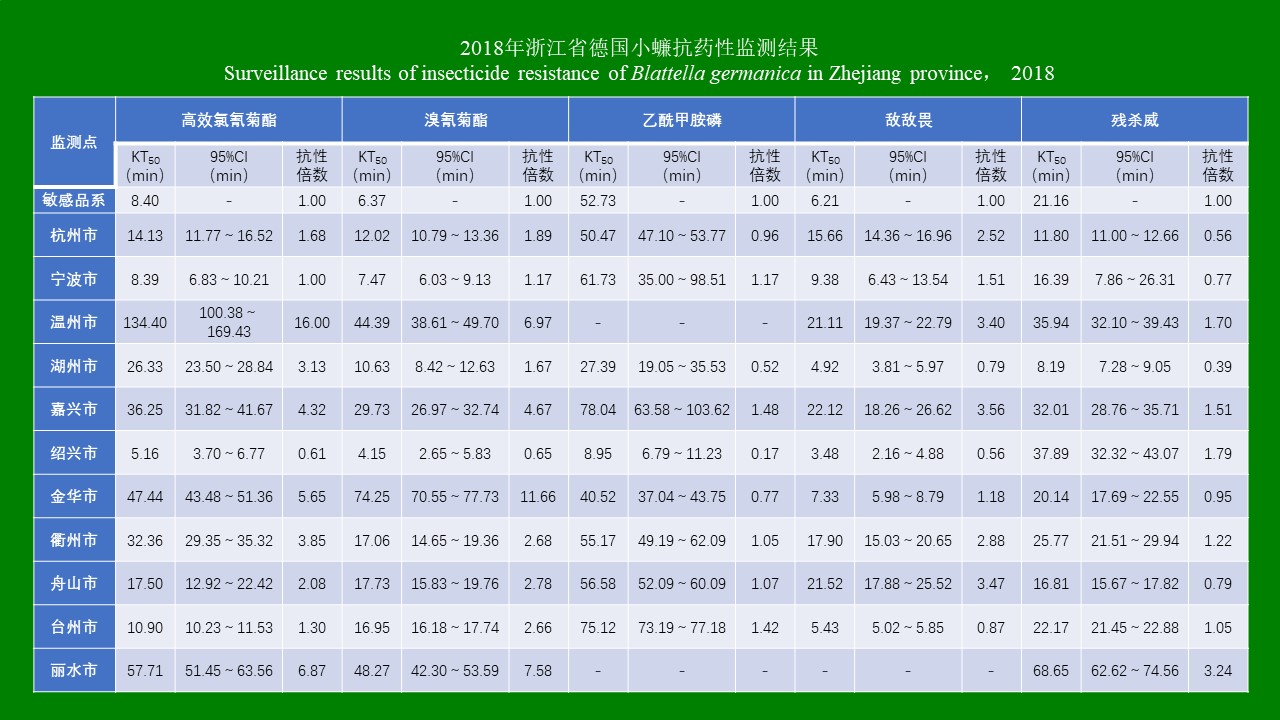
    Objective To investigate the insecticide resistance level of Blattella germanica to commonly used insecticides in Zhejiang province of China, and to provide basic data for rational use of insecticides and scientific control of cockroaches. Methods In 2018, the residual film method was used to determine the resistance level of B. germanica to pyrethroids (beta-cypermethrin and deltamethrin), organophosphate pesticides (acephate and dichlorvos), and carbamates (propoxur) in 11 prefecture-level cities of Zhejiang province. Results The analysis of the resistance level of B. germanica to beta-cypermethrin showed that B. germanica was sensitive in Shaoxing and Ningbo cities and had low resistance in Taizhou, Hangzhou, Zhoushan, Huzhou, Quzhou, and Jiaxing cities, moderate resistance in Jinhua and Lishui cities, and high resistance in Wenzhou city (R/S=16.00). As for deltamethrin, B. germanica was sensitive in Shaoxing and had low resistance in Ningbo, Huzhou, Hangzhou, Taizhou, Quzhou, Zhoushan and Jiaxing, moderate resistance in Wenzhou and Lishui, and high resistance in Jinhua (R/S=11.66). As for acephate, B. germanica was sensitive in Shaoxing, Huzhou, Jinhua, and Hangzhou and had low resistance in the other cities. As for dichlorvos, B. germanica was sensitive in Shaoxing, Huzhou, and Taizhou and had low resistance in Jinhua, Ningbo, Hangzhou, Quzhou, Wenzhou, Zhoushan, and Jiaxing. As for propoxur, B. germanica was sensitive in Huzhou, Hangzhou, Ningbo, Zhoushan, and Jinhua and had low resistance in the other cities. Conclusion Varying level of resistance of B. germanica to the above 5 insecticides are observed in 11 prefecture-level cities of Zhejiang province, with a relatively high level of resistance to pyrethroids and with sensitivity or low resistance to acephate, dichlorvos, and propoxur. Therefore, scientific and rational selection and use of insecticides is recommended to control cockroach and delay the development of resistance.
  • WANG Jin-na, LI Tian-qi, LUO Ming-yu, WU Yu-yan, LIU Qin-mei, GONG Zhen-yu
    Chinese Journal of Vector Biology and Control. 2022, 33(4): 466-470. https://doi.org/10.11853/j.issn.1003.8280.2022.04.004
    Abstract ( ) Download PDF ( )   Knowledge map   Save
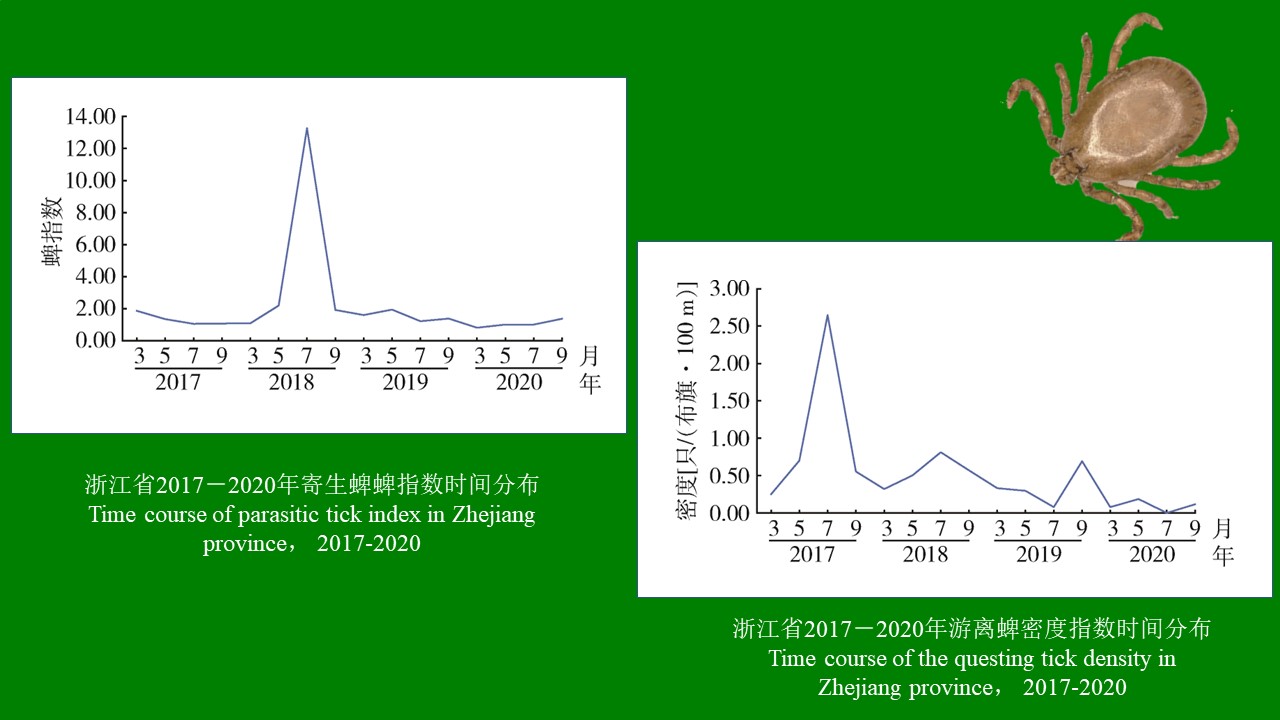
    Objective To analyze the results of tick ecological surveillance in Zhejiang province, China, 2017-2020, to understand species composition, density and seasonal fluctuation of ticks in Zhejiang province, and to provide a basis for the development of control measures. Methods Twelve surveillance sites for ticks were set up in Zhejiang province. Parasitic ticks were monitored by tick inspection on the body surface of animal and the questing ticks were monitored using drag-flag method. Ticks collected from the same sampling sites or animals were numbered uniformly or placed in the same tube and brought back to the laboratory for classification, identification, and counting. The monitoring data were processed and analyzed using Excel 2010 software. Results The parasitic tick index was 2.25 and the questing tick density was 0.48 ticks/flag·100 m in Zhejiang province, 2017-2020. Haemaphysalis longicornis was the dominant parasitic and questing tick. Among host animals, sheep had the highest tick index (4.29), followed by cattle (1.33). The dominant tick species were H. longicornis on sheep, Rhipicephalus microplus on cattle, H. longicornis on rural dogs, and R. sanguineus on urban dogs. The questing tick density was 0.94 ticks/flag·100 m in rural environment and 0.04 ticks/flag·100 m in scenic area. The tick density in Zhejiang province showed no obvious seasonal fluctuation. Conclusion In 2017-2020, the dominant tick species in Zhejiang province was H. longicornis. The dominant parasitic tick species varied across host animals, and sheep had the highest tick infestation rate. The questing tick density in rural environment was significantly higher than that in scenic area. The results can provide a reference for the public health institutions of Zhejiang province to formulate targeted tick and tick control measures.
  • GAO Yi, WANG Chui-zhang, ZHANG Xin-wei
    Chinese Journal of Vector Biology and Control. 2022, 33(4): 471-474. https://doi.org/10.11853/j.issn.1003.8280.2022.04.005
    Abstract ( ) Download PDF ( )   Knowledge map   Save
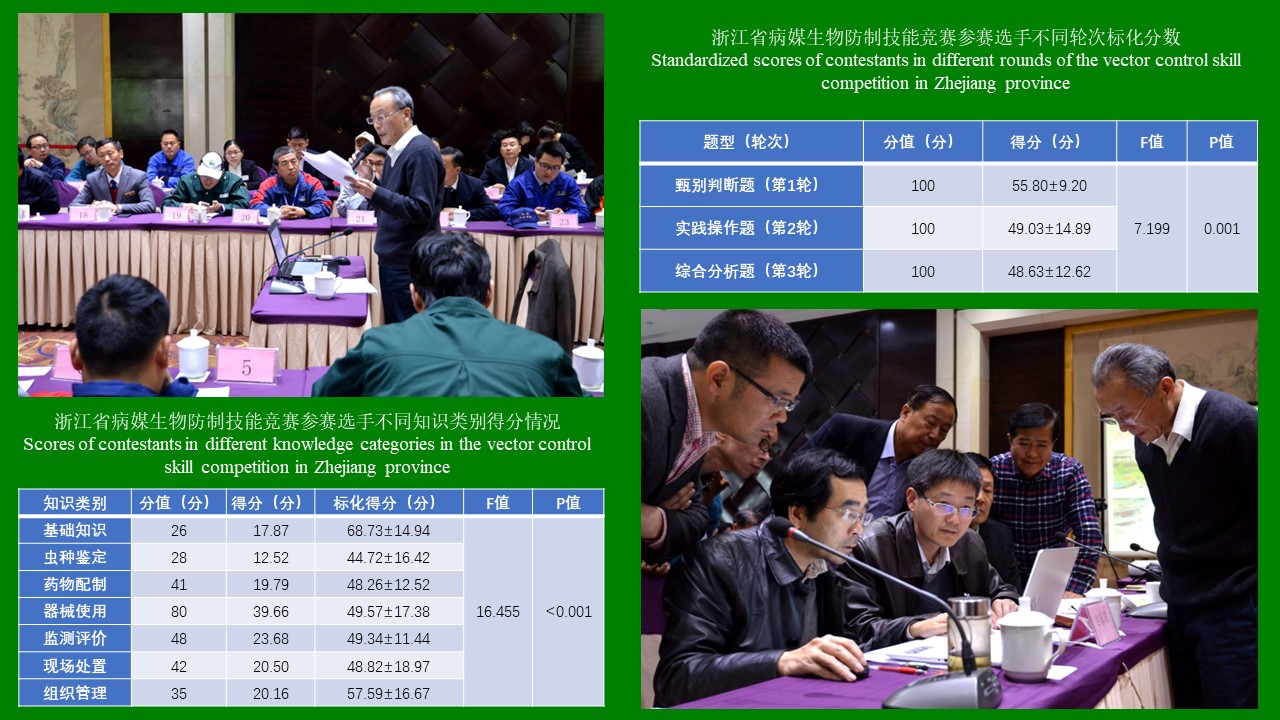
    Objective To master the basic theoretical knowledge, on-site disposal, and comprehensive analysis capabilities of practitioners in vector control services in Zhejiang province, China, and to provide a decision-making basis for improving training strategies. Methods Based on a vector control skills competition organized by the Zhejiang Provincial Association for Elimination of the Four Pests with the participation of 45 technicians from 15 AAA-level members of the association, the contestants' mastery of control knowledge was analyzed, and differences in scores between different question types, regions, vector species, and knowledge categories were analyzed. SPSS 17.0 software was used for difference comparison and variance analysis. Results After standardized by a 100-point conversion, the average score of all contestants was 51.15 points, with the highest score of 72.00 points and the lowest score of 27.83 points. According to three different rounds of discriminatory judgment questions, field practical questions, and comprehensive analysis questions, the scores in the first round showed significant differences from those in the second round (F=9.789, P=0.003) and in the third round (F=11.768, P=0.001). There were no significant differences in scores between different regions (F=0.310, P=0.735). In the analysis of vector species, the scoring rates in the knowledge about rodents, mosquitoes, multiple vectors, and cockroaches decreased in turn. Except for mosquitoes and rats, cockroaches and multiple vectors, there were statistically significant differences between the scores of other vectors (all P<0.5). In the analysis of 7 knowledge categories, the contestants' mastery of basic knowledge and organizational management knowledge was significantly higher than that of 5 other knowledge categories such as insect species identification and on-site disposal (all P<0.5). Conclusion Practitioners in vector control services in Zhejiang province have overall low professional skills, insufficient coverage of knowledge categories, uneven mastery level, and weak spots in some knowledge categories, especially the identification of insect species, on-site disposal, and monitoring and evaluation. It is necessary to do a good job in training the basic knowledge of practitioners in a targeted manner, and to highlight the training of skills such as on-site practical operation and comprehensive analysis.
  • LUO Ming-yu, WANG Jin-na, WU Yu-yan, LIU Qin-mei, LI Tian-qi, GONG Zhen-yu
    Chinese Journal of Vector Biology and Control. 2022, 33(4): 475-479. https://doi.org/10.11853/j.issn.1003.8280.2022.04.006
    Abstract ( ) Download PDF ( )   Knowledge map   Save
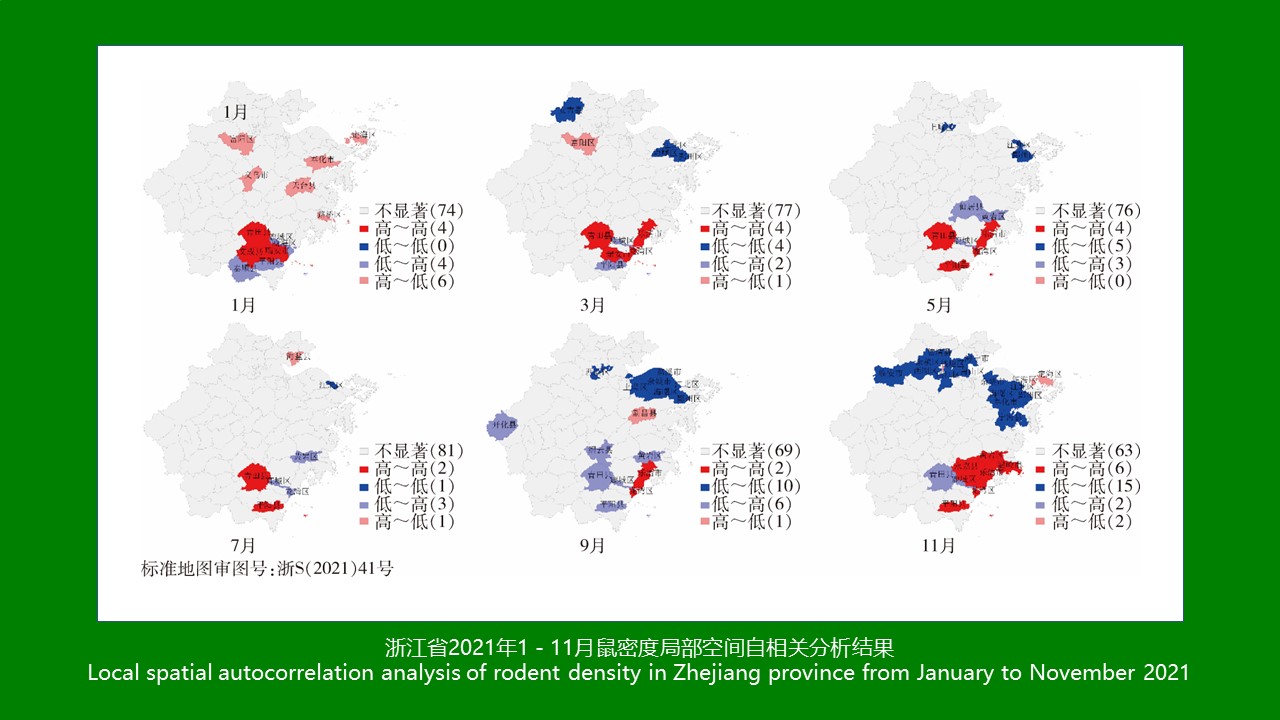
    Objective To investigate temporal and spatial distribution characteristics of rodent density and aggregation areas in Zhejiang province of China in 2021, and to provide a scientific basis for rodent control and deratization and the prevention and treatment of rodent-borne diseases. Methods Statistical description was performed for the data of rodent density monitoring in each county (city/district) from January to November 2021, and the global and local spatial autocorrelation analyses were used to analyze the spatial distribution characteristics of rodent density. Results From January to November in 2021, a total of 380 208 effective rat traps were placed and 1 851 rodents were captured, with a mean rodent density of 0.49 per 100 traps (snap, cages or plates). Rodent density showed an increasing trend from January to November (Z=3.913, P<0.001). Rodent density showed positive spatial autocorrelation within Zhejiang province, and there was a significant difference in Moran's I index among January, May, September, and November (all Z >1.96, P<0.05). The local spatial autocorrelation analysis showed that high-high aggregation areas were distributed in southern Zhejiang from January to November, which was consistent with the spatial distribution of the areas with high rodent density, and low-low aggregation areas were mainly distributed in northern and eastern Zhejiang. Conclusion The overall rodent density is at a relatively low level in Zhejiang province, but with a gradually increasing trend during the whole year of 2021. Rodent density in Zhejiang province shows geographical autocorrelation, and counties with a higher rodent density are mainly distributed in southern Zhejiang, and therefore, the risk of rodent-borne diseases should be concerned seriously in southern Zhejiang.
  • WANG Min, YANG Hui, YU Zhang-you, ZHONG Jian-yue, FANG Chun-fu, WU Shi-quan, GONG Zhen-yu
    Chinese Journal of Vector Biology and Control. 2022, 33(4): 480-484. https://doi.org/10.11853/j.issn.1003.8280.2022.04.007
    Abstract ( ) Download PDF ( )   Knowledge map   Save
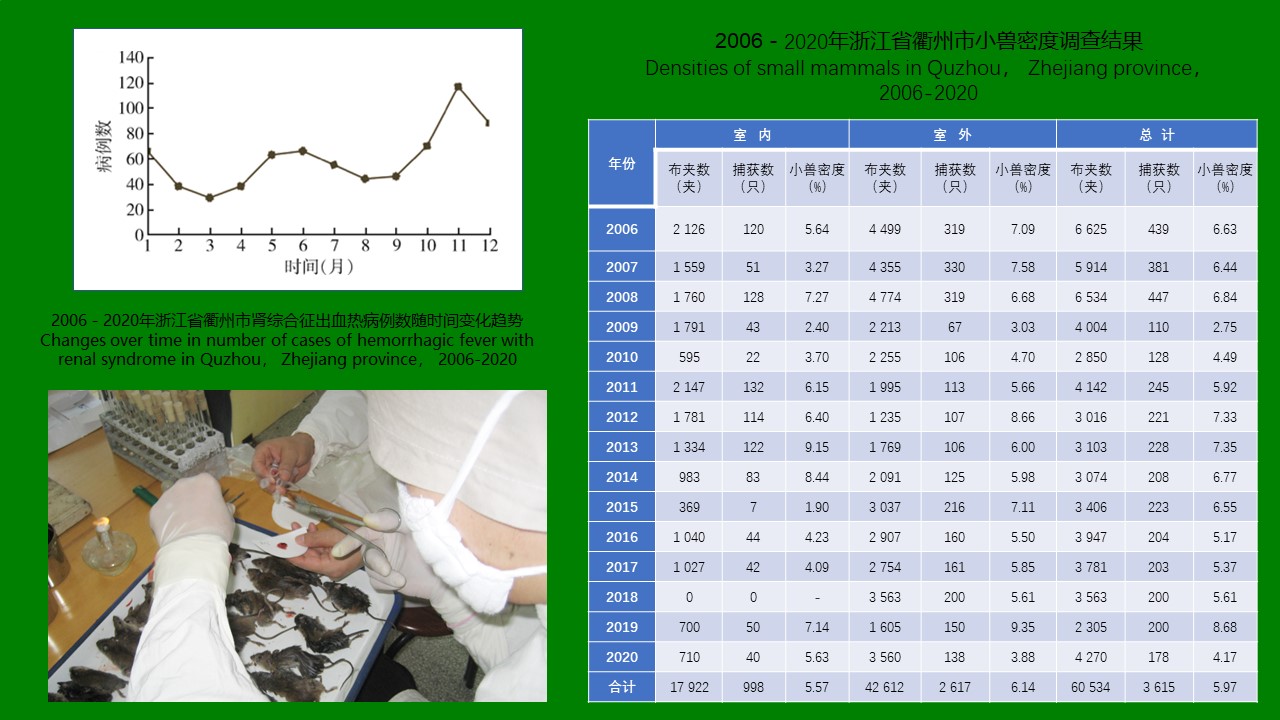
    Objective To investigate the epidemiological characteristics of hemorrhagic fever with renal syndrome (HFRS) as well as the species composition and Hantavirus infection status of host animals in Quzhou, Zhejiang province, China, and to provide a reference for formulating scientific prevention and control measures. Methods The incidence data of HFRS in Quzhou from 2006 to 2020 were analyzed. The night snap-trapping method was used to capture small mammals to calculate the capture rate and analyze the species composition of small mammals. The lungs and blood of the small mammals were collected to detect Hantavirus antigen and antibody for information on hantavirus infection among the small mammals. The Chi-squared test was used to compare the rates. Results A total of 720 cases of HFRS were reported in Quzhou from 2006 to 2020, with an average annual incidence rate of 2.13/100 000. Of those, there were two deaths, with a fatality rate of 0.28%. The cases were mainly aged between 30 and 69 years, accounting for 92.08% of total cases. Farmers accounted for 80.14% of total cases. The male-to-female ratio was 2.35:1. The incidence of HFRS peaked during May to July and October to next January. The average annual incidence was highest in Kaihua county, which was 8.81/100 000. The indoor and outdoor capture rates of small mammals were 5.57% and 6.14%, respectively, showing a statistical difference (χ2=7.374, P=0.007). Rattus norvegicus was the dominant species indoors, accounting for 41.18%, and Apodemus agrarius was the dominant species outdoors, accounting for 62.97%. There was a statistical difference in the species composition of small mammals indoors and outdoors (χ2=1 343.773, P<0.001). The antigen-positive rate of Hantavirus averaged 2.42%, and differed statistically between different species of small mammals (χ2=17.260, P=0.004). The serum antibody-positive rate for Hantavirus averaged 6.71%, and differed statistically between different species of small mammals (χ2=32.923,P<0.001). Conclusion There is a high density of small mammals and a high infection rate of Hantavirus among these small mammals in Quzhou. Cases of HFRS are mainly middle-aged and elderly, with high proportions of males and farmers. Its incidence shows double peaks in summer and winter. It is still necessary to strengthen comprehensive control measures combining HFRS monitoring, rodent control, health education, and vaccination for prevention and control of HFRS.
  • ZHANG Qian-tong, SUN Ji-min, LING Feng, SHI Xu-guang, REN Jiang-ping, GUO Song, ZHANG Rong, LIU Ying
    Chinese Journal of Vector Biology and Control. 2022, 33(4): 485-488. https://doi.org/10.11853/j.issn.1003.8280.2022.04.008
    Abstract ( ) Download PDF ( )   Knowledge map   Save
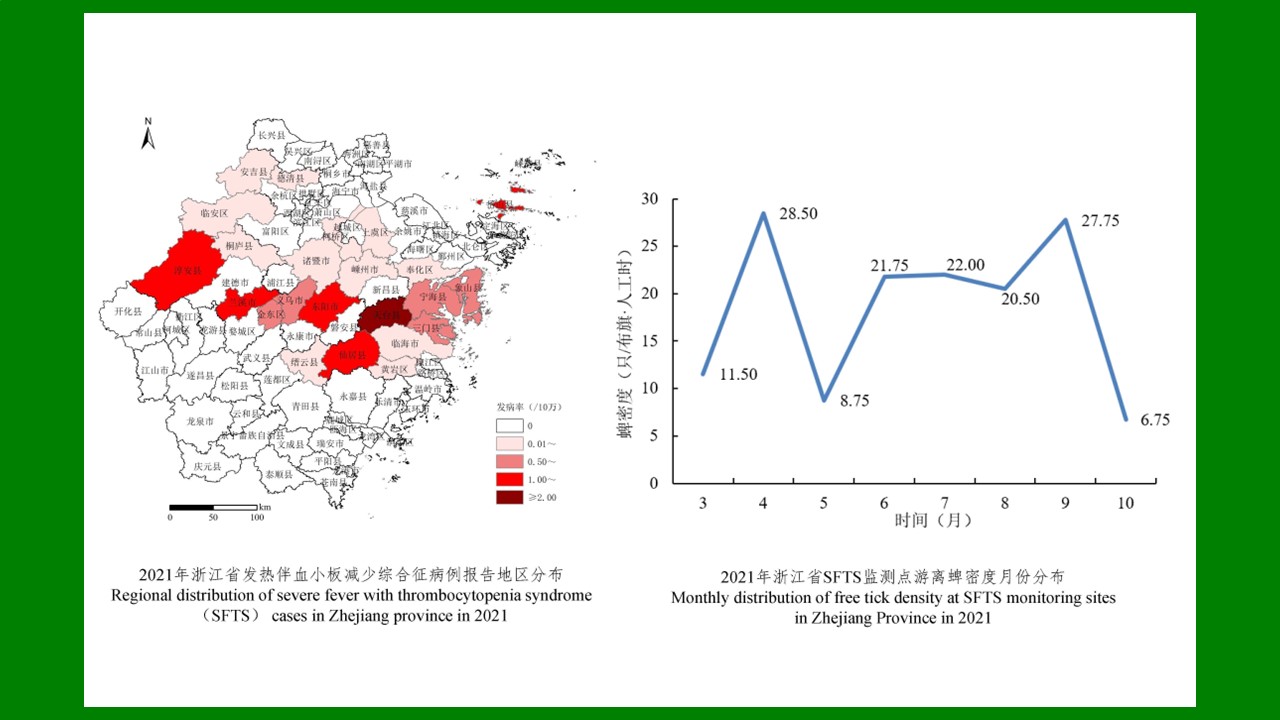
    Objective To understand the epidemiological characteristics of severe fever with thrombocytopenia syndrome (SFTS) and tick vectors in Zhejiang province of China in 2021. Methods The data on SFTS cases in Zhejiang province in 2021 were obtained from China Information System for Disease Control and Prevention, and descriptive epidemiological methods were used to describe the temporal, population, and regional distributions of SFTS cases. Tick surveillance sites were set up in 8 counties (cities/districts) of Zhejiang province from March to October 2021, and the drag-flag method was used to collect free-living ticks and the body surface examination method for on-host ticks. Excel 2013 and SPSS17.0 softwares were used to perform a statistical analysis of the data on SFTS cases and vector surveillance data, and ArcGIS 10.0 software was used to draw the map of SFTS incidence rate in districts and counties. Results A total of 85 SFTS cases were reported in Zhejiang province in 2021, with a reported incidence rate of 0.15/100 000 and a fatality rate of 8.24% (7/85). The cases were distributed in 23 counties (cities/districts) in 8 prefectures, and the top 3 prefectures in terms of the number of cases were Jinhua (27 cases), Taizhou (27 cases), and Ningbo (11 cases) cities. The cases mainly occurred in April to October, with a peak in May to July. There was no significant difference in incidence rate between the male patients and the female patients (χ2=1.347, P=0.246); as for the age of onset of SFTS, most cases were middle-aged and elderly patients, with a median age of 67 years; most of the patients were farmers, accounting for 80.00% (68/85). The patients with a clear history of tick bites within 2 weeks before SFTS onset accounted for 17.65% (15/85). A total of 590 free-living ticks were collected in the unpopulated rural area, and the mean density of free-living ticks was 18.44 ticks/flag·h. A total of 688 animals were monitored and 2 406 on-host ticks were collected, with a mean density of 3.50 ticks per host. Conclusion Sporadic cases of SFTS are mainly observed in Zhejiang province, with obvious regional and seasonal characteristics. The middle-aged and elderly people and farmers were the main affected populations. Free-living ticks and on-host ticks show a relatively high density as the vector for SFTS.
  • GUO Song, LING Feng, LIU Ying, REN Jiang-ping, ZHANG Rong, SHI Xu-guang, HOU Juan, SUN Ji-min
    Chinese Journal of Vector Biology and Control. 2022, 33(4): 489-492. https://doi.org/10.11853/j.issn.1003.8280.2022.04.009
    Abstract ( ) Download PDF ( )   Knowledge map   Save
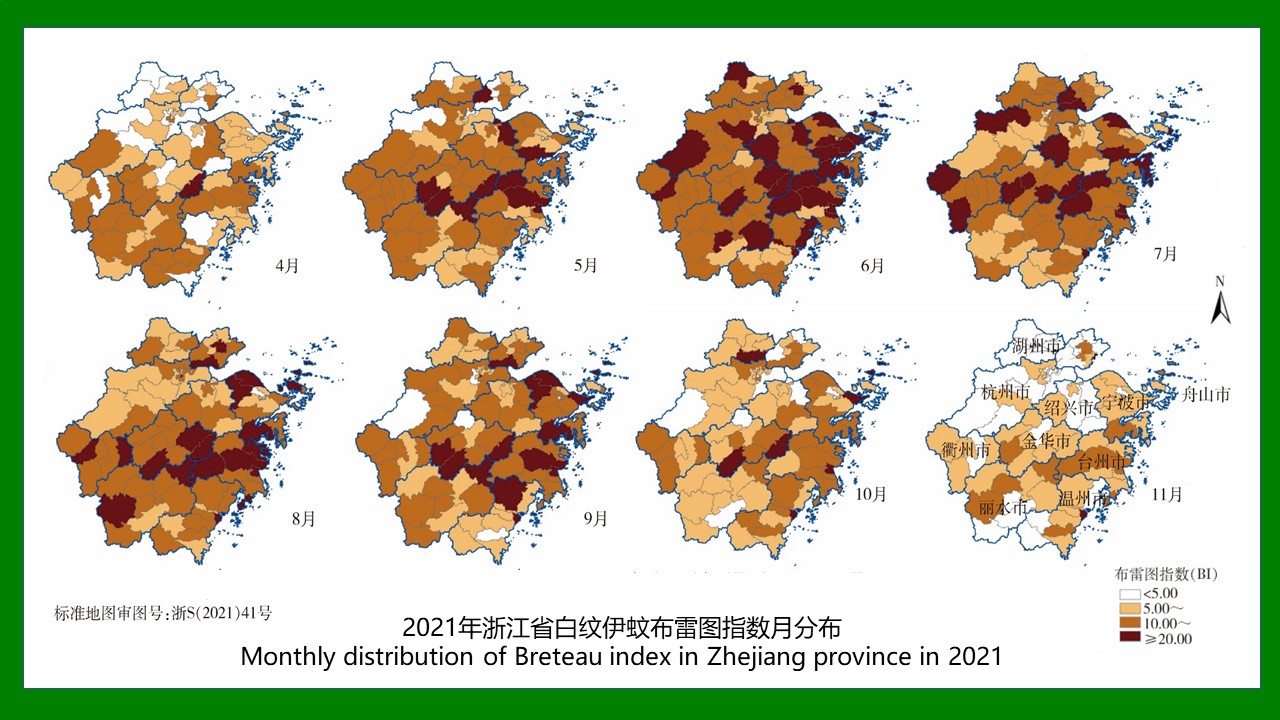
    Objective To investigate the density and seasonal fluctuation of Aedes larvae as a dengue vector in Zhejiang province, China, 2021, and to provide basic data for the prevention and control of mosquitoes and related infectious diseases in urban and rural areas. Methods The surveillance data of Aedes larvae in Zhejiang from April to November in 2021 were analyzed. The rank sum test (Kruskal-Wallis test) for multiple samples was used to analyze the differences in annual average Breteau index (BI) in different regions. The Chi-square test was used to analyze the differences in the positive rate of different types of stagnant water containers. ArcMap 10.8 software was used to draw the monthly distribution of BI in Zhejiang province. Results In 2021, the peak density of Ae. albopictus in Zhejiang was observed from May to October. The annual average BI and container index (CI) were 14.16 and 21.34%, respectively. Both BI and CI showed bimodal curves, with the highest values in June. Positive results were mainly found from idle water containers (bowls, bottles, jars, tanks), storage tanks and basins, and bonsai and aquatic plants. Conclusion Ae. albopictus is widely distributed in the urban and rural residential areas of Zhejiang, with high density in summer and autumn. It is recommended that all cities carry out in-depth environmental improvement and public health education to eliminate mosquito breeding sites and reduce the risk of outbreaks of mosquito-borne diseases such as dengue fever.
  • ZHU Xin-hong, WU Yin-ping, LI Tian-qi, WANG Jin-na, HOU Juan
    Chinese Journal of Vector Biology and Control. 2022, 33(4): 493-498. https://doi.org/10.11853/j.issn.1003.8280.2022.04.010
    Abstract ( ) Download PDF ( )   Knowledge map   Save
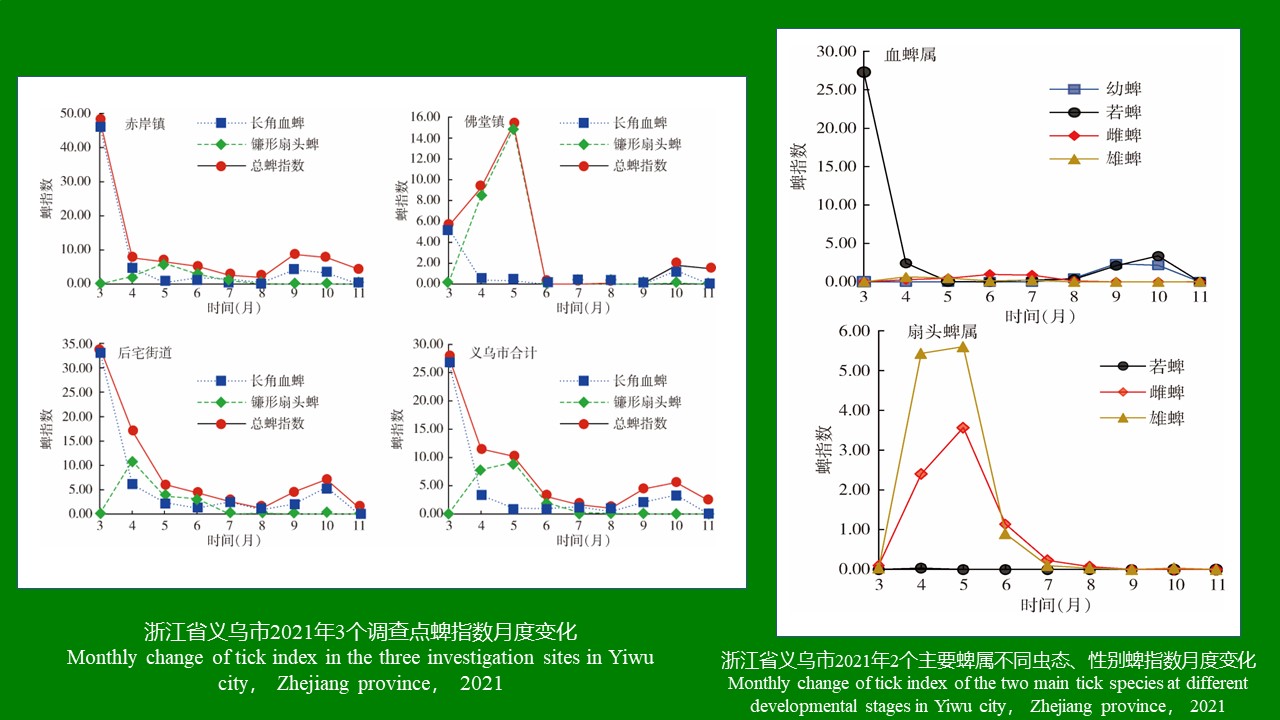
    Objective To investigate the distribution and monthly changing trend of tick species in the main habitats in Yiwu city of Zhejiang province in China, and to provide a scientific basis for formulating targeted tick control regimens. Methods Three representative habitats were selected, i.e., sparse-forest and dense-grass woodland, farm fields, and dense-forest and sparse-grass woodland, and an investigation of on-host ticks was performed for the goats stocked in these habitats in the middle ten days of each month from March to November in 2021. The t test and variance analysis were used to compare the count data, the Chi-square test was used to compare the rate and the composition ratio, and the Pearson correlation analysis was used to analyze the relationship between the tick index and the positive rate of host animals. Results A total of 269 goats were investigated, among which 198 were infected with ticks, with an infection rate of 73.61%, and 2 033 ticks were obtained, with a tick index of 7.56. Species identification showed 6 species of ticks in 3 genera and 1 family, among which Haemaphysalis longicornis accounted for 58.48%, followed by Rhipicephalus haemaphysaloides accounting for 28.73%. There were significant differences in the distribution of tick genera among the three different habitats (χ2=582.371, P<0.001), with Haemaphysalis as the main genus in the two types of woodland environment and Rhipicephalus as the main genus in farm fields. The larval, nymphal, and adult ticks were all collected, among which nymphal ticks accounted for the highest proportion. The density of H. longicornis showed a peak in March and a second peak in October, while the density of R. haemaphysaloides only showed a peak in May. Conclusion There is a relatively high density of ticks in Yiwu, with different tick species in different habitats, and thus control work should be carried out according to tick's biological characteristics.
  • Experimental Study
  • FAN Su-yun, SHI Xiang-hui, CHEN Jian, CHEN Jian-zhong, GU Jin-bao
    Chinese Journal of Vector Biology and Control. 2022, 33(4): 499-502. https://doi.org/10.11853/j.issn.1003.8280.2022.04.011
    Abstract ( ) Download PDF ( )   Knowledge map   Save
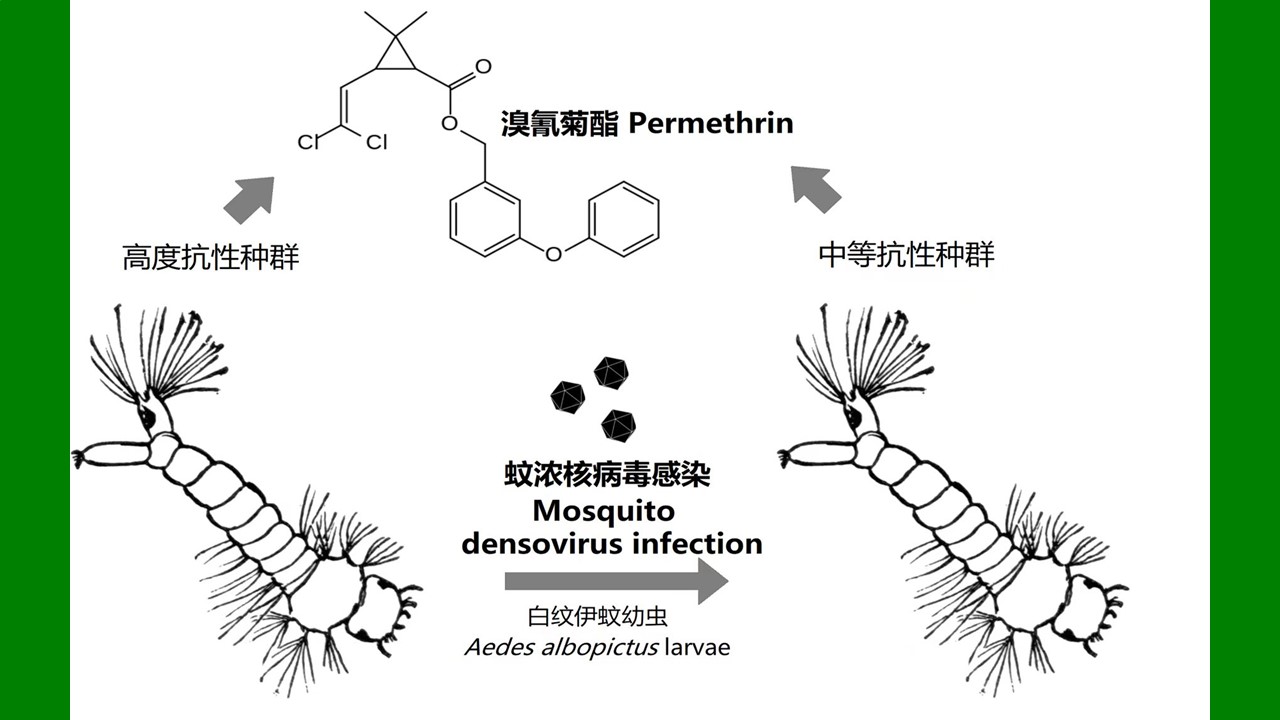
    Objective To study the effect of sublethal dose of Aedes albopictus densovirus-7 (AalDV-7) infection on the deltamethrin resistance of Ae. albopictus. Methods The laboratory resistant strain of Ae. albopictus was established by applying deltamethrin insecticide to the laboratory susceptible strain. Ae. albopictus larvae were infected with a sublethal dose of AalDV-7 (108 geq/ml). The half-lethal concentration (LC50) for larvae and the biological mortality of adult mosquitos in the infected and uninfected groups were determined using the resistance bioassay, and were compared by the t test and χ2 test using the SPSS 19.0 software, respectively. Results The laboratory strain of Ae. albopictus resistant to deltamethrin was successfully established after 15 consecutive generations of screening. After sublethal dose of AalDV-7 infection, the LC50 for larvae decreased from 0.030 0 mg/L to 0.018 5 mg/L (moderate resistance) (t=12.521, P<0.001), and the biological mortality of adult mosquitoes increased from 65.7% to 78.1% (χ2=5.079, P=0.015), with the resistance level unchanged. Conclusion Sublethal dose of AalDV-7 infection reduces the deltamethrin resistance of Ae. albopictus larvae and acts as a synergist to some extent, providing a new theoretical basis and strategy for solving mosquito resistance.
  • KONG Yi-chen, TIAN Jia-wei, YANG Zi, YIN Hong-min, HUANG Hao, CHEN Li, ZHANG Yun-zhi
    Chinese Journal of Vector Biology and Control. 2022, 33(4): 503-509. https://doi.org/10.11853/j.issn.1003.8280.2022.04.012
    Abstract ( ) Download PDF ( )   Knowledge map   Save
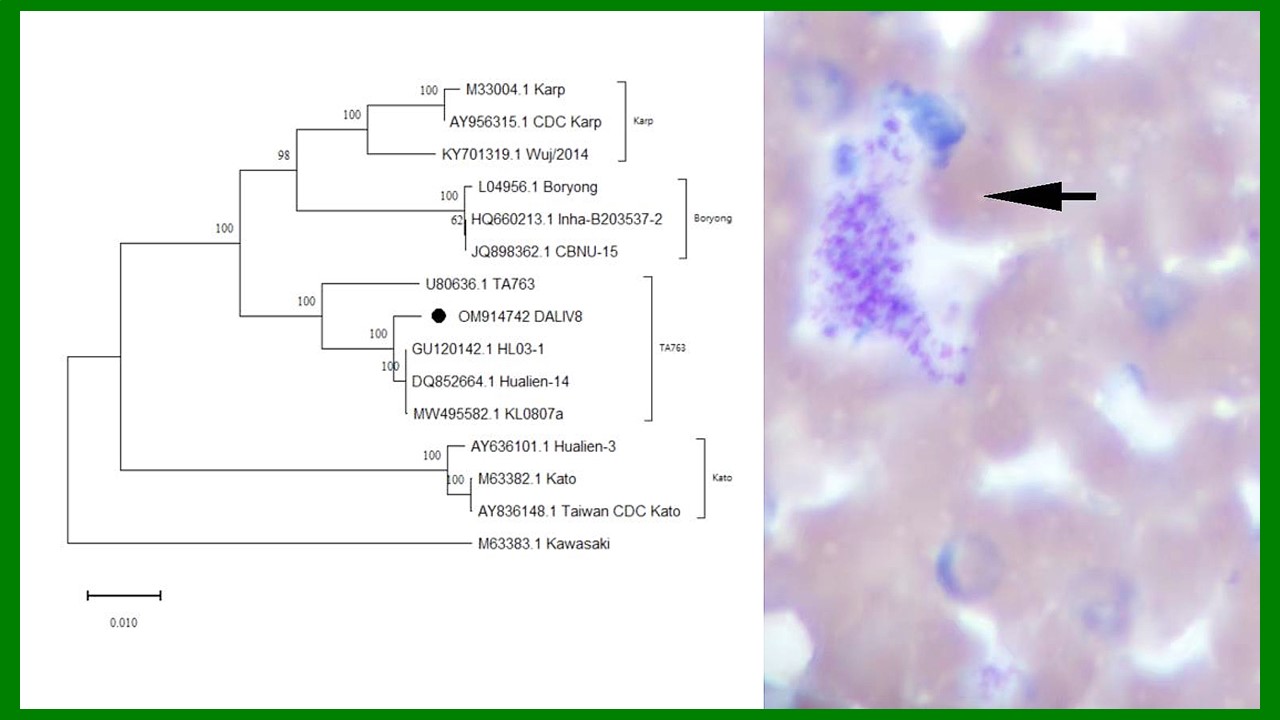
    Objective To isolate and identify Orientia tsutsugamushi from rodents in Dali city, Yunnan province, China, and to amplify and analyze its full-length 56 kDa type-specific antigen (TSA) gene. Methods From August 2020 to August 2021, rodents were collected from four townships in Dali city using the night trapping method. Nested polymerase chain reaction (PCR) was used to amplify the conserved sequence of O. tsutsugamushi. PCR-positive samples were taken to intraperitoneally inoculate mice to isolate O. tsutsugamushi. The isolated O. tsutsugamushi was identified by observation with Giemsa staining and indirect immunoassay. Primers were designed to amplify the full-length 56 kDa TSA gene of O. tsutsugamushi. Bioinformatics software (MEGA Ⅹ, DNAStar 7.1, and SeqMan) was used for homology and phylogenetic analyses. Results A total of 76 rodents were captured, including 6 species under 5 genera. PCR detected the sequence of O. tsutsugamushi from the liver and spleen tissue homogenate of a Rattus tanezumi, with a positive rate of 2.38% (1/42). One strain named DALIV8 was isolated and identified as O. tsutsugamushi. The full-length 56 kDa TSA gene of this isolate was 1 566 bp, encoding 521 amino acids (GenBank:OM914742). The 56 kDa TSA gene of the DALIV8 strain showed similarities of 82.30%-98.85% at the nucleotide level and 74.04%-98.28% at the amino acid level to the Kawasaki, Boryong, Karp, Kato, and TA763 genotypes. So, the isolate was identified as the TA763 genotype. Conclusion The DALIV8 strain isolated from R. tanezumi in Dali city is firstly recorded as the TA763 genotype of O. tsutsugamushi in Yunnan province, China.
  • LIU Han-zhao, YU Si-yu, FENG Lei, LIU Jun, LIN Chen, HAO Li-peng
    Chinese Journal of Vector Biology and Control. 2022, 33(4): 510-515. https://doi.org/10.11853/j.issn.1003.8280.2022.04.013
    Abstract ( ) Download PDF ( )   Knowledge map   Save
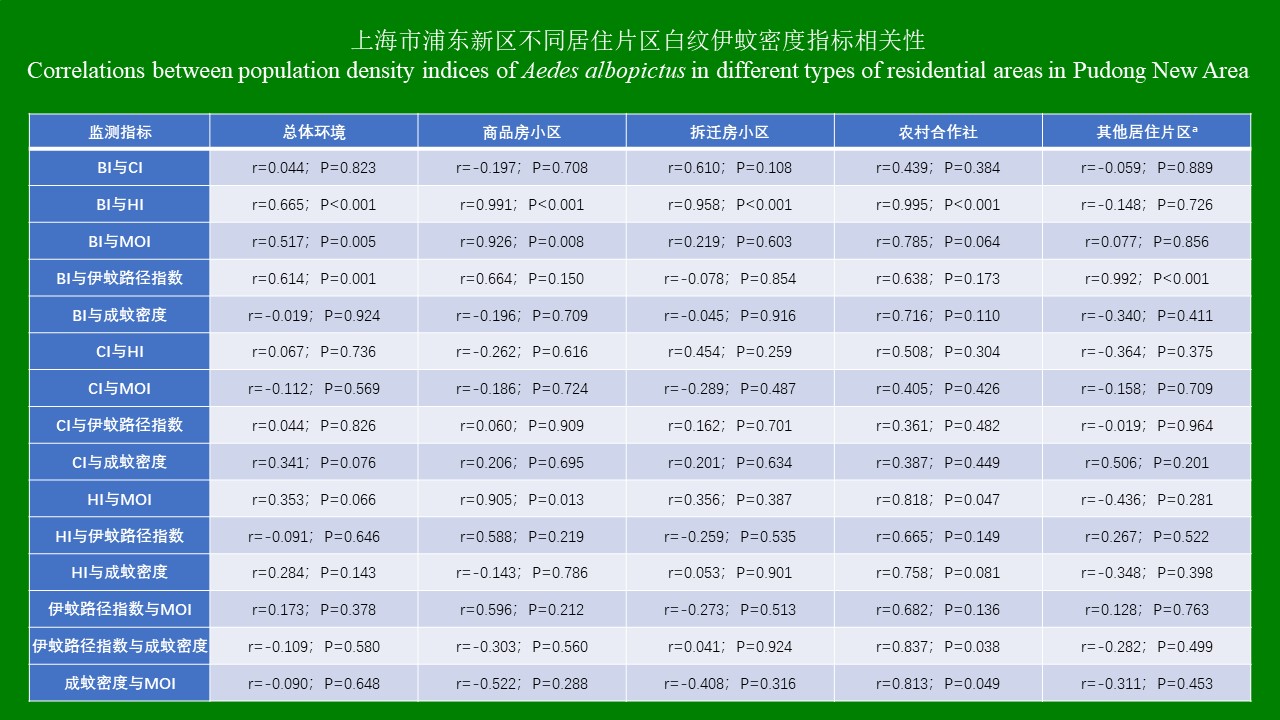
    Objective To study the correlations between population density indices of Aedes albopictus monitored in different types of residential areas, and to provide a basis for the rational use of Aedes mosquito monitoring indices. Methods The density monitoring indices of Ae. albopictus were investigated in 28 residential areas of four types in Pudong New Area, Shanghai, China, and their correlations were analyzed by Pearson correlation analysis. Results From May to October, the highest container index (CI) of 28 residential areas was found in enterprise dormitories (35.78%), the highest housing index (HI) was in rural cooperatives (6.74%), the highest mosquito ovitrap index (MOI) was in commercial housing communities (11.11), the highest Breteau index (BI) was in construction sites (21.14), the highest Aedes route index (RI) was in construction sites (8.33 places/km), and the highest adult mosquito density (AMD) was recorded in a construction site[0.97/(lamp·night)]. There were positive correlations between BI and HI, between BI and MOI, and between BI and RI in the general environment (r=0.665, 0.517, and 0.614, all P<0.05). In commercial housing residential areas, a positive correlation was found between BI and HI, between BI and MOI, and between HI and MOI (r=0.991, 0.926, and 0.905, all P<0.05). In resettlement residential areas, BI and HI were positively correlated (r=0.958, P=0.001). In rural cooperatives, a positive correlation was found between BI and HI, between HI and MOI, between RI and AMD, and between AMD and MOI (r=0.995, 0.818, 0.837, and 0.813, all P<0.05). In other residential areas (urban villages, enterprise dormitories, construction sites, and school dormitories), BI was positively correlated with RI (r=0.992, P=0.001).Conclusion Duplicated monitoring with both BI and HI should be avoided in residential areas such as commercial housing residential areas, resettlement residential areas, and rural cooperatives. Duplicated mosquito monitoring with both BI and RI should be avoided in urban villages, enterprise dormitories, construction sites, school dormitories, and other residential areas with large external environment. Duplicated monitoring with both BI and MOI should be avoided in commercial housing residential areas. Both BI and MOI should be selected to complement each other for monitoring Aedes mosquito the resettlement residential areas, rural cooperatives, and other residential types.
  • TAO Jun-jie, LYU Xi-hong, ZHANG Chi, YAO Juan-yi, LIU-Yao, ZHOU Yi-bin
    Chinese Journal of Vector Biology and Control. 2022, 33(4): 516-520. https://doi.org/10.11853/j.issn.1003.8280.2022.04.014
    Abstract ( ) Download PDF ( )   Knowledge map   Save
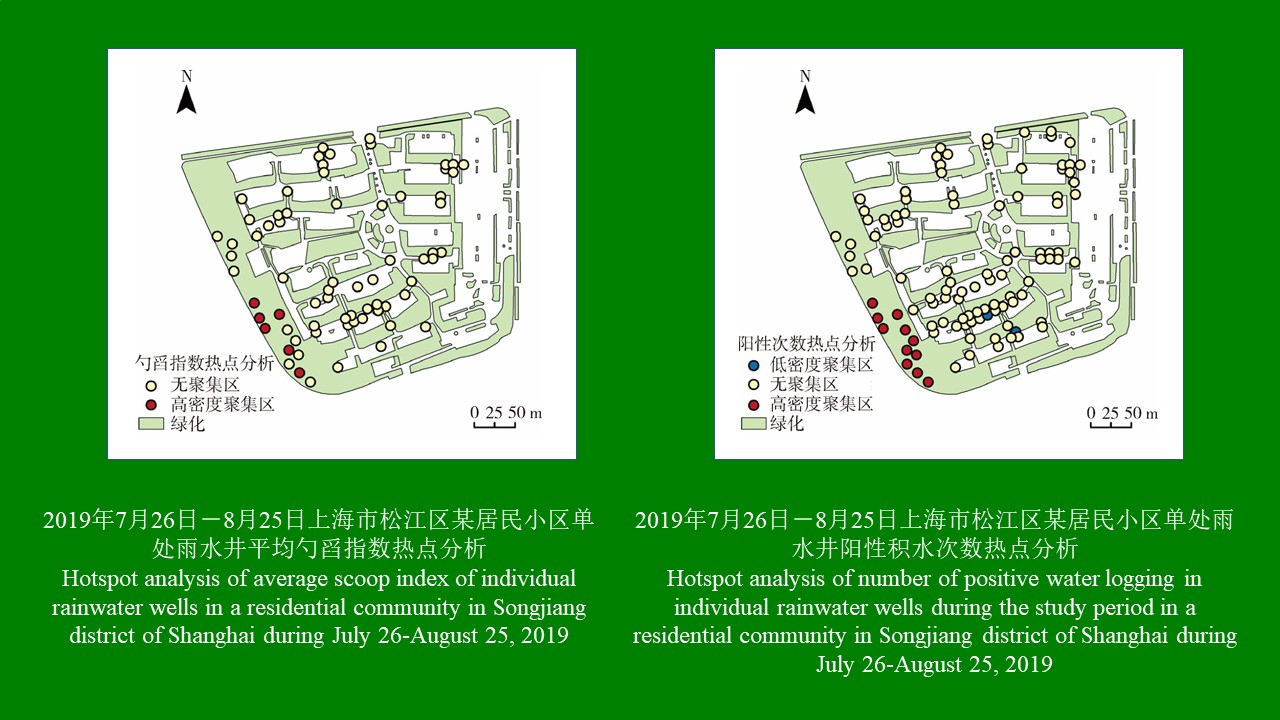
    Objective To investigate the effect of rainfall on the accumulation of water in rainwater wells and the breeding of Aedes albopictus, and to provide a basis for dengue fever prevention and control. Methods From July 26 to August 25, 2019, 105 rainwater wells in a residential community of Songjiang district, Shanghai, China were selected to investigate the water accumulation and mosquito breeding on days 1, 3, 6, 9, 12, 15, 20, and 30. ArcGIS 10.8 was used for spatial analysis and Stata 14.0 was used for negative binomial regression analysis. Results Of the 105 rainwater wells, 22 were flooded 8 times, 77 were flooded 1-7 times, and 6 were not flooded. Of the 99 flooded wells investigated using the juvenile mosquito spoon trap method, 69 were positive for Ae. albopictus breeding (one or more records of Aedes breeding), and 36 were negative for Ae. albopictus breeding. Negative binomial regression analysis showed that mosquito breeding was statistically associated with turbidity of water in rainwater wells (Z=-4.423, P<0.001) and total rainfall during the first seven days (Z=-7.874, P<0.001) and from day 8 to day 14 (Z=6.166, P<0.001) before the survey day of the eight surveys. There was no statistical correlation between mosquito breeding and the number of water logging (Z=1.342, P=0.179). Conclusion The rainwater wells were generally flooded in Shanghai, and mosquito breeding in rainwater wells was related to turbidity of water, total rainfall from day 1 to day 7 prior to the survey, and total rainfall from day 8 to day 14 prior to the survey. Investigation and control of juvenile mosquito density in rainwater wells should be carried out to reduce the risk of dengue fever transmission.
  • GUO Yu, WU Qing-rui, LIU Mei-de, LIU Yuan, YAN Shuai, LI Ruo-xi
    Chinese Journal of Vector Biology and Control. 2022, 33(4): 521-524. https://doi.org/10.11853/j.issn.1003.8280.2022.04.015
    Abstract ( ) Download PDF ( )   Knowledge map   Save
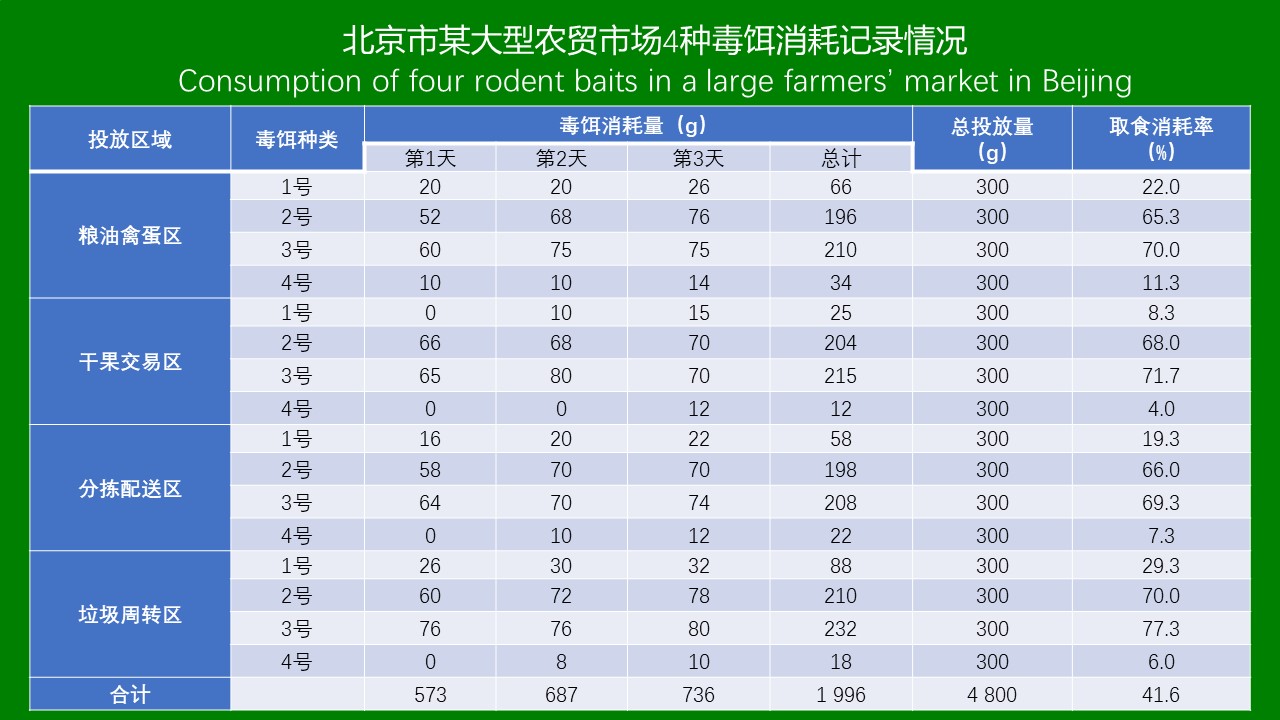
    Objective To evaluate the palatability and effectiveness of several rodent baits for deratization in a large farmers' market in Beijing, China. Methods The rodent density and population distribution in this market were monitored and investigated before and after deratization by using the rodent trace method and night trapping method in May 2021. An on-site investigation of the palatability of several rodent bromadiolone baits was conducted. A rank sum test was used to analyze the difference in palatability to select the best bait for deratization. Results Before deratization, the mean positive infestation rate and the capture rate of rodents were 32.6% and 25.3% in the farmers' market. The places with relatively high rodent densities included the garbage collection area, dry fruit area, and grain, oil, and eggs area, where the capture rates were 69.0%, 43.0%, and 30.0%, respectively. The intakes of No. 2 and No. 3 baits (combination formulations of 0.5% bromadiolone mother liquor with different proportions of corn kernels, raw peanuts, sweet potatoes and apples) were significantly higher than those of No 1 (combination formulations of 0.5% brodiolone mother liquor with corn kernels, raw peanuts) and No 4 (commodity, 0.005% bromadiolone bait pellets) (Z1,2=-4.159, Z1,3=-4.158, Z2,4=-4.168,Z3,4=-4.167, all P<0.001). There was a statistical difference in the intakes of No. 1 and No. 4 baits (Z=-3.367, P=0.001). No statistical difference was observed in the intakes of No. 2 and No. 3 baits (Z=-0.110, P=0.272). No. 3 bait showed statistically better consumption rates than No. 2 bait in various areas. After deratization with No. 3 bait, the rodent capture rate in the farmers' market was statistically decreased to 0.9%. Conclusion The density of rodents in the farmers' market was high before deratization, and was statistically reduced after eliminating rodent habitats and deratization with the selected No.3 rodent baits. Improving the palatability of baits can enhance rodent control.
  • Vector Surveillance
  • WANG Xue-jun, SUN Qin-tong, QI Zong-bao, LIU Wen-jie, LI Xian-wei, LIU Feng
    Chinese Journal of Vector Biology and Control. 2022, 33(4): 525-529. https://doi.org/10.11853/j.issn.1003.8280.2022.04.016
    Abstract ( ) Download PDF ( )   Knowledge map   Save
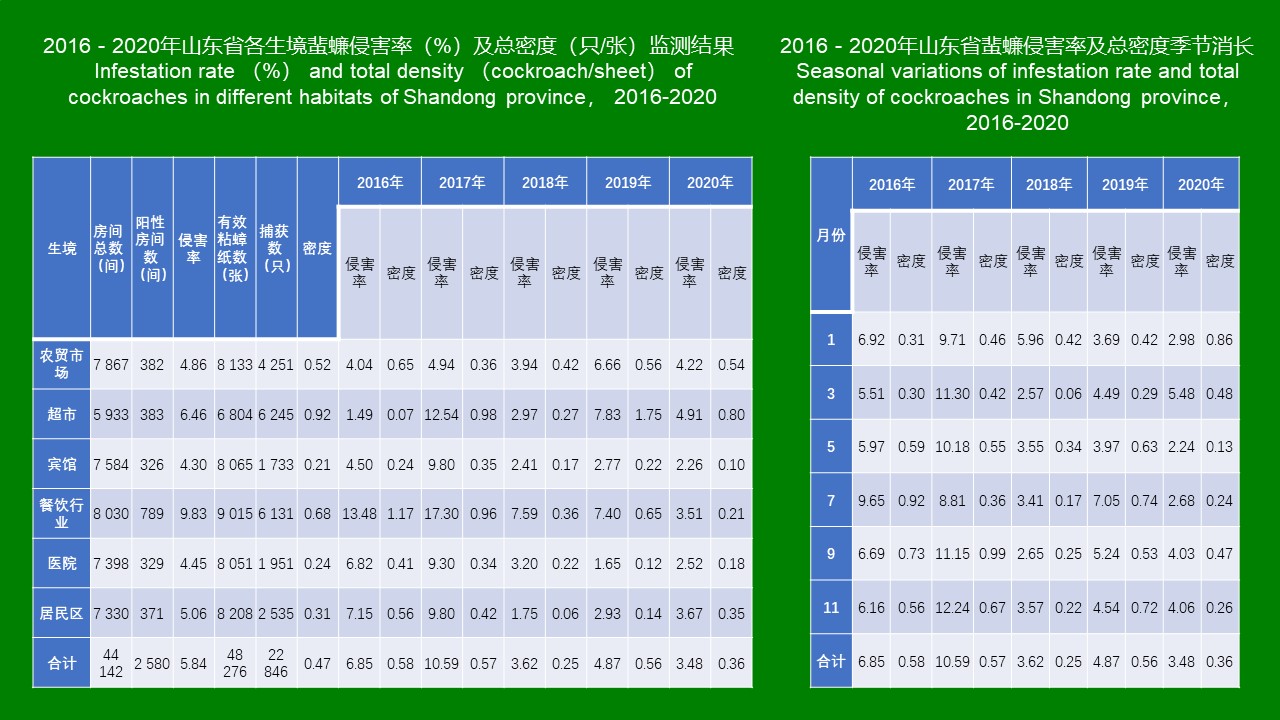
    Objective To investigate the species composition, density, infestation rate, and seasonal variation of cockroaches in Shandong province, China, 2016-2020, to analyze the surveillance data of cockroaches captured by the sticky trap method, and to provide a scientific basis for cockroach prevention and control. Methods The surveillance data of cockroaches in Shandong province, 2016-2020 were collected and analyzed using Excel 2010 and R 3.6.0 softwares, and the distribution of monitoring sites was mapped using ArcGIS 10.3 software. Results From 2016 to 2020, a total of 22 846 cockroaches were captured in Shandong province, with Blattella germanica (99.49%) as the dominant species. The average total density was 0.47 cockroaches/sheet and the average infestation rate was 5.84%. The Cochran-Armitage trend test showed that the infestation rate of cockroaches statistically decreased over the years (Z=-13.011, P<0.001), but a small peak appeared in 2017. The infestation rate was highest in catering industry (9.83%), and the density was highest in supermarkets (0.92 cockroaches/sheet). Hotels showed the lowest cockroach infestation rate (4.30%) and density (0.21 cockroaches/sheet). The total cockroach density was high in July to September and peaked in July. The peak periods of infestation rate and density varied in different habitats. Conclusion B. germanica was the dominant species of cockroaches in Shandong province. Supermarkets and catering facilities are the prioritized places for cockroach control. Based on the seasonal variations of cockroach infestation rate and density in different habitats, integrated control measures should be taken before the peak periods to reduce cockroach density and its related diseases.
  • DING Xu, REN Da-fei, ZHANG Ai-hua, GAO Qian-rong, LONG Zheng-jin, ZHENG Jia-min
    Chinese Journal of Vector Biology and Control. 2022, 33(4): 530-535. https://doi.org/10.11853/j.issn.1003.8280.2022.04.017
    Abstract ( ) Download PDF ( )   Knowledge map   Save
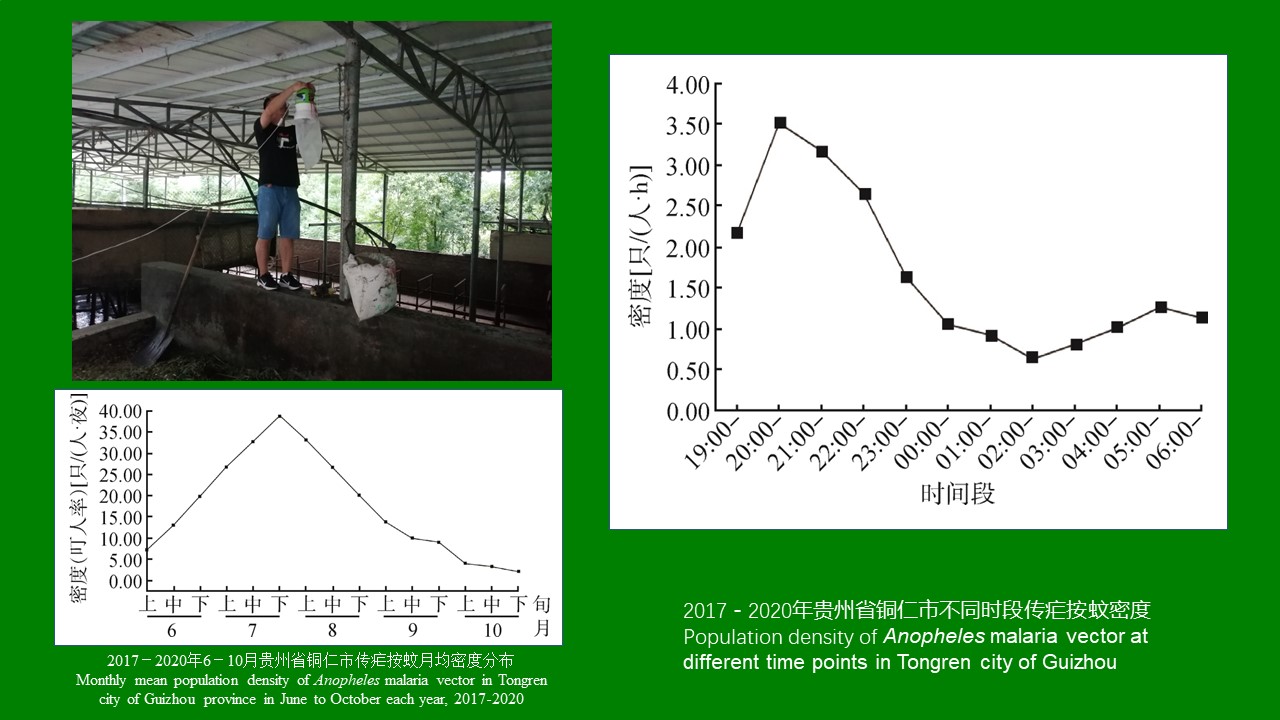
    Objective To investigate the species, population density, habitat, seasonal distribution, and activity rhythm of malaria vectors Anopheles after malaria elimination in Tongren city of Guizhou province in China and the impact of ecological environment change on the distribution of malaria vectors, and to provide a reference for coping with the secondary transmission of imported malaria. Methods In 2017-2020, the all-night light trapping method and the outdoor overnight double-net human-baited trapping methods were used to monitor malaria vectors in Tongren city. The captured Anopheles mosquitoes were classified, identified, and counted based on morphology, and the species composition of malaria vectors and differences in the population density of Anopheles indoors and outdoors and in different habitats were analyzed. Results In 2017-2020, a total of 4 611 malaria vectors were captured by the light trapping method at the surveillance sites of Tongren city, all of which were An. sinensis, and the mean light trapping density was 19.05 mosquitoes/(light·night). Among the investigation sites, livestock sheds had the highest number of 3 322 An. sinensis (72.05%), followed by 978 mosquitoes outdoors (21.21%) and 311 mosquitoes in human rooms (6.74%). Peak activity of An. sinensis in Tongren was observed in July to August, and the activity pattern presented single-peak distribution, with a peak density of 38.84 mosquitoes/(person·night) in late July. The overall nighttime density of An. sinensis first increased and then decreased, with a peak for the activity of An. sinensis at 20:00-21:00 and with the low-frequency period at 02:00-03:00. Conclusion An. sinensis is the only malaria vector monitored in human habitats and surreundings in Tongren city. The population density of An. sinensis is relatively high in livestock sheds, and the outdoor density pattern of An. sinensis is consistent with outdoor activity rhythm of residents at night. There is a potential risk of secondary local transmission caused by imported malaria. Therefore, it is necessary to carry out long-term, continuous, and standardized surveillance of malaria vectors.
  • Vector-borne Disease
  • MENG Jiao, CHEN Xing-xing, ZHANG Xia, YU Fu-xun, WU Jia-hong, YANG Guang-hong, JIANG Jia-fu, SUN Yi, CAO Wu-chun, ZHAN Lin
    Chinese Journal of Vector Biology and Control. 2022, 33(4): 536-542. https://doi.org/10.11853/j.issn.1003.8280.2022.04.018
    Abstract ( ) Download PDF ( )   Knowledge map   Save
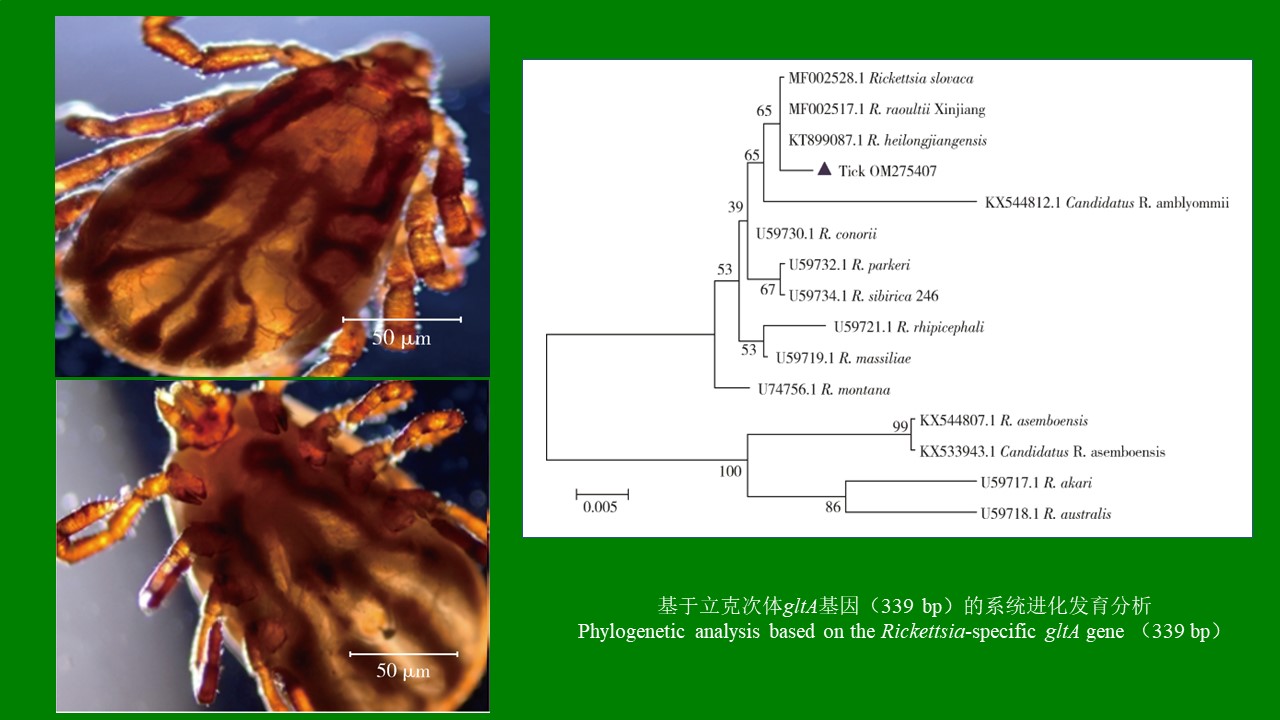
    Objective To investigate the Rickettsia infection and species of pet-dog-parasitizing ticks by the molecular biological technique. Methods Tick samples were collected from the body surfaces of pet dogs in pet centers in Wudang district, Guiyang, China from March to May 2021. Tick species identification and the polymerase chain reaction detection and genotyping of citrate synthase gene (gltA) and outer membrane protein A gene (ompA) of tick-borne Rickettsia were performed. Results A total of 133 ticks were collected from the body surfaces of pet dogs. The morphological characteristics and tick 16S rRNA amplification confirmed that all collected ticks were Rhipicephalus sanguineus. Rickettsia-specific ompA gene amplification, sequencing, and phylogenetic analysis confirmed that R. sanguineus were infected with R. raoultii. Conclusion R. sanguineus is found to parasitize the body surfaces of pet dogs and be infected with R. raoultii, indicating a risk of Rickettsia infecting humans through pet-dog-parasitizing ticks. It is recommended for the local health authorities to make further assessment of the pathogenicity and public health risks of pet-dog-parasitized tick-borne Rickettsia.
  • YANG Rui, XIE Yan-qiong, LIU Li, YAO Xuan
    Chinese Journal of Vector Biology and Control. 2022, 33(4): 543-547. https://doi.org/10.11853/j.issn.1003.8280.2022.04.019
    Abstract ( ) Download PDF ( )   Knowledge map   Save
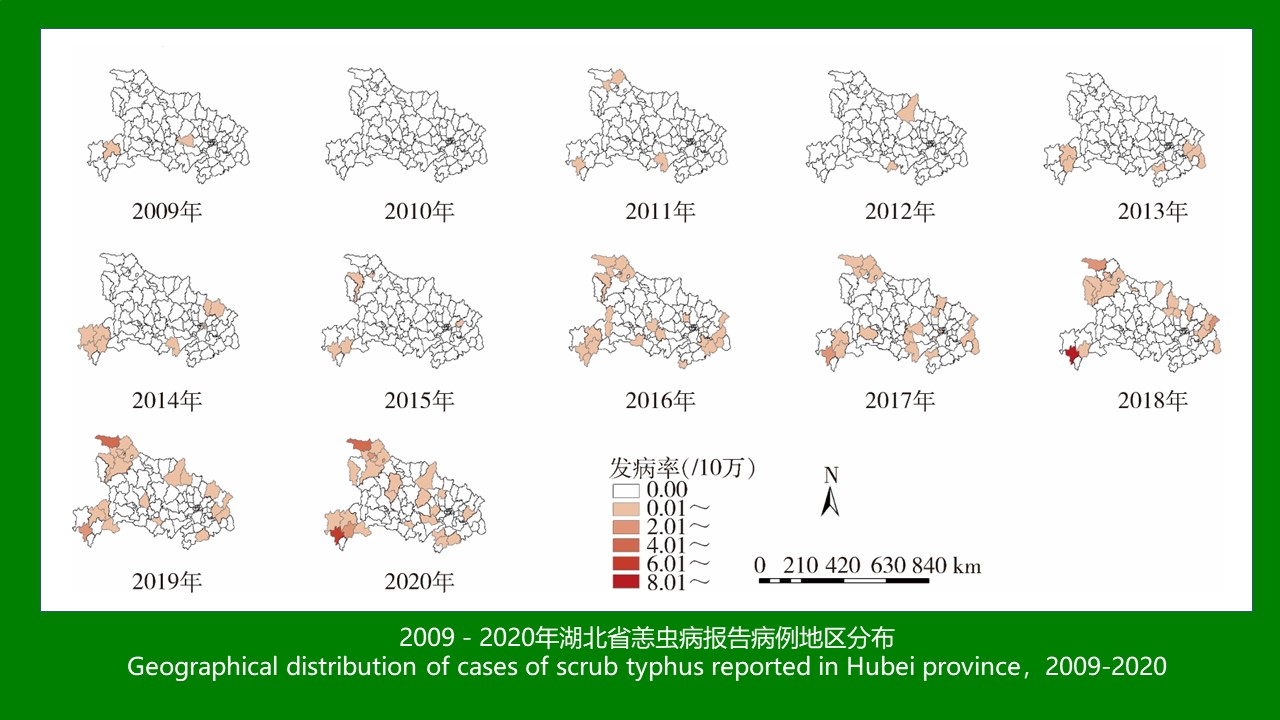
    Objective To analyze the epidemiological characteristics of scrub typhus cases reported in Hubei province, China from 2009 to 2020, and provide scientific evidence for formulating control strategies and measures. Methods The data about cases of scrub typhus reported in Hubei province from 2009 to 2020 were collected from the National Disease Reporting Information System in China. Descriptive epidemiological methods were used to analyze the incidence, mortality, and regional, temporal, and population distributions of scrub typhus with the use of Excel 2010, SPSS 19.0, and ArcGIS 10.3 softwares. Results A total of 364 cases of scrub typhus were reported in Hubei province from 2009 to 2020, including 220 clinically diagnosed cases, 18 confirmed cases, and 126 suspected cases, in which one death was reported. The annual incidence rate was at a mean level of 0.01/100 000 during 2009 to 2015, and has been on the rise since 2016, reaching 0.17/100 000 in 2020 (42.50 times the incidence of 0.004/100 000 in 2009). Over the past 12 years, scrub typhus occurred in a total of 61 counties/districts in 15 cities/prefectures across the province, and 85.71% patients were distributed in Enshi Tujia and Miao Autonomous Prefecture, Shiyan, and Huanggang. It occurred mainly in April to October. Most cases (70.88%) were aged between 40 and 69 years. The male-to-female ratio was 1:1.78. Farmers accounted for 69.50% of the total reported cases. The median time from onset to diagnosis was 5 days. Clinically diagnosed cases accounted for the highest proportion (60.44%). The cases were mainly reported from county-level general hospitals. Conclusion Scrub typhus has been on the rise since 2016 in Hubei province, with rapid spreading in the affected areas, characterized by obvious regionality and seasonality and farmers being the most involved population. High-incidence areas should strengthen rodent and mite surveillance, primary-level laboratories' scrub typhus diagnostic capacity, and key populations' health education, so as to reduce the infection risk and control the epidemic of scrub typhus.
  • LIU Tian, YAO Meng-lei, HOU Qing-bo, HUANG Ji-gui, WU Yang, YANG Rui, CHEN Hong-ying
    Chinese Journal of Vector Biology and Control. 2022, 33(4): 548-554. https://doi.org/10.11853/j.issn.1003.8280.2022.04.020
    Abstract ( ) Download PDF ( )   Knowledge map   Save
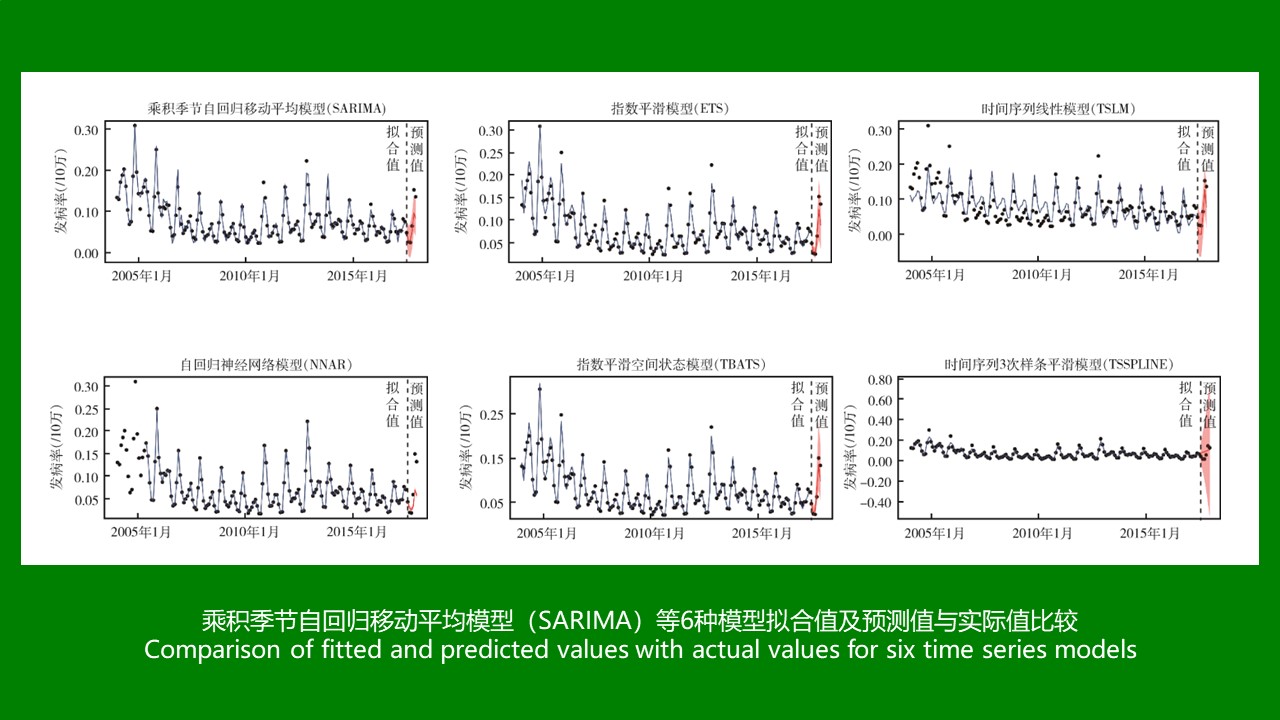
    Objective To compare the performance of seven time series models in fitting and predicting the incidence of hemorrhagic fever with renal syndrome (HFRS) in China, and to provide a reference for optimizing early warning methods for HFRS. Methods The national incidence data of HFRS from January 2004 to June 2017 were used as training data, and the data from July to December 2017 as test data. The training data were used to build the seasonal autoregressive integrated moving average (SARIMA) model, exponential smoothing (ETS) model, time series linear model (TSLM), autoregressive neural network (NNAR) model, TBATS model, time series cubic spline smoothing (TSSPLINE) model, and time series generalized regression neural network (TSGRNN) model. Then these models were used to forecast the national incidence of HFRS from July to December 2017. The model fitting and prediction effect were evaluated by comparing the fitted data with the training data and the predicted data with the test data. The evaluation indicators included mean absolute percentage error (MAPE) and root mean squared error (RMSE). Results SARIMA (0,1,4)(2,1,1)[12] was the optimal SARIMA model, and NNAR (16,1,8)[12] was the optimal NNAR model. The MAPE and RMSE of fitting by SARIMA, ETS, TSLM, NNAR, TBATS, TSSPLINE, and TSGRNN were 11.46% and 0.01, 10.25% and 0.01, 33.91% and 0.03, 1.84% and 0.00, 8.92% and 0.01, 10.82% and 0.01, and 22.29% and 0.02, respectively. The MAPE and RMSE of forecasting by these models were 20.51% and 0.03, 17.22% and 0.02, 55.27% and 0.03, 36.27% and 0.05, 18.03% and 0.02, 118.82% and 0.05, and 38.71% and 0.04, respectively. Conclusion The TBATS model is the optimal model for forecasting and early warning, which is suitable for optimizing the early warning model for HFRS.
  • Early Warning and Forecast
  • SUN Yuan-chao, LIU Kai, YAO Xiao-yan, CUN De-jiao, TIAN Na, ZHANG Yi, WANG Fei, LI Lan-hua
    Chinese Journal of Vector Biology and Control. 2022, 33(4): 555-561. https://doi.org/10.11853/j.issn.1003.8280.2022.04.021
    Abstract ( ) Download PDF ( )   Knowledge map   Save
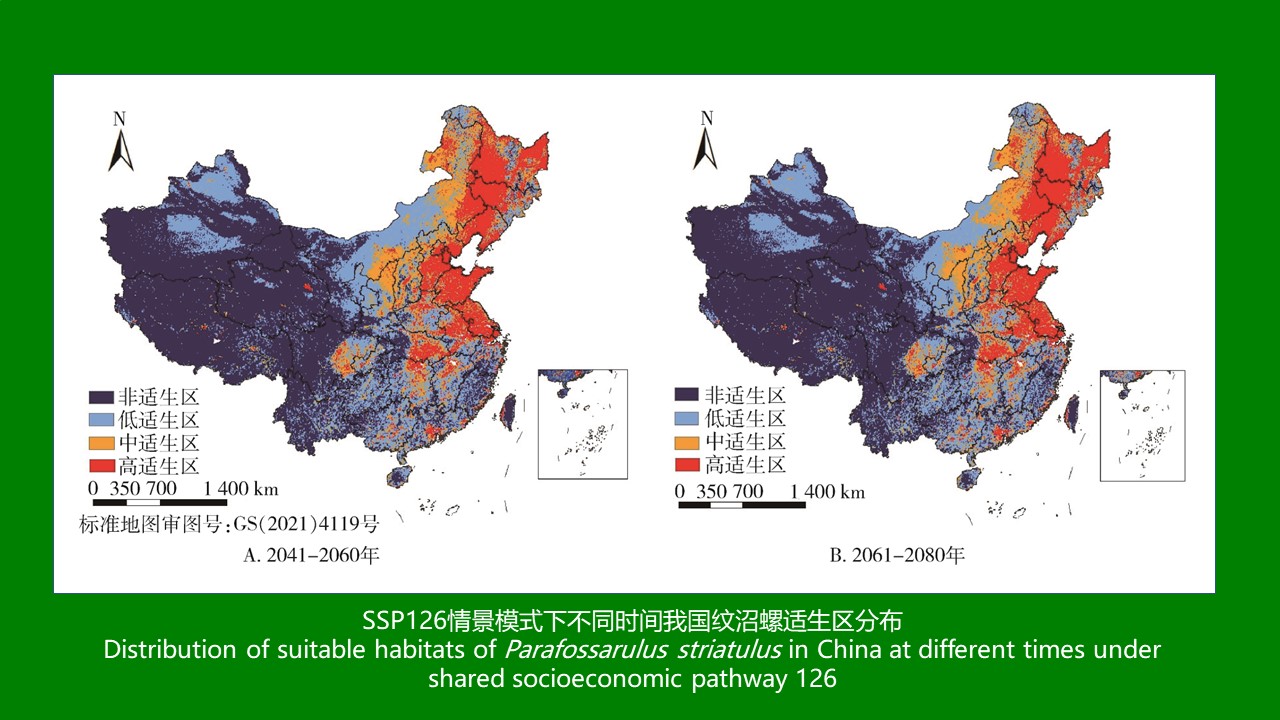
    Objective To analyze the distribution of suitable habitats of Parafossarulus striatulus in China based on environmental factors, and to project the impact of climate changes on the distribution of P. striatulus in China. Methods The Chinese and English literatures related to the geographical distribution of P. striatulus in China were searched in the Chinese National Knowledge Infrastructure, VIP, Wanfang Data Knowledge Service Platform, PubMed, and Web of Science, from which, the coordinate information of distribution points of P. striatulus was extracted, and the information of other distribution points of P. striatulus was obtained from the Global Biodiversity Information Facility (GBIF) combined with the required climate and geographical factors. The MaxEnt was used to project the suitable habitats of P. striatulus in China in the future under different scenarios. Results Among the environmental factors affecting the distribution of suitable habitats of P. striatulus in China, the top four contributing factors were elevation (contribution rate, 51.42%), water index (contribution rate, 11.23%), precipitation in the wettest month (contribution rate, 8.71%), and precipitation in the driest month (contribution rate, 6.82%). Under the current climate conditions, P. striatulus was mainly distributed in the southeastern and northern regions of China, and the areas of highly and moderately suitable habitats were 373 700 km2 and 616 000 km2, respectively. Under the shared socioeconomic pathway (SSP) 126 scenario, the highly suitable habitats increased by 910 000 km2 and 938 200 km2 during 2041 to 2060 and 2061 to 2080, respectively. Under the SSP245 scenario, the highly suitable habitats increased by 412 200 km2 and 494 400 km2 during 2041 to 2060 and 2061 to 2080, respectively. Conclusion Elevation is the most important environmental factor affecting the distribution of P. striatulus. Under the SSP126 and SSP245 scenarios, future climate changes are expected to expand the suitable habitats of P. striatulus to varying degrees.
  • XU Xiang, ZHOU Hong-ning, LUO Chun-hai, DONG Xue-shu
    Chinese Journal of Vector Biology and Control. 2022, 33(4): 562-567. https://doi.org/10.11853/j.issn.1003.8280.2022.04.022
    Abstract ( ) Download PDF ( )   Knowledge map   Save
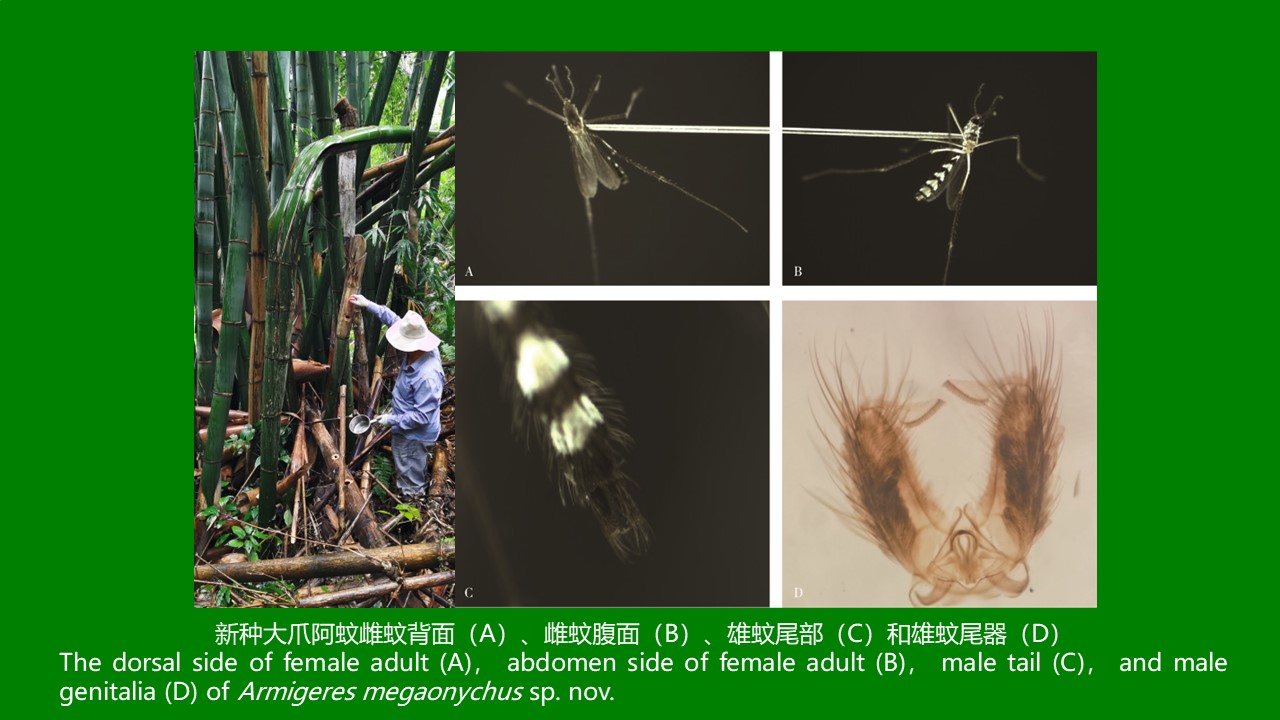
    This paper reports and describes a new species, Armigeres (Leicesteria) megaonychus sp. nov., from Gongshan Derung and Nu Autonomous County, Yunnan province, China. The species has the following features:foretarsomeres, midtarsomeres, and hindtarsomeres without white band; legs with white scale longitudinal strips on the ventral side of femurs; dark brown proboscis with a white scale longitudinal strip on the ventral side; postpronotums densely covered with dark brown scales; significantly expanded fan-shaped gonostylus, with an array of seta on the dorsal side, and 22-24 gonostylar claws near the apex, with the longest and sharp claw on the tip; claspette bearing 3 apical spines with an increasing length from inside to outside; larva abdominal segment bearing 35-40 combs with fringe-like apex. The type specimens are preserved in the Mosquito Collection of Yunnan Institute of Parasitic Diseases.
  • Technology and Methods
  • YAN Dong, LIU Guan-chun, REN Xing-yu, HOU Zhi-lin, LAN Xiao-yu, KANG Dong-mei, YANG Shun-lin, LIU Xiao-lin, ZHANG Rui
    Chinese Journal of Vector Biology and Control. 2022, 33(4): 568-572. https://doi.org/10.11853/j.issn.1003.8280.2022.04.023
    Abstract ( ) Download PDF ( )   Knowledge map   Save
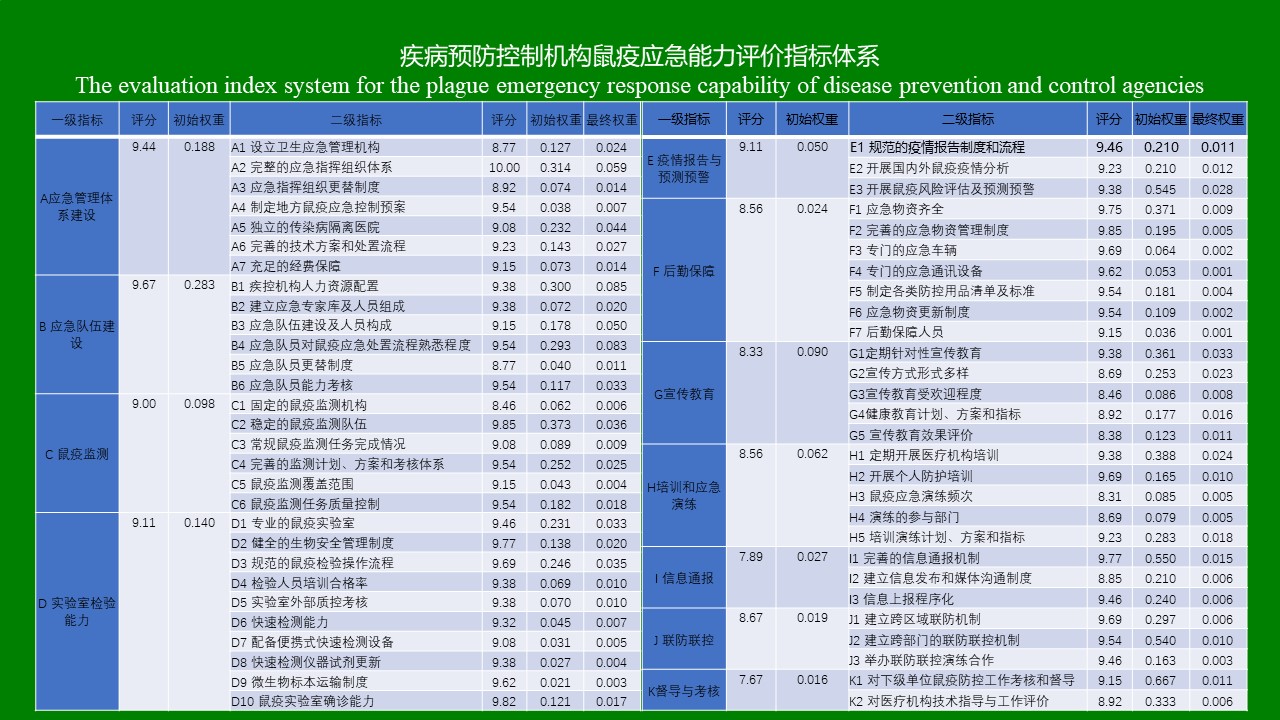
    Objective To establish a plague emergency response capability evaluation system for disease control agencies, and to provide a theoretical basis for effective plague control and emergency response. Methods Documents and literatures on plague control and emergency response were collected. Evidence-based evaluation of the literature, expert consultation, and group discussion as well as two rounds of Delphi method were performed to establish the evaluation indices of plague emergency response capability of disease control agencies. Two experts who participated in both the first and second rounds of consultation were selected to conduct pairwise comparisons of the primary and secondary indices. Analytic hierarchy process was used to determine the weights of the primary and secondary indices, and to establish an evaluation index system for plague emergency response capability. The non-parametric Kendall's coefficient of concordance (W) was used to measure the consistency of expert opinions. Results A total of 14 experts participated in the first round of consultation and 12 experts participated in the second round of consultation. The questionnaire response rate was 93.33% and 85.71%, respectively. The expert familiarity index was 0.94 and the expert authority index was 0.88. Therefore, the experts were familiar with the indices and the results were authoritative. In the first and second rounds of expert consultation, the importance of primary and secondary indices and the availability of Kendall's W test were statistically significant (all P<0.05). Therefore, the coordination of expert opinions was good. Through two rounds of Delphi expert questionnaire surveys, an evaluation system of plague emergency response capability for disease control agencies was established, which composed of 11 primary indices and 57 secondary indices. Conclusion The plague emergency response capability evaluation system is in line with the actual situation, and the indices have high reliability. The system can be used to effectively evaluate the plague emergency response capability of disease control agencies.
  • ZHAO Cong, YUE Zhi-guang, NING Xiao-dong, JIAN Yi-chen, HUANG Bin-bin, LU Chen-yang, ZHANG Wen-ju, ZHANG Kai-hui, JIAN Fu-chun, NING Chang-shen
    Chinese Journal of Vector Biology and Control. 2022, 33(4): 573-579. https://doi.org/10.11853/j.issn.1003.8280.2022.04.024
    Abstract ( ) Download PDF ( )   Knowledge map   Save
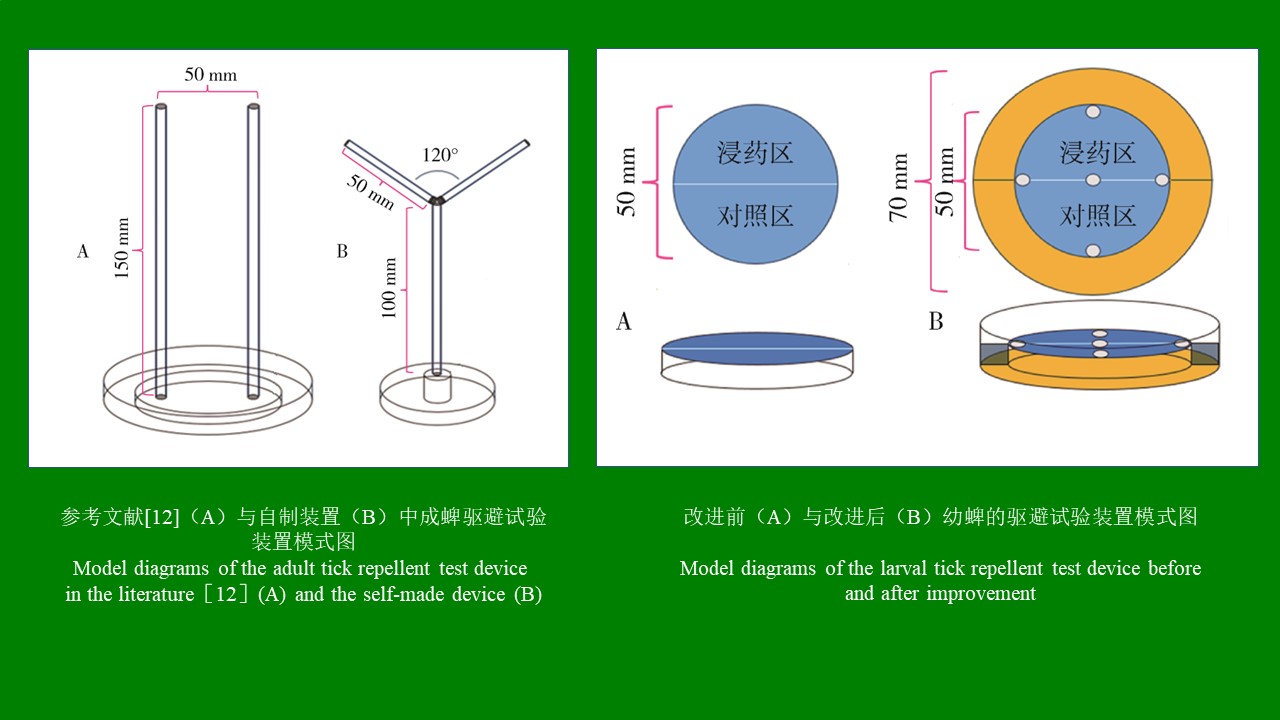
    Objective To develop an in vitro arthropod repellent test device for the study of repellents against hard ticks. Methods The in vitro repellent devices for adult ticks and larval ticks were prepared by the wood strip method and filter paper method, respectively, and the repellent effects of the self-made repellent test device (SM device) were compared with those of the hard tick repellent test devices reported in the literature. The repellent rates of different repellent devices on hard ticks and the proportion of hard ticks in ineffective areas were subject to a difference analysis by the Kruskal Wallis H test of SPSS 18.0 software. Results In the test of wood strip repellent devices, the repellent rate of the SM device (test group) was (97.44±2.56)%, while that of the device in the literature was (87.67±6.23)%, with no statistically significant difference (F=2.105, P=0.220); the proportions of hard ticks in ineffective areas of the SM device were (4.45±2.22)% (test group) and (2.22±2.22)% (control group), which were less than (53.33±3.85)% (test group) and (60.00±3.85)% (control group) of the device in the literature, with statistically significant differences (test group:F=121.004,P<0.001; control group:F=168.825, P=0.001). In the test of filter paper repellent devices, the repellent rate of the SM device (test group) was (100.00±0.00)%, while that of the device in the literature was (95.83±4.17)%, with no statistically significant difference (F=1.000, P=0.374); the proportions of hard ticks in ineffective areas of the SM device were (0.00±0.00)% both in the test group and the control group, which were less than (41.67±7.26)% (test group) and (35.00±5.77)% (control group) of the device in the literature, with statistically significant differences (test group:F=32.895,P=0.005; control group:F=36.750, P=0.004). Conclusion The developed hard tick repellent test device has simple structure and is convenient, and leads to more credible experimental results. It provides a technical means for the research and development, effect determination, and drug screening of arthropod repellents.
  • Taxonomy and Identification
  • YANG Yi-ling, HE Yu-wen, LI Nan, MENG Jin-xin, YIN Jian-zhong, WANG Jing-lin
    Chinese Journal of Vector Biology and Control. 2022, 33(4): 580-585. https://doi.org/10.11853/j.issn.1003.8280.2022.04.025
    Abstract ( ) Download PDF ( )   Knowledge map   Save
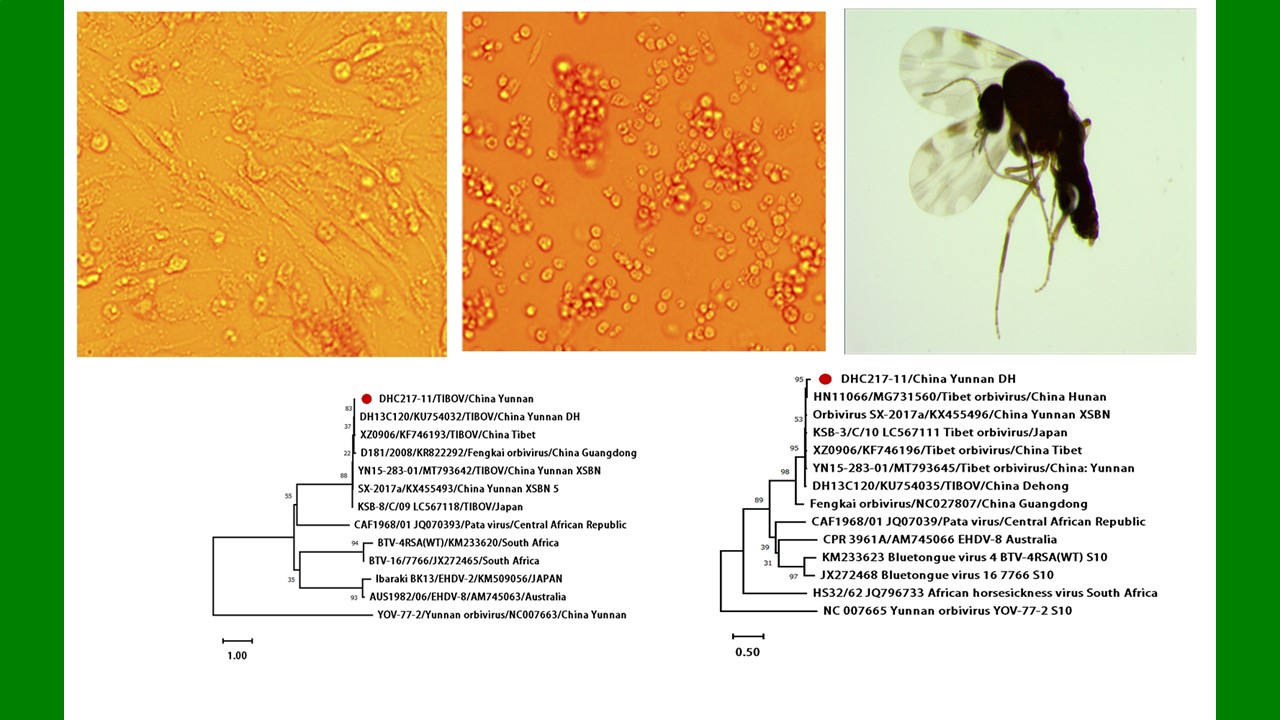
    Objective To investigate the status of Tibet orbivirus (TIBOV) carried by the collected midges and the potential vectors in Mangshi, Dehong Dai and Jingpo Autonomous Prefecture (Dehong prefecture), Yunnan province, China, and to enrich the studies on Orbivirus in the border areas of Yunnan province. Methods Midges were collected with mosquito light trap at night from cattle and sheep houses in the suburbs of Mangshi, Dehong prefecture in August 2016. The collected midges were preliminarily classified under a microscope. The virus was isolated from golden hamster kidney cells (BHK-21) and Aedes albopictus cells (C6/36). The specific primers for Alphavirus, Flavivirus, TIBOV S7 and S10 were used to preliminarily identify the positive isolates. The positive amplified products were sequenced and analyzed by bioinformatics software like MEGA X. Meanwhile, genomic DNA of midges was extracted, and the specific primers for cytochrome c oxidase subunit I (COⅠ) were used to identify midge species. Results The collected midges were divided into 44 batches for grinding. One positive isolate (serial number:DHC217-11) was obtained, which produced obvious cytopathic effect in BHK-21 and C6/36 cells. BHK-21 cells showed obvious cytopathic effect 48 h after inoculation with the supernatant of ground samples. C6/36 cells showed obvious cytopathic effect 72 h after inoculation. The amplification showed negative results using the primers for Alphavirus and Flavivirus, while showed positive results using the primers for S7 and S10 segments of TIBOVs. The sequences of S7 and S10 segments of newly isolated viruses were 1 085 bp and 723 bp after sequencing. The sequence analysis results showed that the newly isolated virus DHC217-11 was in the same evolutionary branch as the six TIBOV strains on the phylogenetic tree constructed by S7 and S10 gene sequences, with a nucleotide homology of 93.4%-99.5% (S7) and 81.3%-97.1% (S10), respectively, and the newly isolated virus DHC217-11 was in the different evolutionary branch from other orbiviruses such as Bluetongue virus and Epizootic hemorrhagic disease virus, with a nucleotide homology of lower than 62.7% (S7) and 58.9% (S10). A further analysis showed that the S7 gene sequence of the newly isolated virus DHC217-11 was 99.5% homologous to the nucleotide sequence of TIBOV DH13C120 isolated from midges in Mangshi in 2013. S10 gene sequence had the highest nucleotide homology of 97.1% with TIBOV SX2017a isolated from Xishuangbanna Dai Autonomous Prefecture in 2017, suggesting that the newly isolated virus DHC217-11 was TIBOV. The COⅠ gene primers were used for molecular identification of midges in batch DHC217-11. The sequence analysis results showed that the COⅠ gene sequence of midges in batch DHC217-11 was closely related to the genetic evolution of Culicoides orientalis, with the highest nucleotide homology of 99.8%, suggesting that midges in batch DHC217-11 were C. orientalis. Conclusion The virus DHC217-11 isolated from C. orientalis collected in Dehong prefecture of Yunnan province is TIBOV. C. orientalis may be a potential vector of TIBOV.
  • Control Experiment
  • CHEN Jia-hui, ZHOU Jing-ya, LIU Yang, TANG Jin-hua, XIE Kai-qi, ZHANG Shao-hua, JIA Feng-long
    Chinese Journal of Vector Biology and Control. 2022, 33(4): 586-589. https://doi.org/10.11853/j.issn.1003.8280.2022.04.026
    Abstract ( ) Download PDF ( )   Knowledge map   Save
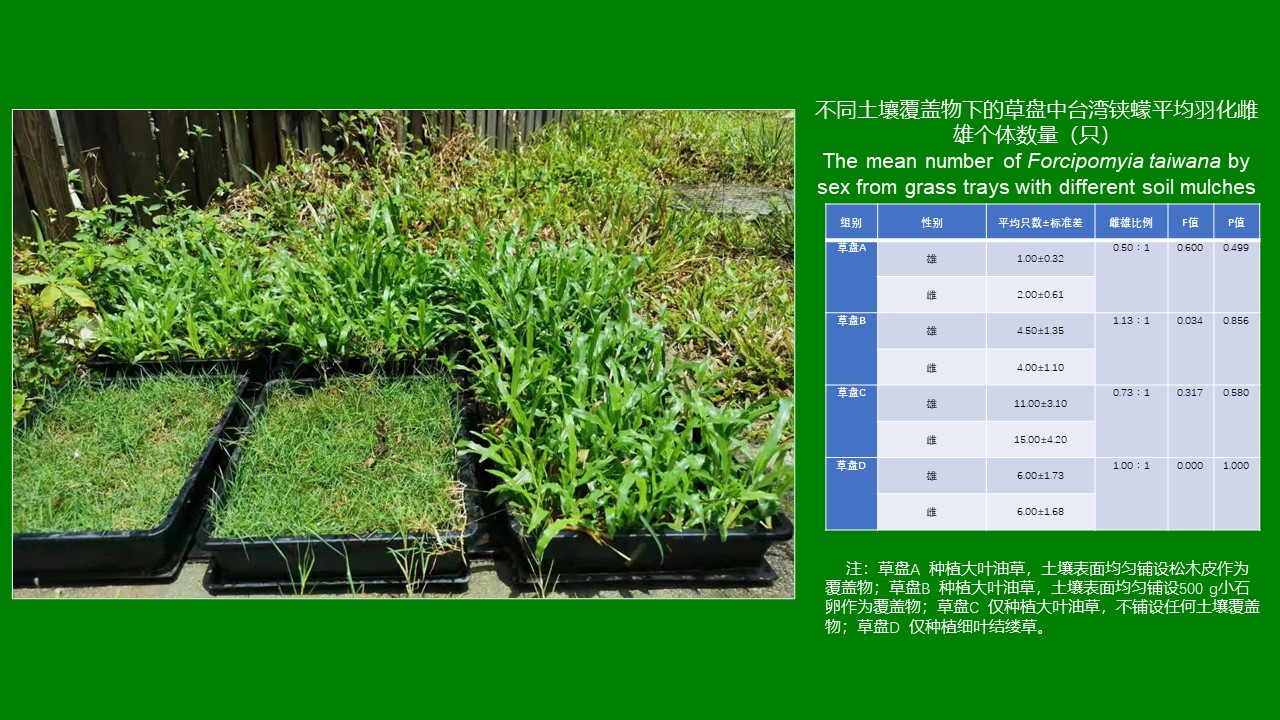
    Objective To study a technique for the control of Forcipomyia taiwana on Axonopus compressus grassland in an urban park. Methods On April 15, 2021, four types of grass trays where F. taiwana could oviposit and breed were placed in the outdoor environment of Futian Mangrove Ecological Park, Shenzhen, China:an A. compressus tray with a soil mulch of small pebbles, an A. compressus tray with a mulch of broken pine barks, an A. compressus tray without any soil mulch, and a Zoysia tenuifolia tray. After 75 days, these trays were moved to the laboratory of School of Life Sciences, Sun Yat-sen University, and were placed into insect cages to rear F. taiwana. Adult F. taiwana midges were collected and counted by sex. The emergence of adult F. taiwana was compared using non-parametric tests and analysis of variance between A. compressus trays with pebble and pine bark mulches, and using the two-sample t test between A. compressus and Z. tenuifolia trays without any soil mulch. One-way analysis of variance was used to compare the numbers of male and female adult F. taiwana emerging from the trays with different soil mulches. Results There was a statistical difference in the numbers of adult F. taiwana emerging from the pine bark-mulched A. compressus tray (3.00±0.92), pebble-mulched A. compressus tray (8.50±2.37), and A. compressus tray without any mulch (26.00±7.23) (F=6.735, P=0.007). The number of adult F. taiwana was higher in the A. compressus tray without any mulch (26.00±7.23) than in the Z. tenuifolia tray (12.00±3.33), but without statistical significance (t=1.719, P=0.111). There was no statistical difference in the number of male and female adult F. taiwana from any grass tray (all P>0.05). Conclusion Applying a pebble or pine bark mulch onto A. compressus grassland is effective to control F. taiwana, and the pine park is superior to pebbles. Compared with A. compressus grassland, Z. tenuifolia grassland cannot significantly reduce the breeding density of F. taiwana.
  • ZHANG Yan, WANG Chong, CHEN Xu-peng, CHEN Bin, CHEN Hang, LU Mo-yuan, WU Qi-xin, WANG Bai-ru, SONG Bing-dong, ZHANG Shou-gang
    Chinese Journal of Vector Biology and Control. 2022, 33(4): 590-595. https://doi.org/10.11853/j.issn.1003.8280.2022.04.027
    Abstract ( ) Download PDF ( )   Knowledge map   Save
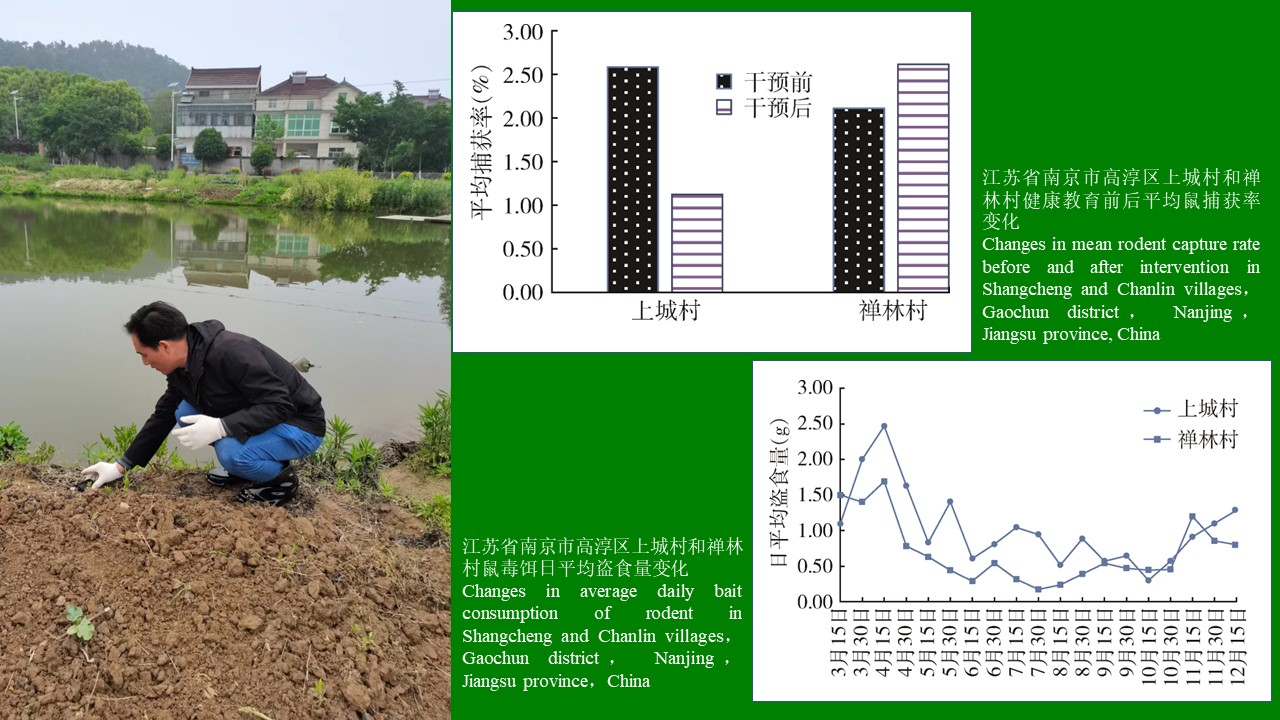
    Objective To investigate the effect of health education in the chemical control of rodents, and to provide a scientific basis for formulating effective rodent control measures in Nanjing, Jiangsu province, China. Methods Shangcheng and Chanlin villages in Gaochun district, Nanjing, China were selected as intervention group (bait stations combined with health education for rodent control) and control group (bait stations alone for rodent control), respectively. The changes in farmers' awareness about rodents, bait consumption, and rodent densities in the two villages from March to December 2021 were analyzed to compare the effects of health education intervention on chemical control of rodents. Results Among 31 participants in Shangcheng village, the numbers of farmers with an awareness of general knowledge about rodents, rodent-borne diseases, control measures, and behaviors before and after health education were 22 versus 29 (χ2=5.415,P=0.043), 17 versus 25 (χ2=4.724, P=0.030), and 14 versus 23 (χ2=5.429, P=0.020), respectively, all showing statistically significant increases after health education except for knowledge about control measures. Before health education, the rodent capture rates (three times) in Shangcheng village were 3.00%, 2.22%, and 2.52%, respectively, while the capture rates in Chanlin village were 1.72%, 2.16%, and 2.45%, respectively, with no statistically significant difference between the two villages (χ2=0.344, P=0.557). The capture rates in Shangcheng village (0.41%, 2.12%, and 0.85%, respectively) after health education, and those in Chanlin village (2.09%, 1.82%, and 3.93%, respectively) at the same time showed a statistically significant difference (χ2=4.409,P=0.036). The capture rate of Shangcheng village was statistically decreased by 56.37% after health education (χ2=4.139, P=0.048), while no statistically significant change was observed in that of Chanlin village at the same time (χ2=0.384, P=0.599). Rodents' average daily bait consumption peaked in mid-April and mid-November, and generally, it was higher in Shangcheng village than in Chanlin village. Conclusion Chemical control combined with health education is more effective for rodent control than chemical control alone in rural areas.

  • Review
  • YIN Hong-min, FU Meng, KONG Yi-chen, YANG Zi, HUANG Hao, ZHANG YUN-zhi
    Chinese Journal of Vector Biology and Control. 2022, 33(4): 596-600. https://doi.org/10.11853/j.issn.1003.8280.2022.04.028
    Abstract ( ) Download PDF ( )   Knowledge map   Save
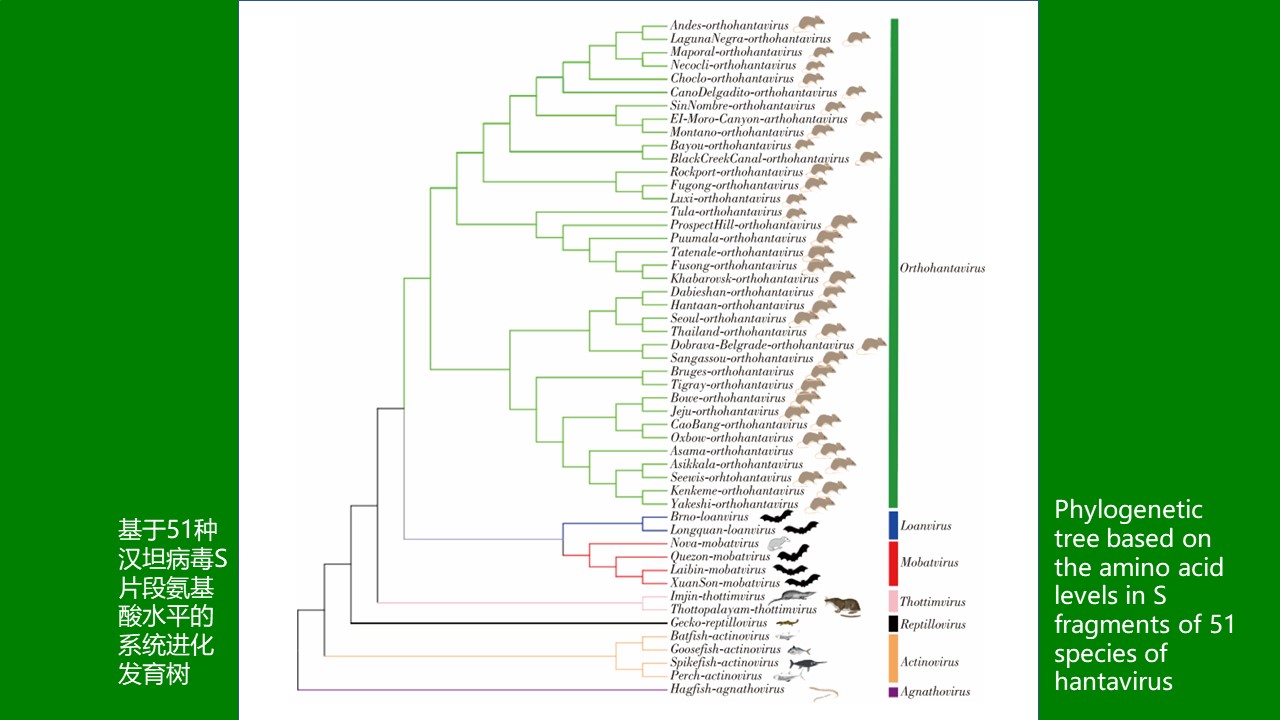
    Hantaviruses are important pathogenes of natural focal diseases that causes hemorrhagic fever with renal syndrome and Hantavirus pulmonary syndrome. According to the latest classification of the International Committee on Taxonomy of Viruses, hantaviruses can be divided into 53 species, 7 genera, and 4 subfamilies. Hantaviruses are widely found in Rodentia, Chiroptera, and Insectivora, and later also found in reptile, Actinopterygii, and Agnatha. There are many species of bats, which are the second largest group of mammals in the world after rodents. At present, 1 446 species have been reported, accounting for about 22% of global mammals. In addition, bats have strong flight ability and are widely distributed in all continents except Antarctica. As the host animal of viruses, bats bear a variety of viruses, and many emerging infectious pathogens such as Marburg virus, Hendra virus, and Nipah virus have been confirmed to come from bats. Bats have also been associated to Ebola virus, severe acute respiratory syndrome coronavirus, Middle East respiratory syndrome coronavirus, and severe acute respiratory syndrome coronavirus 2. In recent decades, more and more bat-borne hantaviruses have been discovered. Bats and bat-borne hantaviruses have an important research value. Therefore, this paper reviews the latest classification of Hantavirus and bat-borne hantaviruses.
  • ZHANG Wan-li, PENG Heng, SHAN Wen-qi, MA Ya-jun
    Chinese Journal of Vector Biology and Control. 2022, 33(4): 601-607. https://doi.org/10.11853/j.issn.1003.8280.2022.04.029
    Abstract ( ) Download PDF ( )   Knowledge map   Save
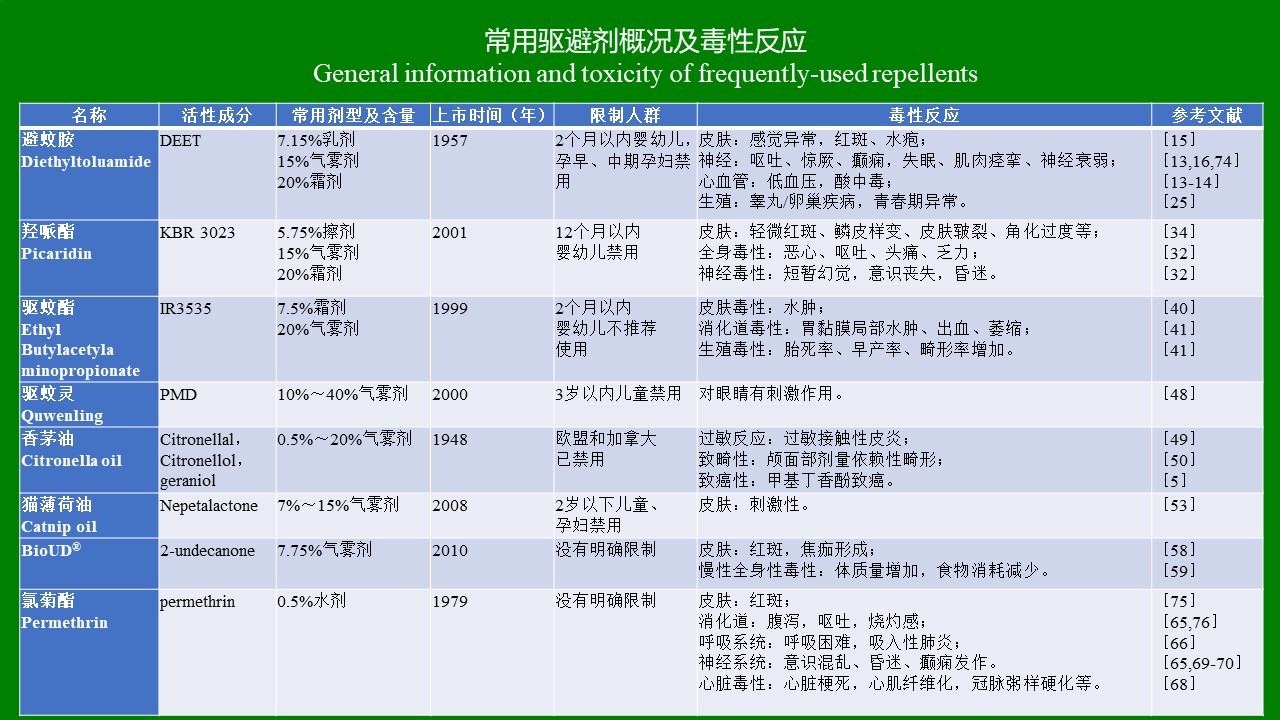
    Repellents can repel blood-sucking insects and reduce bites by affecting their olfactory system,thus preventing the occurrence of insect-borne diseases. Repellents are widely used because of their safety at the recommended dose. However,with the long-term accumulation of observation data,the toxicity cases caused by repellents have attracted extensive attention,such as toxic encephalopathy in children induced by diethyltoluamide and asthma-like allergic reaction induced by permethrin. Therefore,summarizing the long-term toxicity of repellents and deeply exploring the intrinsic mechanism provide a theoretical basis for the development of safer repellents and have an important scientific and application value. This paper reviews the latest progress of studies on safety events and mechanisms of currently applied major repellents, and considers the development trend and research direction of repellents.
  • ZANG Chuan-hui, GONG Mao-qing, LIU Hong-mei
    Chinese Journal of Vector Biology and Control. 2022, 33(4): 608-612. https://doi.org/10.11853/j.issn.1003.8280.2022.04.030
    Abstract ( ) Download PDF ( )   Knowledge map   Save
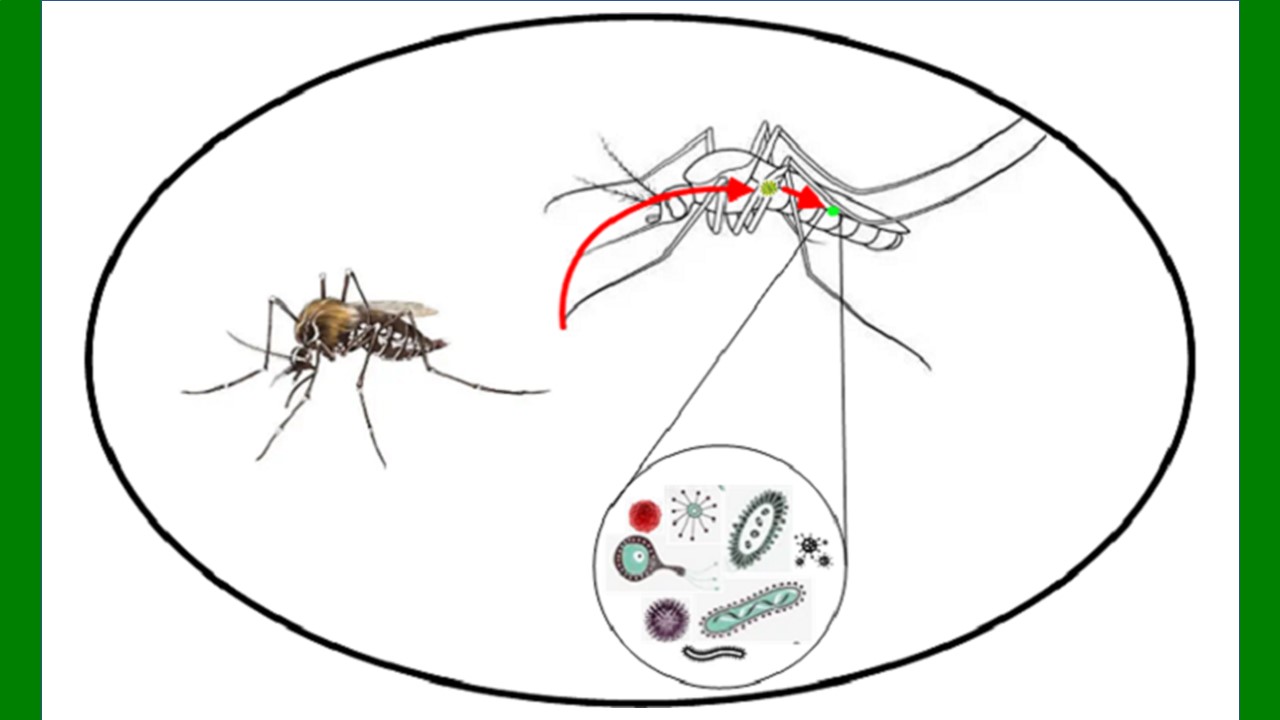
    The vector mosquitoes are widely distributed and can transmit plasmodium, dengue virus, Zika virus, and other pathogens through their bite and blood sucking, which leads to an important public health problem of wide global concern. The midgut tissue is the first barrier for mosquitoes against pathogen infection, in which a large number of gut microbes exist. The mutualism process of the midgut tissue and gut microbes makes a great influence on the life activities of mosquitoes, which provides a new idea for the prevention and control of mosquito-borne infectious diseases. This review summarizes the research progress on the diversity and function of mosquito gut microbes.